Quick answer
To shape eyebrows for men, keep the natural outline and remove less hair than you think. Brush them into place, trim only tips that cross the brow line, then tweeze a few strays while checking your face in normal light.
A good result should look like your own brows on a tidy day, without a high arch, sharp stencil or perfect symmetry. Conservative men's eyebrow grooming is easier to maintain and much harder to regret.
What does eyebrow shaping actually change?
Eyebrow shaping changes three visible details: hair length, the outer border and the space between the brows. It doesn't change your brow bone or eye shape; the aim is cleaner framing, not a new face.
Trimming and hair removal do different jobs: scissors shorten long hairs without removing them from the follicle. Tweezing, threading and waxing pull hairs from the root, while shaving cuts them at the surface and gives a shorter-lived result.
That difference matters because a long hair can make a brow look untidy without making it too thick. Cut it and the brow may settle into place, while pulling several hairs can leave a gap that takes months to fill.
There is no medical rule for a “masculine” eyebrow shape. Thick, fine, straight and curved brows can all look well groomed. Your natural growth pattern is the safest template.
What do you need to trim men's eyebrows?
You only need a few clean tools:
- a spoolie brush or a clean, soft toothbrush
- small eyebrow scissors with controlled tips
- slanted tweezers for single hairs
- a normal mirror near bright, even light
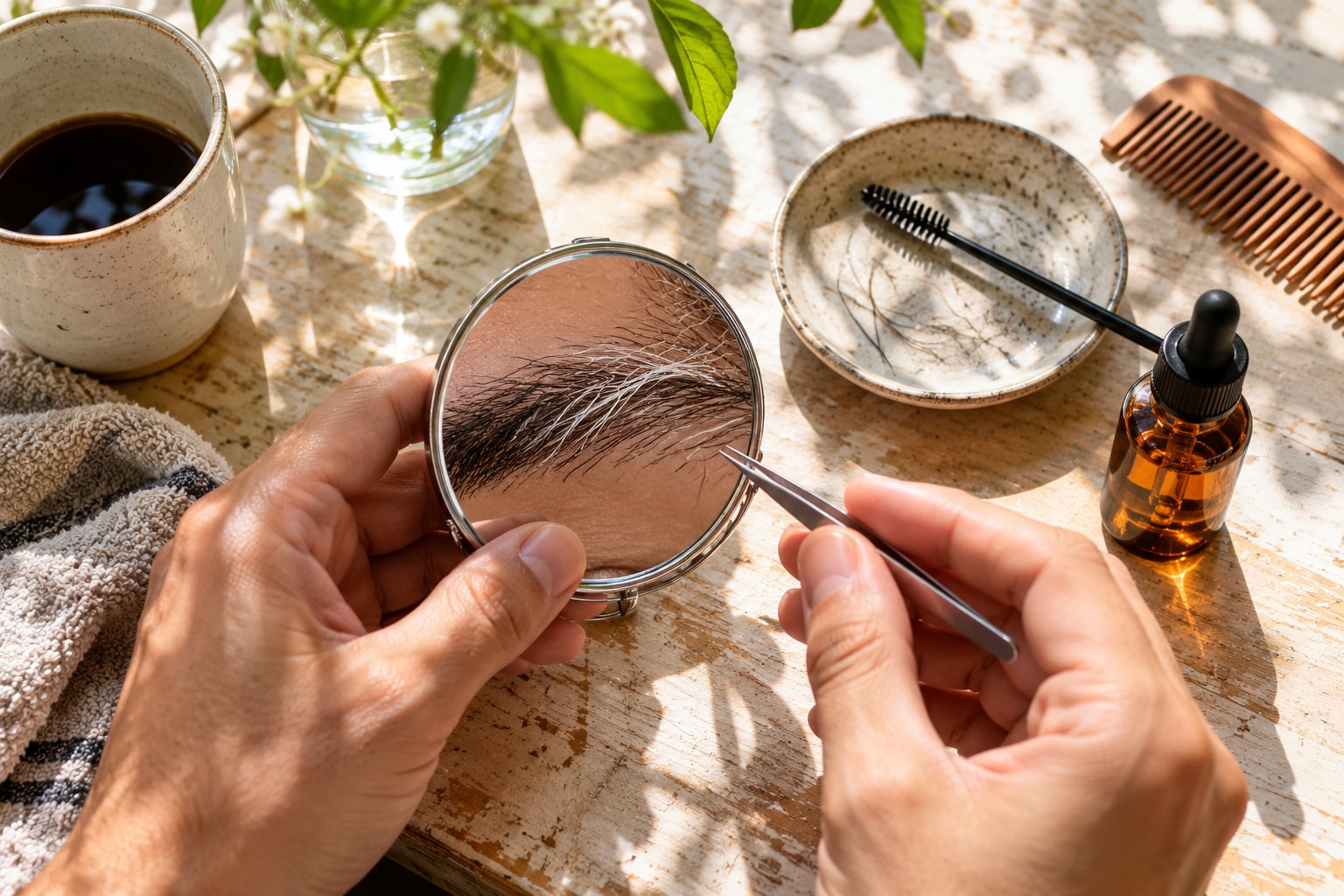
Skip the magnifying mirror. Cleveland Clinic dermatologist Shilpi Khetarpal warns that close inspection can encourage constant plucking and repeated follicle trauma. A normal mirror also shows whether a change suits your face, not one square centimetre of skin.
Wash your hands and face first. Clean the tools according to their care instructions and let them dry. Don't share tools. Keep scissors pointed away from the eye, and stop if your hand isn't steady.
How do you shape eyebrows for men step by step?
1. Start with the brow you have
Leave the hairs alone before deciding what needs removal; if you have overplucked them, give them time to return. Cleveland Clinic advises waiting at least two to three months to judge regrowth.
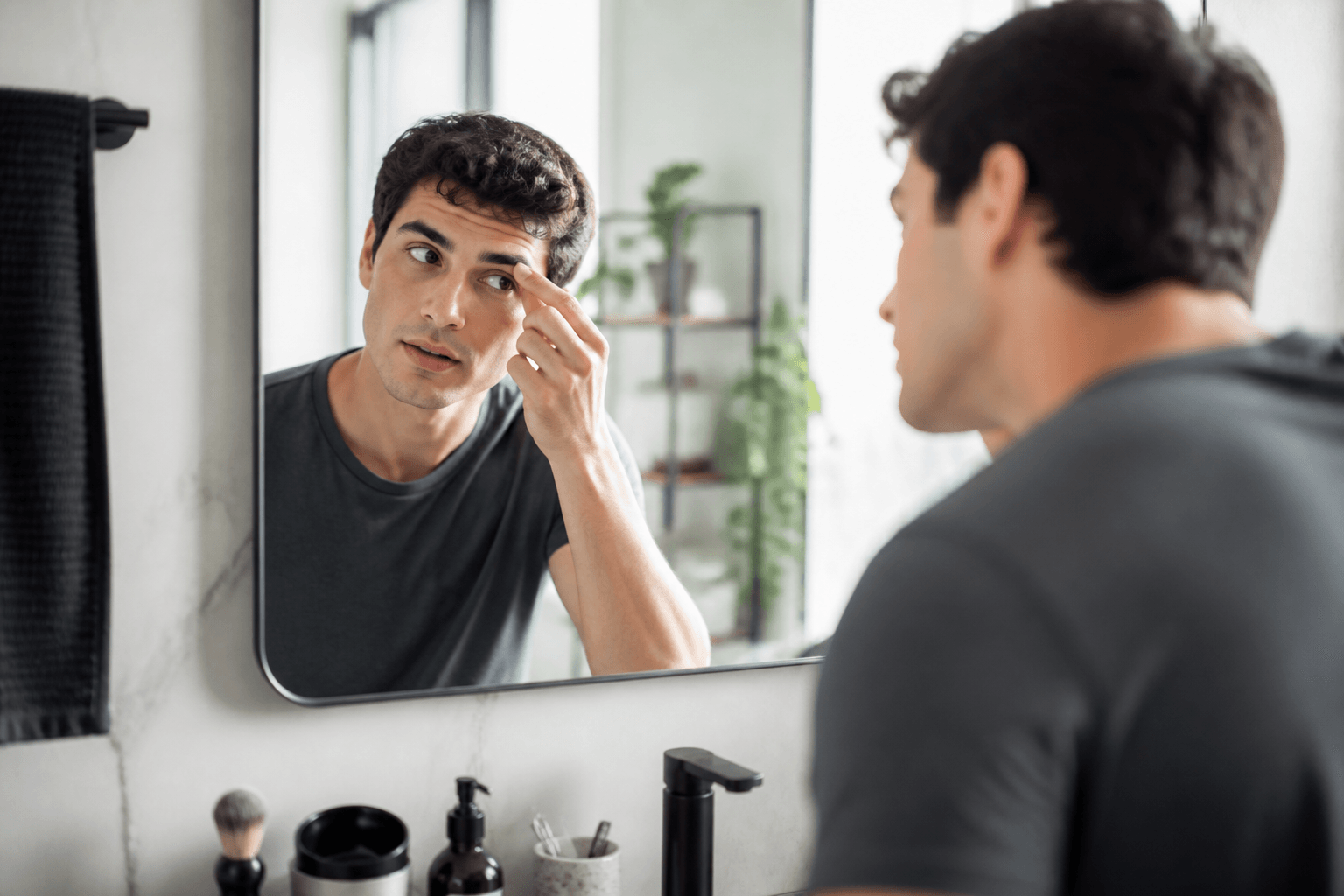
Look from conversational distance, not with your nose against the mirror. Notice long hairs, isolated strays and any hair between the brows, but don't draw a new arch yet.
2. Brush the hairs into their usual direction
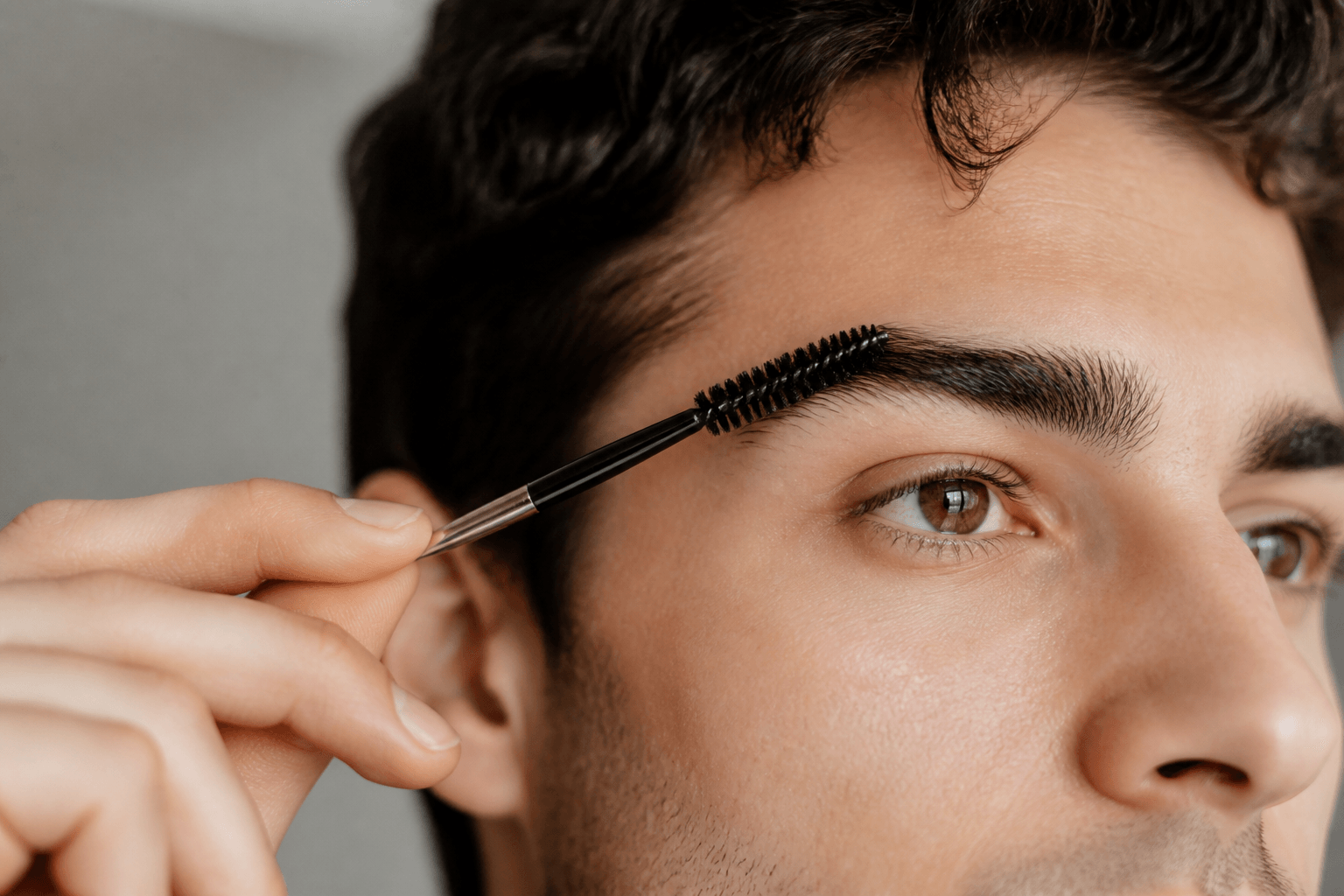
Run the spoolie through each brow, moving upward and slightly outward. This separates the hairs and reveals which ones are longer than the main brow line.
Now let them settle because some hairs look long when raised but sit neatly at their natural angle. Cutting every raised hair creates short spikes and visible gaps.
3. Trim only the obvious long tips
Brush a small section upward, then snip a hair only when its end extends clearly beyond the upper border. Work one or two hairs at a time.
Repeat across the brow, then brush everything back into place. Men's Health grooming specialists advise cutting only part of an overlong tip and keeping clear of the dense body of the brow. That restraint helps avoid the flat, crew-cut effect produced by one straight cut.
Don't run an unguarded beard trimmer across the whole eyebrow. It removes length too evenly and can expose pale skin between darker hairs. If you use an eyebrow trimmer, fit its guard and start longer than you think you need.
4. Clean the space between the brows conservatively
Decide whether you want to keep, soften or remove hair in the centre. A unibrow is not a health problem, and grooming it is a style choice.
For a clean separation, remove only hairs that sit apart from the dense inner edges. Alternate sides rather than clearing a wide strip in one pass, then step back after two or three hairs.
Avoid using finger widths as a universal rule because nose width, eye spacing and natural brow growth vary. A large centre gap can make the change look more obvious than the original hair.
5. Tweeze clear strays, not the main shape
Use slanted tweezers on isolated hairs below the lower edge or far above the brow. Grip one hair near its base and pull in its growth direction. Cleveland Clinic recommends angled tweezers for more precise removal.
Keep the natural top line and arch unless you already know the shape you want. Removing hair from the dense border has a bigger visual effect than removing a true stray, so pause often.
Don't try to make both brows exact copies because natural brows differ in height, density and direction. Alternate between them and aim for similar tidiness instead.
6. Stop before it looks “finished” close up
Brush the brows again and move away from the mirror. Check the result in even light from a normal distance, then take a quick phone photo at eye level.
If one hair still bothers you, wait ten minutes before removing it.
Is tweezing, threading, waxing or shaving better?
The best method depends on how much hair you want to remove and how reactive your skin is.
Tweezing gives the most control
Tweezers suit a few centre hairs and isolated strays, and you can stop after each hair to protect the natural eyebrow shape. The trade-off is time and the risk of overplucking when you inspect too closely.
Threading is fast and precise
Threading catches hairs with twisted thread and removes them from the root. The American Academy of Dermatology says it can remove several hairs quickly, with results lasting four to five weeks. The academy lists it as an option for sensitive or acne-prone skin because it causes little irritation.
Skill still matters because an inexperienced threader can create uneven brows or ingrown hairs. Cleveland Clinic also notes that redness, swelling and irritation can follow a session. Choose a trained professional who uses clean thread, and ask for a light clean-up rather than a full reshape.
Waxing removes a wider strip
Waxing is quick, but its wide contact makes a small mistake harder to contain. Hot wax can burn, and recently waxed skin may become red or irritated.
The American Academy of Dermatology says not to wax skin treated with tretinoin. It also advises against waxing while taking isotretinoin, or within six months of taking it. The academy also advises against waxing while using an antibiotic, so check with your prescriber if you are unsure. Don't pause prescribed treatment just for a brow appointment.
Shaving is temporary
An eyebrow razor or guarded trimmer cuts hair at the surface. It doesn't make hair grow back thicker, but the result is short-lived. The American Academy of Dermatology lists cuts, razor burn, irritation and ingrown hairs among shaving risks.
Shaving can suit a few centre hairs if you prefer not to pull them. Use a facial-detail tool, keep it away from the eyelid, follow hair growth and never use a loose blade near your eye.
How often should men trim their eyebrows?
Use visible growth rather than a rigid calendar, though grooming specialists interviewed by Men's Health suggest three to four weeks between trims. That is a cautious starting point, not a biological rule.
Brush your brows before each session because there is nothing to cut if no tip crosses the natural line. You may tweeze a clear stray between trims, but daily searching raises the chance of removing hairs that belong.
Take one photo before grooming and another the next day, using the same window, distance and expression. This private record is more reliable than memory and helps you see whether you are gradually thinning the shape.
What mistakes make eyebrows look overgroomed?
The common problem is subtraction: each hair seems minor in a magnifying mirror, but ten missing hairs can change the border.
- Cutting every hair to one short length can expose gaps.
- Widening the centre little by little can alter apparent eye spacing.
- Building a high arch can make your resting expression look different.
- Copying a filtered photo ignores hair density, lighting and lens distortion.
- Correcting one brow repeatedly can create more asymmetry, not less.
If you are unsure, trim length first and leave removal for another day. You can always take one more hair. You cannot put it back.
What should you do about bumps or irritation?
Mild redness can follow hair removal, especially threading or waxing. Leave the area alone, avoid rubbing it and use your usual plain moisturiser if it doesn't sting. Don't apply a new acid, scrub or fragranced product to freshly irritated skin.
Shaving, plucking and waxing can damage follicles and trigger folliculitis, which can resemble small acne bumps. If bumps appear after grooming, stop the method that triggered them while the skin settles.
Seek medical advice if you develop spreading redness, pus, strong pain or swelling near the eye. A dermatologist can tell folliculitis from acne, contact irritation and other conditions; repeated inflammation deserves more than another grooming hack.
What if your eyebrows are already thin or patchy?
Stop removing hair from the sparse area because most overplucked eyebrows grow back, but repeated daily trauma can scar follicles. Cleveland Clinic recommends allowing two to three months for visible regrowth and seeing a dermatologist if nothing changes after four months.
Don't put scalp minoxidil around your eyes without medical advice. Cleveland Clinic warns that it can burn if it reaches the eye and may grow hair elsewhere on the face. A clinician can discuss safer options and check why the hair changed.
Sudden eyebrow thinning is not always a grooming problem because age, thyroid conditions, anaemia and some nutrient deficiencies can affect growth. Book a GP or dermatology visit if thinning starts without plucking or shows no improvement after four months. Don't self-treat a guessed deficiency with high-dose supplements.
FAQ
Should men pluck their eyebrows?
Men can pluck isolated hairs between or outside the brows. Use slanted tweezers, pull with the growth direction and keep the dense border intact. Trimming is usually the safer first move for bushy eyebrows because it changes length without removing the follicle.
How often should men trim their eyebrows?
Check them every three to four weeks, then trim only hairs that cross the natural line. Some brows need less frequent care, so skip the session if brushing reveals no long tips.
Is eyebrow threading better than waxing for men?
Threading offers more precise removal and avoids hot wax, so it often suits a subtle clean-up. Waxing is faster across a wider area but can irritate or burn skin. Avoid waxing over tretinoin-treated skin and ask a professional about other medicines.
Do overplucked eyebrows grow back?
Most overplucked eyebrows grow back, but it can take two to three months before you see progress. Repeated trauma may delay growth or scar follicles, so see a dermatologist if there is no improvement after four months.
Is it safe to shave a unibrow?
You can shave centre hair with a guarded facial trimmer, but the smooth result won't last as long as tweezing or threading. Shaving can cause cuts, irritation and ingrown hairs, so keep any blade away from the eyelid and never groom in a rush.