Quick answer
To prevent razor bumps, avoid cutting hair below skin level. Soften the hair, use shaving cream, follow the grain, make few passes, and leave slight stubble. If bumps keep returning, switch to an electric trimmer or ask a dermatologist about treatment.
Razor bumps are common and manageable, but a perfectly close shave is often the problem rather than the goal.
What are razor bumps?
Razor bumps are inflamed follicles caused by shaved hairs growing into nearby skin. The medical name is pseudofolliculitis barbae when it affects the beard area.
A blade leaves a short hair with a sharp tip, which can curve back through the skin surface. It can also retract inside the follicle and pierce its wall. Your immune system treats the trapped hair like a foreign object, creating a raised, itchy, or tender bump.
The jaw and neck are frequent trouble spots because beard hairs often point in several directions there. Similar bumps can appear anywhere you shave, wax, thread, or pluck. Common sites include the legs, armpits, chest, back, and pubic area.
Pseudofolliculitis is mainly inflammation, not an infection. Bacteria can enter injured follicles, though, so infected folliculitis can develop beside ordinary ingrown hairs.
Why do some people get razor bumps more often?
Hair shape matters more than skin colour because coarse, tightly curled hair can turn towards the skin as it grows. That makes razor bumps more common among people of African ancestry, although any ethnicity can be affected.
Your method matters too, since close blade shaving creates shorter, sharper tips than trimming above the skin. Stretching your skin makes the cut hair retract after you release it, while repeated passes add friction and small injuries.
This isn't a hygiene failure. Scrubbing harder won't change the curve of your hair, and it may add irritation.
Are razor bumps the same as razor burn or acne?
They can look alike, but their timing and pattern offer useful clues.
- Razor burn is a flat, stinging rash that appears soon after shaving and often settles within 24 to 48 hours.
- Razor bumps are separate raised spots around follicles, which develop as cut hairs re-enter the skin and may last for weeks.
- Acne can include blackheads and whiteheads outside the shaved beard pattern. An ingrown hair may be visible inside a razor bump.
- Infectious folliculitis can produce tender or pus-filled spots. Heat, spreading swelling, fever, or feeling unwell needs medical advice.
A photo or AI skin check may map visible bumps and redness. It cannot confirm which condition caused them or diagnose an infection.
How do you shave to prevent razor bumps?
The best routine is less about buying products and more about controlling the cut.
1. Map your beard growth
Let your beard grow for a day or two, then study it in good light and stroke each area with your fingertips. The smoother direction is usually with the grain.
Neck hair may grow sideways or form a swirl, so follow each local direction instead of dragging the razor downward. This small change often matters more than a new razor.
2. Soften the hair first
Shave near the end of a warm shower, or hold a warm, damp cloth against the area. The American Academy of Dermatology says softened hair swells and cuts more easily.
Wash with a mild cleanser, then apply a moisturising shaving cream or gel and give it a moment to coat the hairs. Dry shaving creates more drag and encourages extra pressure.
3. Choose closeness carefully
If blade shaving keeps causing bumps, try an electric trimmer that leaves about 1 millimetre of stubble. Both DermNet and the British Association of Dermatologists support leaving a short gap above the skin.
For wet shaving, the British guidance recommends a single blade. Multi-blade systems can produce a closer cut, which some bump-prone faces tolerate poorly. There isn't one perfect razor for every beard, so judge the result on your own skin.
Use a sharp, clean blade because a blunt edge tugs hair and tempts you to press harder. The American Academy of Dermatology advises replacing a disposable razor after five to seven shaves and storing it dry.
4. Use light, short strokes
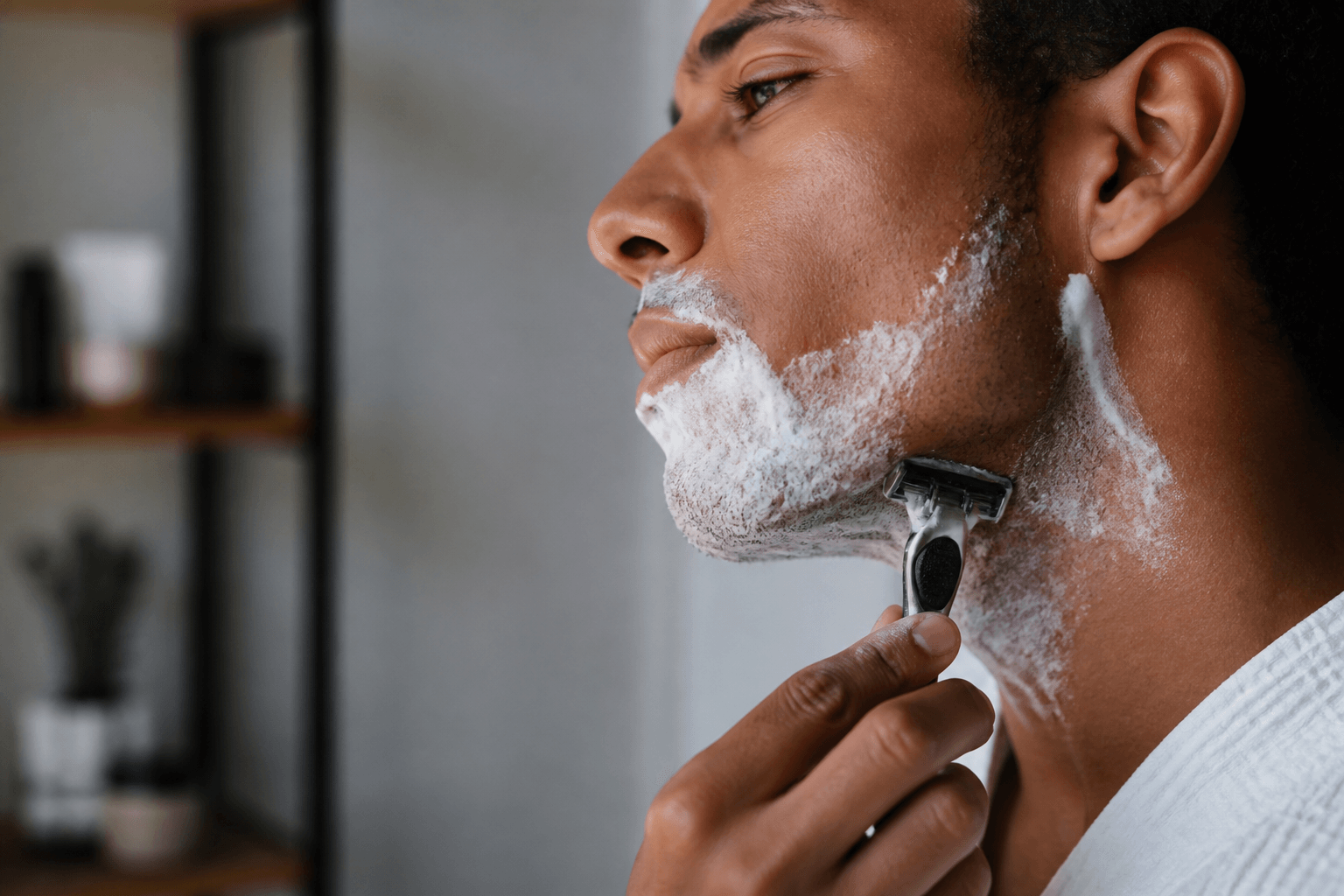
Shave with the grain, and don't stretch your skin, push hard, or chase a glass-smooth finish. Rinse the blade after each stroke, and avoid passing over one patch twice.
Against-the-grain shaving may feel smoother for a few hours, but it cuts closer and helps a curved hair enter the skin.
5. Keep aftercare plain
Rinse away the shaving cream, apply a cool, damp cloth, then use a fragrance-free moisturiser if your skin feels tight. Alcohol-heavy aftershaves may sting already irritated skin without fixing the trapped hair.
Don't introduce several acids, scrubs, and aftershaves at once. You won't know what helped, and the mix may create a second rash.
How often should you shave?
Medical guidance isn't fully consistent here. The NHS and British Association of Dermatologists advise avoiding daily shaving when possible. The American Academy of Dermatology says shaving every day, or every two to three days, can stop longer hairs curving back.
That difference reflects two ways hairs become trapped: some retract after a close cut, while others grow outward and pierce nearby skin.
Run a simple two-week test, keeping your tool, products, direction, and pressure the same while changing only shave frequency. Count new bumps rather than judging the first post-shave hour.
If work rules require a clean shave, ask whether a medical shaving waiver or closely trimmed beard is allowed. Repeated inflammation can leave dark marks and scars, making this a health issue as well as grooming.
What should you do when razor bumps are already there?
Pause shaving over active bumps if you can. The British Association of Dermatologists says inflammation may need four to six weeks to settle after hair removal stops. A shorter break can still prevent a blade from reopening raised spots.
Don't squeeze, scratch, or dig for the hair because picking can damage skin and lead to infection. Home needles and tweezers can turn one bump into a lasting mark.
A warm compress can soothe the area and help surface hairs release naturally, while gentle washing keeps it clean. Skip rough brushes and aggressive scrubs on sore bumps.
Some exfoliating ingredients can reduce dead skin around follicles. DermNet lists glycolic acid among the options, while clinical reviews also discuss retinoids and acne medicines. These products can irritate freshly shaved skin, and prescription treatment needs a clinician.
Ask a pharmacist or dermatologist before combining acids, retinoids, benzoyl peroxide, or steroid creams. More treatment isn't always faster.
Can laser hair removal stop razor bumps?
Laser hair removal can reduce the number or thickness of hairs that trigger recurring bumps. Clinical reviews treat it as a longer-term option when grooming changes and topical care aren't enough.
It isn't a risk-free shortcut because results need several sessions, maintenance may be needed, and the aim is lasting hair reduction. Burns and lighter or darker marks are possible, especially when the device or settings don't suit your skin.
Choose a qualified medical professional with experience treating your skin tone. Ask which laser they use, how they patch test, and how they manage pigment changes. Don't use a mail-order device on active, infected, or badly inflamed skin.
How can you track whether your routine works?
Daily mirror checks exaggerate normal variation because lighting, camera distance, beard length, and a fresh shave can all change how texture looks.
Take one front photo and one side photo each week, using the same room, lighting, distance, expression, and time after shaving. Count new bumps in a fixed neck area, and note pain or itching separately.
A private scan can help map visible skin changes under consistent lighting. LooksMax Scan treats those results as screening signals, not a medical diagnosis. Your photo is used for the analysis session rather than an advertising profile.
Change one part of your routine at a time because two calm weeks of comparable photos beat ten products used together.
When should you see a doctor?
Get medical advice if an area becomes hot, swollen, painful, or starts spreading. Fever, chills, or feeling unwell can point to infection and need prompt care.
Book a routine appointment when bumps keep returning despite gentler shaving. A clinician can distinguish pseudofolliculitis from acne, eczema, fungal infection, and bacterial folliculitis. They can also treat inflammation before dark marks or raised scars become harder to manage.
FAQ
How do you get rid of razor bumps overnight?
You usually can't clear an ingrown hair overnight, so stop shaving, avoid picking, and use a warm compress for comfort. Seek care if the skin becomes hot, swollen, or increasingly painful.
Should you pop razor bumps?
No, because squeezing or digging can tear the skin, push inflammation deeper, and raise the risk of infection or scarring. Let the hair surface naturally or ask a clinician to assess a persistent bump.
Is an electric razor better for razor bumps?
It can be, since an electric trimmer leaves short stubble instead of cutting hair at skin level. That reduces one route to ingrowth, although technique and hair shape still affect your result.
Does exfoliating prevent razor bumps?
Gentle exfoliation may help release trapped hairs and reduce follicle blockage, but it won't change curly hair growth. Strong acids or rough scrubs can worsen irritation, so start slowly and don't apply new actives to broken skin.
How long do razor bumps last?
Small bumps may settle sooner, but established pseudofolliculitis can take four to six weeks after hair removal stops. Continued close shaving can keep producing new bumps, making the outbreak seem permanent.