Quick answer
How to apply sunscreen with a beard comes down to one target: your skin, not the hair above it. Choose a broad-spectrum, water-resistant SPF 30 or higher, then work a gel or light lotion onto skin in small sections. Part longer facial hair with your fingers.
Apply it 15 minutes before going outside, then reapply every two hours outdoors and after swimming or heavy sweating. A beard blocks some ultraviolet radiation, but the protection varies too much to replace sunscreen.
Your beard is not a reliable SPF
Facial hair reduces ultraviolet exposure, but every beard doesn't provide the same protection.
A 2012 dosimetry study measured ultraviolet protection factors from 2 to 21 across beard and moustache setups. Protection changed with hair length and the sun's angle. The authors concluded that facial hair's protection was not high in some conditions.
This was a controlled measurement study, not a trial of real people wearing different beard styles. It can't assign an SPF to your beard because patchiness, hair density, movement and changing sun angles add uncertainty in real life.
Treat dense hair as extra shade, not measured protection. The Skin Cancer Foundation also advises that facial hair alone doesn't provide enough ultraviolet protection.
How to apply sunscreen with a beard step by step
1. Start with a dry beard
Sunscreen is easier to place when you can see where it lands. Comb a longer beard enough to expose its natural partings. You don't need to flatten or soak the hair.
2. Cover the bare areas first
Apply sunscreen to your forehead, nose, upper cheeks, ears and neck. Include the strip above your beard, the hairline and the skin around your moustache. These edges are easy to miss.
The American Academy of Dermatology advises using at least one teaspoon for the face. Don't cut that amount sharply because some of your face has hair. Product trapped on beard hair doesn't count as an even layer on skin.
3. Match the method to your beard length
For stubble, place small dots across the beard zone. Massage them gently until your fingertips reach the skin. Work in several short passes instead of dragging one large blob across the hairs.
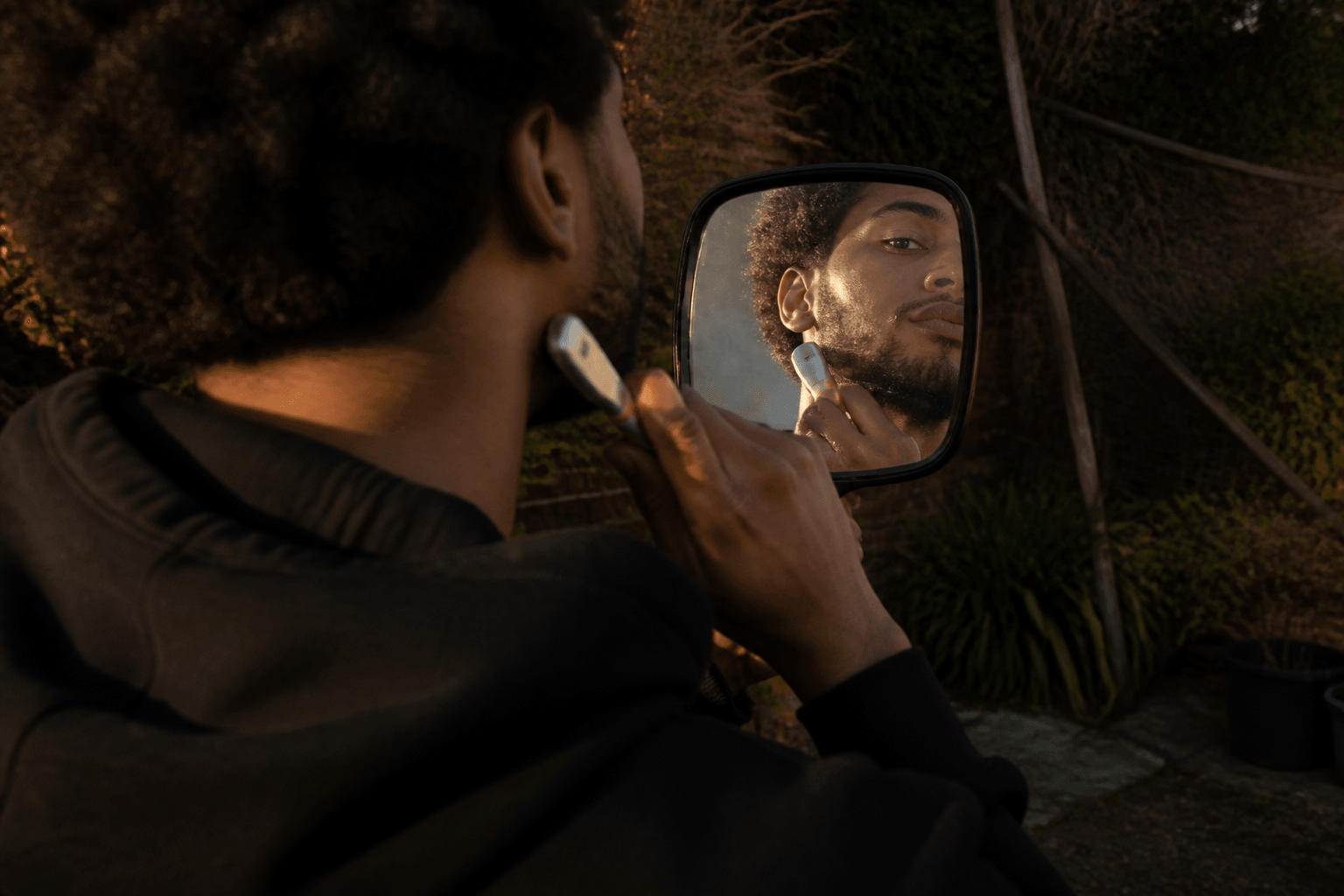
For a short beard, use your fingers to separate small sections. Press sunscreen onto the visible skin, then move to the next section. Pay close attention to patchy areas, the upper lip and the jawline.
For a long or dense beard, make temporary rows with a comb or your fingers. Apply a small dot along each exposed line of skin. You are trying to cover the skin beneath, not turn the beard into a sunscreen sponge.
If full access is impractical, add a wide-brimmed hat and seek shade while still covering every visible or thinly haired area.
4. Let the layer settle
Apply sunscreen about 15 minutes before sun exposure, giving a gel or lotion time to settle before you judge the finish.
Don't wipe the beard with a towel once you finish. If product collects on the hairs, use clean fingertips to work it down toward the skin. Repeated rubbing with a dry cloth may remove the layer you just applied.
Choose a formula that behaves well in facial hair
The best sunscreen is one that meets the protection standard and feels manageable enough to use correctly. Look for SPF 30 or higher, broad-spectrum coverage and water resistance.
Texture matters because the American Academy of Dermatology specifically recommends gels for hairy areas. A light lotion can also be easier to spread beneath a beard than a thick cream.
If you get acne around the hairline or beard, look for “non-comedogenic” or “won't clog pores” on the label. If a product stings or causes a rash, stop using it and choose a formula made for sensitive skin.
White cast often comes from mineral formulas containing zinc oxide or titanium dioxide. A 2025 PLOS One study found that higher zinc oxide levels produced more visible whiteness in its test formulas. The study included only 13 volunteers, tested skin rather than beards and was funded by a skincare company. It doesn't tell you which finished product will look best in facial hair.
The practical fix is to test the whole formula. Try a clear gel, a light lotion or a tinted sunscreen that matches your skin. The Academy recommends tinted formulas when white residue is a concern. Test a small jawline section first because tint can also show on pale or grey beard hairs.
No visible residue doesn't prove that you used enough. Check coverage with your fingertips and a mirror in daylight. By inference, dark beard hair may make pale residue look stronger through contrast, though the white-cast study didn't test facial hair.
Reapply without matting the beard
For reapplication, use the same skin-first method: part the hair, place small amounts on exposed skin and work section by section. Don't spread one thick layer across the beard's surface.
The American Academy of Dermatology and FDA advise reapplying at least every two hours outdoors. Reapply more often after swimming or sweating, following the water-resistance time on your product's label.
A spray may look convenient, but the FDA says not to spray sunscreen directly onto your face. Spray it into your hands if the label permits, then apply it to the skin without breathing the mist.
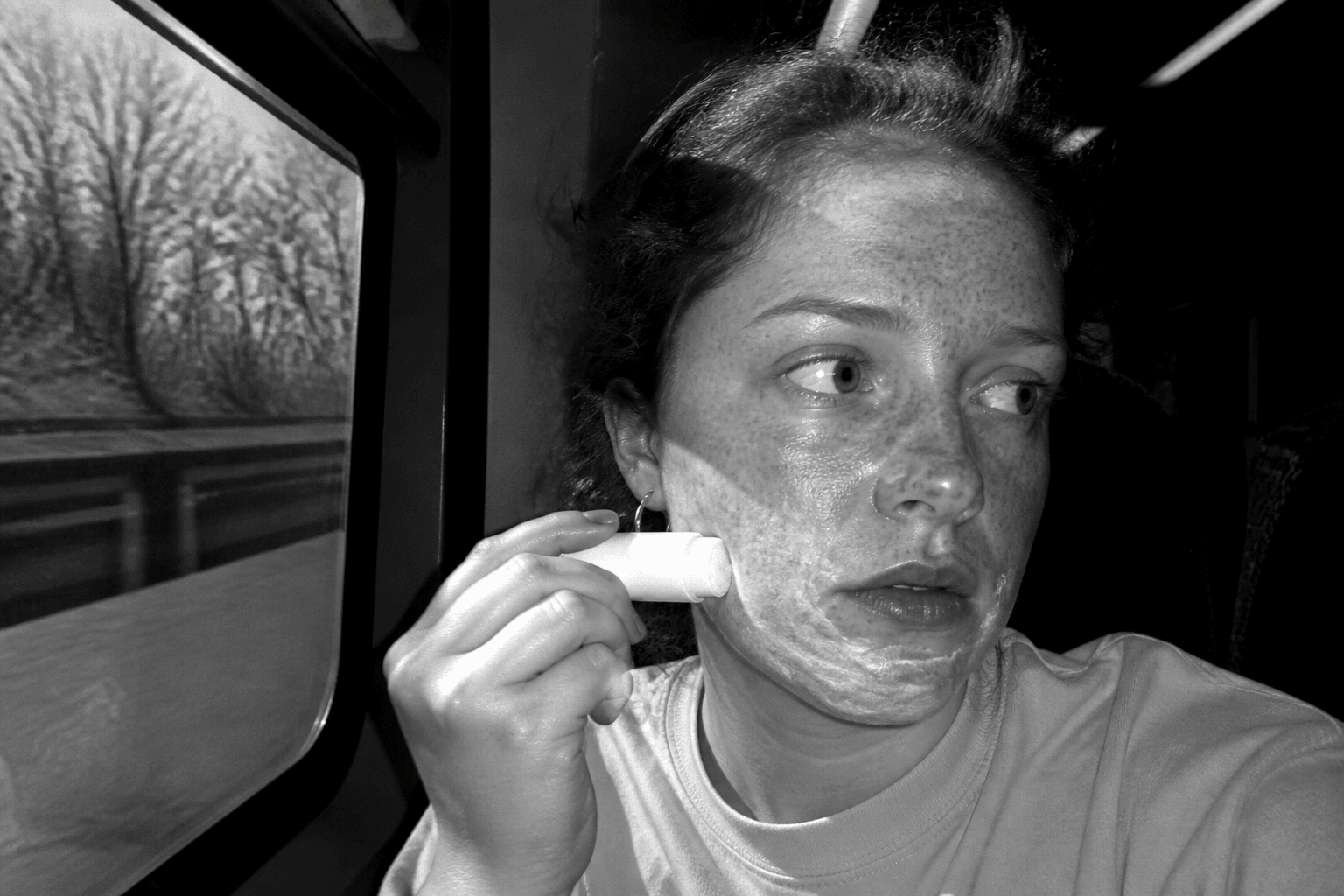
Recheck the places that get missed: ears, nose, back of the neck, hairline and exposed skin beside the beard. An SPF lip balm can protect the lips without coating your moustache.
Avoid these common beard sunscreen mistakes
- Don't rely on beard density as if it were a tested SPF.
- Don't coat only the hair. Sunscreen needs an even layer on the skin.
- Don't use less on the forehead, nose, ears and neck because your jaw is covered.
- Don't choose a lower SPF just because its texture feels lighter.
- Don't wait until you are already in direct sun to apply it.
- Don't skip reapplication because the first layer still looks visible.
FAQ
Does a thick beard replace sunscreen?
No. The facial-hair study found a wide UPF range of 2 to 21, and protection changed with conditions. Use sunscreen on skin you can reach, then add shade and a wide-brimmed hat for longer exposure.
What type of sunscreen works best with a beard?
Choose a broad-spectrum, water-resistant SPF 30 or higher. Gels suit hairy areas, while light lotions can be easier to work beneath short beards. A clear or tinted finish may reduce white residue.
Can I spray sunscreen directly onto my beard?
Don't spray it directly toward your face because the FDA advises against that. If the product's label allows, spray it into your hands and work it onto the skin beneath the hair.
How often should I reapply sunscreen under a beard?
Reapply at least every two hours outdoors, sooner after swimming or sweating, and follow the label's 40- or 80-minute water-resistance window.