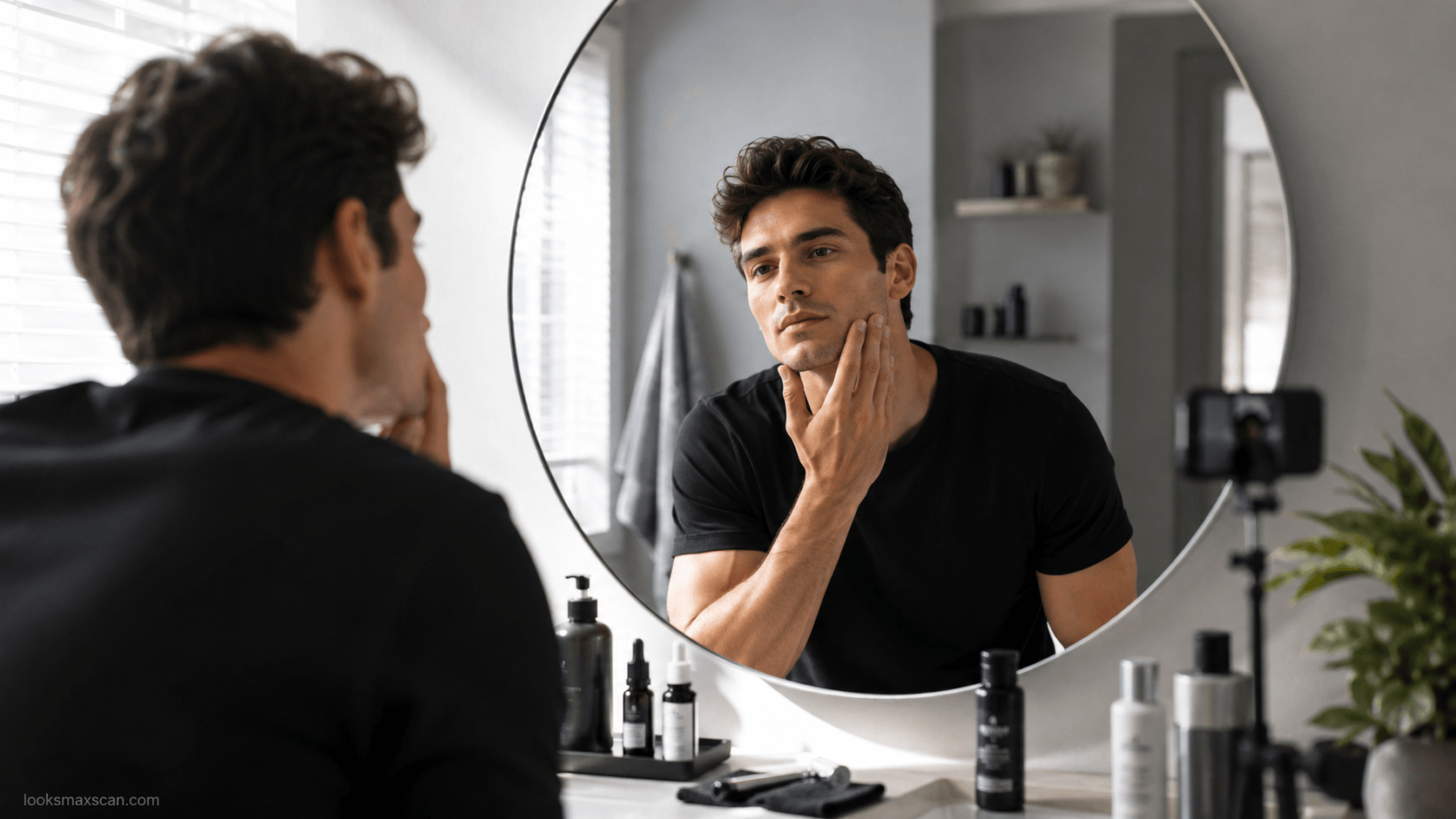
Quick answer
A good glow-up test should not tell you whether you are attractive or unattractive. It should help you find the most practical visible improvements you can actually control: skin clarity, under-eyes, redness, pores, oiliness, hairstyle framing, grooming, lighting, expression, and photo consistency.
The best glow-up result is not a beauty score. It is a prioritized plan.
What a glow-up test should measure
A useful AI glow-up test starts with a clear selfie and checks visible signals across several categories:
- Skin clarity: active blemishes, post-blemish redness, texture, shine
- Under-eyes: darkness, puffiness, shadowing, photo factors
- Redness: cheek, nose, shaving, irritation-looking patterns
- Pores and texture: visible pores, uneven texture, camera exaggeration
- Face framing: hair, eyebrows, facial hair, neckline, and overall balance
- Photo presence: lighting, angle, expression, sharpness, and background distraction
These categories are practical because they can turn into actions. “Improve front-facing lighting” is useful. “Become more attractive” is not.
Why the top 3 opportunities matter
Most people do not need 50 recommendations. They need the first three that will create the biggest visible difference.
Example:
- Retake photos with soft front-facing light because current lighting exaggerates under-eyes.
- Simplify skincare because redness and texture look irritated.
- Adjust hairstyle or facial hair framing because the face shape is being hidden, not improved.
That type of result helps someone move without feeling overwhelmed.
The right way to use an AI glow-up score
If the test gives a score, treat it as a progress marker, not a value judgment. A score can be useful for tracking whether your photo setup, skin consistency, or grooming changed. It should not decide your self-worth.
The better approach is a “signal map.” The scan should show which areas are high impact, which are medium impact, and which are mostly photo artifacts. If your under-eyes look dark because of overhead shadows, the first fix is lighting. If your skin looks shiny because of flash, the first fix is photo setup. If your redness is visible in every neutral-light scan, then tracking triggers may matter.
How to take the glow-up test photo
Use one clear, front-facing selfie in even light. Avoid filters, heavy editing, sunglasses, hats, extreme expressions, and dramatic angles. Keep the camera at eye level and far enough away to avoid close-lens distortion. Pull hair away from areas you want analyzed, especially forehead, cheeks, and jawline.
If you want the most useful result, upload a normal honest photo, not your best photo and not your worst photo. The test is trying to find opportunities, not flatter or punish you.
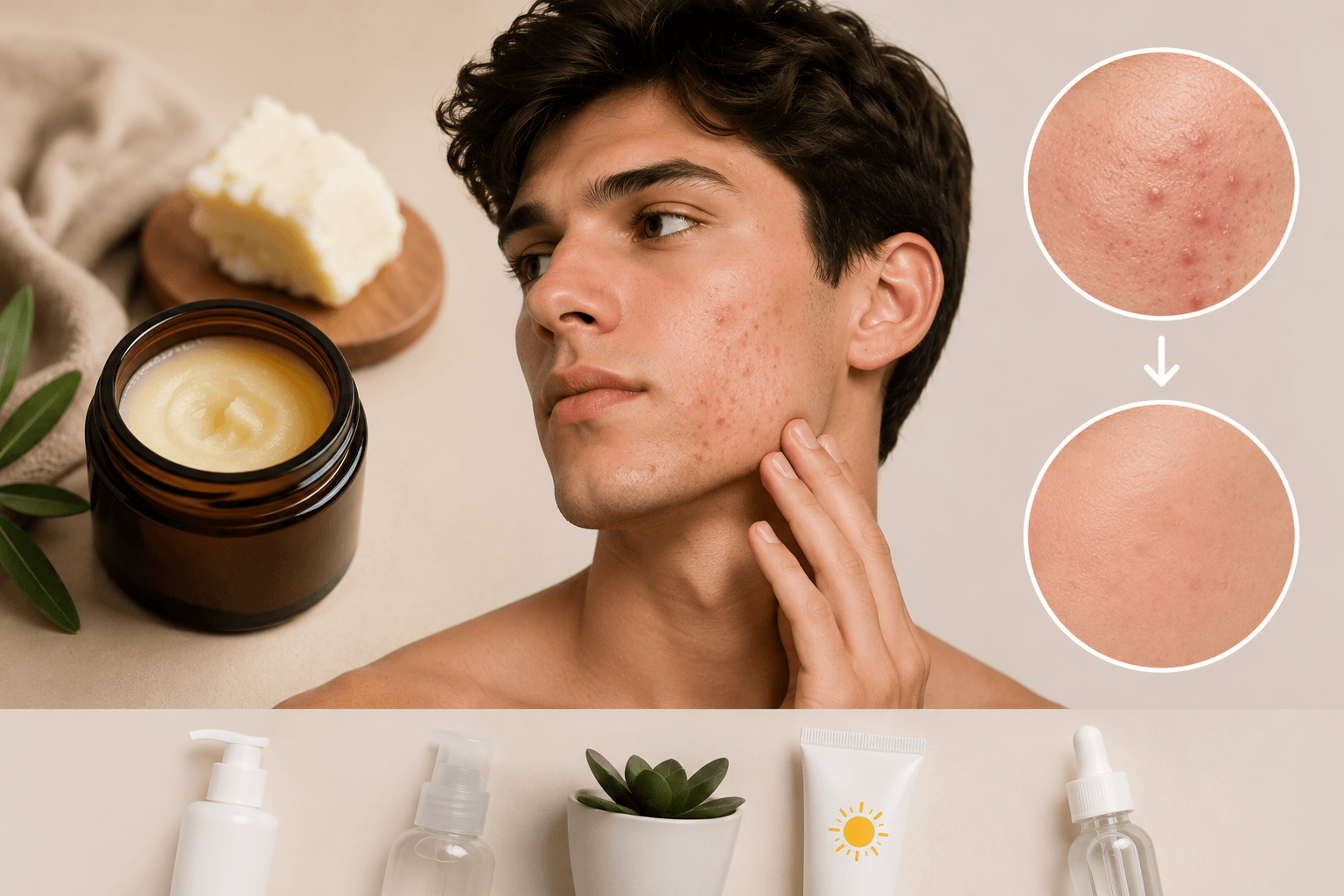
A simple 7-day glow-up plan
Day 1: Take the test and write down your top 3 opportunities.
Day 2: Fix the easiest photo factor first: lighting, camera height, distance, or background.
Day 3: Simplify skincare and remove anything that obviously irritates your skin.
Day 4: Check grooming details: eyebrows, facial hair edges, haircut shape, neckline, and lip dryness.
Day 5: Improve sleep and hydration consistency. Do not expect one night to change everything, but track it.
Day 6: Retake your photo in the same setup.
Day 7: Compare the result and decide what deserves 30 days of focus.
A simple 30-day glow-up plan
Pick one skin goal, one grooming goal, and one photo-presence goal. Examples:
- Skin goal: fewer new breakouts or less irritation-looking redness
- Grooming goal: cleaner hair/eyebrow/facial-hair framing
- Photo goal: consistent front-facing light and relaxed expression
Rescan every 1 to 2 weeks. Avoid changing everything at once. The goal is to learn what actually moves the needle.
What the test cannot tell you
A glow-up test cannot diagnose medical conditions, measure your personality, predict dating success, or objectively define attractiveness. It cannot know how you look in motion, how you sound, how you carry yourself, or how people experience you in real life.
Use it as a private planning tool. The best glow-up is not chasing a perfect face. It is removing avoidable friction from how you present yourself.
Run a private AI glow-up test on GlowUpFace.