Quick answer
Clear aligners and braces can both straighten teeth and improve a bite. For simple cases without extractions, a 2025 systematic review found no clear winner on standard measures of the finished result, though evidence quality was low. Braces usually give the orthodontist more control in complex cases. Clear aligners are discreet and removable, but they only work if you wear them as prescribed.
Clear aligners vs braces: what do they actually change?
Both are orthodontic appliances. They apply controlled pressure so teeth move gradually into planned positions. The goal is a healthier bite, where upper and lower teeth meet properly, as well as a straighter smile.
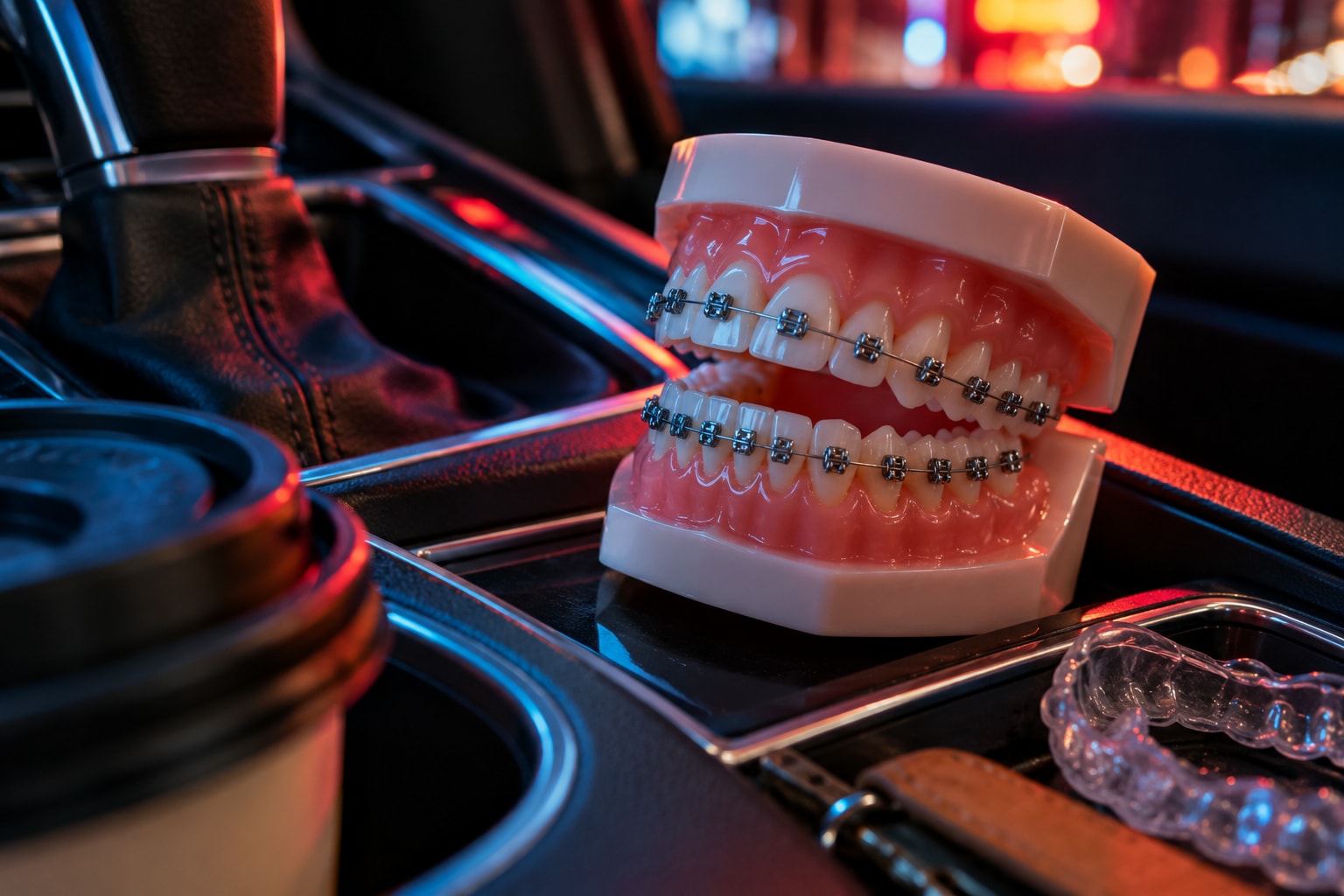
Braces use brackets fixed to the teeth and an archwire. An orthodontist adjusts the system and may add elastic bands or other appliances. Because braces stay on, they keep working without you remembering to put them back.
Clear aligners are a sequence of thin plastic trays made for your mouth. The American Association of Orthodontists says each tray is typically worn for one week. It also advises at least 22 hours of daily wear. You remove the trays for eating, drinking, brushing, and flossing.
The popular search “Invisalign vs braces” compares one aligner brand with a whole treatment type. This guide covers clear aligners as a category. Products and clinical plans differ, so a brand name can't tell you whether treatment suits your bite.
Neither option is a general jawline treatment. They move teeth and correct bites; they don't offer a shortcut to different cheekbones or “hunter eyes.” If your facial profile is your main concern, ask what visible change your orthodontist expects in your case.
Are clear aligners as effective as braces?
For straightforward treatment, they can be. Baneshi and colleagues reviewed randomized trials in 2025. Both clear aligners and fixed appliances worked well for simple malocclusions treated without extractions. They found no clear difference on three standard scoring systems for alignment and bite quality.
That result needs a boundary. The authors rated the overall evidence as low quality. It doesn't prove that every aligner system matches braces for severe crowding, difficult rotations, or complex bite movement.
The better question is more specific: can both options produce the planned result for your teeth? Ask the clinician to explain which movements are difficult, whether attachments or elastics are needed, and what happens if trays stop tracking.
When do braces have the edge?
Braces can treat a wider range of orthodontic problems. The AAO says some cases are handled more predictably with braces. Its patient guidance places light to moderate alignment problems within the usual range for clear aligners.
Fixed braces also remove one major variable: wear-time compliance. You can still break a bracket or miss visits, but you can't leave the appliance in its case for half the day.
Braces may fit better if your orthodontist expects complex tooth movement. They may also suit you if removable trays would be easy to lose or forget. That isn't a willpower test. Pick the system you can follow for months, including busy days and travel.
Metal isn't the only fixed option. Tooth-coloured ceramic brackets and braces placed behind the teeth can be less obvious. Availability depends on your case and provider.
When do clear aligners make sense?
Clear aligners make sense when your planned movements are suitable and discretion matters to you. They can treat gaps, crowding, crooked teeth, and several bite problems. Eligibility still depends on the details, not the label.
Removability is useful at meals and during cleaning. It is also the main weakness. The AAO's 22-hour guidance leaves little room for long lunches, repeated snacks, or forgetting trays overnight.
Some plans use small attachments or orthodontic elastics. These can make the treatment more visible than the polished “invisible braces” image online. Ask to see a realistic model of your proposed setup before choosing.
Which option looks better during treatment?
Clear aligners are harder to notice than metal braces. Ceramic or lingual braces can also be less obvious. Your preference is valid because treatment lasts months, not one photo.
If you want progress photos, use the same room, distance, expression, and camera each time. Keep them private if that feels better. A monthly comparison is more useful than inspecting your teeth after every tray or adjustment.
Are clear aligners less painful than braces?
Both methods create pressure because teeth are moving. Temporary soreness can happen after a new tray or a braces adjustment. Aligners may also feel unfamiliar during the first week.
The 2025 review found better pain outcomes with aligners. It also warned that the underlying trial evidence was low quality. So “usually more comfortable” is a fair expectation, while “pain-free” is not.
Brackets and wires can rub the inside of the mouth. The AAO advises contacting the orthodontist about a broken wire or bracket. Orthodontic wax can cover a sharp edge temporarily while you get advice.
Severe pain, swelling, a loose tooth, or an appliance that no longer fits deserves professional review. Don't force a tray or bend a wire yourself.
Which is easier to keep clean?
Clear aligners usually make brushing and flossing simpler because the trays come out. The 2025 review found lower plaque, gum inflammation, and bleeding scores with aligners than fixed appliances. Again, the authors rated the evidence base as low quality.
Removable doesn't mean self-cleaning. Aligners cover the tooth surfaces for most of the day. You still need the cleaning routine given by your dental team, plus regular dental checks.
Braces create more edges where food and plaque can collect. The AAO recommends fluoride toothpaste, a soft toothbrush, and tools that reach around brackets. Hard or sticky foods can damage braces, so follow your provider's food advice.
Start treatment with healthy teeth and gums. The AAO advises a dental cleaning and check-up before either system. Cavities and other dental work may need attention before an aligner scan or brace fitting.
Are clear aligners faster than braces?
There is no honest universal answer. Treatment time depends on the starting problem, planned movements, appointments, breakages, and aligner wear. A simple case shouldn't be compared with a complex extraction case.
The 2025 review favoured aligners for treatment time in the simple cases it studied. The same review called the evidence low quality. AAO guidance also says aligners aren't necessarily faster and that manufacturing can delay the start.
Ask for a range, not a promise. Then ask what could extend it. Useful questions include whether refinements are likely, how often visits occur, and what counts as poor tray tracking.
What should you compare besides the headline price?
Clear aligner cost and braces cost vary with complexity, duration, provider, and coverage. A cheap starting figure may leave out records, extra trays, repairs, retainers, or follow-up visits.
Request written quotes for every suitable option. Check whether they include:
- the examination, scans, photographs, and X-rays
- all planned trays, attachments, wires, and adjustments
- replacement trays or broken-bracket visits
- aligner refinements if the first series falls short
- the first retainers and later replacements
- post-treatment checks
Compare plans that aim for the same clinical result. A front-teeth-only offer isn't equivalent to full bite correction, even if both adverts promise a straighter smile.

Why are mail-order aligners a risky shortcut?
Tooth movement is health care, not a filter. The AAO warns that mail-order treatment may begin without an in-person examination or X-rays. Those records can show roots, bone, missing teeth, jaw position, and problems hidden below the gumline.
Poorly supervised movement can change the bite and harm teeth or gums. Some damage may be permanent and costly to correct. For that reason, use clear aligners only with a qualified dentist or orthodontist who examines you and monitors progress.
Ask who is responsible when something goes wrong. You should know the clinician's name, credentials, location, contact route, and follow-up schedule before paying.
Why do retainers matter after both treatments?
Teeth can shift after active treatment. A retainer holds them in their corrected positions while the surrounding tissues adapt. This applies after clear aligners and after braces.
The AAO says retainer wear is typically needed for life, although frequency may fall over time. Your own schedule should come from your orthodontist. A damaged, painful, or poorly fitting retainer needs a check rather than a DIY adjustment.
Clean removable retainers gently with a soft toothbrush and water. Avoid hot water, bleach, and alcohol-based products because they can damage the appliance. Store the retainer in its case whenever it isn't in your mouth.
How should you choose between clear aligners and braces?
Start with the diagnosis. Then make the lifestyle choice inside the options that can safely deliver the result.
Ask your orthodontist these questions:
- What exact bite and alignment problems are you treating?
- Can both systems reach the same finish in my case?
- Which movements are least predictable with aligners?
- How many hours must I wear trays, and what happens if I miss that target?
- What visible attachments, elastics, or appliances will I need?
- What is included in the total fee and retainer plan?
- How will you check roots, gums, bone, and bite during treatment?
Don't choose from a face rating or a filtered simulation. A healthy bite and a smile you can maintain are better targets than perfect symmetry.
FAQ
Do clear aligners work as well as braces?
Clear aligners can match braces for many simple, nonextraction cases, but the comparative evidence is low quality. Braces may be more predictable for complex movements, so the right answer depends on an orthodontic examination.
Can clear aligners fix an overbite?
Clear aligners can treat some overbites, often with attachments or elastics. Severe or complex bite problems may need braces or a combined plan, which an orthodontist should decide after examining your teeth and jaws.
How many hours a day should you wear clear aligners?
The American Association of Orthodontists advises wearing each aligner for at least 22 hours daily. Remove it for eating, drinking, brushing, and flossing, then follow your own clinician's schedule.
Do clear aligners change your face shape?
Clear aligners move teeth and can change how your smile and bite look. They aren't a treatment for cheekbones, eye shape, or a sharper jawline, so ask for case-specific profile expectations before treatment.
Are mail-order clear aligners safe?
Mail-order aligners can skip the in-person examination, X-rays, and close supervision needed for safe tooth movement. The AAO warns of changed bites and damage to teeth or gums, so choose professionally supervised care.