Quick answer
Why does minoxidil make my scalp flaky? Topical minoxidil can leave dandruff-like deposits or make the treated skin dry and irritated. Strong itching, redness, burning, swelling, or a spreading rash points away from simple residue and toward dermatitis.
Use only the labeled dose on a dry scalp. Stop and get medical advice if irritation or redness develops.
First, work out what the flakes are
White flakes after minoxidil don't all have the same cause, and Gloucestershire Hospitals NHS warns that treatment can leave dandruff-like deposits. MedlinePlus also lists dryness, scaling, flaking, itching, irritation, and burning as possible side effects.
These patterns can help you describe the problem, but they can't diagnose it:
- Dried deposit: Pale powder or a brittle film appears mainly where the liquid dried. The skin underneath feels normal or only slightly dry.
- Irritation: Fine scale comes with tightness, stinging, burning, or red skin. It often follows application closely or worsens as use continues.
- Possible allergy: Itch and an eczema-like rash may become marked, swollen, blistered, or extend beyond the treated area. A dermatologist may need patch testing.
- Dandruff or another scalp condition: Flakes existed before treatment or also affect untreated areas. Scaly patches around your eyebrows, ears, beard, or nose can fit seborrheic dermatitis.
More than one pattern can happen together, and timing doesn't prove which ingredient or condition caused the change.
Why topical minoxidil can cause flaking
The liquid isn't just minoxidil: one current DailyMed label lists alcohol, propylene glycol, and purified water as inactive ingredients. Those ingredients keep the medicine in solution and help it spread, but a formula can also irritate sensitive skin.
The active drug can be the allergen too. A 2025 review examined 21 published studies of suspected minoxidil contact dermatitis. Most reported redness, itching, and increased scalp scale, while 54 patch-tested patients reacted to minoxidil and 12 to vehicle ingredients.
That result corrects a common online shortcut, since you can't assume propylene glycol is always responsible. The review covered selected patients with suspected dermatitis, so its numbers don't show your personal risk or the rate among all users.
Application can add another problem: the DailyMed label directs users of that 5% solution to place one milliliter on the scalp twice daily. It says larger or more frequent doses don't improve results and may raise the chance of side effects.
A safe way to troubleshoot the flakes
Start with the scalp, not the hair count, because continuing through an inflamed reaction can make the cause harder to see.
- Check for inflammation. Stop the product and contact a clinician if the scalp is red, painful, swollen, blistered, or persistently irritated. Don't apply minoxidil to already irritated or sunburned skin.
- Read your own label. Formulas and directions vary by product, strength, country, and intended user. Check the inactive ingredients rather than guessing from the words “liquid” or “foam.”
- Measure the stated dose. Apply it directly to dry scalp in the treatment area. More product won't speed growth, and a missed dose isn't a reason to double the next one.
- Let it dry fully. Follow your product's timing instructions before washing, wearing a hat, or lying down. One DailyMed 5% solution label allows two to four hours for complete drying.
- Keep washing gentle. If you wash before applying that labeled solution, DailyMed advises a mild shampoo. Don't scrape flakes or scrub an inflamed scalp.
Avoid adding exfoliating acids, scented oils, harsh scalp scrubs, or several dandruff products at once. MedlinePlus advises against putting lotions, cosmetics, or other skin medicines on the treated area unless your doctor approves.
Change one thing at a time after your scalp has settled and a clinician says treatment can continue. Record the product, dose, application time, itch, and redness. That makes a repeat pattern easier to explain at an appointment.

Would foam be less irritating than liquid?
Foam may help some people when a liquid vehicle causes irritation, but it isn't a guaranteed fix.
A 24-week randomized trial compared propylene-glycol-free 5% foam once daily with 2% solution twice daily. It included 113 women with pattern hair loss, and the foam group reported less local intolerance, especially itching and dandruff.
The comparison changed strength, vehicle, and dosing schedule together, and participants knew which treatment they used. You can't use that trial to blame one ingredient or predict how every foam will feel.
Patch testing matters when a true allergy is suspected, and the 2025 review recommends testing the active drug and relevant vehicle ingredients. If propylene glycol is the allergen, a clinician can discuss a formula without it. If minoxidil itself is the allergen, changing the vehicle may not solve the rash.
When the problem needs medical help
Stop topical minoxidil and ask a doctor about persistent scalp redness or irritation. Get prompt care for facial swelling, a severe or spreading rash, blisters, broken skin, or signs of infection.
DailyMed also says to stop and seek medical advice for chest pain, a rapid heartbeat, faintness, dizziness, unexplained weight gain, or swollen hands or feet. MedlinePlus adds breathing difficulty and swelling of the face, ankles, hands, or stomach to its urgent list.
Separate scalp disease may need its own treatment, and the American Academy of Dermatology lists the scalp, ears, eyebrows, beard, and nostril area. See a dermatologist if scale is widespread, keeps returning, or comes with hair loss, pain, pus, or thick plaques.
FAQ
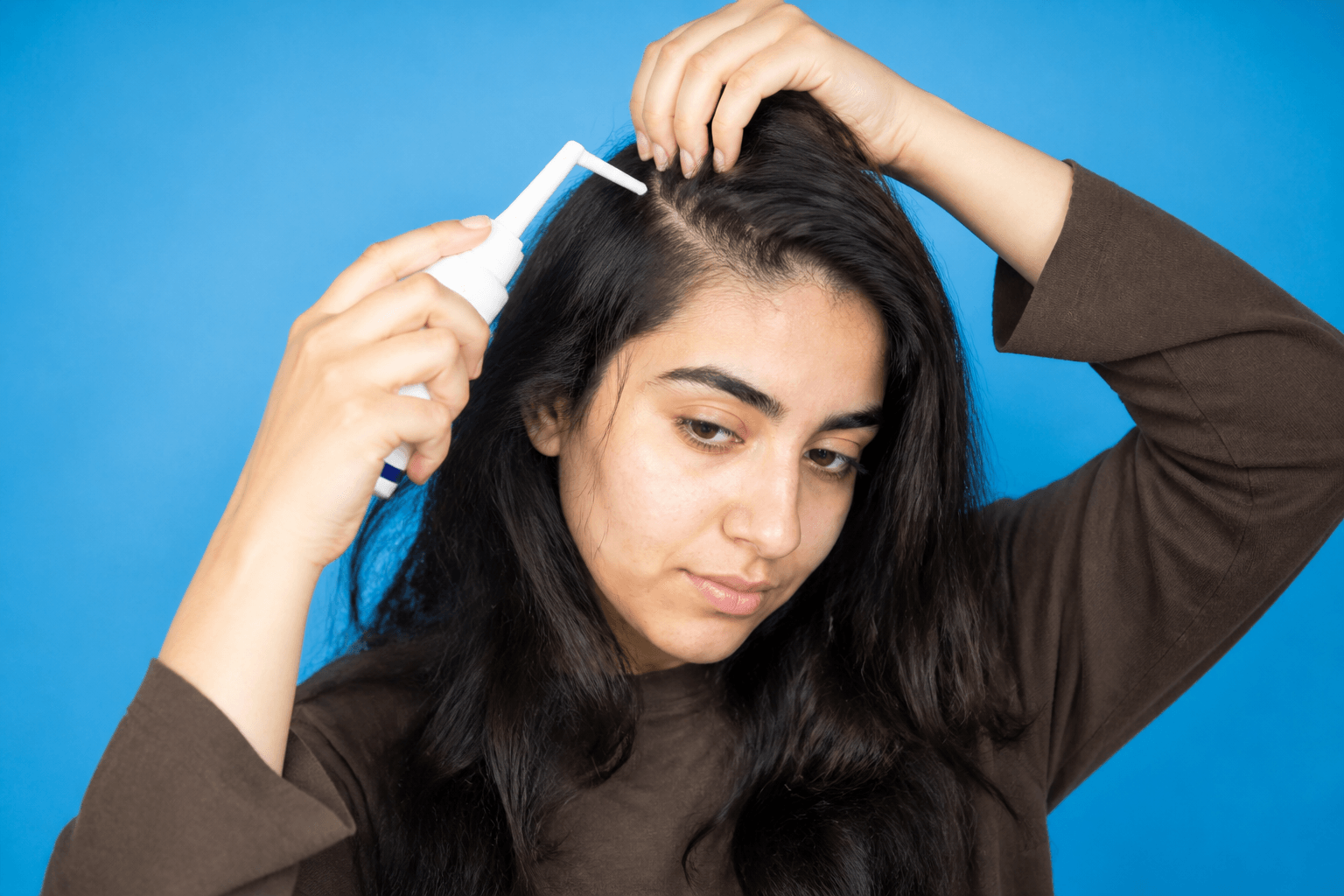
Is minoxidil residue the same as dandruff?
No. A dried product deposit can resemble dandruff, while dandruff is scale shed by the scalp. Redness, itch, burning, and flakes outside the application zone make a skin condition or reaction more plausible, but an exam may be needed.
Can I wash my hair every day while using minoxidil?
Follow the timing on your product because formulas differ. One DailyMed 5% solution label says to leave it on about four hours before washing and use mild shampoo if washing first. Daily washing won't identify whether the flakes are residue, irritation, or dandruff.
Should I stop minoxidil if my scalp flakes?
Simple residue without skin symptoms calls for a label and dose check. Stop and ask a clinician if you have redness, burning, pain, swelling, or persistent irritation. Don't repeatedly restart a product that produces a worsening rash.
Does a flaky scalp mean minoxidil is causing hair loss?
Flakes alone don't show that minoxidil is worsening hair loss or failing: they show that residue or a scalp reaction needs sorting out. New patchy loss, scalp pain, or shedding with a severe rash deserves a dermatology review.