Quick answer
Why is one side of my hair curlier? Usually, your follicles produce a naturally mixed pattern, or the two sides are being handled, weighted, dried, or damaged differently. Run the controlled wash-day test below before buying new products. Styling can make definition more even, but it cannot permanently retrain the follicles that make new hair.
Natural pattern or a change in the hair shaft?
Your natural curl starts below the skin. In a laboratory study, Thibaut and colleagues found that curved follicles kept producing curved hair in culture. Their later work linked curl to asymmetry inside the follicle and the developing hair shaft.
A 2019 review found that curl biology involves several layers, from the follicle to the fibre's internal structure. This supports a simple point: neighbouring follicles do not have to produce identical strands.
Those studies did not compare the left and right sides of the same head. They explain how a stable curl forms, but not how often side-to-side differences occur. So a persistent uneven pattern can be natural, yet styling and damage still need testing.
Look first at the newest few centimetres near your roots. If the hair on one side grows in looser after every wash, the difference probably starts at the follicle. If the roots match but the lengths separate, handling, weight, buildup, or damage is more likely.
What can exaggerate the difference
Uneven length and weight
A longer or denser section hangs under more weight, which can stretch its visible curl. Layers can do the reverse by removing weight from one side, so check the actual cut before blaming your curl pattern.
Stretch one small section from each side without pulling hard. If the ends finish at different points, part of the visual difference may be the haircut. Compare again after both sections spring back.
Uneven water or product
Curl cream and gel work on the hair you actually coat. Your dominant hand may rake one side more thoroughly, while the other gets larger sections or less water. Heavy product can also lengthen a loose wave instead of defining it.
Frequent use of gels, oils, creams, or pomades can leave buildup. The American Academy of Dermatology suggests a clarifying shampoo before moisturizing shampoo when you use these products often. Clarifying every wash can leave curly hair dry, so use it as a test rather than a reflex.
Drying one side differently
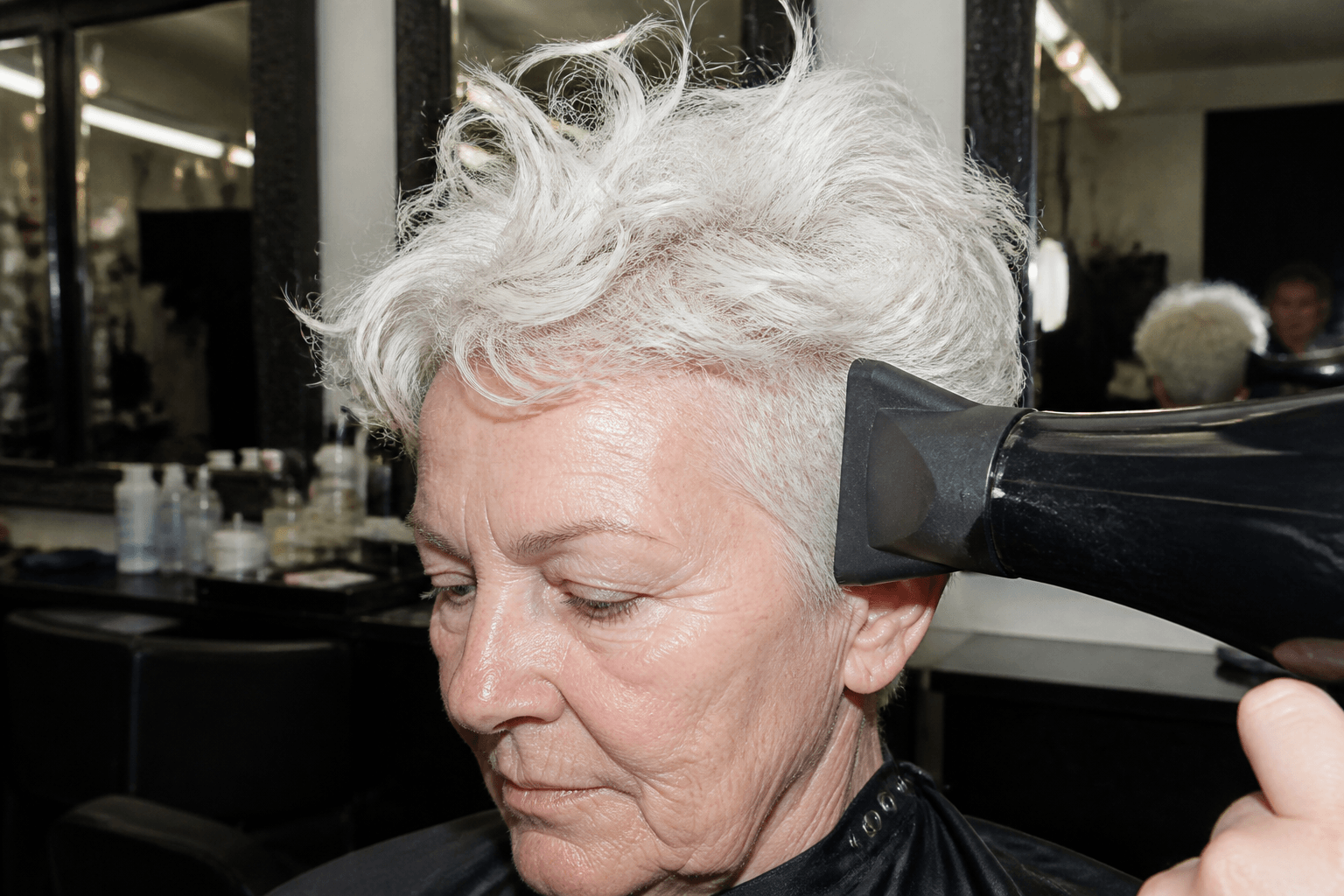
Airflow, heat, and hand position can change the result of a single wash day. One side may spend longer inside a diffuser bowl, while the other may be stretched as you reach across your head.
Heat also affects the hair surface: one controlled study found more surface damage as dryer temperature increased. Dermatologists advise using the lowest useful heat and limiting contact time with hot tools.
Friction and handling
Dry brushing can create breakage and frizz in curly hair, while repeated tugging, tight styles, and rough detangling can also damage the shaft. If you always part, tuck, brush, or tie the same side, the wear may be uneven.
Sleeping on one side can flatten that wash day's curls and increase pillow friction. The American Academy of Dermatology recommends a loose top ponytail or braid to preserve curls and reduce friction. That advice concerns the exposed hair, not permanent changes to the follicle.
Run a two-wash controlled test
Do not change your haircut, shampoo, gel, brush, and dryer at once, or you will learn nothing from the result. Use two normal wash days and change only the side you start on.
For the first wash:
- Shampoo and condition the whole scalp as usual, then detangle wet hair gently in sections.
- Split your hair into similar left and right sections while both sides are equally wet.
- Apply the same measured amount of leave-in and hold product to each side.
- Use the same section size and styling motion, starting with the side that usually looks looser.
- Dry both sides under the same conditions, using low heat and keeping the dryer moving if you diffuse.
- Let the hair dry fully before touching, separating, or judging the pattern.
Take front, side, and back photos in the same light. Camera angle and a shifted part can make one side look fuller, so keep both fixed. Compare curl shape near the roots as well as the ends.
On the second wash, repeat the routine on the curlier side first and swap the hand or direction used for each half. If the better side changes, technique or product distribution is driving much of the difference.
If the same side remains curlier through both tests, check the cut and damage history. A stable difference from the roots is more consistent with natural variation. A looser, rougher section that begins below the roots points more toward accumulated wear.
Match the fix to the result
For a natural mixed pattern, style the two sides for the hair they have. Use smaller sections or a little more hold on the looser side, and finger-coil only the pieces that need help. These steps shape existing strands until the next wash; they do not change new growth.
For a technique problem, make section size, water, and product more even, and style the looser side before it begins to dry. Alternate which hand starts the routine until the result stops following your hand.
For buildup, try one clarifying wash followed by conditioner, then repeat the controlled test. If nothing changes, more clarifying is unlikely to solve the asymmetry.
For damage, reduce high heat, dry brushing, tight styles, and repeated chemical services, then condition the full length and detangle in wet sections. A trim may be the cleanest fix when the difference sits mainly in thin or broken ends.
Claims that go beyond the evidence
"Curl training" can improve your styling technique and temporarily set strands into a more regular shape. It does not reprogram the bulbs that produce new hair, while research places natural curvature inside the follicle and developing shaft.
Side sleeping is also an incomplete explanation. It can compress curls and add friction, but the available evidence does not show that a pillow permanently makes follicles on one side grow straighter.
Do not diagnose a protein or moisture "imbalance" from one photo because roughness, buildup, heat damage, and natural variation can look similar. A controlled wash test gives you more useful information than another product label.
When to see a dermatologist
A lifelong uneven pattern without scalp symptoms is usually a styling issue, not an alarm. Book a dermatologist if the change is sudden and comes with marked breakage, thinning, bald patches, pain, redness, scale, or increased shedding.
The American Academy of Dermatology also recommends medical review when gentler hair care does not improve damaged-looking hair. A stylist can assess the cut, but a dermatologist should assess the scalp and hair loss.
FAQ
Is an uneven curl pattern normal?
Yes. Hair follicles can produce strands with different curvature, and styling can make those differences more visible. Consistent asymmetry without breakage or scalp symptoms does not by itself show damage.
Can sleeping on one side make that side less curly?
It can flatten curls, add frizz, and increase friction on the exposed shaft. There is no good evidence that side sleeping permanently changes follicle shape. Protecting hair loosely overnight may improve the next day's definition.
Can I train the looser side to become permanently curlier?
No styling method has been shown to permanently retrain natural growth, and finger-coiling, brushing, and hold products set the existing hair only temporarily. New strands still take their underlying shape from the follicle.
Does a looser side always mean heat damage?
No. Natural variation, an uneven cut, product distribution, and drying technique can all loosen one side's appearance. Damage becomes more likely when the change is new and the same area also feels rough, snaps, or has thin ends.