Quick answer
The short answer to “why does toothpaste make my mouth peel?” is usually local irritation. A detergent called sodium lauryl sulfate, or SLS, is one known trigger in sensitive mouths. Flavourings and other formula ingredients can also cause irritant or allergic reactions.
Stop using the suspected product and choose a mild, SLS-free toothpaste that still contains fluoride. Get dental advice if the peeling hurts, keeps returning, or doesn't start settling after the switch.
What the white strings actually are
Your mouth has a thin protective lining called the oral mucosa. When its surface loosens, you may see white or translucent strings, sheets, or soft flakes. Dentists call that oral mucosal peeling or desquamation.
A 2019 systematic review found that most reported cases were painless. The tissue beneath often looked normal after the loose layer came away. Repeated peeling isn't a useful “deep clean” or detox sign; it means the surface lining has reacted to something.
Check the pattern before blaming your toothpaste, since product-related peeling often appears after brushing. It affects areas the paste touches, such as the inner cheeks or gums. A fixed white patch, a round ulcer, or a lacy white pattern is different and needs a proper look.
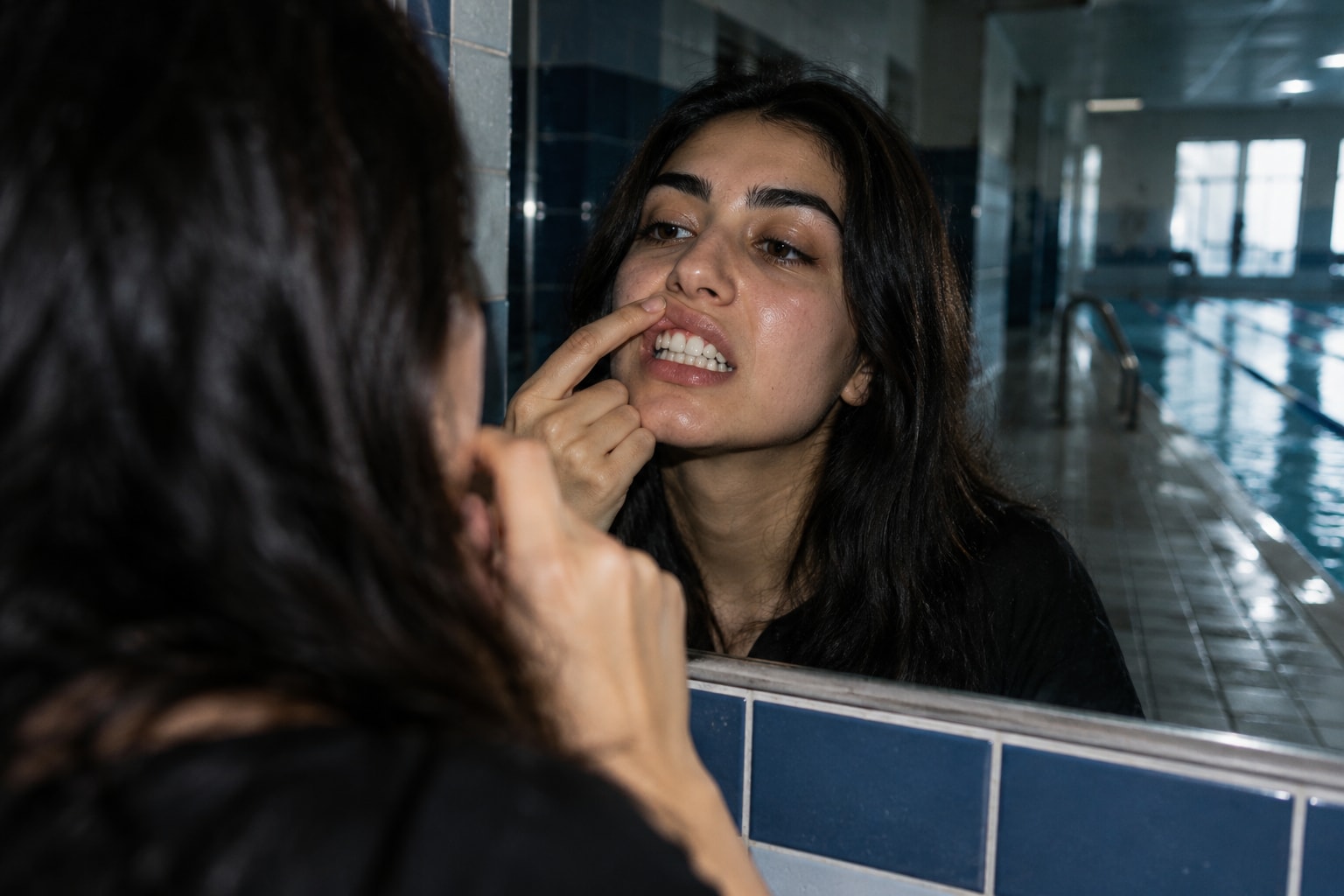
A private reference photo can track visible change, but it can't identify the cause.
The strongest ingredient clue is SLS
SLS is a detergent that helps toothpaste spread and foam, but it can irritate some people's mouths. It doesn't cause peeling in everyone.
A small 1996 double-blind crossover trial tested seven pastes in 28 healthy women. Participants held the paste against their teeth and upper mouth with a fitted splint. Researchers recorded 42 of 45 peeling reactions during SLS periods; three involved cocamidopropyl betaine, while the detergent-free paste caused none.
That result is useful, but the setup wasn't normal brushing. Each paste stayed against the tissue for two minutes, twice daily, over four days. The study shows that SLS can trigger peeling under controlled exposure. It doesn't tell us how common the problem is in everyday use.
The 2019 review found only 15 eligible reports across several study designs. SLS was linked to peeling in 21 subjects, tartar-control pastes in two, and flavouring in one. The evidence supports a product link, but it can't rank every ingredient or brand.
Irritation and allergy aren't the same
An irritant reaction comes from direct damage to the surface. It may depend on the formula, dose, contact time, and your own sensitivity, with peeling as the main sign.
An oral contact allergy is an immune reaction to a particular ingredient. The American Academy of Oral Medicine lists cinnamon, peppermint, and spearmint among possible flavour triggers. It also lists several toothpaste ingredients, including SLS and cocamidopropyl betaine, as reported triggers.
Allergy can bring redness, swelling, burning, ulcers, lip inflammation, or a changed sense of taste. Those signs don't prove an allergy, since irritation can look similar. A dentist or oral medicine clinician may use the timing, an examination, and specialist testing to sort them out.
Run a simple product-swap test
Change one variable first, because that gives you a better answer than replacing your whole routine overnight.
- Stop the toothpaste that was in use when the peeling began.
- Pick an SLS-free fluoride toothpaste with a mild flavour for the trial.
- Keep your toothbrush, brushing times, floss, and diet steady when practical.
- Brush gently with a soft-bristled brush, and don't scrub or pull away loose tissue.
- Note whether peeling, burning, and redness improve over the next one to two weeks.
Check the full ingredient list rather than trusting words like “natural” or “sensitive.” A natural paste can still contain strong flavouring, while a sensitive-teeth paste may contain SLS.
Keep fluoride in the routine unless your dentist tells you otherwise. The American Dental Association says fluoride strengthens enamel and helps prevent tooth decay. An SLS-free product and a fluoride product aren't opposite choices; many toothpastes are both.
Don't treat the area with undiluted peroxide, concentrated plant oils, or abrasive homemade pastes. These add another exposure, make the reaction harder to read, and don't identify the trigger.
When the toothpaste theory becomes weaker
The link looks less convincing when nothing changes after you stop the product. It also weakens when the problem stays in one spot beside a sharp tooth, filling, brace, or denture.
Other mouth conditions can cause white areas, ulcers, soreness, or peeling. A photo can't safely separate contact irritation from infection, inflammatory disease, or repeated trauma. Avoid cycling through antifungal, steroid, or allergy treatments without a diagnosis.
Book a dentist or GP appointment if the area keeps returning, spreads, bleeds, or becomes more painful. Get checked sooner if eating or drinking becomes difficult. The NHS advises assessment for a mouth ulcer that lasts more than three weeks.
Sudden swelling of your lips, mouth, tongue, or throat is different. Trouble breathing, swallowing, or speaking can signal a severe allergic reaction. Call emergency services rather than waiting for a toothpaste swap to work.

What to do after the peeling clears
Keep using the bland fluoride paste your mouth tolerates, and save the old tube for ingredient comparison if the problem returns.
Don't deliberately retry a product that caused swelling, marked pain, or ulcers. If symptoms return with several pastes, ask about an oral medicine or allergy assessment. Professional testing is more useful than guessing from the front label.
FAQ
Is mouth peeling after brushing normal?
Occasional loose tissue can follow minor irritation, but repeated peeling isn't a cleaning benefit. A clear link with one product makes an irritant reaction more likely, especially when it settles after you stop that product.
Is SLS-free toothpaste better for everyone?
No, because the controlled trial and review show that SLS can irritate sensitive mouths, not that everyone must avoid it. An SLS-free trial makes sense when peeling tracks closely with brushing.
Should I stop using fluoride toothpaste?
Usually, no, since fluoride protects against tooth decay while SLS mainly helps a paste foam and spread. Look for a fluoride toothpaste without SLS instead of dropping cavity protection.
Can mouthwash cause the same peeling?
Yes, since the 2019 review covered peeling linked to both toothpastes and mouthwashes. If a new rinse started at the same time, tell your dentist because it may be the better clue.