Quick answer
Why are canine teeth more yellow than the incisors beside them? In many healthy mouths, both canines naturally look darker, redder and more yellow. Colorimeter studies confirm this common pattern, so a long-standing, even difference usually doesn't mean poor hygiene. Ask a dentist about a recent one-tooth change, pain, a dark spot, or discoloration after an injury.
The shade difference is usually normal
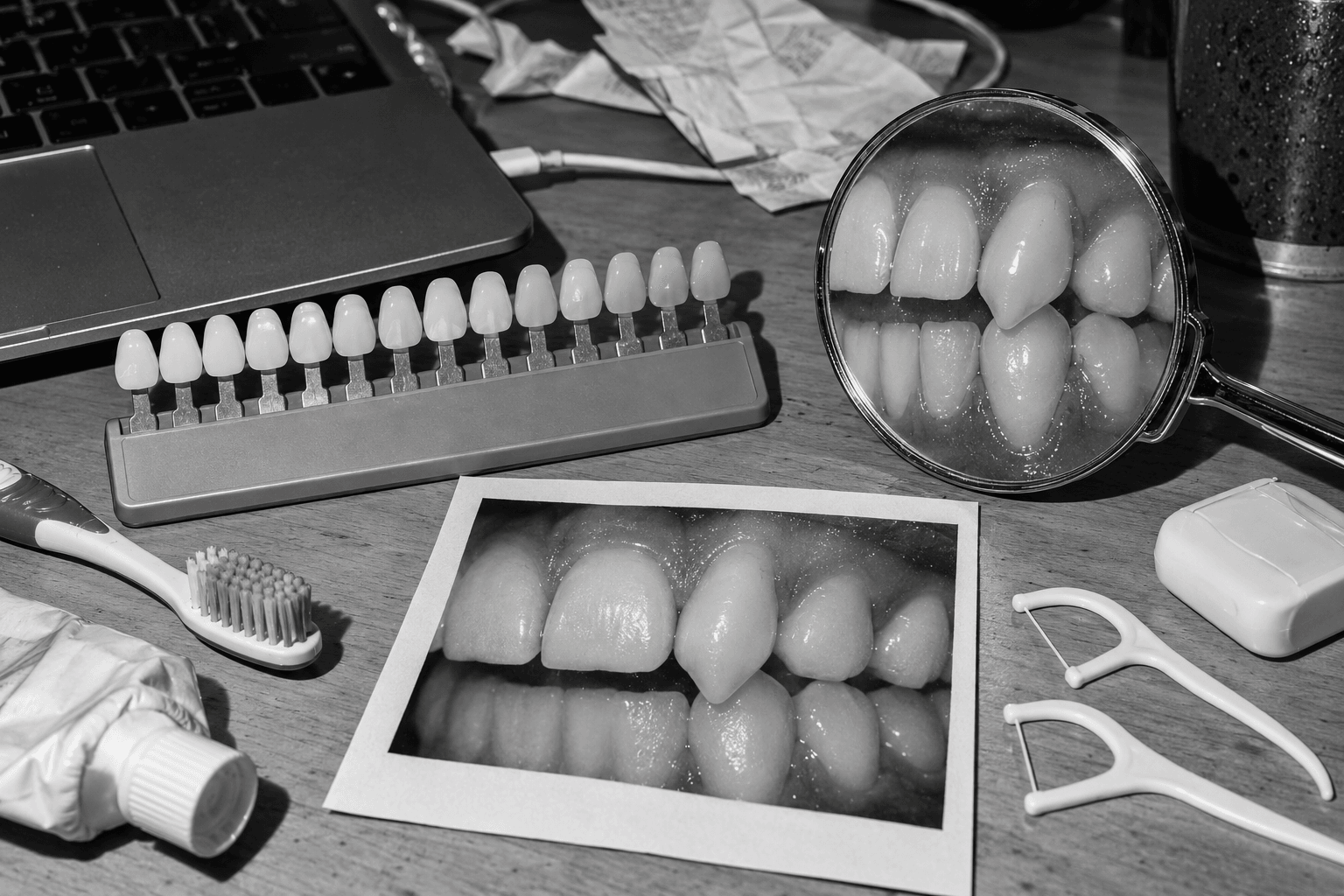
Natural teeth aren't one flat shade. Enamel is partly translucent, while the dentin below has a warmer, yellower color. The thickness and optical behavior of both layers shape the shade you see.
Tooth shade comes from its structure, not surface cleanliness alone. Different tooth types let dentin and enamel shape the color you see in different ways. It doesn't mean the tooth is dirty.
A 2018 study measured six front-tooth positions in 640 volunteers aged 18 to 22. Researchers found that canines were darker, redder and more yellow in both the upper and lower jaws. The upper canine and upper central incisor showed the largest measured color gap.
A separate study used a spectrophotometer on 369 upper incisors, canines and molars. Incisors had the highest lightness, followed by canines and then molars. The most common measured shades also differed by tooth type.
These results show a clear pattern, but they don't define one correct shade. Both studies examined selected groups, and one included only young adults. A 2025 review found 53 in-vivo studies, yet their devices, lighting, populations and methods varied. The reviewers found no universal color range across age, sex and ethnicity.
Genetics also affects natural tooth color, brightness and translucency. Compare your canines with each other and with their past appearance, not with edited smiles online.
Check the pattern before treating it
The useful question is whether the color is stable and symmetrical.
- Both canines have always looked warmer: This fits the normal tooth-type pattern found in color studies.
- One canine recently changed: Decay, an old injury, pulp damage or a restoration can change one tooth's color.
- The color sits on the surface: Plaque, tobacco, coffee, tea and other pigments can create external stains.
- The whole tooth has a deeper shade: Natural dentin or another internal cause may be contributing.
Lighting can change the contrast you notice. If you compare photos, use the same room, light, distance and camera settings. An unfiltered photo can track a change, but it can't identify the cause.
When to book a dental check
A stable difference between two symptom-free canines is often cosmetic. A new or uneven change deserves an examination before whitening.
Arrange a dental visit if:
- one canine becomes noticeably darker than the other.
- you see a brown or black spot, a hole, or a new patch.
- the tooth hurts or becomes sensitive.
- the change follows a fall, blow or sports injury.
- you also have bad breath, bleeding gums or another mouth symptom.
- the tooth has bonding, a filling, a crown or previous root canal treatment.
A damaged tooth can change color without immediate pain. Cleveland Clinic advises assessment when discoloration follows an injury because color may reflect damage inside the tooth. A dentist can also tell surface stain from decay or an internal color change.

Can whitening reduce the difference?
Whitening can narrow the shade gap when the teeth are healthy and the darker color is suitable for bleaching. It can't promise a perfectly uniform row.
A 2009 trial followed 90 patients using three professional and take-home bleaching systems. Canines gained more lightness than incisors, which made their measured lightness more alike. The result is useful but narrow: three regimens, 90 patients, and about four months of follow-up.
The treatment choice depends on what causes the color:
- Surface stain: Professional cleaning or a whitening toothpaste may remove some external pigment.
- Natural or internal color: Peroxide whitening can chemically lighten natural tooth tissue.
- A filling, crown or bonding: Whitening won't change the restoration's color, even if nearby enamel becomes lighter.
- A tooth with pulp damage: This needs a dental diagnosis and may need a different treatment.
The American Dental Association lists temporary tooth sensitivity and gum irritation as the most common whitening side effects. Follow the product directions and don't extend treatment to chase an exact match. If the teeth already feel sensitive, ask a dentist before starting.
Don't scrub the yellow away
Harder brushing won't remove a natural difference in dentin color. It can add wear without solving the problem.
Skip charcoal powders, salt scrubs, lemon, vinegar and improvised bleaching mixtures. The ADA finds too little evidence that charcoal products whiten teeth safely. Its review also cites an abrasive charcoal-and-salt mixture that failed to whiten and caused deep surface wear.
Acidic or abrasive recipes can damage enamel and expose more of the yellower layer below. They may leave the tooth looking worse.
Use a soft-bristled brush and fluoride toothpaste instead. Brush twice daily for two minutes and floss daily. These steps control plaque and surface stain, but they won't force every tooth into the same natural shade.
A low-risk plan
Start by deciding whether you are seeing a normal pattern or a change.
- Compare the left and right canines in neutral, repeatable light.
- Check an older unfiltered photo if you have one.
- Keep normal brushing, flossing and dental cleaning habits.
- Book an examination for any recent, one-sided or symptomatic change.
- If a dentist confirms normal color, discuss whether cleaning, whitening or no treatment best fits your goal.
Ask the dentist to record the shade of each canine and central incisor before treatment. That creates a better baseline than memory or a bathroom selfie. It also reveals restorations that won't respond to bleach.
Natural teeth can be healthy without matching exactly. The target is a clean, stable smile, not artificial uniformity.
FAQ
Is it normal for both canine teeth to look yellower?
Yes. Direct color measurements consistently find canines darker and more yellow than incisors. A long-standing, similar shade on both sides usually fits normal variation.
Does a yellow canine mean the tooth is dead?
No. Healthy canines often have a warmer natural shade. A dead or injured tooth is more concerning when one tooth changes recently, turns gray or dark, or follows trauma.
Will whitening strips whiten canine teeth?
Peroxide strips can lighten natural canine teeth, but the response varies. They won't whiten fillings, crowns or bonding, and they can cause temporary sensitivity or gum irritation.
Can brushing harder make canine teeth match?
No. Brushing can reduce plaque and some surface stain, not the tooth's natural internal color. Aggressive or abrasive methods can wear enamel and make the contrast worse.