Quick answer
Minoxidil can help some men with an early receding hairline, especially where finer, miniaturised hairs are still present, but it is more likely to preserve or thicken hair than rebuild a dense teenage hairline. The evidence is nuanced: US over-the-counter labelling for men's 5% foam covers the crown rather than frontal baldness, while clinical studies have found benefits or stabilisation in frontotemporal areas as well as the vertex.
Results vary, take months and last only while treatment continues. Before starting, confirm that the recession is actually male pattern hair loss, follow the label for your exact product, and use consistent photos rather than viral minoxidil before-and-after posts to judge progress.
Does minoxidil work on the front hairline or only the crown?
The honest answer is that the crown has the clearest labelled indication, but the front hairline is not necessarily biologically unresponsive.
The current US label for one men's 5% minoxidil foam says it is intended to regrow hair on the vertex and is not intended for frontal baldness or a receding hairline. That matters: you should not pretend an off-label use is the same as the use printed on the package. Product approvals, formulations and directions can also differ by country.
However, research conducted specifically on frontal loss is more encouraging than the label alone suggests. In a 24-week randomised, double-blind, placebo-controlled study of men with androgenetic alopecia, 5% minoxidil foam increased frontotemporal measurements from baseline and produced a significantly greater gain than placebo in cumulative hair width, but not in frontotemporal hair count. A follow-up open-label study over 104 weeks found stabilisation of hair density, width and scalp coverage in both frontotemporal and vertex areas.
Those findings support a realistic conclusion: minoxidil may help a thinning frontal hairline, but it does not promise complete temple regrowth. The longer study was open-label, study participants had defined stages of male pattern hair loss, and an average group result cannot predict your individual response.
Why is a receding hairline harder to restore?
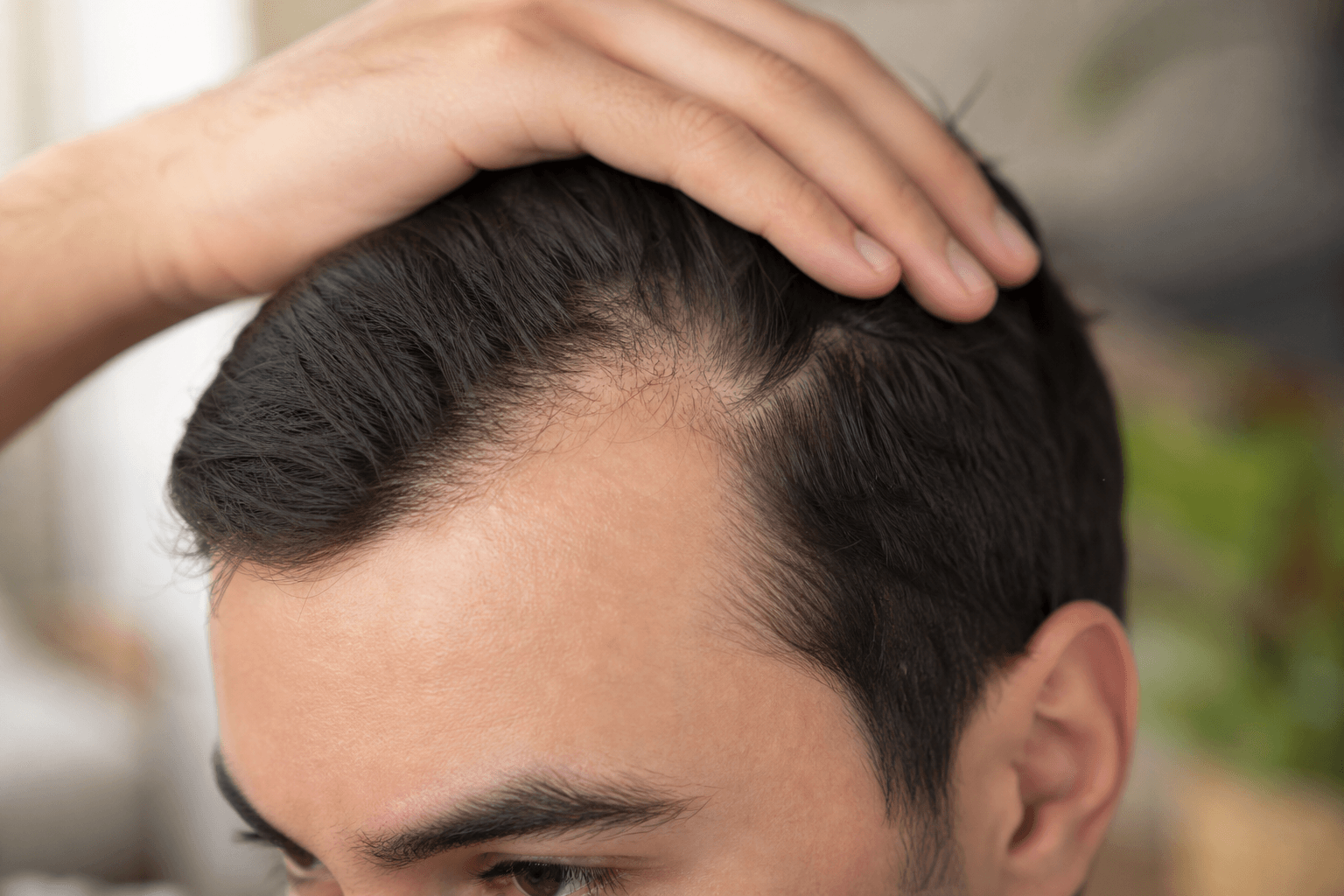
Male pattern hair loss, also called androgenetic alopecia, develops gradually. Hairs in genetically susceptible areas become finer and shorter over repeated growth cycles. Early treatment has a better chance of maintaining thickness because there are still active, miniaturised hairs to support. The American Academy of Dermatology notes that men generally get the best results when they start soon after noticing hair loss.
That is different from expecting a topical product to create a completely new hairline on smooth, long-bald skin. Minoxidil can reduce loss, stimulate some growth and strengthen existing strands, but the AAD explicitly cautions that full regrowth is unlikely. It also does not change your skull, lower your natural hairline or correct every possible cause of hair loss.
This distinction is useful for appearance improvement. A sensible target might be slower recession, thicker-looking corners or stable coverage under the same lighting. A perfectly straight juvenile hairline is not a sensible pass-or-fail test.
Is your hair loss the kind minoxidil is designed to treat?
Minoxidil has its strongest role in gradual pattern hair loss. A slowly receding M-shaped hairline, thinning at the crown and a family history can fit that pattern, but a selfie cannot confirm the diagnosis.
Get medical advice before treating if your hair loss is sudden, patchy, unexplained, or accompanied by a red, painful, inflamed or infected scalp. The product label specifically warns against self-treatment in these situations because different types of hair loss require different assessment and treatment.
A GP or dermatologist can examine the distribution, scalp and hairs and decide whether this is androgenetic alopecia or another condition. That step is more valuable than buying several products and trying them all at once. It also gives you a clean baseline from which to judge whether treatment is working.
What results can you realistically expect from 5% minoxidil?
Think in three possible levels rather than one dramatic transformation:
- Stabilisation: the hairline looks broadly unchanged over a period in which it might otherwise have continued to thin.
- Thickening: fine hairs become more visible, making the edge or temple area look less transparent.
- Partial regrowth: some people gain measurable density, but the amount and cosmetic impact vary.
No treatment works for everyone. A weak response is not a personal failure, and a strong online before-and-after is not a forecast. Hair length, styling fibres, wet versus dry hair, camera distance, overhead lighting and the angle of the head can all change how dense a hairline appears.
The 104-week frontal study is also a reminder that maintaining density can be a valid result even when the hairline does not visibly move forward. For progressive hair loss, holding ground may be more meaningful than a short burst of baby hairs in a carefully lit photo.
How long does minoxidil take to work?
Minoxidil is a months-long trial, not a seven-day grooming hack. The US 5% foam label says some men may see results after two months of twice-daily use, while others need at least four months. The AAD gives a more conservative window of up to six to 12 months for visible results in men who respond.
Some users notice extra shedding near the beginning. Reviews of minoxidil describe an initial increase in hair fall as resting hairs shift through the cycle, but not everyone experiences it. Shedding alone does not prove the treatment is working, and persistent or severe loss still deserves professional review.
Follow the review instructions on your own product. If its label tells you to ask a doctor after a certain period without regrowth, do that rather than increasing the amount. Applying more or applying it more often does not improve results according to the drug label.
How should you use topical minoxidil safely?
Use this as a decision checklist, not a substitute for the leaflet:
- Confirm the likely cause. Pattern loss is only one explanation for a changing hairline.
- Choose a regulated product intended for you. Concentration, foam or solution, frequency and eligibility can vary by formulation, sex and country.
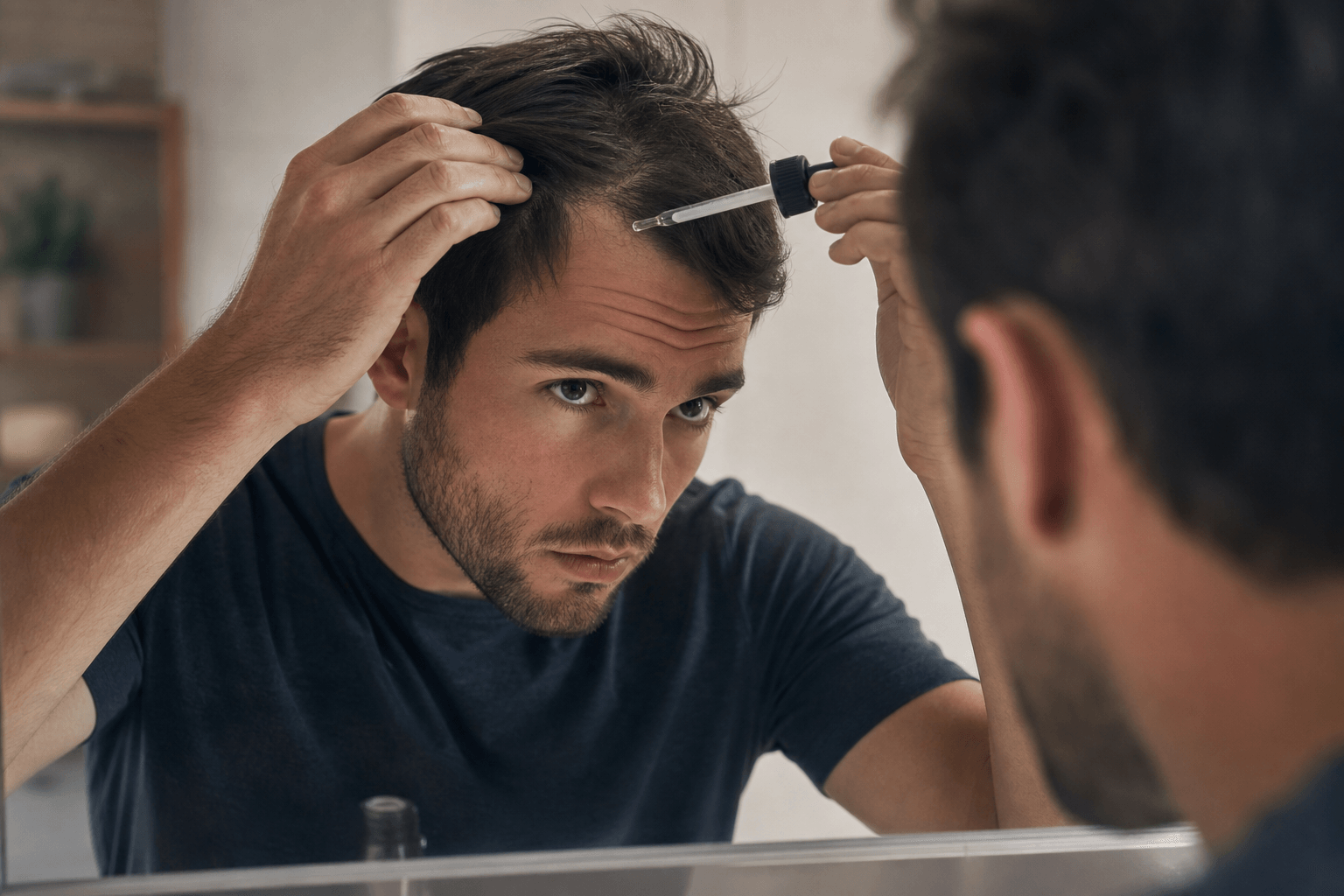
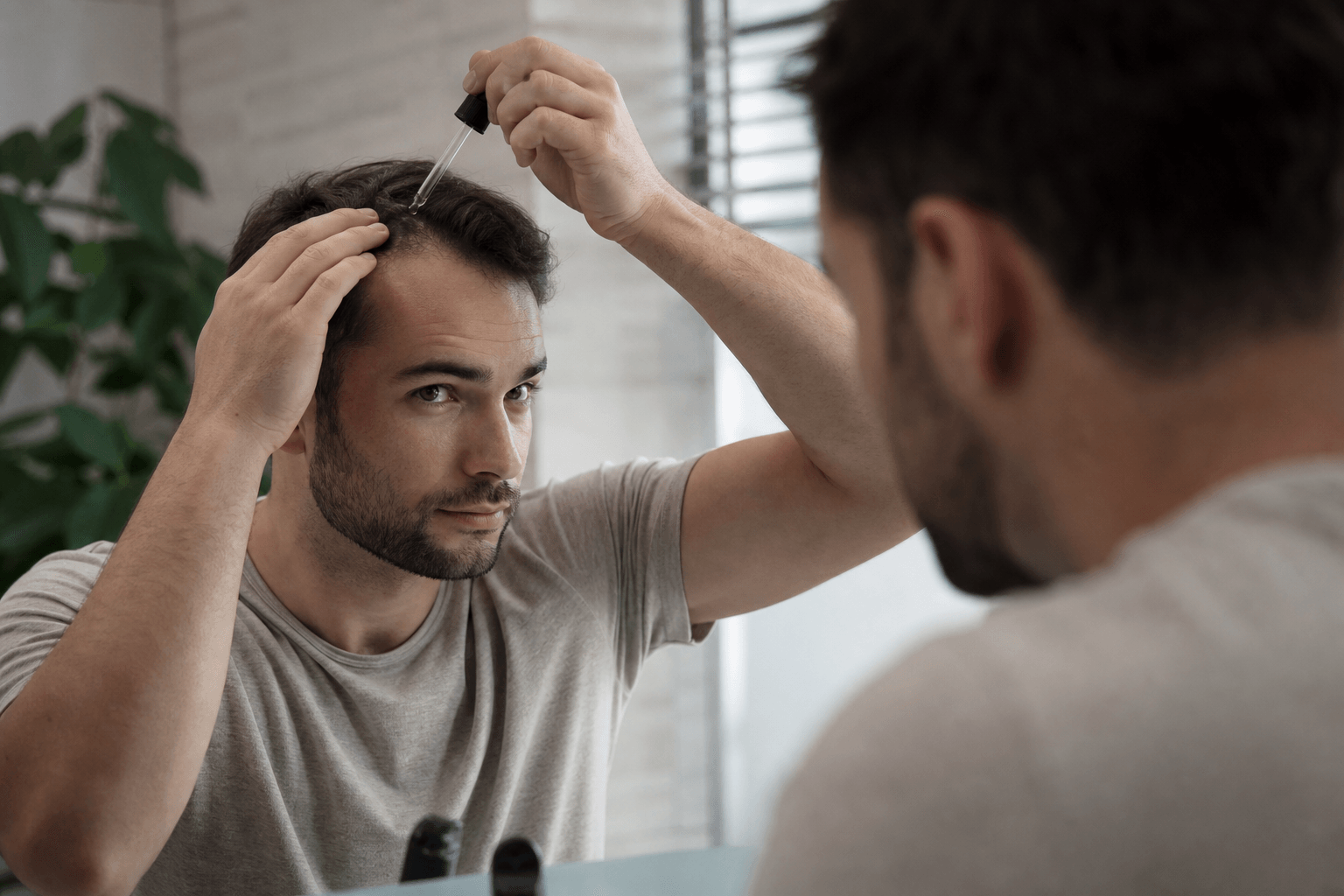
- Follow that exact label. Apply only to the scalp area directed, wash your hands afterwards, avoid the eyes and do not use extra in pursuit of faster results.
- Do not apply to an irritated or injured scalp. Do not combine it with other scalp medicines or DIY microneedling unless a qualified clinician has reviewed the plan.
- Keep it away from children and pets. Store and handle the product exactly as its safety information directs.
- Stop and seek medical advice for warning symptoms. The US foam label lists chest pain, rapid heartbeat, faintness, dizziness, unexplained weight gain, swollen hands or feet, and significant scalp redness or irritation as reasons to stop and contact a doctor.
Scalp itching and irritation are among the more common topical complaints. The AAD notes that foam appears to reduce irritation for some users, so tolerability may influence which labelled formulation you discuss with a pharmacist or clinician. The best routine is the one that is appropriate, safe and realistic enough to maintain.
What is the best way to track minoxidil hairline results?
Take baseline photos before the first application, then repeat them about once a month. Use the same room, overhead light, camera, distance, head angle, hair length, parting and dry-hair condition. Capture the front, both temples and crown even if only one area worries you.
Monthly comparison is more useful than checking the mirror after every shower. Hair shedding naturally fluctuates, and daily inspection encourages you to treat noise as a trend. Compare the oldest image with the newest after a meaningful interval and look for density and scalp visibility, not just whether the outline moved.
Keep a short note of application consistency, irritation, haircuts and any illness or major weight change. If you use a digital appearance or skin-tracking tool, check its privacy policy and remember that a face scan is not a hair-loss diagnosis. Your photos should help a clinician assess change, not turn your appearance into a score.
What happens if you stop minoxidil?
Minoxidil is maintenance treatment. The AAD and drug labelling make the same central point: benefits generally last only while you continue treatment. After stopping, maintained or regrown hairs can be lost gradually and shedding resumes as the underlying pattern hair loss continues.
That commitment should be part of the decision before you begin. Consider cost, scalp comfort and whether regular application fits your life. You do not have to pursue treatment to have a worthwhile appearance. A shorter haircut, a different style or simply accepting a mature hairline are all valid choices.
Is oral minoxidil a better shortcut?
Oral minoxidil is not a DIY upgrade to topical treatment. It is a systemic medicine that requires a qualified prescriber to weigh blood pressure, cardiovascular history, other medicines and possible adverse effects.
In a 24-week randomised trial in men with androgenetic alopecia, 5 mg oral minoxidil once daily was not superior overall to 5% topical minoxidil used twice daily. That does not mean oral treatment is never appropriate. It means stronger-looking internet protocols should not replace individual medical assessment. Do not buy prescription tablets informally or copy another person's dose.
The same principle applies to finasteride, compounded mixtures and aggressive derma-rolling combinations. They involve different evidence, contraindications and trade-offs. A dermatologist can discuss them if topical minoxidil alone is unsuitable or insufficient, without turning your scalp into an uncontrolled experiment.
FAQ
Does minoxidil regrow hair at the temples?
Minoxidil can improve or stabilise temple density in some men with early androgenetic alopecia, and controlled research has found frontotemporal benefits. Results are less predictable than a guaranteed hairline restoration, especially where an area has been completely bald for a long time.
How long should I use minoxidil before judging it?
Follow your product label and clinician's advice, but expect months rather than weeks. Labels may mention early results from two to four months, while the AAD says some responding men need six to 12 months to see a visible difference.
Is minoxidil shedding a sign that it is working?
An early increase in shedding can occur as hair cycles shift, but it is not proof of future regrowth. If shedding is severe, persistent, patchy or paired with scalp symptoms, seek medical advice instead of assuming it is normal.
Do minoxidil results disappear if you stop?
Usually, yes. Minoxidil's benefit depends on continued use, and maintained or regrown hair is generally lost gradually after treatment stops as the underlying pattern hair loss resumes.
Is oral minoxidil more effective than topical minoxidil?
Not necessarily. One 24-week randomised trial in men found 5 mg oral minoxidil was not superior overall to 5% topical minoxidil, and tablets introduce systemic considerations that require a qualified prescriber.