Quick answer
You cannot choose where body fat comes off, so there is no proven exercise, food or gadget that selectively removes cheek or chin fat. If weight loss is appropriate for your health, gradual overall fat loss can reduce fullness under the chin and around the neck, which may reveal more jawline definition. The size and timing of that change vary with genetics, starting body composition, skin, facial anatomy and fluid-related puffiness, so do not crash diet or push below a healthy weight for a sharper face.
Does losing weight actually change your face?
Often, yes. Your face contains soft tissue over a fixed adult skeleton. When some of that soft tissue is fat, an overall reduction in body fat can make the cheeks, lower face or area under the chin look less full. Weight loss does not rebuild your cheekbones, enlarge your chin or change the angle of your jaw bone; it changes how much soft tissue covers those structures.
Direct research supports a connection, but it does not promise a particular result. An 18-month lifestyle trial enrolled 278 adults with abdominal obesity or abnormal blood lipids. In a random 155-person subset scanned at six months, mean weight loss was 5.4 kg, while measured neck fat had fallen by 13.1% and chin fat by 5.3% on average. Changes in those areas tracked changes in overall weight.
That study is useful evidence that chin and neck fat are responsive to weight change. It is not a personal forecast: nearly 90% of participants were men, their average age was about 48 and their average BMI was around 31. Results in a younger person, a woman or someone already at a healthy weight may be different. The trial also found some regain in chin fat when weight returned, which is another reason to value sustainable habits over a short aggressive cut.
Why can a slim person still have a full face or double chin?
Face fat is only one contributor to the outline you see. Cleveland Clinic notes that a double chin can relate to overall weight, inherited jawline shape and loose skin. This explains why two people at a similar weight can have very different cheeks, chin-neck angles and jawline definition.
A naturally round face or softer lower face is not proof that you are unhealthy or doing something wrong. If your weight is already suitable for your health, continuing to lose weight may not reveal the sharp jawline you expect. Bone projection, facial proportions and the way your skin sits over the neck do not obey a target body-fat chart from social media.
Presentation matters too. A close phone selfie, a lowered chin, hard overhead light or a wide-angle lens can make the lower face look different from a portrait taken farther away at eye level. Beard shape and hairstyle can change the visible frame without changing anatomy. Treat one unflattering photo as a photo, not a diagnosis.
Is it face fat or facial puffiness?
Face fat and facial swelling are not the same thing. Cleveland Clinic defines facial swelling as fluid building up in facial tissues. Mild puffiness on waking can settle within hours, while allergies, injuries, infections and some medical conditions can also cause swelling. A camera or face scan cannot identify the medical cause.
A practical clue is the time scale. Fullness that looks broadly similar across weeks and follows your longer-term weight trend may include fat or stable anatomy. A face that changes noticeably between morning and evening, or from one day to the next, is less likely to reflect a meaningful change in body fat. This is only a tracking clue, not a self-diagnosis.
Do not respond to puffiness by deliberately dehydrating yourself, taking diuretics or severely restricting food or salt on your own. Sudden facial swelling, severe pain, worsening symptoms, fever, skin discoloration, breathing difficulty or trouble swallowing should be assessed by a healthcare professional; breathing or swallowing difficulty can be an emergency.
Can you spot-reduce face fat?
There is no reliable way to tell your body to burn fat only from your cheeks or under your chin. A systematic review and meta-analysis of localized exercise studies found that training a nearby muscle did not reduce the fat over that trained area. Those studies examined body regions rather than the face, so they are not a direct trial of face yoga. They do, however, challenge the basic spot-reduction claim.
Face exercises, chewing and jaw gadgets can make muscles work. That is not evidence that the fat above those muscles is being selectively burned. Cleveland Clinic similarly cautions that stronger jaw and neck muscles do not automatically mean less chin fat, and overworking the area can strain muscles or aggravate the jaw joint.
Mewing, chewing gum, chin straps and "face fat burner" supplements do not create a local calorie deficit. Avoid painful jaw routines, DIY bone manipulation and any form of bone smashing: they do not safely remodel an adult face and can cause injury.
How to lose face fat safely
The evidence-based route is ordinary, sustainable weight management, and only when weight loss is appropriate for you. The goal is not to punish a round face. It is to support health while allowing overall fat distribution to change in its own order.
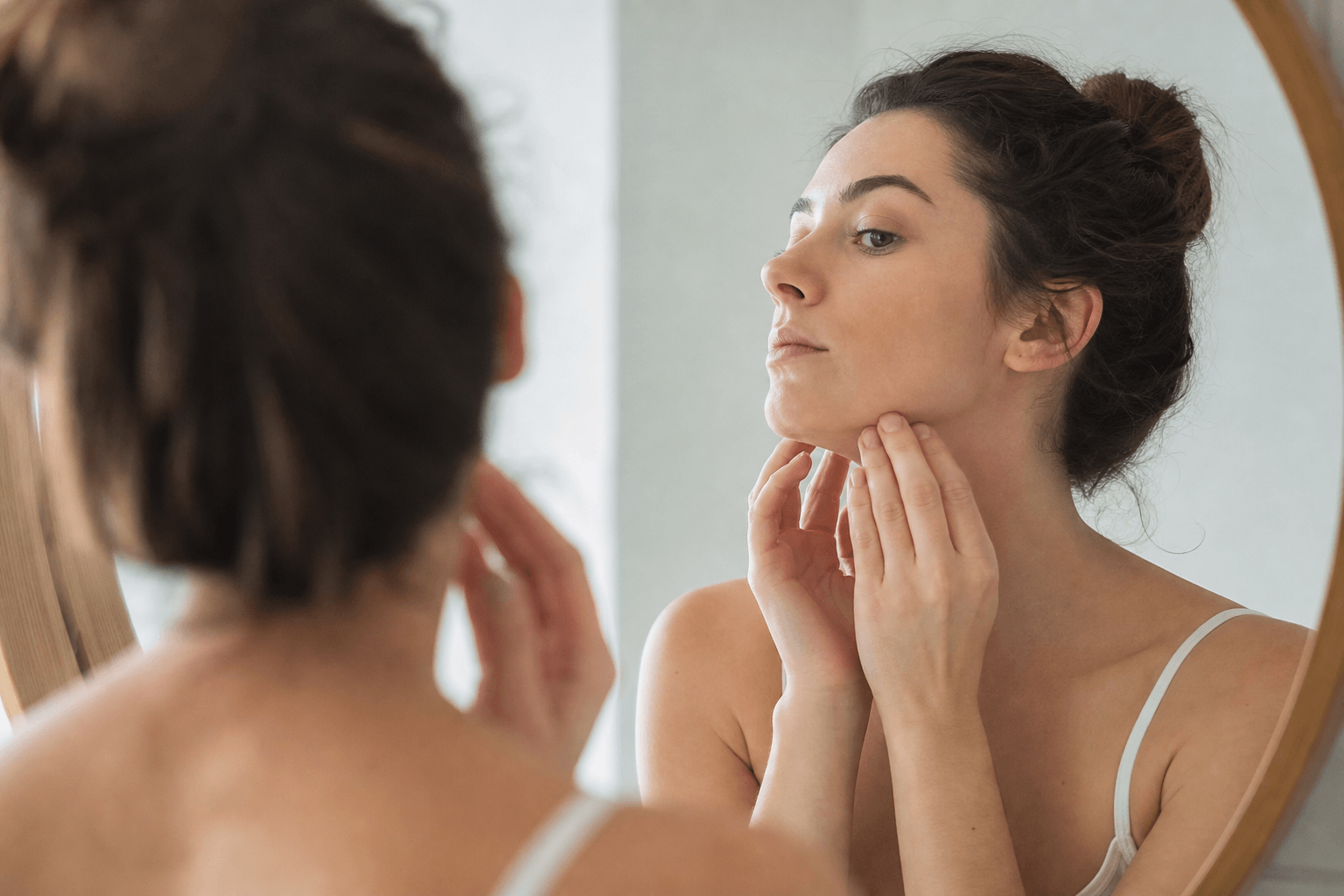
Check whether weight loss is a sensible goal
Do not choose a goal from an influencer's body-fat estimate or a filtered before-and-after post. If you are already in a healthy range, are under 18, are pregnant, have a medical condition, take medicines that affect weight or have a history of disordered eating, ask a GP or registered dietitian for individual guidance. A jawline is not a reason to ignore health.
Make gradual, repeatable changes
NHS guidance for adults who are trying to lose weight recommends aiming for about 0.5 to 1 kg, or 1 to 2 lb, per week and warns against sudden diets. It recommends regular activity, more fruit and vegetables, reading food labels, replacing sugary drinks with water and reducing foods high in sugar and fat. You do not need to do everything at once; a plan you can maintain is more useful than a perfect seven-day cut.
Choose meals that are satisfying and nutritionally balanced, and use portions that support your health goal. Pick movement you can repeat, such as brisk walking, cycling, swimming, sport or gym training. Exercise is valuable for health and helps with overall energy balance, but no specific cardio session targets chubby cheeks or a double chin first.
Reject fast looksmaxxing shortcuts
Starvation, extreme "starvemaxxing," deliberate dehydration, laxatives, diuretics, DNP, hormones and unsupervised prescription drugs are not face-slimming tools. Do not buy mail-order medication or alter a prescribed medicine to change your face. If medication-assisted weight management is medically appropriate, it belongs in a plan supervised by a qualified clinician.
Fast scale loss can include shifts that are not body fat, and an aggressive approach is harder to interpret or maintain. More weight loss is not always more aesthetic: facial fat also contributes normal volume, and individual anatomy sets a point where further cutting may make little difference to the jawline. Stop treating leanness as a score.
How long does it take to lose face fat?
There is no evidence-based number of days or kilograms that guarantees a slimmer face. The MRI trial detected average chin and neck changes over six months, but it studied a particular group and should not be turned into a countdown. Your starting size, inherited fat distribution, amount of change, age, skin and measurement method all affect what you notice.
Day-to-day mirror checks are especially noisy because lighting, expression, camera distance and puffiness move the visual result. If you are following a health-appropriate plan, assess the trend over several weeks. Do not respond to a stubborn cheek or double chin by automatically cutting calories harder.
How should you track jawline changes fairly?
Standardized photography is more honest than comparing a bathroom selfie with a professional portrait. Clinical photography guidance emphasizes keeping lighting, camera position, distance, background and facial angles reproducible. You can adapt that principle without turning your face into a daily rating exercise:
- Use the same phone and the same rear-camera or front-camera setting each time.
- Stand in the same place with the camera at eye level and a fixed distance away.
- Use soft, even lighting and the same plain background.
- Take a relaxed front view and side view with the same natural head position.
- Keep expression, beard length, hairstyle and glasses reasonably consistent.
- Turn off beauty filters, portrait reshaping and automatic face slimming.
- Compare photos periodically, for example every four weeks, rather than every morning.
Keep the images private if that feels better. A face photo or image-based face scan can organize visible trends, but it does not directly measure your body-fat percentage, diagnose swelling or decide whether your face is attractive. The useful question is whether a consistent, health-supporting routine is producing a repeatable change—not whether one algorithm gives you a better score.
The bottom line
If excess overall body fat contributes to facial fullness, gradual weight loss may slim the face and make the jawline easier to see. You cannot choose the order of fat loss, and a round face or double chin can remain because of inherited anatomy, loose skin or temporary puffiness. Use sustainable health habits and consistent photos; skip crash diets, face-fat gadgets and promises of targeted results.
FAQ
Can you lose fat just from your face?
No proven exercise, food or gadget selectively removes face fat. Cheek and under-chin fat generally change as part of overall fat loss, while the order and amount are controlled by individual biology rather than a face-specific workout.
Does losing weight sharpen your jawline?
It can when fat around the lower face and under the chin is hiding the jawline, but it is not guaranteed. Weight loss does not change adult jaw bones, and inherited chin projection, loose skin and neck anatomy still influence the final outline.
Why is my face still round after losing weight?
A round face after weight loss can reflect inherited facial proportions, naturally fuller cheeks, loose skin, remaining fat, temporary swelling or inconsistent photography. It does not automatically mean you need to lose more weight, especially if you are already at a healthy weight.
How much weight do I need to lose before my face changes?
There is no universal kilogram, pound or body-fat threshold. Visible change depends on your starting size, where you store fat, how much of the facial outline comes from anatomy and whether your comparison photos use the same lighting, angle and distance.
Do face exercises or chewing gum reduce face fat?
Face exercises and chewing work muscles but have not been shown to selectively burn the fat above them. They may also fatigue the jaw or aggravate jaw-joint symptoms if overdone, so they should not replace whole-body activity and sensible nutrition.