Quick answer
Can an open bite make your face longer? Sometimes, but the gap between your front teeth doesn't stretch your face. A skeletal open-bite pattern can include extra lower-face height, while a dental open bite may occur with ordinary jaw proportions.
An orthodontic exam, not a selfie, shows which pattern you have.
What an open bite actually means
With an anterior open bite, your upper and lower front teeth don't touch when your back teeth meet. That describes the bite, but it doesn't explain why the gap exists.
This distinction matters because two people can show the same front-tooth gap for different reasons. One may have displaced teeth, while the other has a jaw-growth pattern that affects the whole lower face.
An open bite can affect biting and chewing, but a small gap doesn't automatically mean disease or surgery. Treatment depends on function, dental health, growth, and the cause.
Dental and skeletal open bites look alike
A dental, or dentoalveolar, open bite comes mainly from tooth position and eruption. Jaw proportions may remain ordinary, although childhood sucking habits, tongue posture, and local tooth movement can contribute.
A skeletal open bite involves the jaws as well as the teeth. Orthodontic reviews describe a steeper lower-jaw angle, downward and backward mandibular rotation, and increased lower facial height.
That pattern can make the area from your nose to your chin look longer. The lips may also need more effort to meet at rest.
The direction of cause is easy to get wrong. The tooth gap usually doesn't lengthen the facial bones. A shared growth pattern can produce both the longer lower face and the open bite.
Many cases contain both dental and skeletal features. You can't sort them reliably by staring at the front teeth alone.
Why a skeletal open bite can lengthen the lower face
The back teeth and supporting jaw height affect how the mandible closes. Extra vertical height at the back can rotate the lower jaw down and back. This increases the front distance between the jaws and may leave the incisors apart.
That rotation can place the chin lower and farther back in profile. It may look like a longer face, a softer jawline, or a more recessed chin.
These are patterns, not rules, because face height also reflects genetics, jaw size, chin shape, tooth eruption, and soft-tissue thickness. Plenty of long faces have no open bite, and plenty of open bites appear on faces that don't look long.
A selfie can't show which type you have
Close phone photos change facial proportions. In a study of 30 volunteers, a 12-inch selfie made measured chin length appear 12% shorter than a five-foot clinical photograph.
Head tilt creates another trap because lifting your chin exposes more lower face, while lowering it compresses the same area. Lip strain and a forced bite can also exaggerate the pattern.
If you want a fair visual check, use the same camera, distance, head position, light, and relaxed expression. Take frontal and profile photos, then treat them as tracking images rather than diagnostic scans.
An orthodontist checks the bite directly. The assessment may include dental photographs, models or scans, and a lateral cephalometric X-ray. That side-view image lets the clinician measure facial height, jaw angles, and tooth position separately.
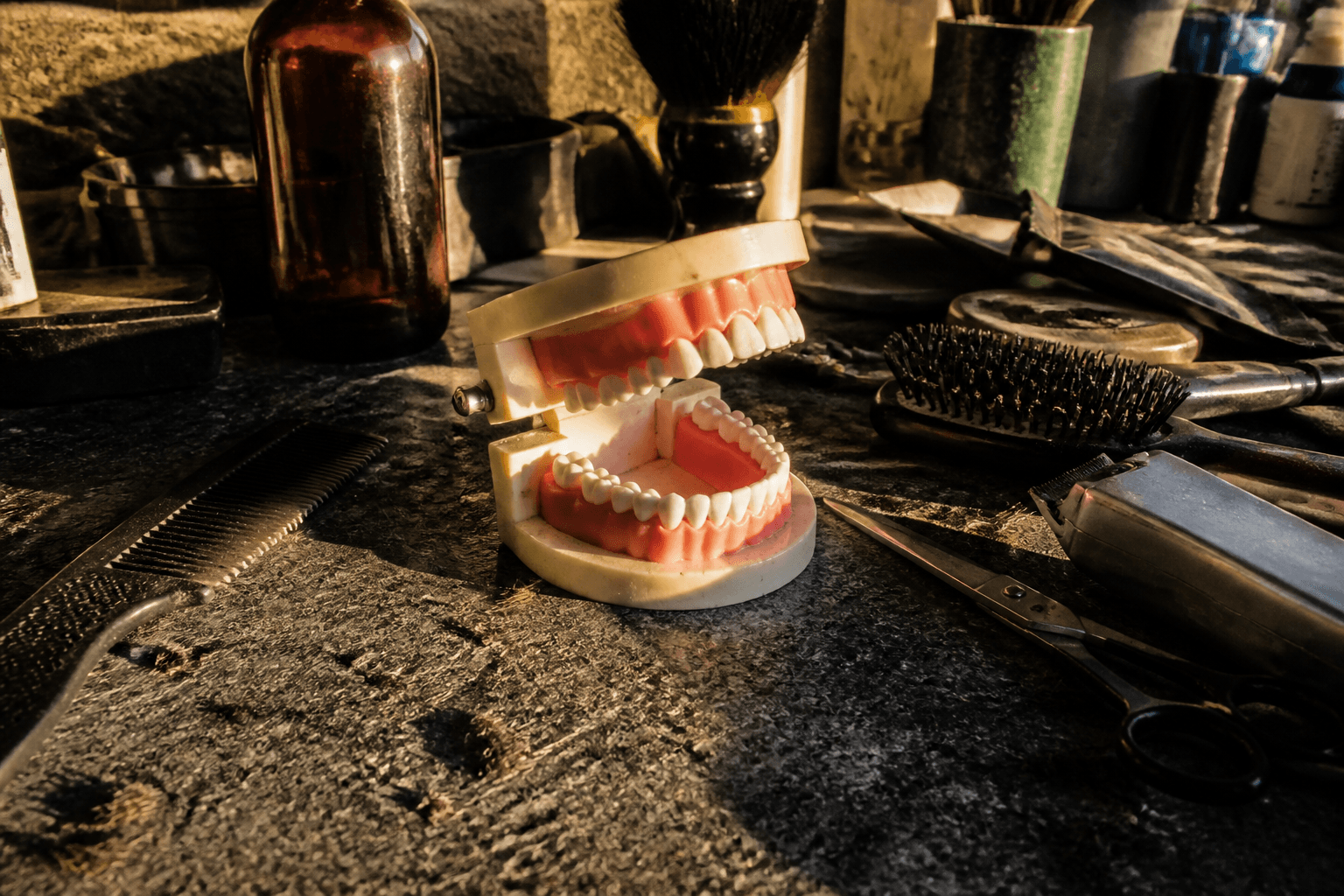
Will fixing the open bite shorten your face?
It depends on what the treatment moves. If the problem is mainly dental, braces or aligners may close the gap by moving teeth. Your smile and lip posture can change, but the underlying facial height may barely move.
A 2023 systematic review found only six controlled studies with 244 people. Across those studies, long-term skeletal changes from non-surgical treatment were minimal. The bite closed mainly through changes around the teeth rather than large jaw changes.
Selected skeletal cases can change more with vertical control. A 2014 study followed 33 consecutive patients with an open bite and long anterior face height. Temporary anchorage devices helped intrude the upper molars by an average of 2.3 millimetres.
Anterior face height fell by an average of 1.6 millimetres during that phase. It then increased by 0.5 millimetres during later orthodontic treatment. This was a specific clinical group, not proof that the same method will shorten every face.
Severe adult skeletal cases may need orthodontic care combined with jaw surgery. The British Orthodontic Society notes that jaw surgery can correct the bite and change the facial profile. It can also be planned with little visible change, depending on the problem and goal.
Choose treatment by cause, not a face trend
The useful question isn't “How do I shorten my face?” It is “Is my open bite dental, skeletal, or mixed?”
A sound plan may involve:
- braces or aligners for tooth movement
- managing a contributing oral habit during growth
- specialist vertical control with temporary anchorage in selected cases
- orthodontic and surgical planning for a severe adult skeletal mismatch
None of these is a generic looksmax shortcut, since a long lower face can be a normal facial pattern. Treatment isn't required simply because an online ratio labels it.
Don't copy an elastic pattern, alter prescribed wear, or use a DIY jaw device. Unplanned force can move teeth in the wrong direction and worsen the bite. See an orthodontist if the bite affects chewing, speech, tooth wear, lip closure, or your ability to clean your teeth.
What to ask at an orthodontic consultation
Ask for a plain explanation of the diagnosis before discussing your profile.
- Is the open bite dental, skeletal, or mixed?
- Which measurements show increased facial height, if any?
- Will the plan move front teeth, back teeth, jawbones, or a combination?
- How much profile change is realistic?
- What is the retention plan, and what can relapse?
- Would treatment still make sense if my face looked the same afterward?
That last question keeps the decision grounded, since a useful treatment should have a clear dental or functional aim. It shouldn't depend on a dramatic before-and-after promise.
FAQ
Is every open bite linked to a long face?
No. A dental open bite can occur with ordinary jaw proportions. Increased lower facial height is more closely linked to a skeletal open-bite pattern.
Can braces make a long face shorter?
Standard tooth movement usually changes facial height only a little. Some specialist plans intrude back teeth and allow jaw rotation, but the measured change is often modest.
Can an adult open bite be fixed without surgery?
Yes, many adult dental and selected skeletal open bites can be treated without surgery. Severe skeletal mismatches may need a joint orthodontic and surgical assessment.
Will closing an open bite change my jawline?
It may change chin position or lower-face appearance if treatment rotates the mandible. If treatment only moves the front teeth, the jawline may look almost the same.