Quick answer
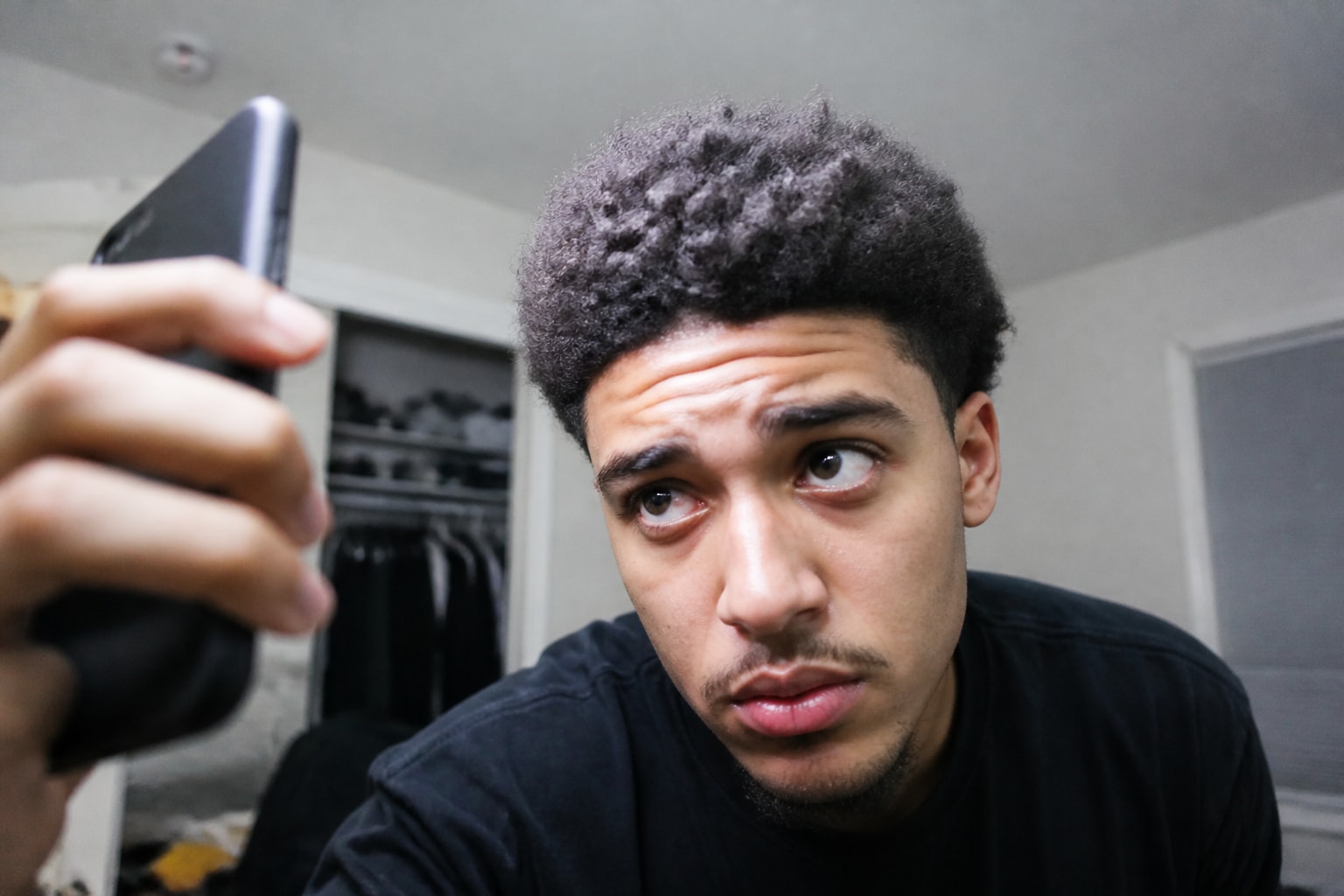
If your hair sticks out at the sides, short strands may follow their natural growth angle while a bulky cut amplifies the effect. This is usually a shape problem, not proof of damage or hair loss. Choose one route: keep the sides properly short, grow them until they sit flatter, or direct them downward with low heat. Ask your barber to inspect your hair while it's dry before removing more length or bulk.
Why hair sticks out at the sides
Hair emerges at an angle shaped by follicle orientation. A cowlick is a section whose direction differs from the surrounding hair, and it can occur near the temples. A 2023 genome-wide study found a genetic component to scalp-whorl direction, but it doesn't make every flared side a cowlick.
This helps explain why brushing can't permanently move a follicle: you can change how the exposed shaft sits, but its starting direction remains.
Length changes what that direction looks like, and close-cut hair cannot form much of a ledge. Longer hair may gain enough weight to sit closer to the head. The middle stage can project outward, especially when the strands are straight or stiff.
That explanation comes from hair mechanics and professional practice; no controlled trial has defined a universal problem length. Your growth direction, density, shaft shape and haircut all affect the result.
The cut may be the main issue when both sides form a shelf after an appointment. British GQ's barber guide recommends a gradual transition from shorter hair around the ears to longer hair where the sides meet the top. In barber practice, that gradual blend can reduce a shelf-like outline.
Check the cause before another haircut
Use three normal wash days to compare styling with cut shape. This is a practical screen, not a scalp diagnosis.
- Day one: let your hair dry without product, then take front, left-side and right-side photos.
- Day two: dampen only the projecting section and direct it down with your fingers while it air-dries.
- Day three: repeat with a moving dryer on low or medium heat, keeping the airflow pointed down the shaft.
- Compare the same views with the same lighting, distance and head angle.
One fixed patch that turns against nearby hair fits a cowlick or local growth pattern. A broad, even shelf may be more consistent with length and blending. Scattered fuzzy strands may reflect frizz, static, new growth or breakage; photos alone can't separate them.
Compare fully dry hair under repeatable conditions, without changing your product, camera distance or head angle. Keep the side photos on your device as a private record; you don't need to upload them to judge the cut.
Pick one haircut strategy
Repeating small random trims whenever the sides flare may keep returning the hair to the same awkward length.
Go clearly shorter
A graduated taper or fade can reduce the projecting outline and blend it into the top without exposing skin. The useful detail is a smooth transition around the ears and through the upper sides.
This changes the outline immediately, but the shape changes as new length returns, so choose it if you prefer frequent maintenance.
Grow through the middle stage
Extra length can help a cowlick or stiff side section lie flatter, but no exact length works for everyone. Healthline's medically reviewed cowlick guide notes that longer hair may weigh down a stubborn section.
Tell your barber you are growing the sides and want a tidy perimeter without resetting the problem area. A reference photo should show the side view, not only the front.
Ask for shape, not automatic thinning
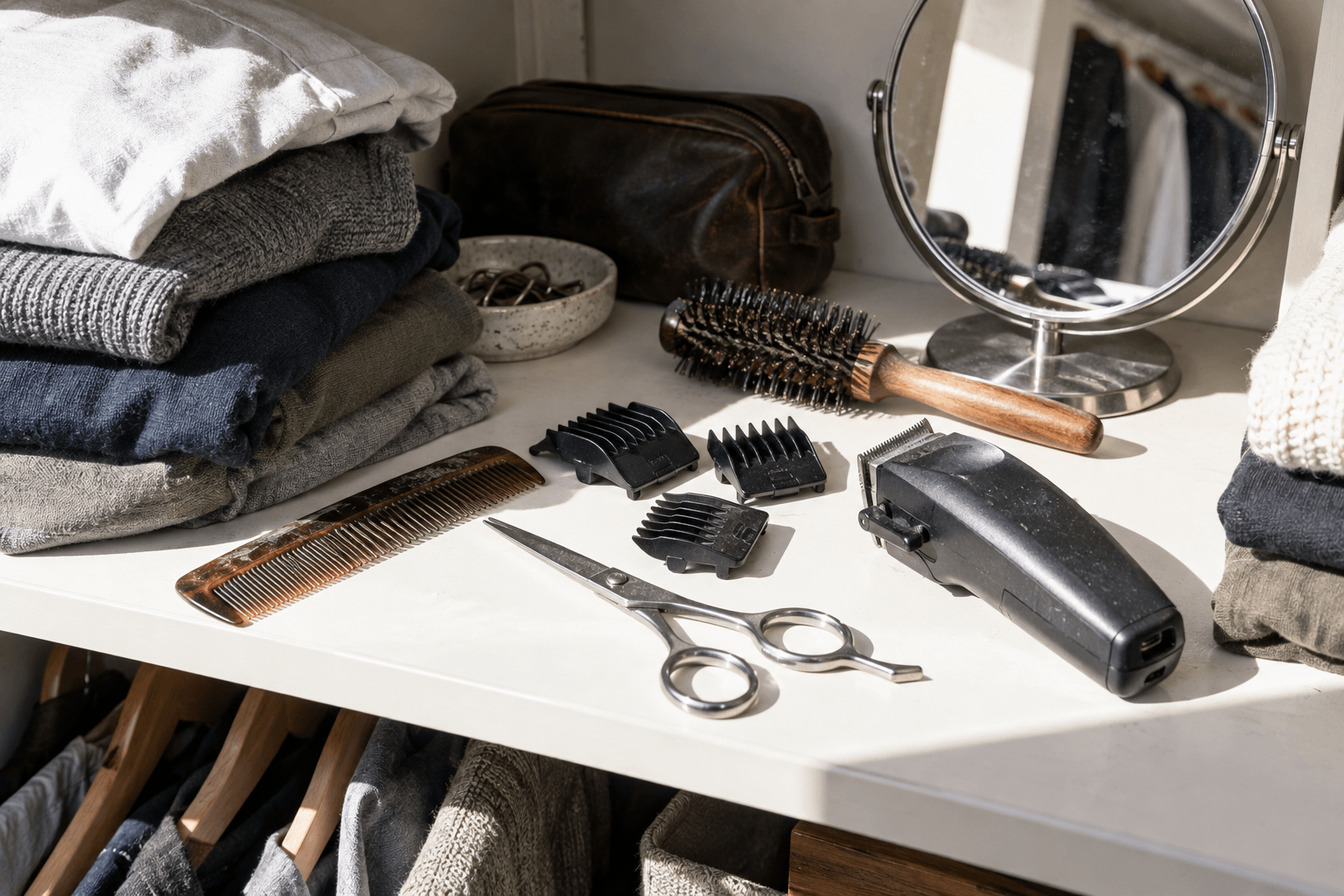
Thinning is a technique, not a goal. Ask the barber whether it suits your dry growth pattern before choosing scissors, clippers or thinning shears.
Use this script:
"My side hair grows outward here. Please check it dry before cutting. I want either a short, gradual taper that removes this shelf, or enough length for it to sit down. Please keep the blend smooth where the sides meet the top."
That is more useful than naming a guard number from someone else's haircut. The same number can look different with another density, head shape or growth pattern.
A low-heat styling test
Styling can control the visible shaft for the day, but it cannot retrain the follicle to grow in a new direction.
Start when the sides are damp, not dripping. The American Academy of Dermatology advises letting hair partly air-dry before styling and limiting dryer use. Aim the airflow from above while your fingers or a brush guide the hair downward.
Use low or medium heat. Across one laboratory study's combined settings, surface damage rose as the dryer moved closer and hotter. In that protocol, continuous movement from 15 centimetres caused less damage than natural drying, while the closest, hottest setting caused the most. This guides technique but doesn't guarantee zero damage.
Once the section is dry, press in a small amount of flexible-hold cream or paste. More product isn't automatically better, so stop if the hair becomes separated, greasy or wider at the sides.
Don't keep combing after a hard-hold product has set, since the AAD warns that this can contribute to breakage. If control requires repeated hot passes every morning, change the cut or length instead.
What about a down perm?
A down perm chemically reshapes the side hair so it sits flatter, but evidence for this exact use is limited. It also affects the visible shaft, not the follicle angle or new growth.
Don't use a mail-order relaxer or improvise with chemical straighteners at home. Perming changes chemical bonds inside hair, and a dermatology review reports breakage and skin irritation when products are misused. If you still want the service, choose a qualified stylist and disclose recent chemical treatments or scalp reactions.
Postpone the service if your scalp is sore, broken or inflamed. Burning is a reason to stop, not proof that treatment is working.
When it may be more than styling
A stable outward section with unchanged density usually points to grooming, not disease; a new bare patch, thinning, breakage, pain, redness or scale is different. Photograph the change and see a dermatologist rather than asking a barber to hide it.
FAQ
Why does straight hair stick out at the sides?
Straight or stiff strands can make an outward follicle angle more visible, especially at a short middle length. The cut's blend and local cowlicks can add to the effect, but hair texture still varies from person to person.
Should I cut the sides shorter or grow them out?
Both can work, so choose a short, graduated taper if you want immediate control and accept more upkeep. Choose growth if you want a longer style and can leave the problem section alone; no study defines one cutoff length for everyone.
Can I train side hair to grow downward?
Water, airflow and product can set the exposed shaft for a time, but they don't move the follicle beneath your skin. Claims that repeated brushing permanently changes growth direction aren't supported by good evidence.
Is hair sticking out at the sides a sign of hair loss?
Not by itself: a cowlick or bulky cut can expose more scalp without reducing hair count. Get medical advice when the area is new, widening or paired with shedding, breakage, pain, itching or scale.