Quick answer
Gums receding during Invisalign treatment need a prompt dental exam from your orthodontist or dentist. Clear aligners haven't been shown to cause more recession than fixed braces, but tooth movement, thin gum tissue, plaque and hard brushing can all matter. Don't cut the tray, change your wear schedule or assume the gum will grow back without dental advice.
First check whether it is recession
Gum recession means the gum margin has moved away from the tooth's crown. More of the tooth or its root becomes visible, so that tooth may look longer than its neighbours. The exposed area can also feel sensitive to cold, sweets, brushing or dental cleaning.
Redness or bleeding can mean gum inflammation, while a rough aligner edge may irritate one spot without causing lasting gum loss. These problems need different responses, and a close phone photo can't tell them apart.
A dentist measures the gum margin and the pockets around each tooth with a small dental probe. They may also compare earlier records or take an X-ray when bone loss is a concern. That baseline matters more than judging the change from memory.
What clear-aligner studies actually show
The evidence doesn't support a simple claim that Invisalign ruins gums. Invisalign is one brand, while most studies group several clear-aligner brands together.
A 2023 systematic review compared clear aligners with fixed braces across 12 studies. Only one included study directly measured new recession with clear aligners. It followed patients for three months and found no change in the aligner group. The reviewers said the evidence was too limited for a firm comparison.
Another 2023 review combined four earlier systematic reviews involving 2,042 orthodontic patients. Clear aligners produced slightly better plaque and gum-health scores at some follow-ups. The differences were too small to matter much in practice, and the reviewers found too little evidence on recession. They judged the gum effects of aligners and braces to be comparable.
That is reassuring at group level, but it doesn't rule out recession around one tooth during your treatment.
Why recession can appear during Invisalign
Several factors can overlap, so timing alone doesn't prove the aligner caused the change.
Your gums were thin or already receding
A systematic review of 48 orthodontic studies linked thin gum tissue and previous recession with higher risk after treatment. The studies differed widely, so they couldn't predict what will happen to any one person.
Thin tissue isn't a failure of hygiene; it is a natural risk factor your clinician can measure and track.
A tooth is moving toward a thin bone boundary
Orthodontic treatment moves teeth through supporting bone. In the same review, 10 of 16 studies on forward movement of the front teeth reported more recession or longer-looking crowns. The results were mixed, and small study samples limit certainty.
Your orthodontist can compare the planned movement with the tooth's position and surrounding bone. A selfie or aligner animation can't show whether the root remains well supported.
Plaque is inflaming the gums
Clear aligners are removable, which can make brushing and flossing easier than with fixed braces. They don't remove the need for daily plaque control. The NIDCR explains that plaque can harden into tartar and drive gum inflammation.
Watch for redness, swelling, easy bleeding, persistent bad breath or tenderness. Those signs point to inflammation that needs assessment, even if the gum line hasn't moved.
Brushing or a tray edge is causing trauma
Cleveland Clinic lists aggressive brushing and local injury among causes of recession. More brushing isn't better if you scrub the margin with force, so use a soft-bristled brush and light pressure.
If an aligner edge cuts the gum or makes one point bleed, contact the clinic that fitted it. Don't trim or sand it yourself. Your clinician needs to see the contact point and decide whether the tray needs adjustment.
What to do now
- Book a check. Ask your orthodontist or dentist to measure the affected site rather than only looking at it. Mention new sensitivity, bleeding, pain or a tray edge that catches.
- Keep your current records. Take one clear photo at rest, then repeat it weekly from the same distance and light. Bring the current tray and any earlier dental photos to the appointment.
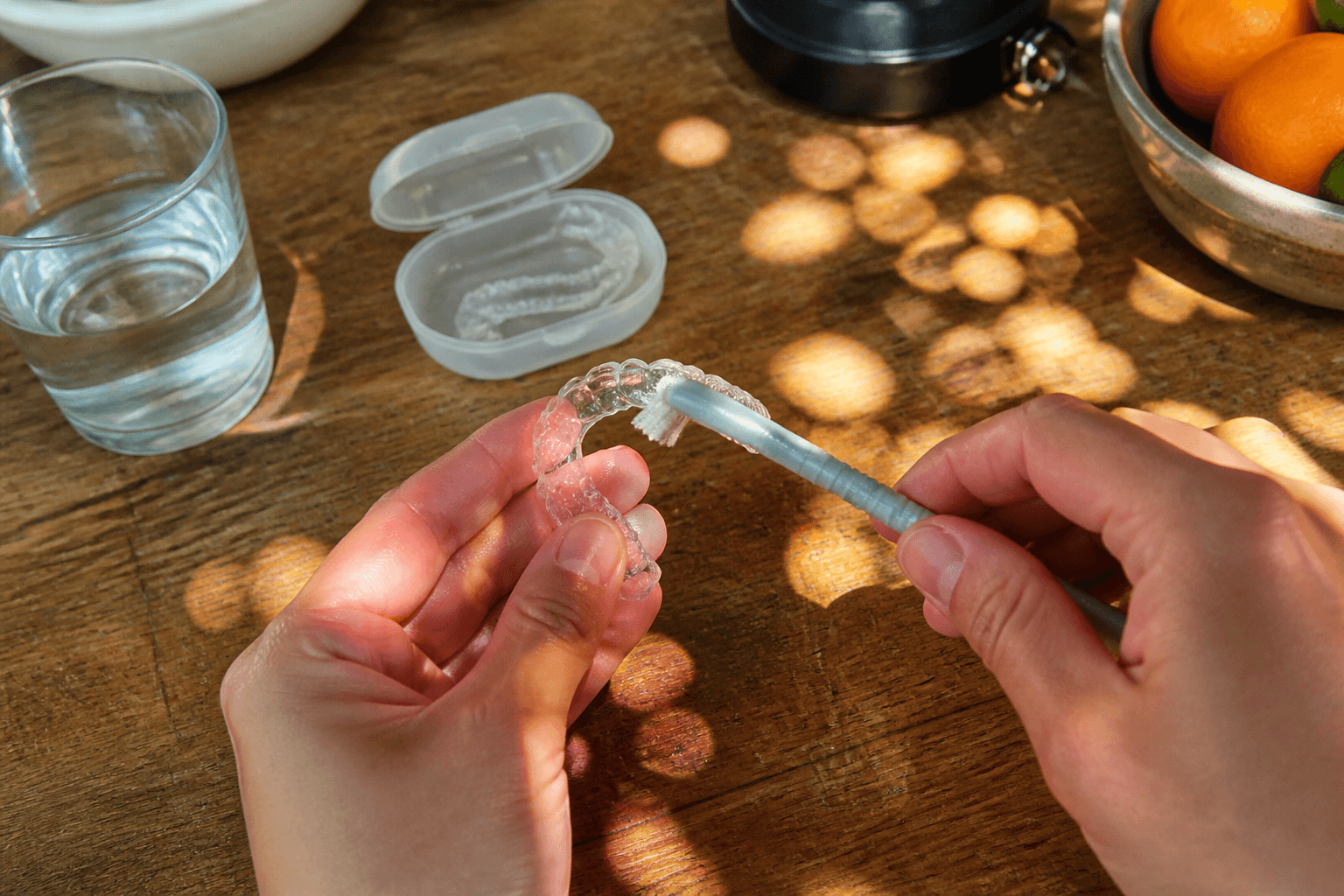
- Clean gently. Brush twice daily with a soft brush and clean between the teeth. Avoid scrubbing harder because the area looks different.
- Follow your clinician's wear advice. Don't skip trays, move ahead early or alter an aligner on your own. If the tray is actively cutting you, call the clinic the same day for instructions.
- Ask what is driving the change. Useful questions cover gum thickness, previous recession, plaque, planned tooth movement and whether a gum specialist should review the site.
An AI face or skin scan can't diagnose gum recession. A saved photo may record what you saw, but a dental probe and dental exam answer this question.
What treatment may involve
The next step depends on the cause and severity. Your clinician may track a small stable area, improve plaque control, review brushing pressure or change the tooth-movement plan. Active gum disease needs treatment before more tissue support is lost.
True recession usually doesn't grow back on its own. In some cases, moving a poorly positioned tooth into better alignment may allow the gum margin to improve. Whether that happens depends on the tooth, bone and tissue, not the aligner brand.
A gum specialist may discuss a graft when root coverage or added tissue is needed. Cleveland Clinic describes grafting as the most predictable long-term way to replace missing gum tissue. It isn't always required for a small recession.
Signs that need faster attention
Don't wait for a routine review if the tooth feels loose, the root has become newly exposed or sensitivity is increasing. Call sooner for repeated bleeding, swelling, pain or a sharp tray edge that keeps injuring the same area.
Daily mirror checks won't show whether the margin moved by a measurable amount, so one repeatable weekly photo is enough before your exam.
FAQ
Can Invisalign cause gum recession?
Recession can develop during any orthodontic treatment, but current reviews don't show that clear aligners cause more recession than fixed braces. Your risk depends more on factors such as existing recession, thin gum tissue, tooth movement, plaque and brushing trauma.
Will receding gums grow back after Invisalign?
Lost gum tissue usually doesn't grow back by itself. A gum margin may improve when tooth position was part of the cause. Other sites need monitoring, gum treatment or a gum specialist's opinion about grafting.
Should I stop wearing my aligners?
Don't change the wear schedule on your own; contact your orthodontist promptly and follow their instructions. If an edge is cutting or bleeding, ask for same-day advice before changing anything.
Can frequent brushing during Invisalign cause recession?
Aggressive brushing is a known cause of gum recession, while ordinary plaque removal protects gum health. Use a soft brush and light pressure, and ask your dentist to watch your technique if one margin keeps changing.