Quick answer
Yes, daily broad-spectrum sunscreen can slow the skin changes that become wrinkles, roughness, and uneven pigment. The best human trial found 24% less measured skin aging after 4.5 years in daily users. Sunscreen prevents added UV damage; it doesn't erase deep wrinkles or change your natural facial structure.
Does sunscreen prevent wrinkles in real people?
The evidence is better than you might expect: researchers in Australia ran a randomized trial with 903 adults younger than 55. One group used broad-spectrum sunscreen daily, while another used it when they chose.
After 4.5 years, the daily group had 24% less measured skin aging. Assessors who did not know each participant's group graded changes in skin surface patterns. The daily group showed no detectable rise in aging over the study period.
That result matters because it came from a long trial, not a brand's before-and-after gallery. It supports prevention, though it does not promise a wrinkle-free face.
The trial has limits because it took place in sunny Nambour, Australia, and did not assess every feature linked with facial aging. Some outcome data were missing, and the study had modest power for smaller effects. Sunscreen can only reduce UV-related aging, so it cannot make anyone wrinkle-proof.
The useful takeaway is that daily sunscreen reduces one controllable source of visible aging: repeated ultraviolet exposure.
How does sunscreen slow premature skin aging?
Sunlight includes ultraviolet A and ultraviolet B radiation, while SPF mainly describes protection from the UVB radiation tied to sunburn. A product marked broad spectrum also protects against UVA.
That distinction matters because the FDA ties early-aging protection claims to broad-spectrum products with enough SPF. Those claims assume correct use and other sun protection.
Sunscreen forms a protective film that absorbs or reflects UV before it damages skin. It lowers exposure; it doesn't create a force field. Missed areas, thin application, water, sweat, and long outdoor time all reduce real-life protection.
This is why an expensive serum cannot make up for repeated unprotected sun exposure. You don't need a complex routine; you need a sunscreen you can apply properly and keep using.
What SPF is best for preventing wrinkles?
Choose broad-spectrum SPF 30 or higher, plus water resistance if you exercise, work outdoors, or sweat easily.
SPF 30 blocks about 97% of UVB under test conditions, while higher SPF blocks slightly more. No sunscreen blocks everything or lasts all day, so reapply during sustained outdoor exposure.
Look for three points on the label:
- Broad spectrum, for UVA and UVB protection
- SPF 30 or higher
- Water resistant for 40 or 80 minutes, if you will swim or sweat
Do not get stuck comparing SPF 50 with SPF 100 while ignoring comfort. A formula that pills, stings, or leaves a cast may end up unused. Consistent SPF 30 protection beats a higher-SPF bottle left in a drawer.
Is mineral or chemical sunscreen better for anti-aging?
Both can work because the AAD says mineral, chemical, and hybrid products protect effectively when broad spectrum, water resistant, and SPF 30 or higher.
Mineral sunscreens use zinc oxide, titanium dioxide, or both, and dermatologists often suggest them for sensitive skin. Some leave a visible cast, though a matching tint can make that less obvious.
Chemical sunscreens use other approved UV filters. You may prefer their finish on facial hair or deeper skin tones. The best choice is the one your skin tolerates and you will use in the right amount.
If dark spots are a main concern, consider a tinted sunscreen with iron oxide. The AAD notes that visible light can worsen hyperpigmentation, especially in darker skin tones. Tint can add visible-light protection and reduce white cast.
How should you apply daily sunscreen to your face?
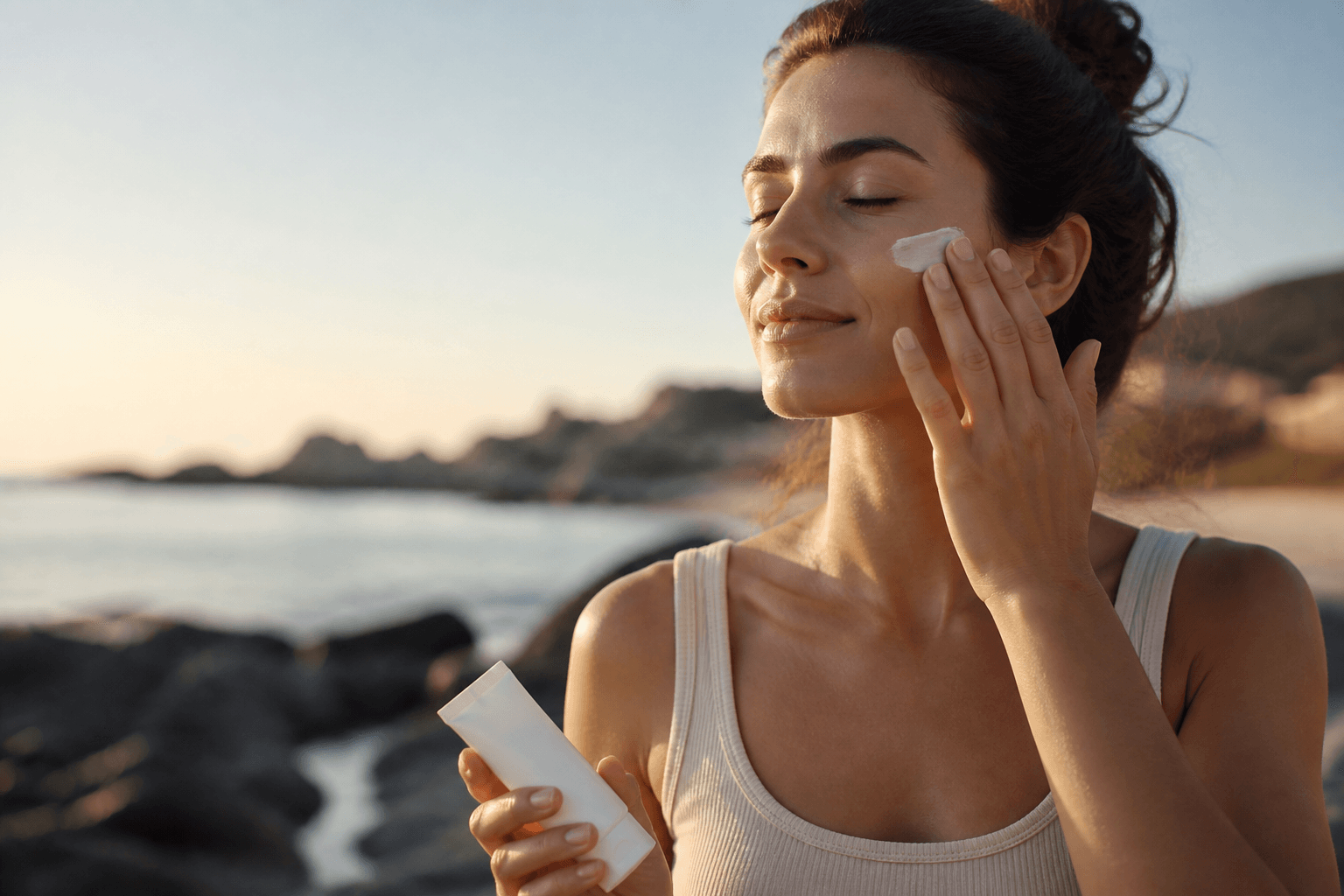
Apply sunscreen as the last step of your morning skincare routine. Put it on before sun exposure and give it about 15 minutes to settle before going outside.
Use enough to cover the full area evenly. The AAD's face guide uses at least two finger lengths, though your product label remains the final guide.
Cover the places people skip:
- Ears and the area in front of them
- Neck, including the sides and back when exposed
- Hairline, part, or thinning scalp
- Tops of the hands
- Lips with an SPF 30 lip balm
Beards need attention because facial hair may not cover every patch. Work a suitable lotion or gel down to exposed skin, or add shade and a hat.
When you remain outdoors, reapply about every two hours and sooner after swimming or heavy sweating. Check the label because no sunscreen is waterproof.
The two-hour rule is outdoor guidance, so you do not need an alarm through every indoor workday. Reapply when exposure continues or the film has rubbed, washed, or sweated off.
Should you wear sunscreen every day, including winter?
A daily habit makes sense because exposure is not limited to beach days. The AAD advises sunscreen on exposed skin whenever you go outside, including cloudy days and winter.
Your routine can match your day. A commute, lunch walk, outdoor workout, or bright window creates more exposure than staying away from windows indoors. The AAD notes that UV can pass through windows, which matters for drivers and people seated close to glass.
Sunscreen is one layer of the plan, while shade, a hat, sunglasses, and clothing reduce how much exposed skin needs product. The FDA also advises limiting direct sun during the strongest midday hours.
Do not use sunscreen as permission to stay outside indefinitely. More time in strong sun still means more exposure, even with a high SPF.
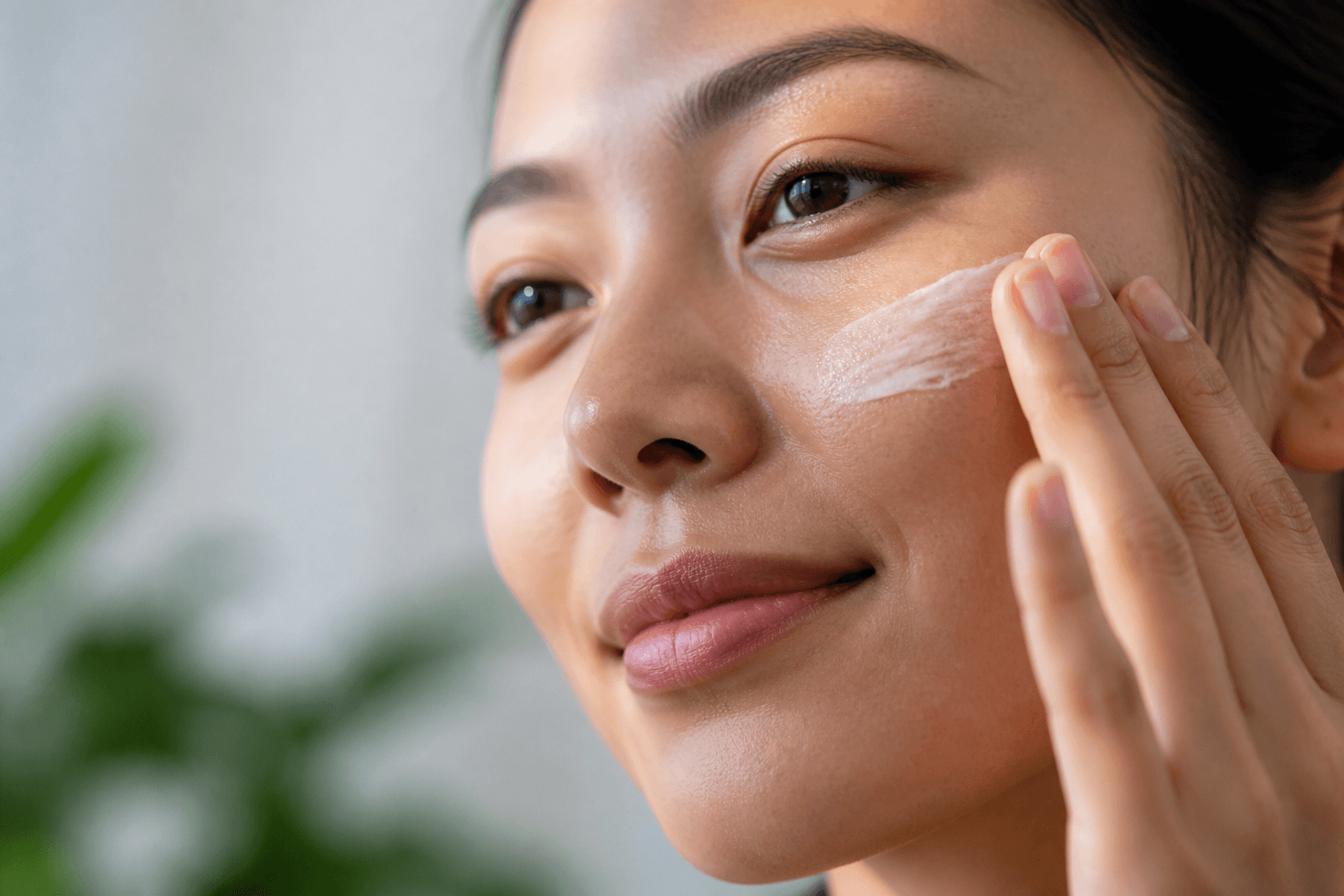
Can sunscreen reverse wrinkles you already have?
Do not expect established wrinkles to vanish because the strongest trial tested prevention, not sunscreen as a wrinkle treatment.
A smaller 2016 study followed 32 people using an SPF 30 facial sunscreen for one year. Dermatologist ratings found improvements in texture, clarity, pigmentation, and fine lines. That sounds encouraging, but the study had no untreated control group. The sunscreen maker funded it, and the formula itself could have moisturized the skin.
So sunscreen may let some surface changes look better while it prevents fresh damage. That is different from proving that sunscreen rebuilds aged skin or removes deep lines.
Use sunscreen to protect what you have now, and ask a dermatologist about low-risk options if existing pigment, roughness, or wrinkles bother you.
What are the most common sunscreen mistakes?
Most sunscreen failures are practical, not scientific.
Applying too little
The SPF on the bottle comes from controlled testing with a set amount. A thin, patchy layer will not give the labeled protection. Cover the whole exposed area, not just the center of your face.
Using SPF makeup as your only protection
Makeup with SPF can help, but a thin or uneven layer will not deliver dependable protection. Use a separate sunscreen when you need dependable outdoor protection.
Forgetting reapplication outdoors
High SPF is not an all-day pass, so reapply during long outdoor periods and after swimming or sweating. Check whether water resistance lasts 40 or 80 minutes.
Skipping sunscreen because your skin is darker
All skin tones can receive UV damage, so try a tinted or chemical formula if white cast stops you from applying enough. Choose based on comfort, not fear-based claims online.
Judging results from random selfies
Lighting can make texture, lines, and pigment look different within minutes. Keep the camera, distance, angle, expression, and lighting fixed, then compare months rather than mornings; you don't need to post or rate them.

A simple anti-aging sunscreen routine
Keep your anti-aging sunscreen routine short enough to repeat.
- Wash or rinse your face as needed.
- Apply moisturizer if your sunscreen does not feel moisturizing enough.
- Apply broad-spectrum SPF 30 or higher to your face, ears, neck, and other exposed skin.
- Let it settle before going outside.
- Carry a product you can reapply on long outdoor days.
- Add shade, clothing, and a hat when exposure is strong.
Give a new formula several calm tests, then stop if you develop a persistent rash, swelling, or marked irritation. A dermatologist can help if every product stings or triggers breakouts.
FAQ
Does sunscreen prevent wrinkles?
Yes. A randomized trial found 24% less measured skin aging after 4.5 years with daily broad-spectrum sunscreen versus discretionary use. It slows added UV-related aging rather than stopping all wrinkles.
What SPF is best for anti-aging?
Choose a broad-spectrum, water-resistant SPF 30 or higher because SPF mainly measures UVB sunburn protection. Correct application matters more than chasing the highest number.
Does sunscreen reverse existing wrinkles?
Sunscreen is proven more clearly for prevention than reversal. A small uncontrolled study found some visible improvement over one year, but it cannot prove sunscreen removed existing wrinkles.
Do you need sunscreen indoors?
Indoor need depends on exposure, and daily sunscreen is sensible if you sit beside windows, drive, or go outside. If you stay away from windows all day, repeat indoor applications are less useful.
Is mineral sunscreen better than chemical sunscreen?
Neither type is automatically better, and both protect well when broad spectrum and applied correctly. Mineral formulas may suit sensitive skin; choose either based on comfort and finish.