Quick answer
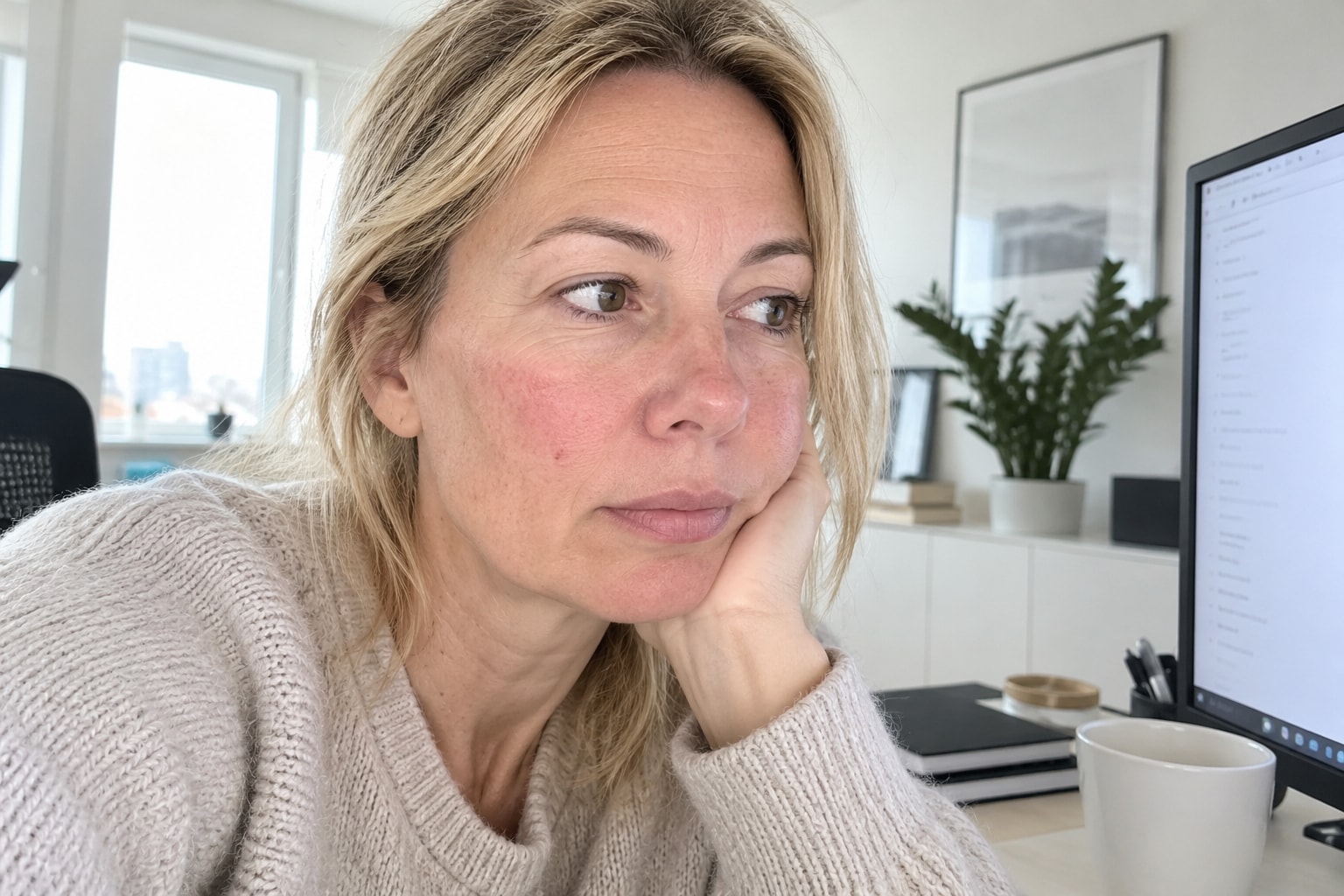
Yes, sleep can affect how your face looks, especially around your eyes. Controlled studies found that sleep loss made people look more tired, with heavier eyelids, darker under-eyes, swelling, and small changes in skin colour.
The effect is real but usually modest, and better sleep won't reshape your jaw or fix genetic eye hollows.
Does lack of sleep change your face?
Lack of sleep can change visible facial cues for a short time, mainly around the eyes, mouth, and skin tone. They signal fatigue rather than a new facial structure.
A 2010 BMJ experiment photographed 23 healthy adults aged 18 to 31 in two conditions. One followed eight hours in bed, while the other followed a five-hour night and 31 hours awake.
Sixty-five people rated each face on 100-point scales, and average health ratings fell from 68 to 63. Attractiveness fell from 40 to 38, while tiredness rose from 44 to 53.
Those are group averages, not a universal result: the attractiveness shift was small, while the tiredness shift was clearer.
That distinction matters because "beauty sleep" has evidence behind it, but social media often turns a subtle effect into a makeover claim.
Which facial signs change after sleep deprivation?
A 2013 study examined the details people read as a tired face through 40 observers rating 20 photos of ten adults. Each adult appeared after normal sleep and after the same 31-hour sleep-deprivation protocol used in earlier work.
Observers saw more hanging eyelids, redder and more swollen eyes, and darker circles after sleep loss. They also rated the faces as paler, with more visible eye lines, drooped mouth corners, and a sadder appearance.
The largest average shift was in hanging eyelids, yet the response varied between faces. Seven of the ten people looked more fatigued after sleep loss, while three did not show that clear change.
So a bad night doesn't stamp the same pattern onto everyone. Your anatomy, colouring, expression, and starting level of fatigue all affect what another person sees.
Does two nights of short sleep affect appearance?
Yes, at least in small controlled samples from a 2017 Royal Society Open Science study. Twenty-five adults were photographed after two normal nights and after two nights with four hours in bed.
The photos kept useful variables steady: participants wore no makeup, pulled their hair back, and faced the same photographer at the same time.
A group of 122 adults rated the faces, and participants looked sleepier, less healthy, and less attractive after restricted sleep. Raters were also less willing to socialise with them, while trustworthiness ratings did not clearly change.
This study gets closer to a rough workweek pattern, but it still tested just two restricted nights in 25 people. It can't tell us how every face responds to months of six-hour nights.
What happens to skin after too little sleep?
The best direct test here is a small 2022 Sleep Medicine study of 24 healthy women aged 30 to 55. They normally slept well, then spent only three hours in bed on two consecutive nights.
Researchers measured their faces morning and afternoon, finding lower skin hydration and higher water loss after restriction. Instrument readings also found lower extensibility and viscosity.
Photo analysis found lower brightness and colour saturation, while dark circles increased at both measurement times.
These findings support a short-term link between sleep and facial appearance, but they don't prove that one late night causes lasting ageing. The sample included no men, no poor sleepers, and nobody under 30 or over 55.
Three hours in bed is severe, so don't treat that study as a precise forecast for losing 45 minutes on one night.
Does more sleep make you more attractive?
Getting enough sleep may remove some visible signs of fatigue, and the controlled studies support that narrow claim. They don't show that sleeping beyond your needs keeps raising attractiveness.
The studies compared adequate sleep with restriction or deprivation, and none found a "beauty sleep" number for a sharper jawline or different face shape.
Sleep won't move your cheekbones or change your canthal tilt. It may help you look more rested because your eyelids, under-eye area, skin tone, and expression aren't carrying the same fatigue cues.
Think of sleep as maintenance that protects a controllable part of your appearance without overwriting genetics.
Why dark circles don't always mean poor sleep
Dark circles are easy to blame on bedtime because fatigue can make them more noticeable. Mayo Clinic lists fatigue as one cause, alongside genetics, eczema, contact dermatitis, eye rubbing, ageing, skin-colour changes, and sun exposure.
Some "darkness" is a shadow because puffy lids or natural hollows can create it without much extra skin pigment.
That means sleep can help one person more than another, especially when fatigue deepens the darkness. It won't remove a fixed hollow, inherited pigmentation, or eczema.
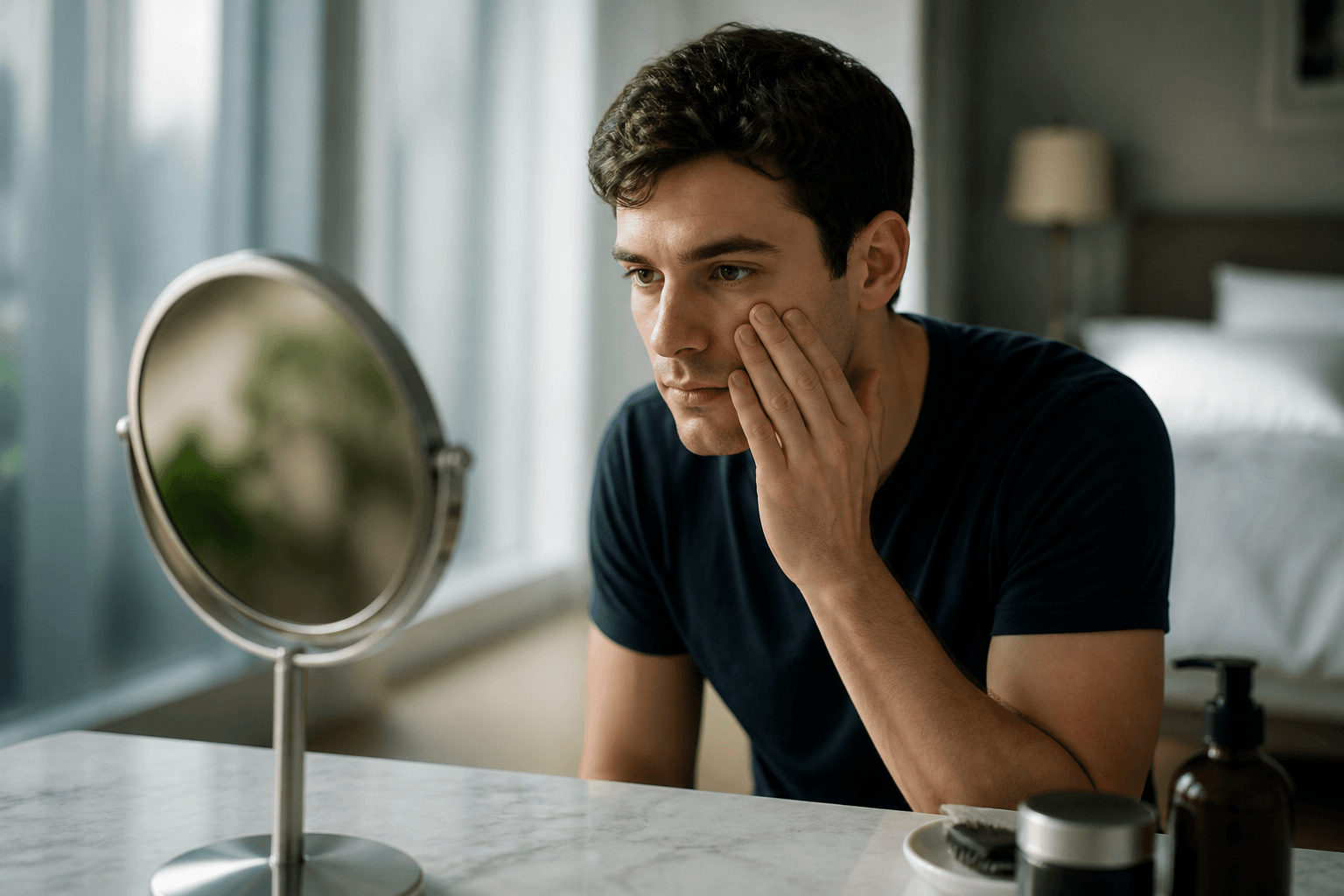
Check the pattern before buying another eye cream. If darkness changes after short nights, stress, or eye rubbing, those clues are useful. If it stays constant under the same lighting, sleep may not be the main driver.
How many hours of sleep help your face look rested?
There isn't a face-specific target, but the NHS says adults need seven to nine hours on average and that needs differ.
Use that range as a starting point, not a looksmaxxing quota. Your better target is the amount that leaves you alert during the day and doesn't require repeated catch-up sleep.
More isn't automatically better, since spending ten hours in bed while waking often may feel worse than a steady eight-hour schedule. The appearance studies measured time or sleep opportunity, but they didn't create a personal formula for skin or attractiveness.
A practical two-week sleep and face check
You can test whether sleep changes your own tired-face signals by tracking the pattern without rating your looks or worth.
- Pick a wake time you can keep for 14 days, including most weekends.
- Give yourself a sleep window within the NHS seven-to-nine-hour range.
- Note bedtime, wake time, night waking, and how rested you feel.
- Take a photo every second or third morning, not several each day.
- Use the same room, window direction, camera, distance, angle, and expression.
- Compare the first and second weeks only after the test ends.
Look at a few defined signals: eyelid openness, under-eye shadow, puffiness, eye redness, and general colour. Avoid zooming into pores or scoring the whole face.
This setup won't prove cause and effect because stress, eye rubbing, alcohol, and lighting can still interfere. It is more useful than comparing a bathroom selfie with a sunny outdoor photo.
A private photo tracker can organise consistent comparisons, but it cannot diagnose sleep deprivation, insomnia, or sleep apnoea from your face.
How can you improve sleep without buying a "beauty" product?
Start with repeatable NHS advice: keep similar sleep and wake times, make the bedroom dark and quiet, and relax before bed.
It also advises regular daytime activity because caffeine, nicotine, alcohol, large late meals, and screens near bedtime can hinder sleep.
Use one change at a time, since moving coffee earlier is easier to judge than changing six parts of your routine together.
Don't use alcohol as a sleep tool, buy prescription sleep medicine online, or copy someone else's dose. The NHS advises speaking with a doctor before taking a sleep aid, and notes that pharmacy products don't cure insomnia.
When is a tired-looking face more than an appearance issue?
Your face isn't a sleep test, and persistent tiredness matters more than whether one photo looks fresh.
The NHS advises seeing a GP when sleep problems have lasted for months, changes haven't helped, or insomnia affects daily life. Loud snoring, interrupted breathing, or sudden daytime sleep episodes can point to another sleep disorder and need proper assessment.
If darkness or swelling develops under only one eye and keeps worsening, ask a healthcare professional instead of relying on sleep tracking.
FAQ
Can one night of no sleep change your face?
Yes, controlled photo studies found more visible fatigue after severe sleep loss, including heavier eyelids, swollen or red eyes, dark circles, and paler skin. The size of the change differed between people.
Does sleeping eight hours make you more attractive?
Eight hours may help if it meets your sleep needs and replaces a short night. Studies show rested faces receive slightly better average ratings, but they don't prove that exactly eight hours changes attractiveness for everyone.
Can sleep get rid of dark circles?
Sleep may reduce dark circles made worse by fatigue or puffiness. It won't remove every dark circle because genetics, pigmentation, eczema, eye rubbing, ageing, and under-eye hollows can also cause or deepen them.
How long does it take to stop looking tired?
Research doesn't give one recovery time for facial appearance. The controlled studies tested faces after defined sleep conditions, not daily recovery. Give a steady routine several nights, then compare photos taken under the same conditions.
Can extra sleep change your face shape?
No good evidence shows that extra sleep changes adult bone structure, canthal tilt, or jaw shape. Better rest can change temporary cues such as eyelid position, puffiness, skin colour, and expression.