Quick answer
If your dental midline is off after braces, that does not automatically mean treatment failed. Orthodontists compare three things: your upper teeth with your face, your upper teeth with your lower teeth, and how your bite closes. A small, stable mismatch may be an acceptable compromise. A new shift, a changed bite, or a retainer that no longer fits needs an orthodontic review.
First, identify which line is off
“Dental midline” sounds like one measurement, but people often compare different lines.
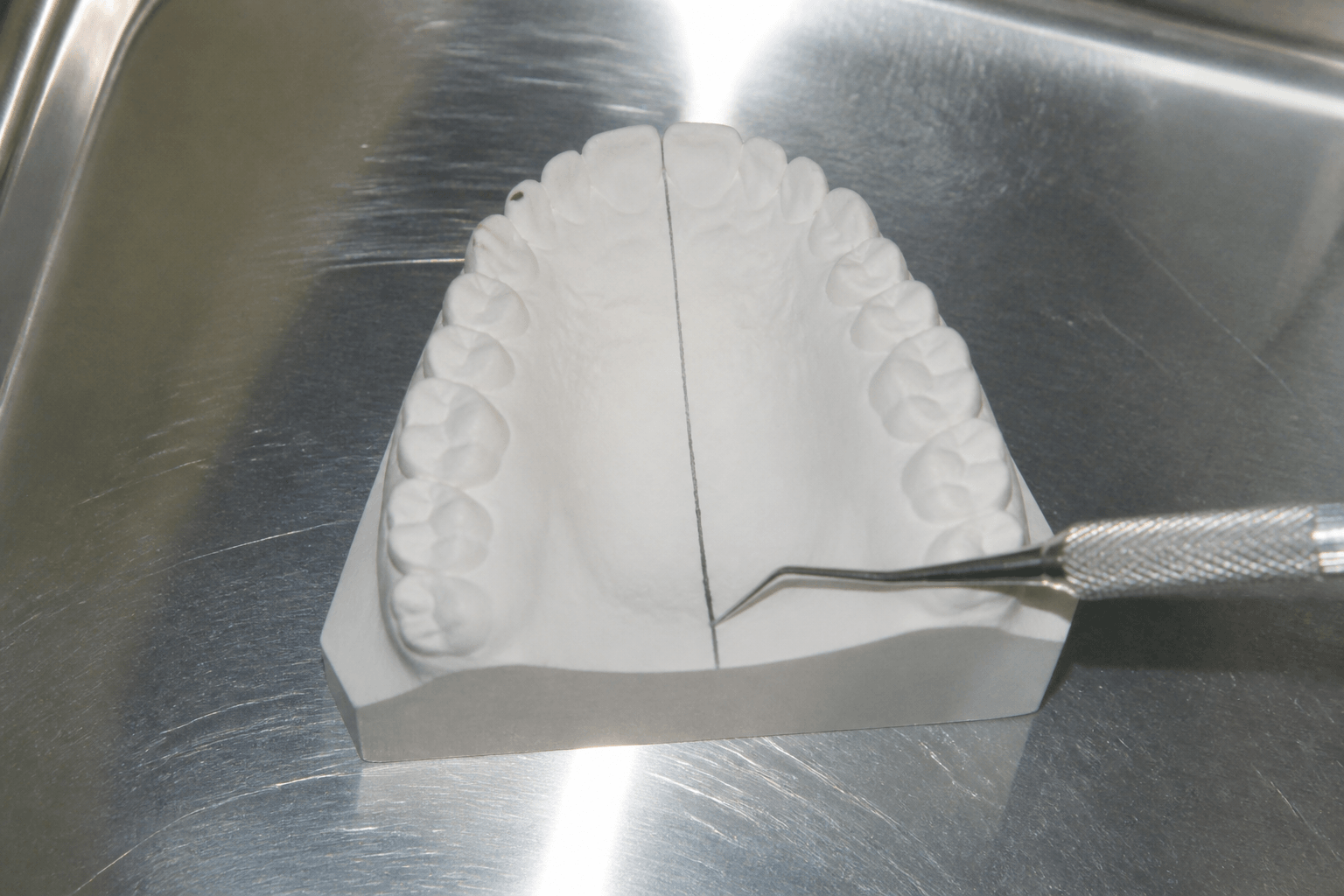
- Upper dental midline: the contact line between your two upper front teeth.
- Lower dental midline: the contact line between your two lower front teeth.
- Facial midline: an estimated center line through facial landmarks, such as the bridge of your nose and the groove above your upper lip.
Your upper and lower dental midlines can match each other while both sit slightly away from your facial center. Your upper line can match your face while the lower line sits to one side. The line may also tilt, which is different from a straight line shifted sideways.
Your lower jaw may also slide sideways as your teeth meet. That functional shift can change the lower midline between a slightly open mouth and a fully closed bite.
These patterns do not share one cause or one fix, and a straight-on selfie cannot sort them out.
Why a midline can remain off after braces
Braces move teeth, but they cannot erase every difference in teeth and jaws. An orthodontic review on dentofacial asymmetry groups causes as dental, skeletal, or functional.
Dental causes include uneven crowding, different tooth widths, missing teeth, or spaces that were not equal on both sides. Previous extractions can also change how much room is available in each half of an arch.
Skeletal asymmetry comes from the jaws rather than tooth position alone. A functional shift happens when tooth contacts guide the jaw sideways during closure. An orthodontist checks these possibilities with your bite, facial landmarks, records, and sometimes imaging.
Treatment also involves trade-offs. Moving a center line further may require more space, more tooth movement, or a change that makes the bite less stable. In some cases, the safer finish is a good bite with a small midline mismatch.
That is not the same as ignoring your concern. Your orthodontist should be able to name the mismatch, explain why it remains, and describe the cost of correcting it.
How noticeable is a small dental midline shift?
There is no universal number that separates “fine” from “wrong.” Visibility changes with tooth shape, smile width, lip position, line tilt, and how much of each arch shows.
A 2011 systematic review examined studies in which professionals and other viewers rated smiles. It reported that a small sideways deviation of about 2.2 mm could be acceptable to both groups. A tilted midline could become noticeable sooner.
Do not treat 2.2 mm as your target or a treatment rule, because the studies used different photographs, edits, and groups of raters. They measured perceived smile appeal, not bite health or what is achievable in your mouth.
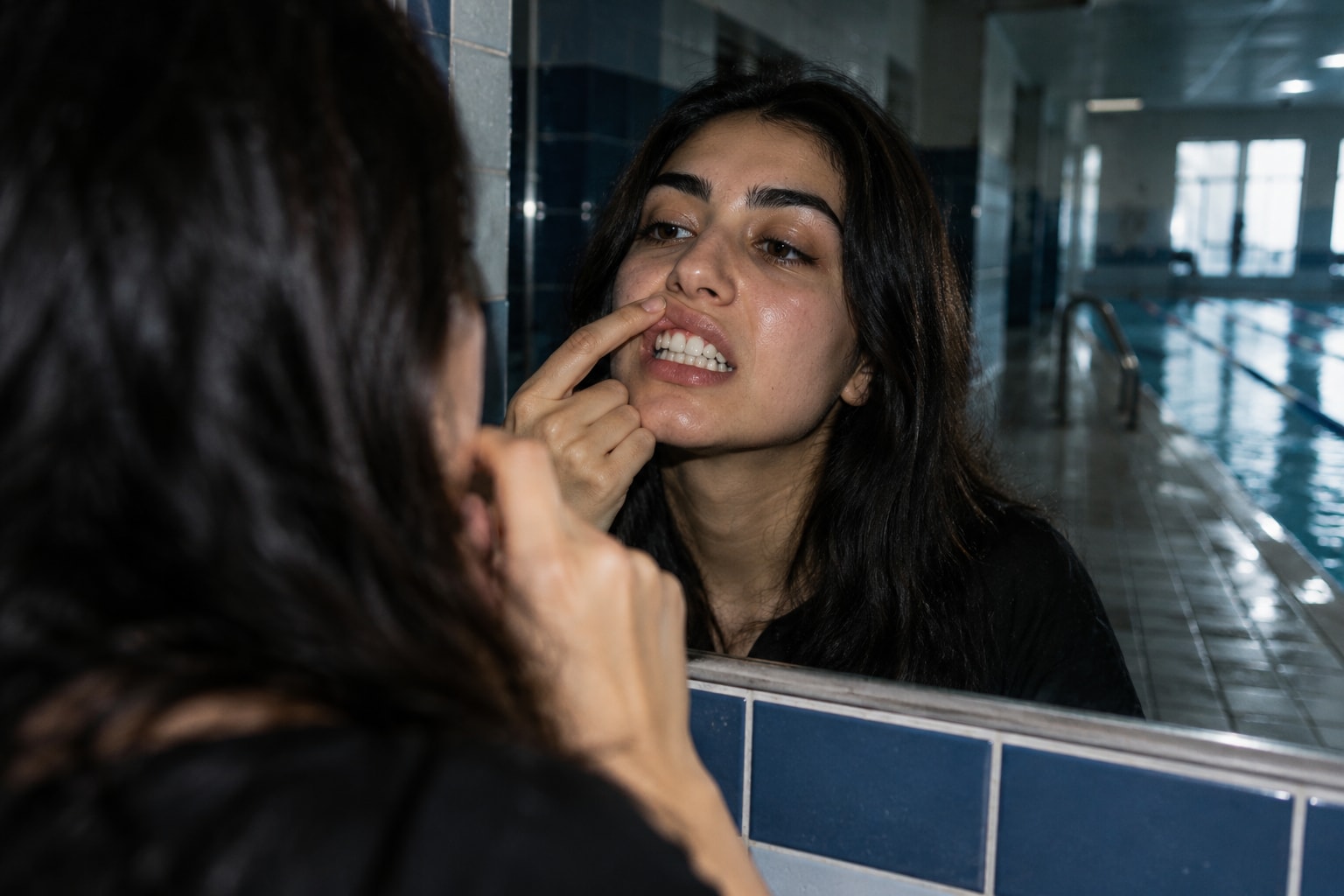
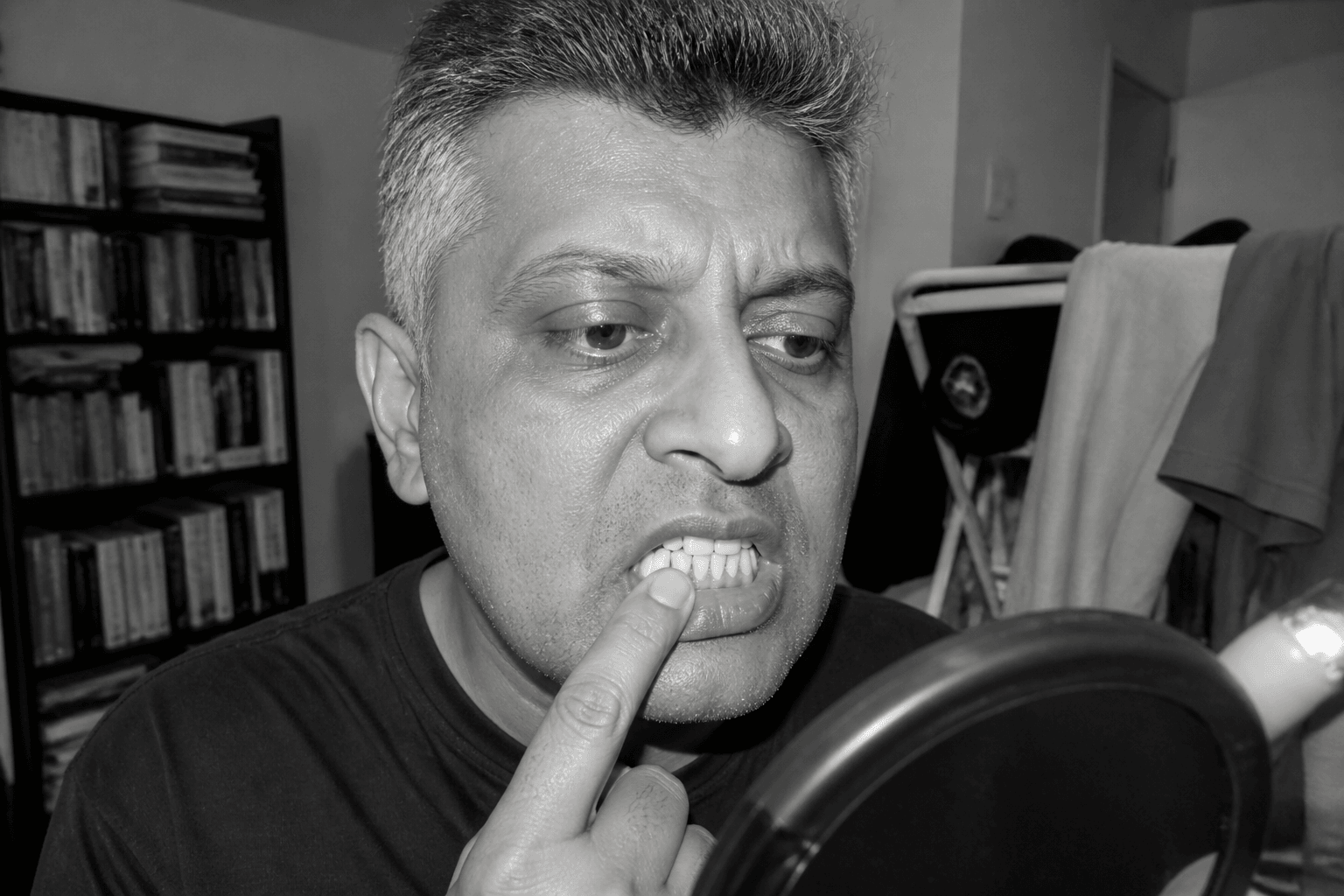
Photos can magnify the concern. Changes in camera distance, head position, lighting, or expression can make two smiles look different. Judge the line from several matched images, not one bad frame.
Check whether the teeth moved after treatment
The timing matters because a midline present when your braces came off is different from one that appeared later.
Retainers limit relapse, which is the tendency for teeth to move after treatment. The American Association of Orthodontists says a newly tight retainer can mean teeth have shifted. It advises contacting your orthodontist if the retainer no longer fits as it did.
Check these points:
- Did the midline look centered in the orthodontist's final photographs?
- Does your removable retainer now feel tighter on one side, hurt, or fail to seat fully?
- Has a fixed retainer come loose from any tooth?
- Do your teeth meet differently, or does your jaw slide as you close?
Do not force a retainer that will not seat. Do not bend its wire or adjust a bonded retainer yourself. Bring the retainer to the appointment so your orthodontist can inspect both the device and your bite.
Use a fair photo check
A photo can track a visible shift, but it cannot show roots, bone, or contact between the back teeth. Treat it as a record, not a diagnosis.
Stand in the same place with the camera at mouth height. Keep the distance and soft, diffuse lighting fixed. Hold your head level, look straight ahead, and take one relaxed view and one natural smile.
Repeat the photo once; if the line changes between shots, pose or camera position is affecting what you see. If it stays consistent, save the images and show them at your review.
No photo tool, including an AI face scan, can decide whether your bite is healthy or more tooth movement is safe.
Store comparison photos locally, or choose a service that clearly explains how it stores and deletes them.
What to ask your orthodontist
Ask for a specific answer, not a promise of perfection.
- Which relationship is off: upper teeth to face, upper to lower teeth, or both?
- Was the difference present before treatment, at removal, or only after retention began?
- Is the cause dental, skeletal, or a sideways shift during closure?
- Does the current bite function well, and what would further correction require?
- Is the retainer holding the intended result?
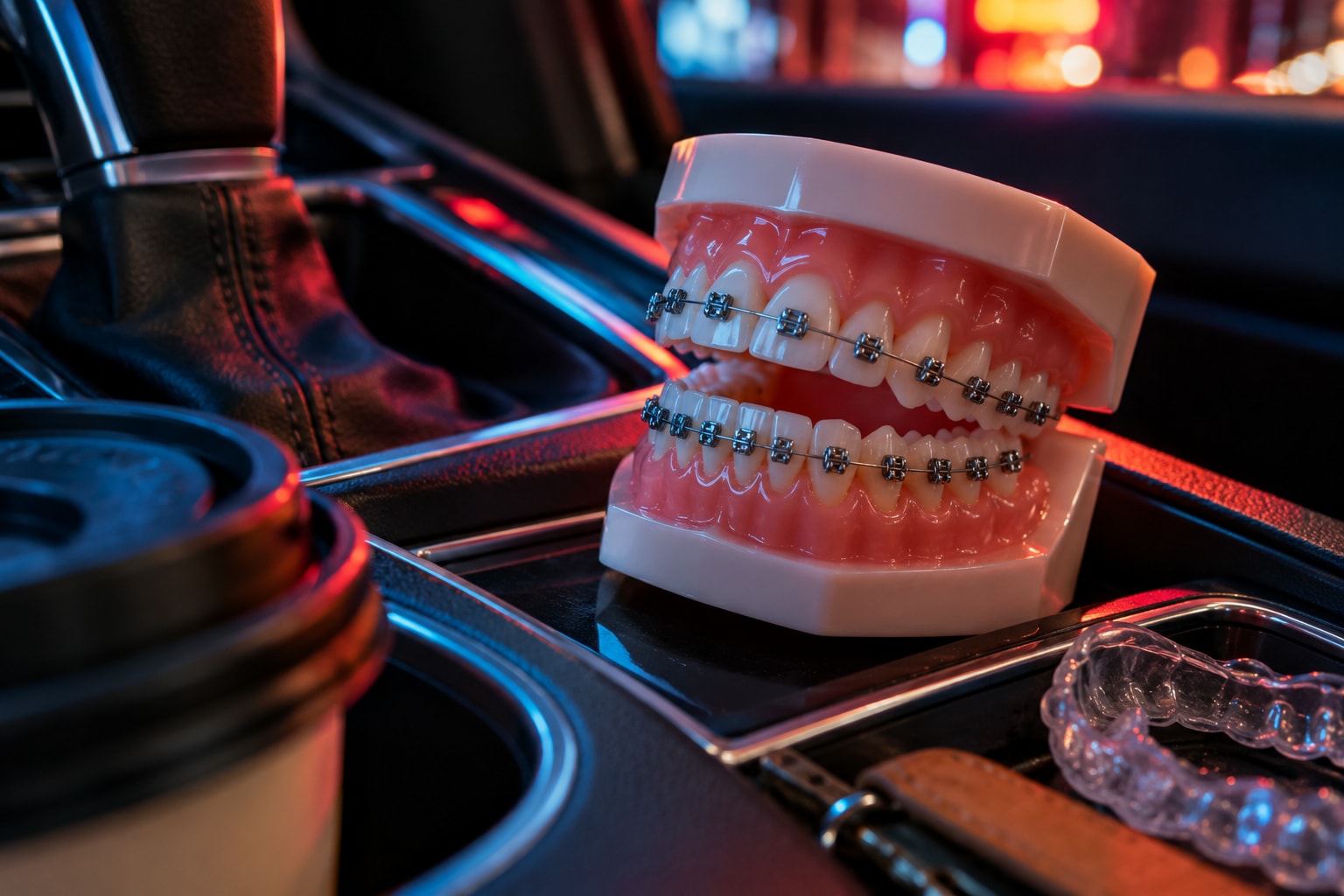
A small dental shift may sometimes be refined with braces or aligners. Other cases need space management, prescribed elastics, or different anchorage. A larger jaw asymmetry may not be correctable by moving teeth alone.
The cause decides the method, so never copy an elastic pattern from a video or attach rubber bands to your teeth. The American Association of Orthodontists documents severe gum and bone damage from unsupervised elastic use.
When a second opinion makes sense
Ask for a review before braces come off if the line bothers you now. That is the easiest time to compare your concern with the treatment plan and final records.
After removal, arrange a review if the midline is moving, the retainer does not fit, or your bite feels different. A second orthodontic opinion is reasonable when you cannot get a clear diagnosis or explanation of the trade-offs.
If the mismatch is small, stable, and the bite works well, doing nothing may be a sound choice. Perfect symmetry is not required for a healthy or good-looking smile.
FAQ
Is it normal for a dental midline to be off after braces?
It can happen even after successful treatment. Tooth-size differences, missing teeth, jaw asymmetry, available space, and bite goals can limit perfect alignment. Your orthodontist should confirm that the result is stable and explain the cause.
Will my retainer fix an off-center midline?
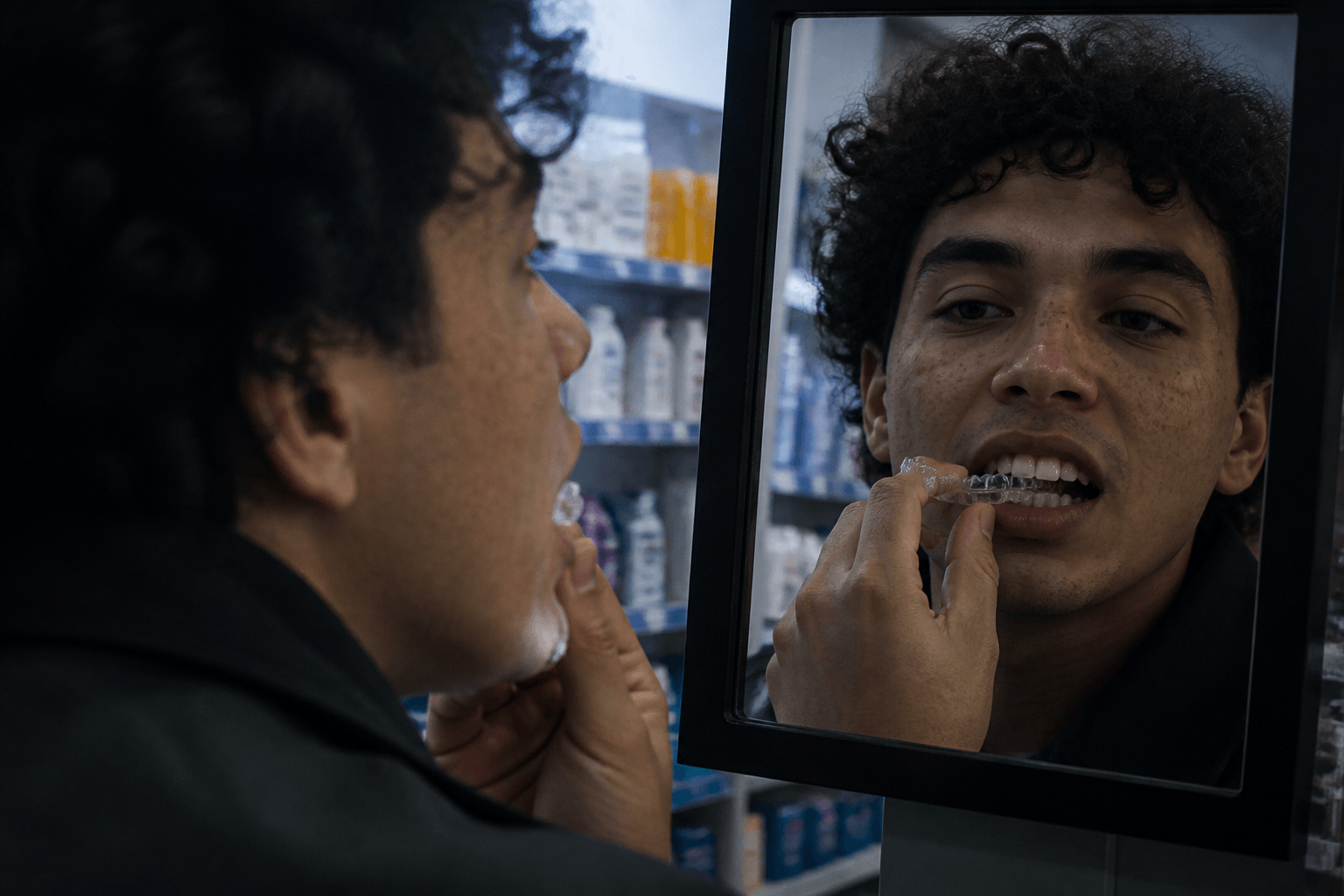
A standard retainer is designed to hold teeth, not perform a new correction. Wearing it as prescribed can reduce further movement. If it is tight, painful, or no longer seats fully, contact your orthodontist instead of forcing it.
Can orthodontic elastics correct a dental midline?
Prescribed elastics can help in selected cases, but their direction and force depend on your full bite. Unsupervised bands can damage gums, bone, and teeth. Use only the pattern and schedule your orthodontist gives you.
Does an off-center dental midline mean my face is asymmetrical?
No. A dental midline can shift because of tooth position even when the jaws are fairly balanced. A facial or skeletal asymmetry needs a broader examination than a smile photo can provide.