Quick answer
Does composite bonding glow under UV light? Often, yes, but it may not match your natural teeth. Some resins look brighter, darker or a different blue under blacklight because fluorescence varies between materials. That mismatch is cosmetic and doesn't by itself show damage, decay or poor curing.
Why teeth glow under blacklight
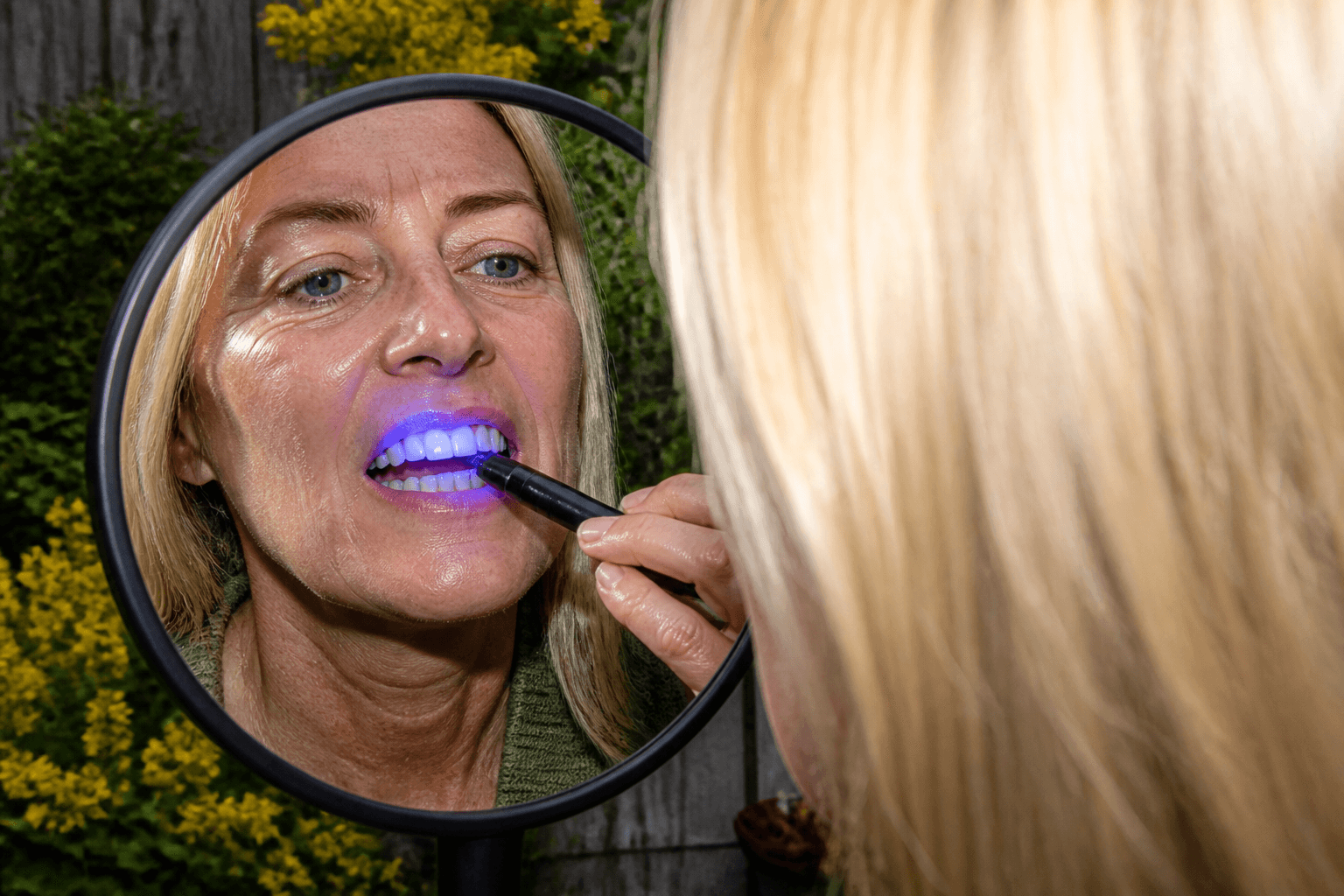
Natural teeth fluoresce because they absorb ultraviolet light and release some of that energy as visible light, which often looks blue-white. Both enamel and dentin take part, although dentin usually fluoresces more strongly.
This is different from glowing in the dark because fluorescence stops when the UV source is removed.
Composite resin can include fluorescent pigments that help it copy this part of a natural tooth's appearance. A close color match in daylight doesn't guarantee a close match under UV. Color, translucency and fluorescence are separate optical properties.
First, confirm that the tooth has composite bonding. A porcelain crown or veneer uses a different material, so resin studies don't predict how it will glow.
Why your bonding may look brighter or darker
There isn't one standard glow for composite bonding because formula matters more than most people expect.
A 2010 laboratory study tested 14 composite brands. It placed them into three groups: highly fluorescent, moderately fluorescent and weakly fluorescent. The same study found that UV light could reveal resin left on extracted teeth after researchers thought they had removed it.
A larger 2024 study compared 46 resin-based composites with human tooth samples. Some resins looked dimmer than the teeth, while most looked brighter. A few produced up to six times as much light as the comparison tooth under that study's UV source.
Those figures don't predict exactly how your smile will look. The work was done in a laboratory with a specific lamp, fixed distances and prepared samples. Your result also depends on the UV source, surrounding tooth structure and the layers used by your dentist.
Shade labels don't settle the question either. A 2023 study tested 61 shades across nine composite systems. Fluorescence depended more on the product brand than on its usual shade or opacity.
That explains several common blacklight effects:
- Bonding may look dark because it fluoresces less than the nearby tooth.
- It may look unusually bright because it fluoresces more.
- An edge may stand out where resin and natural tooth meet.
- Two bonded teeth may differ if the dentist used different materials or layers.
None of these patterns proves that the restoration has failed.
A blacklight photo is not a dental test
A photograph can make the contrast look stronger or weaker. The 2023 study found weak agreement between photographic analysis and a laboratory spectrophotometer. A phone image is not a precise fluorescence measurement.
The blacklight matters too because lamps emit different bands and amounts of UV or violet light. A resin that stands out under one source may look less obvious under another.
Use normal viewing conditions for the first check. Look at the tooth in daylight and neutral indoor light. If the bonding blends in there, a blacklight-only mismatch is usually an appearance issue rather than an urgent dental problem.
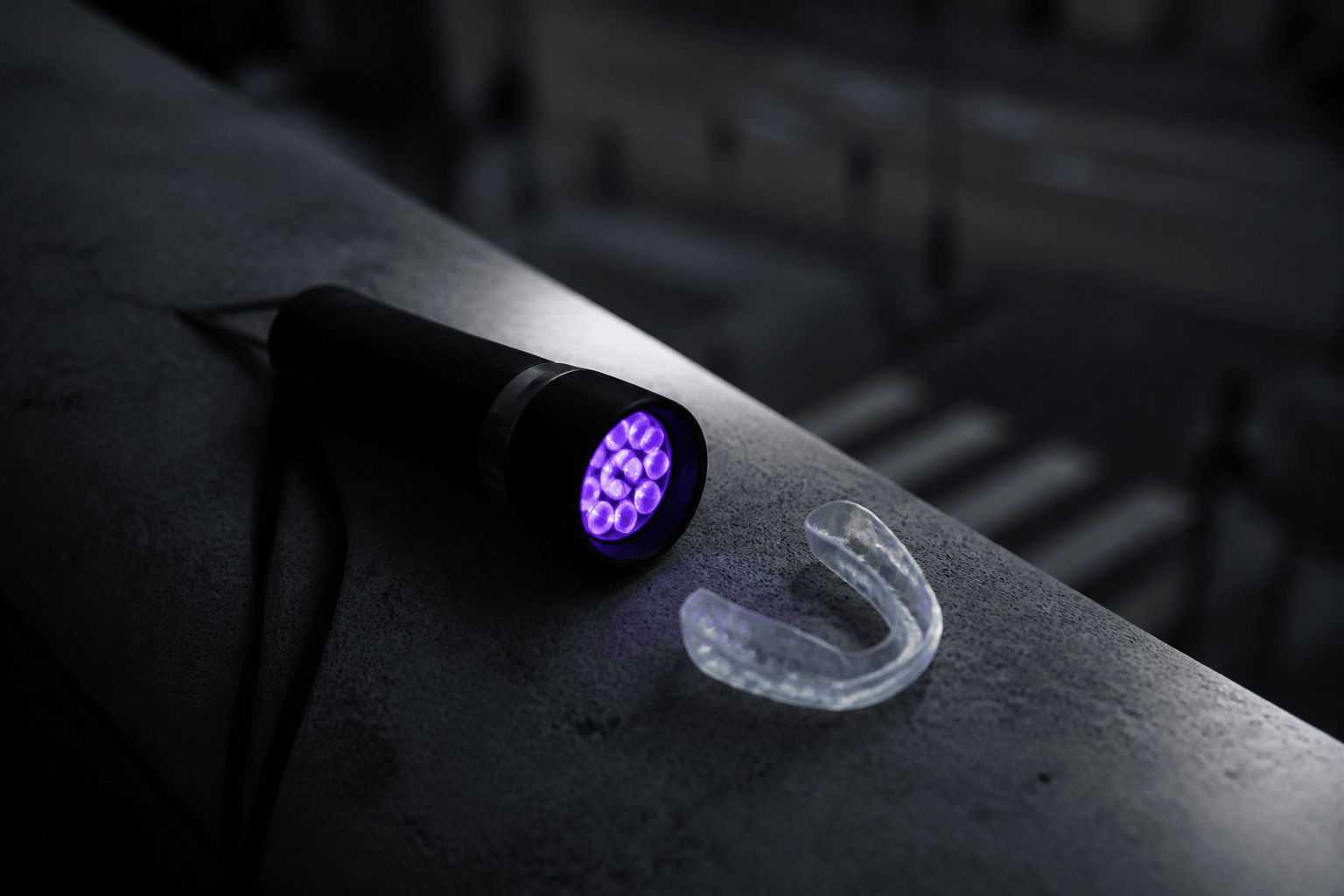
Don't buy a germicidal UV-C wand to inspect your teeth. The US Food and Drug Administration has warned that some UV-C wands can injure skin and eyes within seconds. Never stare into a UV source or aim an unverified high-powered device into your mouth.
Fluorescence is not the same as curing
The blue lamp used during modern dental bonding is commonly mistaken for a UV lamp. The American Dental Association explains that current curing lights use visible light to activate the resin's photoinitiator. Dentistry moved away from early UV curing systems decades ago.
The curing lamp hardens the resin, while a nightclub blacklight reveals how the hardened material handles a different part of the light spectrum.
So a bonded tooth that looks dark under blacklight isn't proof that your dentist skipped curing. Fluorescence can't tell you whether the bond is sealed, whether decay sits underneath or whether your bite is placing too much force on it. Those questions need a dental examination.
What to do if the mismatch bothers you
Start with the situation that matters to you. If you noticed the difference in one photo, check another blacklight setting before assuming the effect is constant. Then compare the tooth in daylight.
A blacklight-only mismatch, without pain or damage, isn't a dental emergency. You can show your dentist a clear photo and ask which composite was used. Ask whether a closer fluorescent match is possible before agreeing to replacement.
Matching isn't as simple as choosing a whiter shade. The outer resin layer, product system and natural tooth all affect the result. Your dentist can review the material used and discuss whether a closer fluorescent match is realistic.
Replacement has a trade-off because removing a sound restoration creates more dental work. The next resin still can't be promised to match every UV lamp. A conservative dentist can help you weigh that cost against how often the difference is visible.
Do not sand, scrape or coat the bonding yourself. Home changes won't reliably correct its built-in fluorescence and may roughen the surface or damage the tooth.
When the tooth needs a proper check
Blacklight contrast alone isn't a warning sign because changes you can feel matter more.
Book a dentist if the bonded tooth has a sharp edge, chips, feels loose or changes your bite. New or lasting pain and sensitivity also deserve an examination. Cleveland Clinic advises calling your dentist when a bonded tooth feels sharp or odd during biting.
A visible line in normal light can also justify a routine appointment. It may be harmless staining, but a dentist needs to inspect the margin rather than judge it from a selfie.
One unusual image doesn't define your smile. Fluorescence studies measure materials under controlled lamps, not how attractive teeth look in everyday conversation.
FAQ
Does all composite bonding glow under blacklight?
No. Many composites fluoresce, but their brightness varies widely. A 2024 study of 46 materials found examples that looked dimmer than natural tooth samples and others that looked much brighter.
Why does my composite bonding look black under UV light?
It probably fluoresces less than the surrounding enamel and dentin under that lamp, while camera exposure can deepen the contrast. A dark UV appearance alone doesn't mean the resin is broken or uncured.
Is the blue light used for bonding ultraviolet?
Modern dental curing lights usually use visible blue light, which activates chemicals in the resin so it hardens. That process is separate from the glow seen under a blacklight.
Can a dentist make bonding match under UV light?
A dentist may choose a resin with fluorescence closer to your teeth, but no material can be promised to match every light source. Ask about this before bonding or replacement if blacklight appearance matters to you.