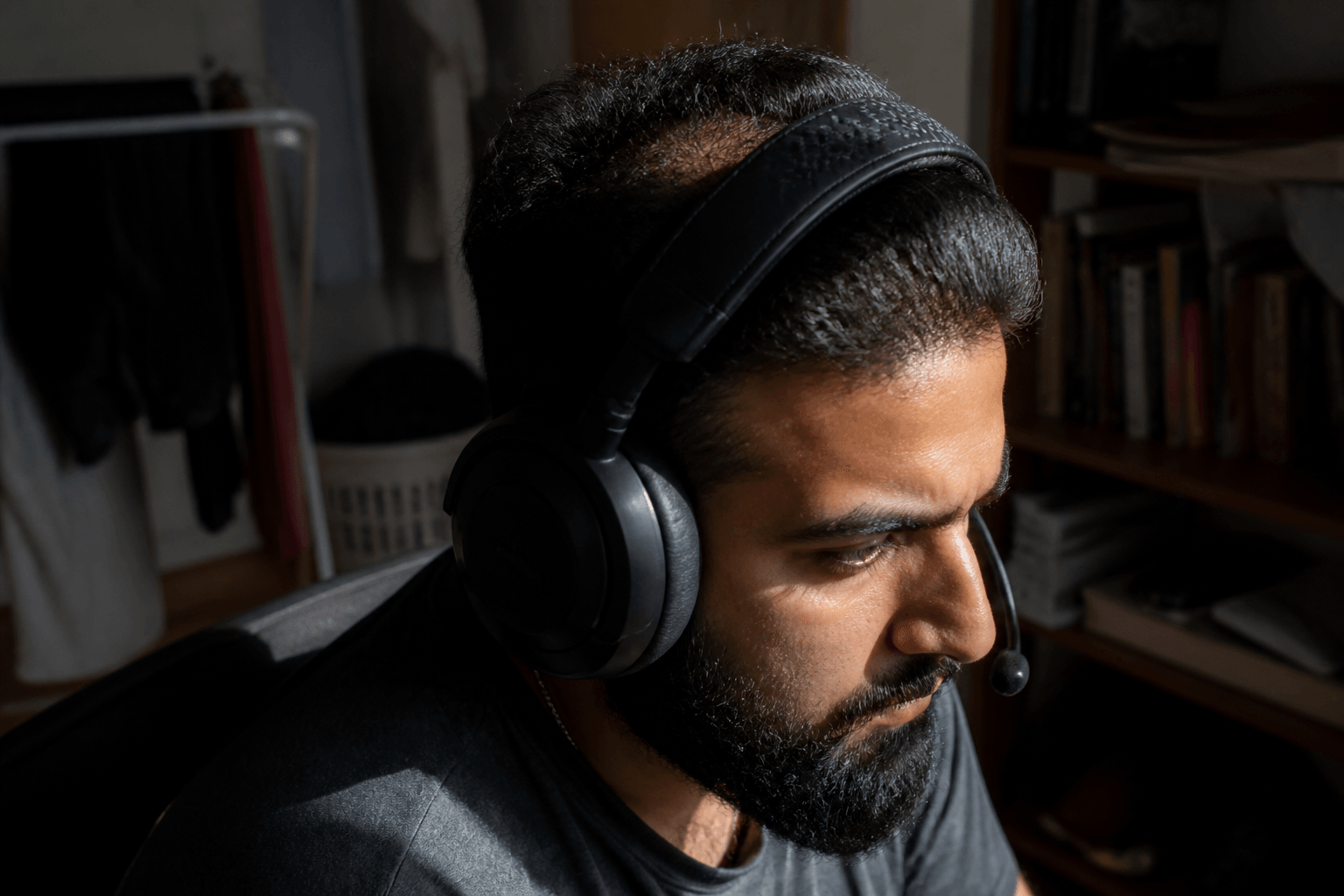
Quick answerCan gaming headsets cause hair loss? Normal headset use hasn't been shown to cause pattern baldness. Most “headset hair” is flattened or separated hair that exposes more scalp until you wash or restyle it.A tight band can still rub or pull the same spot, so pain, broken hairs, or a growing thin patch deserve attention.## Check for headset hair before hair lossA headband compresses strands, pushing them apart so more scalp catches bright monitor or ceiling light. This can make the crown look thinner in a webcam or bathroom photo.Run a simple check: take the headset off, wash or dampen your hair, and let it dry without the band. Compare the area in the same light after you restore your usual part.If the “thin” strip disappears, you saw a styling effect. Actual breakage leaves short hairs behind, while hair loss from the root doesn't vanish after one wash.Greasy or wet hair adds another trap because clumped strands cover less scalp than clean, dry, separated strands. Compare like with like.## What the headset evidence actually showsNo controlled study has tested gaming headset use against hair density. That means nobody can give you an evidence-based safe weight, clamp force, or daily time limit.The published evidence is limited but useful: Sano and colleagues reported pressure alopecia in four people who wore headbands. Fowler and Tosti's review of friction alopecia also cites a jogger whose tight headphone band rubbed the scalp.Those reports show that mechanical hair damage is possible, but they don't show that an ordinary gaming headset commonly causes it.Pressure alopecia usually appears after much harsher conditions, such as long surgery or intensive-care immobilization. A 2012 review describes prolonged, fixed pressure on the back of the scalp, a setting far removed from normal gaming.So don't label every headset dent “pressure alopecia”; look at the pattern, symptoms, and whether the change persists without the headset.## Three problems that can look alike### Friction can break the hair shaftA band that slides back and forth can weather the cuticle and snap strands. Frictional alopecia is non-scarring loss from repeated rubbing, with broken hairs at different lengths in the contact area.This is more plausible when a rough seam, worn pad, or narrow band catches the same hairs each day. Repeatedly dragging the headset into position adds more rubbing than lifting it on and off.### Pulling can stress the follicleTraction alopecia comes from repeated tension at the hair root. A headset may add tension when its band grips hair or presses a tight ponytail, bun, braid, or other style underneath.The American Academy of Dermatology lists pain, stinging, crusts, broken hairs, and patches under tension as warning signs. Long-standing traction can scar follicles, so early traction loss has a better chance of regrowth once the pulling stops.### Pattern hair loss can sit under the bandThe top of the head is also a common place for inherited hair loss to become visible. A headset may flatten the area and reveal thinning already developing, but that doesn't mean the band caused it.Check whether the change is wider than the headband's path. A receding hairline, widening part, or slowly growing crown spot points beyond a simple contact problem. Mechanical damage and pattern loss can also occur together.## How to make your headset lower-riskComfort is the first test: a headset shouldn't leave your scalp sore, burning, numb, or tender. Stop using that setup if it does.Then reduce the force on one strip of hair:- adjust the band so it rests securely without digging into your scalp;- choose a wider, smoother, lighter headband when replacement makes sense;- lift the headset off instead of scraping it across your hair;- keep tight buns, braids, and ponytails away from the contact point;- replace torn padding or exposed rough seams that catch strands;- use speakers or a no-headband option during some sessions if the area stays tender.There is no proven break schedule for hair. Short pauses can help you notice discomfort and remove continuous contact, but “ten minutes every hour” isn't a medical threshold.Don't add a tight cap under the headset as an automatic fix. It may create another edge, more heat, or extra tension. A loose, smooth layer can reduce rubbing for some hair types, but it must not make the fit tighter.## Track the spot without fooling yourselfTake a baseline photo before changing anything, using clean, dry hair, the same haircut length, and diffuse front lighting. Keep the camera distance and part consistent.Photograph the crown, both temples, and the exact strip under the band once a month. Keep the images private; you don't need to post close-ups publicly to compare them.Stop contact with the affected spot while you track it. Short broken hairs won't become full length in a week. The British Association of Dermatologists says regrowth from early traction alopecia may start around three months after tension stops.Don't use oils, supplements, or mail-order hair medication as a test because they won't identify the cause. A clear pattern and a scalp examination are more useful.## When a dermatologist should check itBook an assessment if the patch grows, persists after avoiding the band, or has many broken hairs. Get checked sooner for pain, burning, marked scale, crusts, pus, or smooth shiny skin.Sudden round patches need a proper diagnosis, as does thinning that spreads across the crown or hairline. Hair loss has many causes, and early treatment matters for some scarring conditions.Bring your monthly photos and the headset to the appointment. They help show the contact point without asking a photo or an AI scan to diagnose your scalp.## FAQ### Can a gaming headset cause a bald spot on top of my head?It is possible but appears rare. Published reports describe local loss from tight headbands, pressure, and repeated friction, not routine gaming headset use. A dermatologist should assess a persistent bald spot because pattern loss and other scalp conditions are more common explanations.### Does a headset dent mean my hair follicles are damaged?No; a temporary groove usually means the band flattened and separated your hair. Follicle damage is more concerning when you see persistent thinning, short broken hairs, scalp pain, inflammation, or a patch that keeps expanding.### Will headset-related hair breakage grow back?Broken hair can regain length if the follicle remains healthy and the rubbing stops; early non-scarring traction or pressure loss may also regrow. Smooth, shiny skin can signal scarring, which needs prompt assessment and may not regrow.### Are earbuds safer for your hair than a headset?Earbuds remove the headband contact, so they avoid that specific source of pressure and rubbing. You don't need to switch if your headset fits comfortably and your hair and scalp show no persistent change.