Quick answer
The "AI face" is the polished, symmetrical, poreless version of a person that appears when image generators, beauty filters, and editing apps smooth away real skin and exaggerate ideal features. It looks convincing because the image still resembles the person, but it is not a normal target for a human face. Pixels can be moved perfectly. Skin, bones, healing, lighting, genetics, and age cannot.
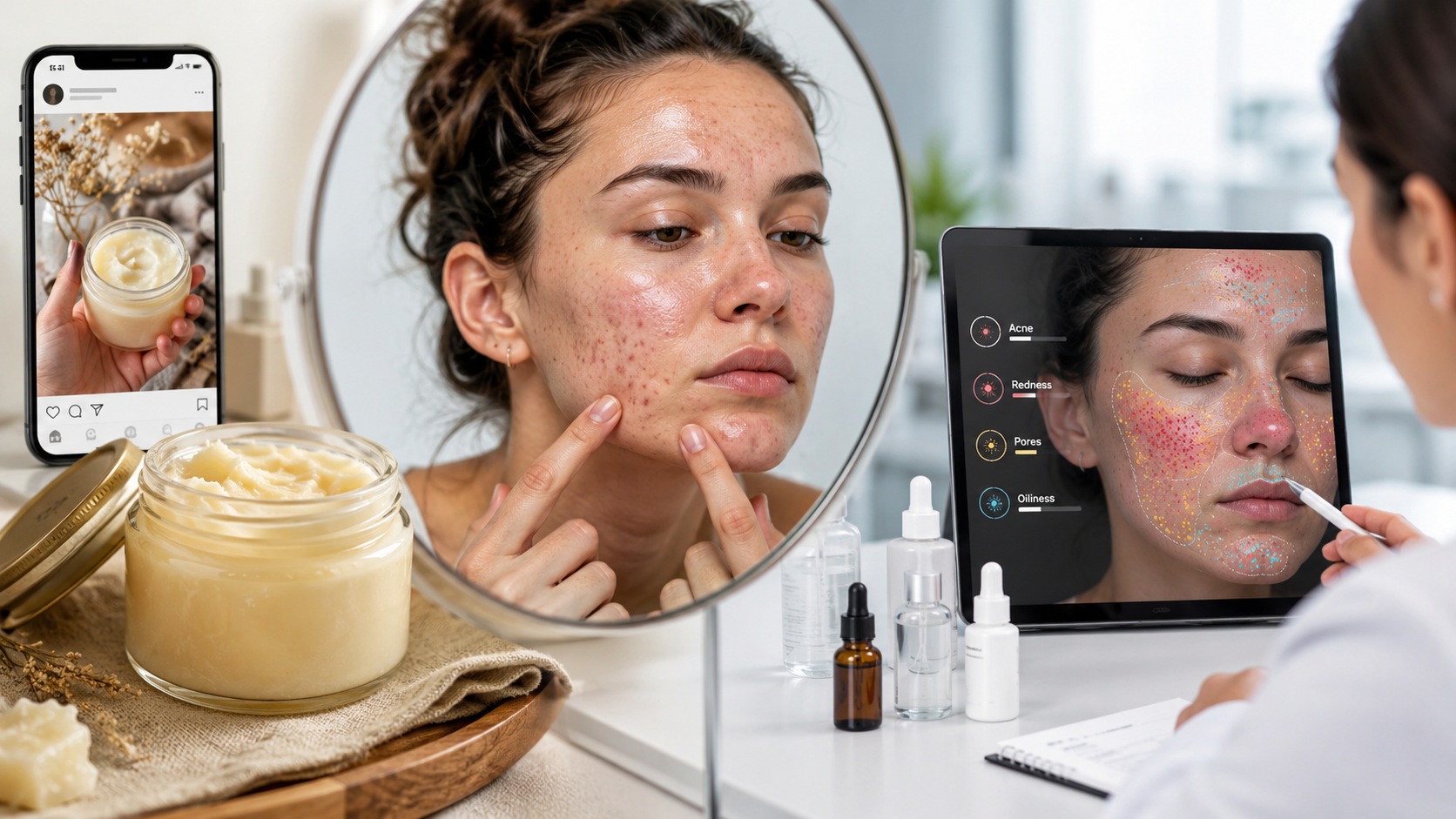
AI can still be useful for appearance self-improvement when it is used carefully. A private skin scan can help you track visible signals such as acne, pores, redness, oiliness, and dark circles. That is very different from asking AI to invent an impossible version of your face and then treating the result as a beauty requirement.
The healthy goal is not to look AI-generated. The healthy goal is to understand your real skin better.
Why this is trending
People have always brought inspiration photos to salons, clinics, and cosmetic consultations. AI changes the situation because the inspiration photo can now be a hyper-idealized version of the person themselves. That creates a stronger emotional pull: it feels like proof of who you could become, even when the image is a synthetic fantasy.
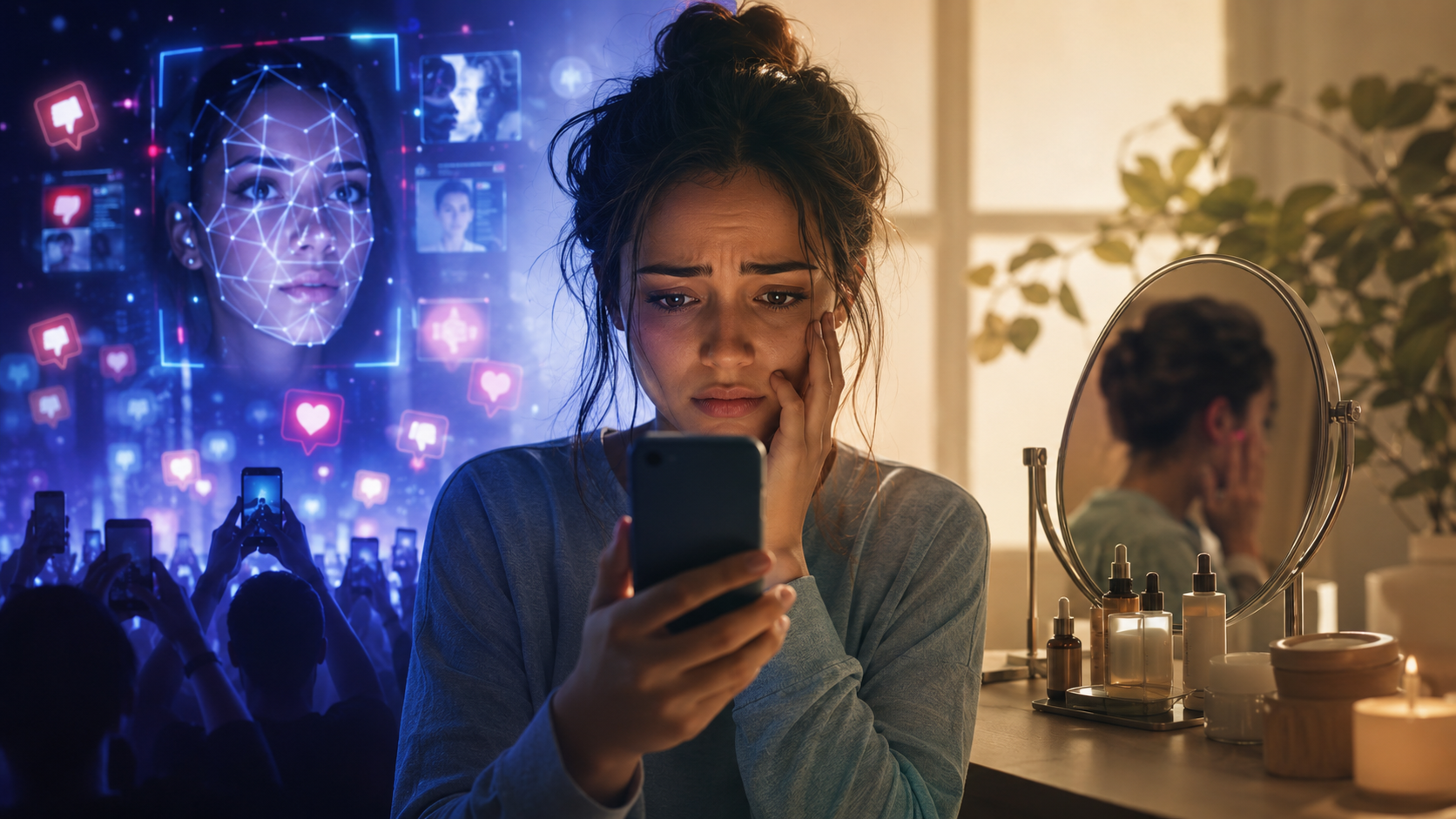
The trend also fits the way social platforms reward smoothness and symmetry. Front cameras, portrait modes, filters, and generated avatars have trained many people to see normal texture as a flaw. Under-eye shadows, pores, acne marks, asymmetry, expression lines, and uneven tone can feel unacceptable when every feed is full of edited faces.
Recent reporting on the "AI face" describes surgeons being asked to recreate digital images with flawless skin and idealized proportions. The problem is that real bodies do not behave like prompt outputs. Even skilled professionals cannot guarantee pixel-level symmetry, identical healing, or permanently filtered skin.
What the evidence says
The evidence supports a cautious split. AI in dermatology and skin analysis has real potential, especially for pattern recognition, triage support, education, and access. But consumer AI health and dermatology apps also raise concerns about validation, safety, transparency, privacy, and whether users understand the limits of automated outputs.
For appearance content, the same rule applies: AI is most useful when it narrows a question, not when it creates a fantasy. "Where is redness concentrated?" is a narrower question. "Do I have more visible shine in my T-zone this week?" is a narrower question. "Can I become this generated face?" is not a useful question because the target may be biologically unrealistic.
AI also reflects the data and aesthetics it is trained on. Generated beauty often collapses diversity into a narrow template: smoother skin, sharper contours, larger eyes, smaller pores, more symmetry, and fewer signs of age or fatigue. That may look attractive in a grid of images, but it can make real human variation seem like a defect.
What LooksMax Scan can help you check
LooksMax Scan focuses on visible skin signals, not invented facial ideals. The analyze flow is built around one clear front-facing photo, facemesh validation, zone-aware analysis, and five core metrics: acne, pores, redness, oiliness, and dark circles. The output is designed to give heatmaps, per-zone scores, and a practical plan rather than a beauty verdict.
That makes the tool more grounded than an AI-face generator. You are not being asked to chase a synthetic face. You are being shown where your current image suggests visible skin concerns may be strongest. If the scan shows oiliness concentrated around the nose and forehead, your next step may be routine adjustment. If redness is high after adding a new active, you may need to simplify. If dark circles look different depending on light direction, you can learn how much photography affects perception.
The useful question becomes: what can I improve safely over the next few weeks? That is a better self-improvement question than: how do I become a generated image?
What it cannot diagnose
LooksMax Scan cannot diagnose medical conditions, and it cannot tell you whether a cosmetic procedure is right for you. It cannot determine the cause of acne, redness, oiliness, or dark circles from a photo alone. It cannot evaluate moles, wounds, infections, allergic reactions, or urgent skin problems.
It also cannot promise that changing skincare will make you look like an AI image. Pores do not disappear permanently. Skin texture is normal. Faces are not perfectly symmetrical. Lighting can exaggerate shadows and color. Camera lenses can distort proportions. Any tool that ignores those facts is selling a fantasy, not useful analysis.
If an AI-generated image makes you feel distressed or obsessed with changing your face, take that seriously. A skin scan should support awareness and routine-building, not fuel panic. For persistent distress about perceived flaws, a mental health professional may be more helpful than another image tool.
Practical next steps
Use AI for measurement, not fantasy. Save the generated ideal face if you want, but do not treat it as a medical, cosmetic, or personal requirement. Instead, take a clear baseline photo in normal light and ask measurable questions: acne distribution, pore visibility, redness, oiliness, and under-eye darkness.
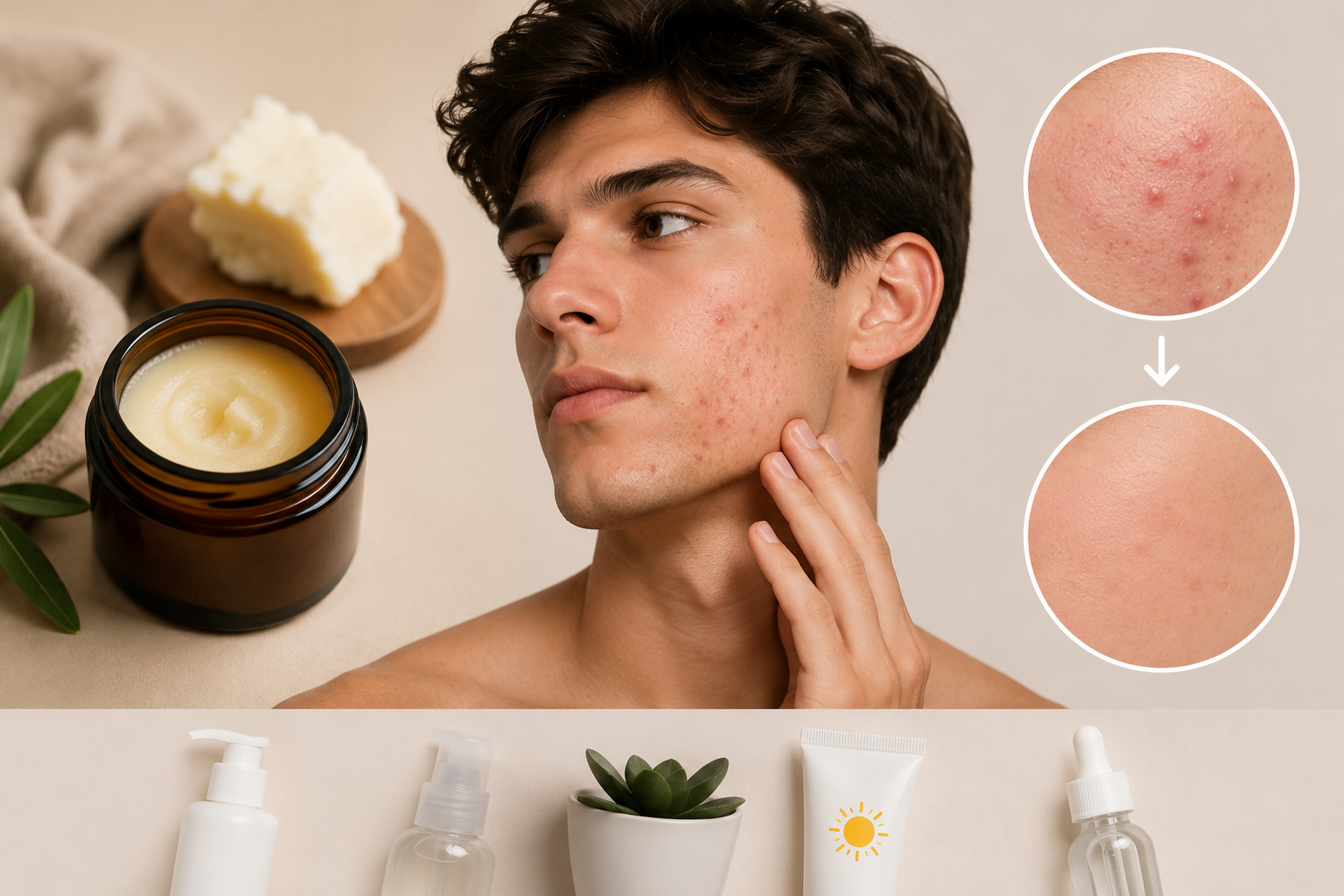
Keep your skin routine realistic. Use a gentle cleanser, protect your skin from UV exposure, moisturize if your skin needs it, and introduce active ingredients slowly. When you take progress photos, use the same place, light, distance, and expression. This reduces the chance that a lighting change looks like a skin change.
Be skeptical of content that turns AI beauty into urgency. You do not need to fix every natural feature. You do not need to copy a generic digital template. The best use of computer vision is to help you understand your real face with more clarity and less noise.
Run a private AI skin scan on LooksMax Scan.