Quick answer
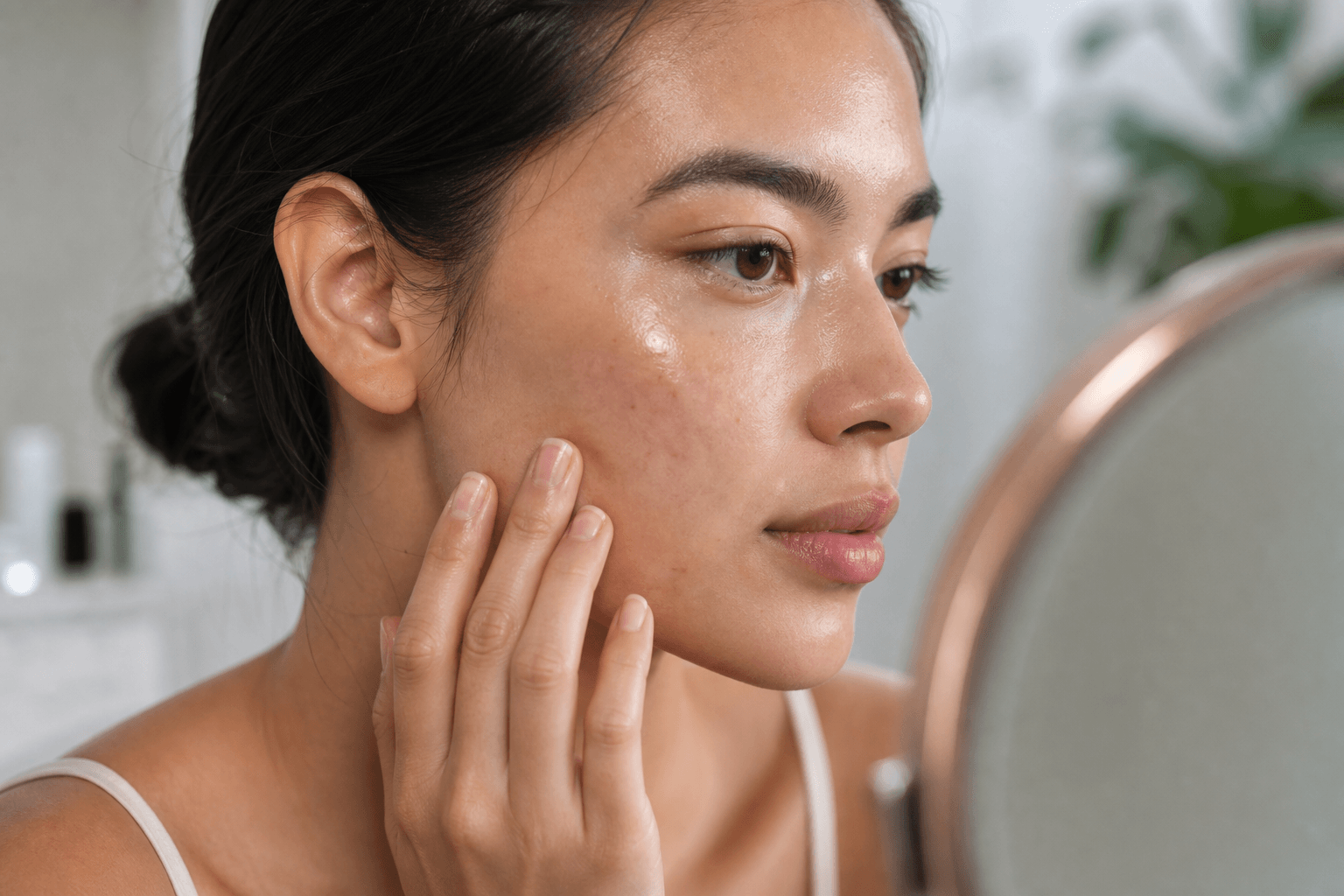
Oily skin means the face produces a lot of sebum, usually showing as shine through the T-zone, enlarged-looking pores, and makeup or sunscreen breaking down quickly. Dehydrated skin means the skin lacks water or is losing water too easily. The confusing part is that the same face can be both oily and dehydrated.
That is why the fix is not always "dry it out." If your skin is shiny but tight, sensitive, flaky, or red, stripping more oil may make the face look worse.
| Signal | More like oily skin | More like dehydrated skin |
|---|---|---|
| Midday look | Shine returns quickly, especially nose/forehead | Can look shiny but also dull or creased |
| Feel after washing | Comfortable at first, oil returns later | Tight, stretched, or squeaky-clean feeling |
| Pores | Pores look more visible where oil is highest | Texture looks rough, papery, or patchy |
| Redness/stinging | Not always present | More common, especially after products |
| First move | Gentle oil control, non-comedogenic products | Hydration, moisturizer, fewer harsh actives |
Why oily skin gets dehydrated
Oily skin routines often become too aggressive: foaming cleanser twice a day, acids every night, retinoid too fast, clay masks too often, and no moisturizer because the face already feels oily. That can leave sebum untouched while making the water-loss and irritation side worse.
The better question is: "Where is the oil, and is the skin comfortable?" If the T-zone is shiny but cheeks sting, treat those zones differently instead of applying one harsh routine everywhere.
What to change first
Start with small, readable changes:
- Keep cleanser gentle. Skin should feel clean, not stripped.
- Use a lightweight moisturizer even if you are oily.
- Prefer non-comedogenic sunscreen and moisturizer textures.
- Add oil-control steps slowly, such as salicylic acid or a retinoid, only if your skin tolerates them.
- Avoid judging results from one mirror check under bad lighting.

How an AI scan helps
LooksMax Scan measures oiliness distribution, pore visibility, redness, acne, and dark circles from the same photo workflow. That matters because oily-versus-dehydrated decisions are visual over time. If oiliness falls but redness rises, your routine may be too drying. If oiliness stays concentrated in the T-zone but cheeks calm down, your routine may be moving in the right direction.
Use repeat photos under similar lighting. One scan is a snapshot; two or three scans become a trend line.
What the scan cannot tell you
The scan cannot measure water content inside your skin, diagnose dermatitis, or decide whether a product ingredient is right for you. It can show visible shine, redness, pores, and breakout patterns so you have a less subjective baseline before changing your routine again.
Run a private AI skin scan on LooksMax Scan: https://looksmaxscan.com/analyze