Quick answer
Gray eyebrows in your 20s can reflect inherited early graying, but a new white patch needs a different assessment. Hair loses color when its follicles produce less melanin, the pigment that colors each strand. Scattered gray hairs don't prove that you're deficient in vitamins or that stress caused the change. Ask a clinician about a spreading patch, pale skin beneath it, or accompanying hair loss.
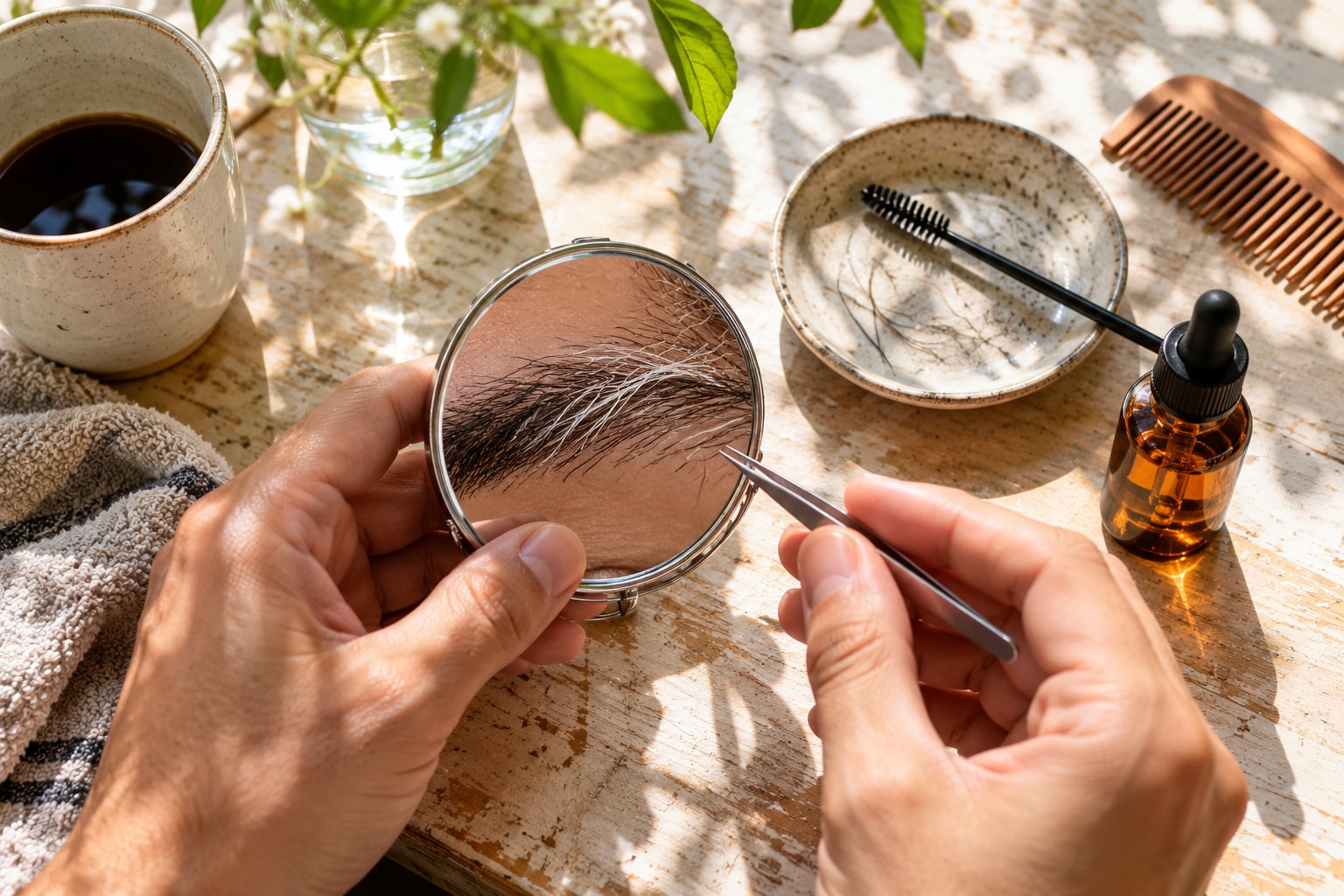
Check the pattern of white hairs
Check whether you have a few separate gray hairs or a cluster, then look at the skin beneath them. These details give a clinician more useful information than your age alone.
A few scattered strands can fit ordinary graying. The American Academy of Dermatology identifies family history as one factor in how early hair loses color. Ask whether close relatives noticed early graying, while remembering that family history doesn't explain every new change.
DermNet calls a local cluster of white hairs poliosis, which can affect your eyebrows as well as other areas. It's a visible sign, not a diagnosis.
Poliosis can occur with vitiligo, which affects pigment, or alopecia areata, which causes patchy hair loss. Some medicines and previous injuries can also be involved. The skin underneath may look normal, so unchanged skin color doesn't rule it out.
Book an appointment for a new or expanding white patch rather than trying to treat it with supplements.
How unusual is eyebrow graying this young?
Research on eyebrow whitening is limited, so general statistics about gray scalp hair don't tell you when your brows should change.
In 2014, Feride Aylin Kantarcı and colleagues found no eyebrow whitening among patients aged 1–40 in a study of 1,545 people. Whitening first appeared in the 41–50 group.
That finding needs context. The researchers excluded people with conditions that could cause premature whitening, as well as systemic disorders. Everyone attended one ophthalmology clinic in Istanbul, so the sample doesn't represent every background.
The study doesn't establish that a gray eyebrow hair before 40 means disease. It also can't estimate how common early whitening is among people excluded from the research.
Does it mean you're missing a vitamin?
Eyebrow color alone can't diagnose a deficiency, and the evidence often cited online concerns scalp hair.
Deepashree Daulatabad and colleagues compared 52 Indian patients whose scalp hair began graying before age 20 against 52 controls. Vitamin B12 deficiency occurred in 29 patients with graying and nine controls.
That finding links low B12 with early graying, but doesn't prove that supplements restore eyebrow color.
The same study found different average biotin levels between groups, but nobody in either group had a biotin deficiency. Turning that finding into a recommendation for biotin gummies goes beyond the evidence.
If you're concerned, discuss your diet and health history with your clinician before ordering tests or buying supplements. Treat a confirmed deficiency for your health, without assuming a change in eyebrow color will follow.
What stress research actually found
Stress is a possible contributor to graying, but a white brow hair isn't a stress test.
In 2021, Ayelet Rosenberg and colleagues mapped pigment changes along individual hairs from 14 participants, finding that some regained color. In selected examples, changes lined up with participants' reports of stressful periods and relief from stress.
This was a small observational study, not a trial of stress treatment for gray eyebrows. It didn't establish a way to predict which hairs would regain color.
The study supports further research into reversibility, but it doesn't establish a reliable treatment for you to try. Promising that better sleep, a holiday, or a serum will darken your brows goes beyond those results.
What to do before buying a treatment
Before an appointment, write down when you first noticed the change and whether it's spreading. Note any nearby skin changes, hair loss, new medicines, or recent injury.
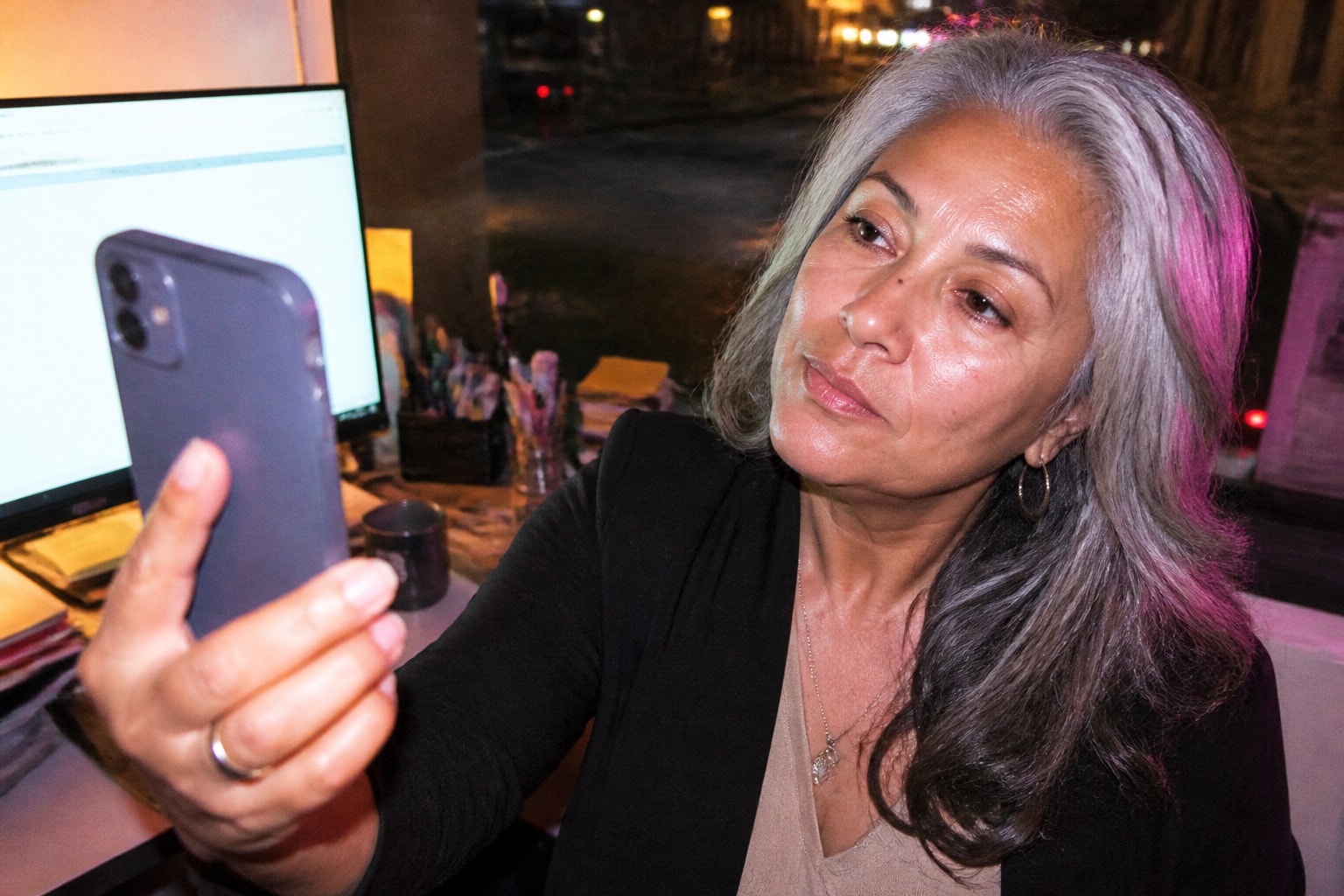
If you'd like a private record, take a clear photo before applying brow makeup and save it on your device. Use the same light and distance for any later comparison, rather than checking each strand daily.

Covering the hairs without damaging your brows
Leaving gray hairs visible is a valid choice. If you prefer coverage, try a wash-off pencil or tinted gel labeled for eyebrows. Follow its directions, starting with a small amount so you can decide how much coverage you want.
Don't use scalp or beard dye around your eyes. The FDA warns that eyebrow and eyelash dyes can cause serious eye injuries. If you want longer-lasting color, discuss suitable products and your allergy history with a qualified professional.
Keep your hands and applicators clean, and don't share eye cosmetics with anyone else. Stop a product if it irritates you, and seek medical advice if irritation persists. Avoid makeup over inflamed skin.
Avoid repeatedly plucking hairs just to hide their color. The American Academy of Dermatology warns that plucking can cause thinning, while the replacement hair can still be gray.
FAQ
Does one gray eyebrow hair mean all my hair will turn gray soon?
One strand doesn't give you a reliable timetable, since hair pigmentation varies between follicles and body areas. The eyebrow study measured people at one point; it didn't predict how quickly someone's whole head would gray.
Can gray eyebrow hairs turn dark again?
Sometimes hairs regain pigment, but you can't count on it. Human research documents reversal in some hairs, while DermNet notes that some forms of poliosis can repigment. Neither finding establishes a reliable home treatment.
Should I pluck a white eyebrow hair?
Leave it or use temporary coverage, since repeated plucking can thin your brows without fixing pigment loss. A replacement strand may still be white.
Does a white patch in one eyebrow mean vitiligo?
Vitiligo is one possible cause of poliosis, so a white patch alone doesn't confirm that you have it. A clinician can examine the hairs and surrounding skin, then decide whether further checks are needed.