Quick answer
Why does my electric shaver miss hairs under my chin? Hair there often lies flat, changes direction across the curve, or never enters the cutter openings.
A dirty or worn head, long stubble, poor contact, and repeated identical strokes can make the patch worse. Map the growth, adjust your approach, use light pressure, and stop before your skin feels sore.
Why the under-chin area gets missed
Your chin and upper neck form a curve, while beard hairs can point in several directions across that small area. A stroke that catches one patch may glide over the next.
An electric shaver must guide each hair into an opening before its moving cutter can cut it. Panasonic explains that flat-lying hair is harder to capture than hair standing away from the skin. Its guide also lists longer hair, debris, dull blades, worn foils, heavy pressure, and fast passes as possible causes.
A 2016 review in the International Journal of Cosmetic Science describes shaving as an interaction between beard hair, follicles, and responsive facial skin.
That makes a more powerful shaver a poor first fix, so start by finding which part of your process fails.
Start with a grain map
Wait until your stubble direction is easy to see and feel. Use even bathroom light or soft daylight, then lift your chin without pulling the skin tight. Run clean fingers over each small area in several directions.
The smoother direction follows the grain, while the rougher direction usually runs against it. Notice where the pattern turns under your chin and beside each jaw corner.
The American Academy of Dermatology advises shaving in the direction of growth to reduce razor bumps and irritation. Use that direction for your first pass, especially if you often get ingrown hairs.
If your skin stays calm, try one cross-grain pass over the missed patch. Don't make repeated against-grain passes your default when bumps or burning follow.
Fix contact before adding pressure
Pressing harder doesn't correct a poor angle. Panasonic lists heavy pressure among the factors that can worsen missed stubble, while Philips recommends light pressure around awkward contours.
Your aim is to present a flatter surface to the head. Lift your chin, turn slightly away from the side you're shaving, and reposition the shaver before each short pass. Keep the whole shaving surface in contact where your model allows it.
Shaver type changes the motion, and Philips recommends small circles for its rotary heads. Panasonic tells foil-shaver owners to hold the foil perpendicular to the skin and move slowly; follow your manual if its directions differ.
A gentle skin stretch can help a shaver catch flat hair, but it is not a rule for every face. If tight stretching leads to bumps or burning, stop stretching and use lighter passes.
Check the head before blaming your beard
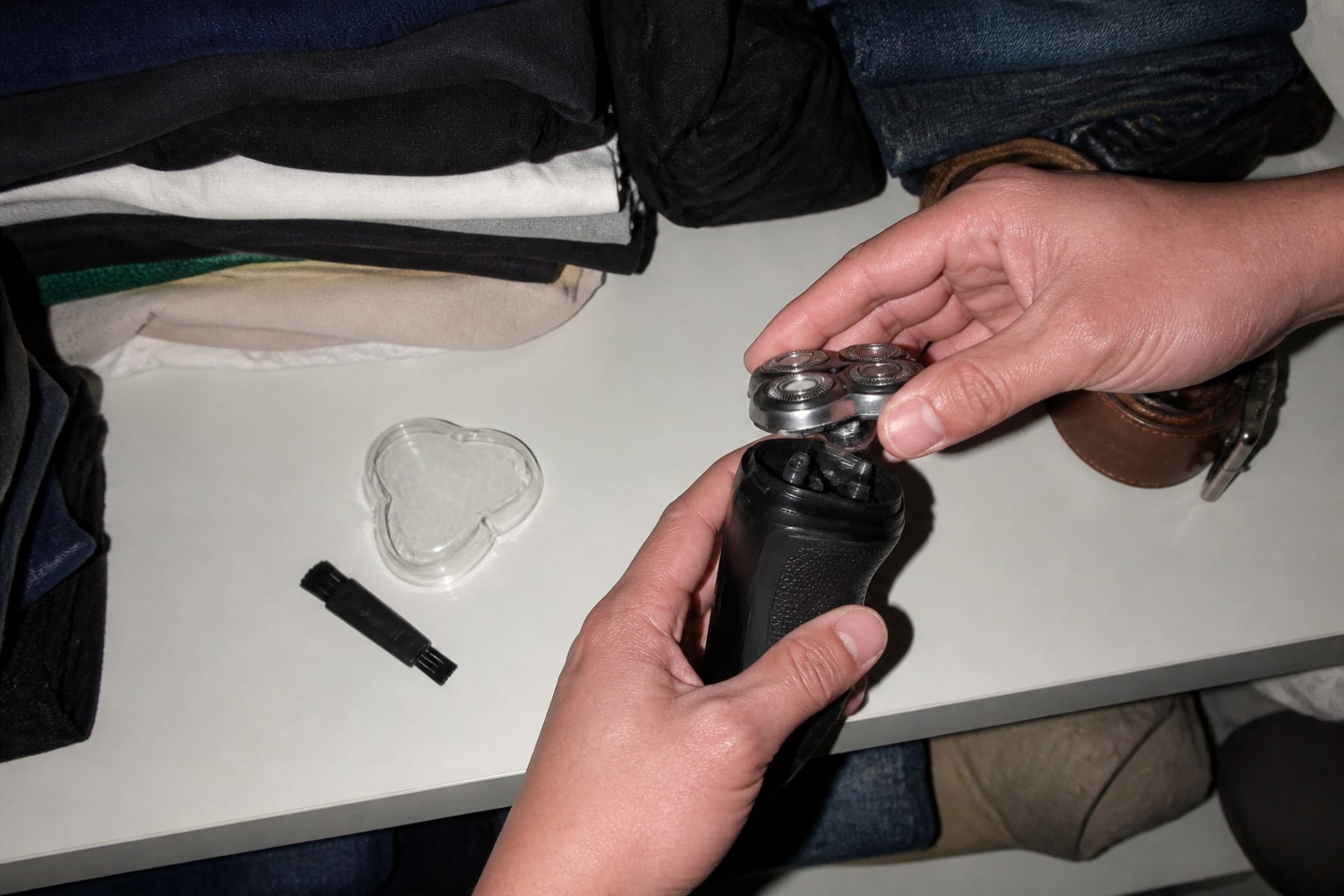
Switch off the shaver and remove its head as directed, then clear residue from the foil, guard, cutters, and collection chamber. Panasonic identifies debris as one cause of weaker cutting.
The dermatology academy advises cleaning an electric razor every five to seven shaves. Some manufacturers call for cleaning after each use, so your model's instructions take priority.
Inspect the foil or guard under good light. A bent foil, damaged guard, dull blade, or worn cutter can leave the same strip behind each time. Replace parts on schedule, stop using damaged cutting parts, and never press harder to compensate for a worn head.

Match the method to your stubble length
Main shaving heads can struggle when longer hairs lie flat against the skin. Panasonic identifies both longer hair and flat growth as reasons for missed stubble.
If you have skipped several days, shorten long hairs with the shaver's trimmer first, then use the main head. One careful preparation step is kinder than scraping the same long hair with repeated passes.
Use a dry-only shaver exactly as its manual describes; wet-shaving models may allow water and shaving gel to soften the hair. The dermatology academy recommends wetting hair before blade shaving, but that advice does not override an electric shaver's manual.
Run a controlled under-chin test
Change one thing at a time, or a closer result will not tell you what fixed the problem.
- Clean the head and check its cutting parts.
- Let enough stubble grow to reveal its direction, then pre-trim any long hairs.
- Shave one side with your usual method.
- On the other side, follow the grain map with light pressure and a corrected head angle.
- Check both sides in the same light and feel them in several directions.
- Make one careful finishing pass only where you can still feel a longer hair.
A coarse feel against the grain may be short, cut stubble rather than a hair the shaver missed completely. Look closely before another pass, since changing mirrors or lighting can alter which short hairs you notice.
Repeat the comparison on another shave if your skin remains comfortable. A single attempt can be affected by stubble length, head cleanliness, and how closely you followed the map.
Stop before closeness becomes irritation
Repeated strokes add friction, so stop if the area starts to sting, burn, or look increasingly red. A closer shave is not an improvement when it leaves painful bumps.
The dermatology academy says shaving against growth can trigger irritation. Its razor-bump guidance also recommends a non-comedogenic cleanser and shaving product for bump-prone skin.
Give irritated skin time to settle before shaving the spot again. See a dermatologist if painful or itchy bumps keep returning, or if you notice scarring. Those problems need skin care, not more pressure.
When the shaver may be the mismatch
A clean, undamaged head can still struggle with one contour or hair pattern. Philips notes that jawline and neck performance depends on how well a head follows curves and captures difficult hairs.
That does not prove a new shaver will work better, so replace overdue cutting parts and repeat the grain test first. If the same hairs remain, finish them with the built-in precision trimmer rather than adding full-head passes.
If you later compare foil and rotary designs, judge your under-chin result and skin comfort; marketing claims cannot predict either outcome for your face.
FAQ
Why does my electric shaver leave random long hairs?
Long hairs may lie flat or approach the cutter from a direction that misses its openings. Map the grain, pre-trim longer growth, and change the head angle. If the same hairs remain every time, clean the head and check the foil, guard, and cutters for wear.
Should I shave under my chin against the grain?
Start with the grain if you are prone to irritation or razor bumps. If your skin tolerates shaving well, one cross-grain finishing pass may catch remaining hairs. Stop if you feel burning, and avoid repeated against-grain strokes on bump-prone skin.
Does pressing harder make an electric shave closer?
Usually not, because poor contact, the wrong direction, or worn parts will not improve through extra force. Heavy pressure can add irritation and may make the head move less freely over the curve. Use light pressure and reposition the shaver instead.
How often should I clean an electric shaver?
The American Academy of Dermatology advises cleaning an electric razor every five to seven shaves, while your manufacturer may require cleaning after every use. Follow the manual, because washable heads, cleaning stations, and lubrication needs differ by model.