Quick answer
Why does brow gel leave white residue? Two likely explanations are a styling film drying visibly on the hairs or skincare rolling up underneath. Use less gel on clean, dry brows, avoid reworking it while it sets, and test the product alone. If flakes start on bare skin with itching or redness, the problem may be dermatitis rather than makeup.
First, find where the flakes start
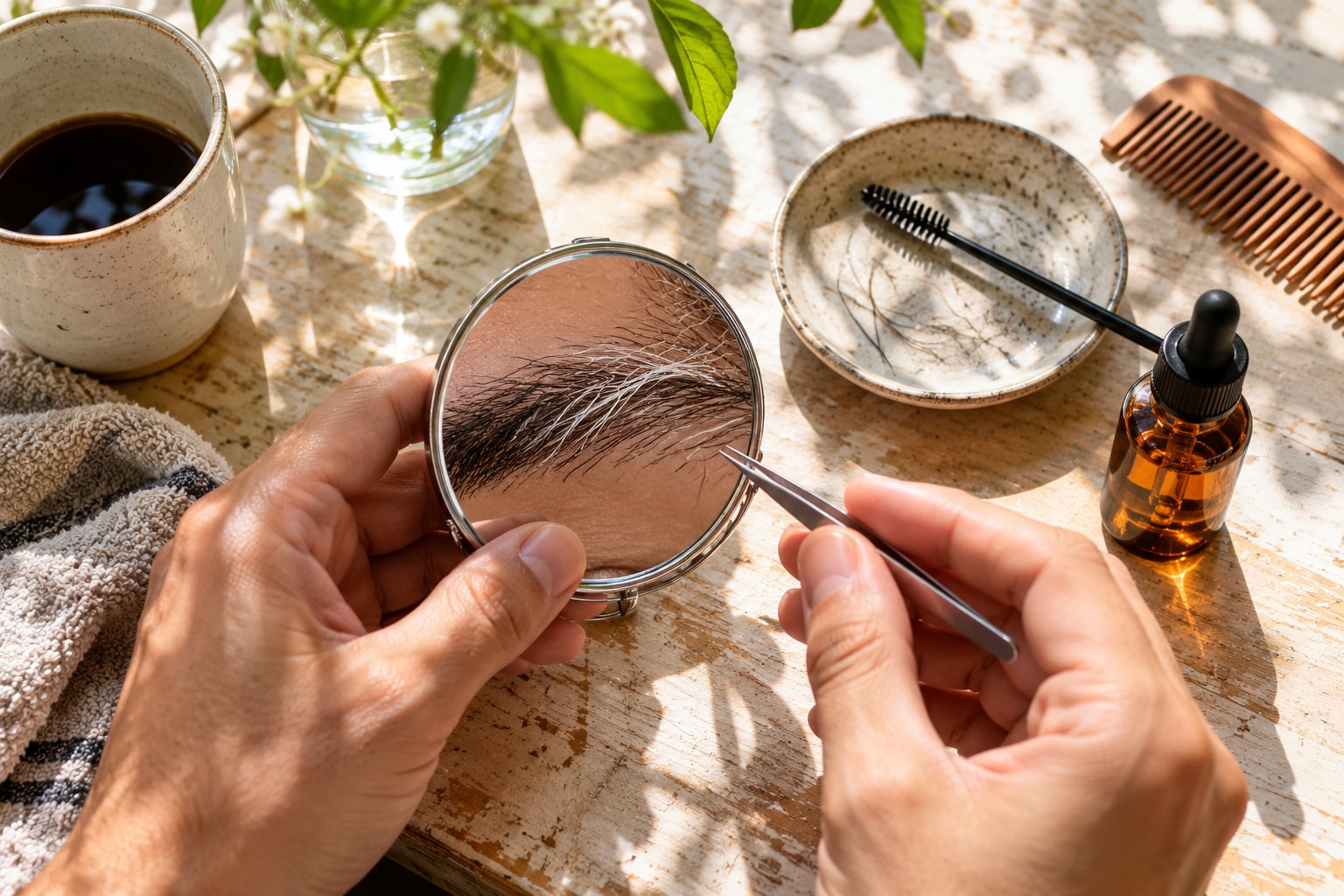
Check your bare brows before blaming the gel, because the flakes' location and timing can help distinguish three different problems.
- Dried gel appears after application and sits mainly on the hairs; it may turn chalky as the brows dry.
- Product pilling forms crumbs where gel meets skincare or makeup, often after the layers have been rubbed together.
- Skin scale starts beneath or around the hairs before makeup and may come with itching, burning, redness, or oily-looking patches.
Why brow gel can dry white
A thick styling film becomes visible
Brow gel holds hair by leaving a thin film on each strand. Hair-styling research shows that polymers must attach to hair, and their films differ in stiffness, flexibility, and response to water.
That doesn't mean a specific polymer is always the culprit; the finished formula matters. So do the amount you apply and what you do while it dries.
More product means a thicker deposit, but no brow-gel trial defines a flaking threshold. The clean-brow test below checks amount and brushing without assuming either is the cause.
White residue isn't proof that the gel is dangerous or counterfeit; it often means the amount, technique, or formula doesn't suit your brows.
Skincare underneath can pill
Pilling happens when cosmetic layers gather into small rolls or flakes instead of staying as an even film. This is a plausible cause when your residue collects near the skin.
The closest human study didn't test brow gel; Lua and colleagues layered base formulas, sunscreen, and foundation on 528 women in Guangzhou. They saw pilling in 217 participants, and rubbing motions produced more pilling events.
That study can't tell you which brow-gel ingredients conflict, but it shows why a simple layering test beats ingredient guesswork.
The gel may not be the source
Seborrhoeic dermatitis often affects the eyebrows, scalp, sides of the nose, and area between the brows. DermNet describes scaly patches on pink or oily-looking skin, while itching can be mild or absent.
Contact dermatitis is different: a cosmetic can cause itching, stinging, burning, swelling, or a dry rash around the eye area. These signs matter more than whether the flakes look white or yellow.
Run a two-day brow test
Don't buy another gel yet; test the same tube under two controlled conditions.
Skip this test if you already have itching, burning, swelling, or a rash. Stop using the product instead.
Day 1: gel alone
Run this test indoors or after sunset, so you don't remove sunscreen before going outside.
- Wash your brows with your usual gentle cleanser, then let the hairs and skin dry fully.
- Check for scale before makeup, then take one cropped photo in soft daylight if you want a private record.
- Wipe excess gel against the tube opening, then apply one light pass without coating the skin.
- Shape the brows, then stop without adding pencil, soap, powder, or a second coat.
- Check them after ten minutes and again after four hours.
Day 2: your normal layers
Repeat the test with your usual moisturizer, sunscreen, and brow makeup; let each layer settle without rubbing it into the gel.
Keep sunscreen on the skin, but pass a clean spoolie through the hairs if cream coats them before the gel goes on.
The comparison gives you a useful answer:
- Clean brows on day 1 but flakes on day 2 point toward product pilling.
- Flakes on both days, only after the gel dries, point toward the amount, technique, or formula.
- Flakes visible before gel point toward a skin issue.
- One thin coat still turning white on clean brows means that tube may simply be a poor match.
This isn't a medical test; it is a low-risk way to change one variable at a time.
How to stop brow gel flaking
Start with the smallest change, and you may keep the same hold without replacing your whole routine.
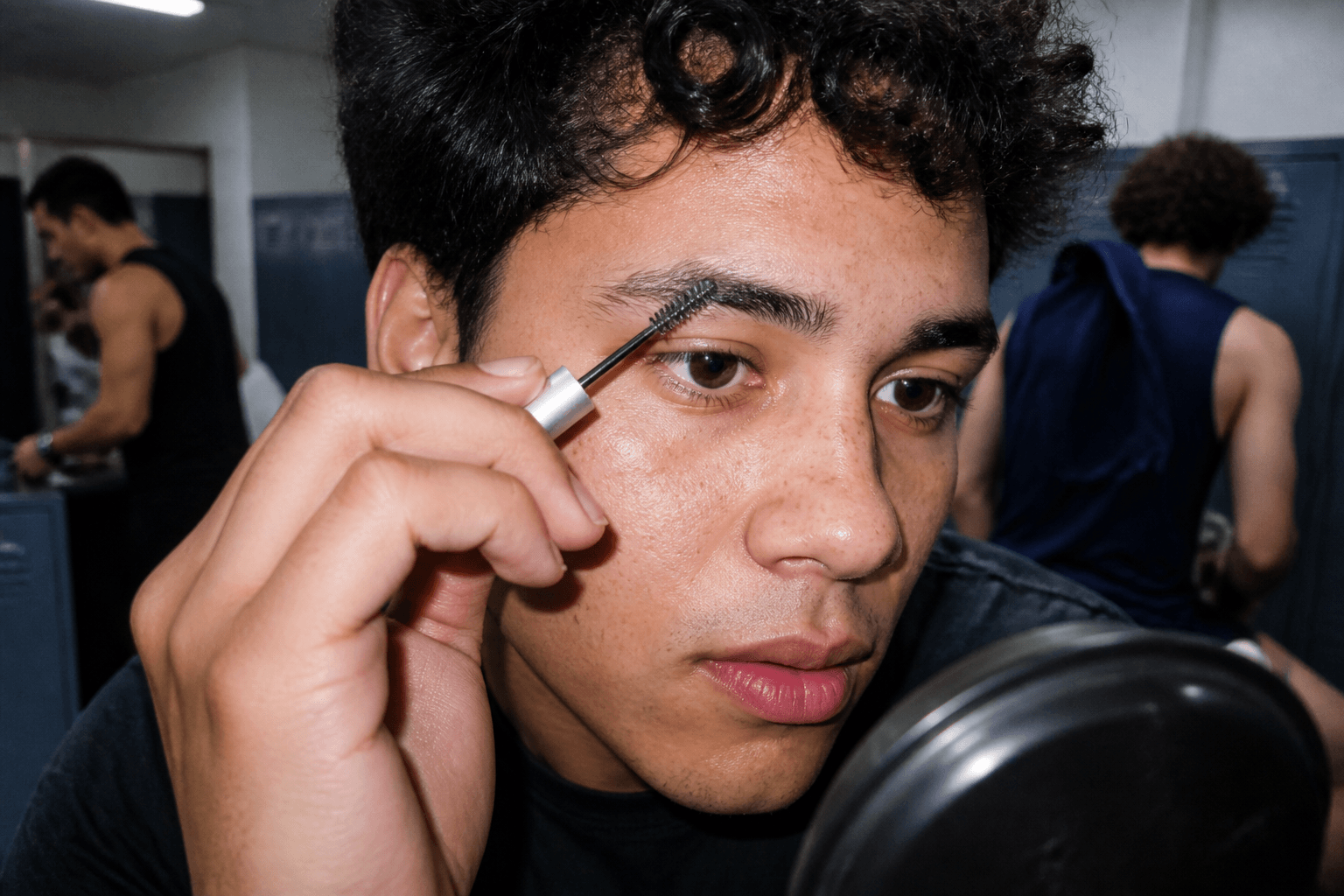
- Remove excess from the wand and use one thin coat.
- Finish the shape while the gel is wet, then leave it alone.
- Let moisturizer and sunscreen settle before brow makeup, and avoid rubbing the layers together.
- Use one clean, dry spoolie after the film sets if a few loose flakes remain, then brush lightly.
- Wash the gel off gently at night without scraping hardened product or wiping the skin with alcohol.
- Try a different brow-specific gel if the clean-brow test still flakes; a softer hold may suit hairs that move more.
A tinted gel can make pale residue less obvious, but it doesn't fix the cause. Don't add water or anything else to the tube. The FDA warns that added water can introduce microbes and dilute preservative protection.
When the skin needs attention
Stop the gel if your bare brow skin becomes itchy, sore, swollen, or persistently scaly. Gently wash it off and avoid the suspected product while the skin settles.
Don't scrub the area or apply dandruff shampoo and steroid cream close to your eyes without professional advice. A pharmacist or dermatologist can help separate seborrhoeic dermatitis from contact dermatitis, eczema, or psoriasis.
Get medical advice if the rash spreads, blisters, or weeps; repeated reactions may need formal patch testing.
If gel enters your eye, rinse with plenty of clean water for at least 20 minutes. Seek urgent care for severe pain, trouble opening it, or vision changes.
Compare the result fairly
Compare photos taken with the same light, distance, and camera settings. Take one before gel and one after four hours.
A cropped local photo is enough; you don't need to upload your whole face.
FAQ
Does clear brow gel always dry white?
No. A clear gel should leave little visible residue when its film is thin and even. If one light coat turns white on clean brows, switch formulas rather than piling on another product.
Can sunscreen under brow gel cause white flakes?
It can contribute to pilling, but direct brow-gel evidence is lacking. Let sunscreen settle, keep its protective layer on your skin, and compare gel alone with your normal routine.
Is white brow residue the same as eyebrow dandruff?
Not necessarily. Product residue and skin scale can look alike, and both can occur together. Check bare skin for itching, redness, or oily patches.
Should I brush brow gel flakes out?
You can make one gentle pass with a clean spoolie after the gel dries. If that tugs hairs or irritates skin, wash the product off and reapply less.