Quick answer
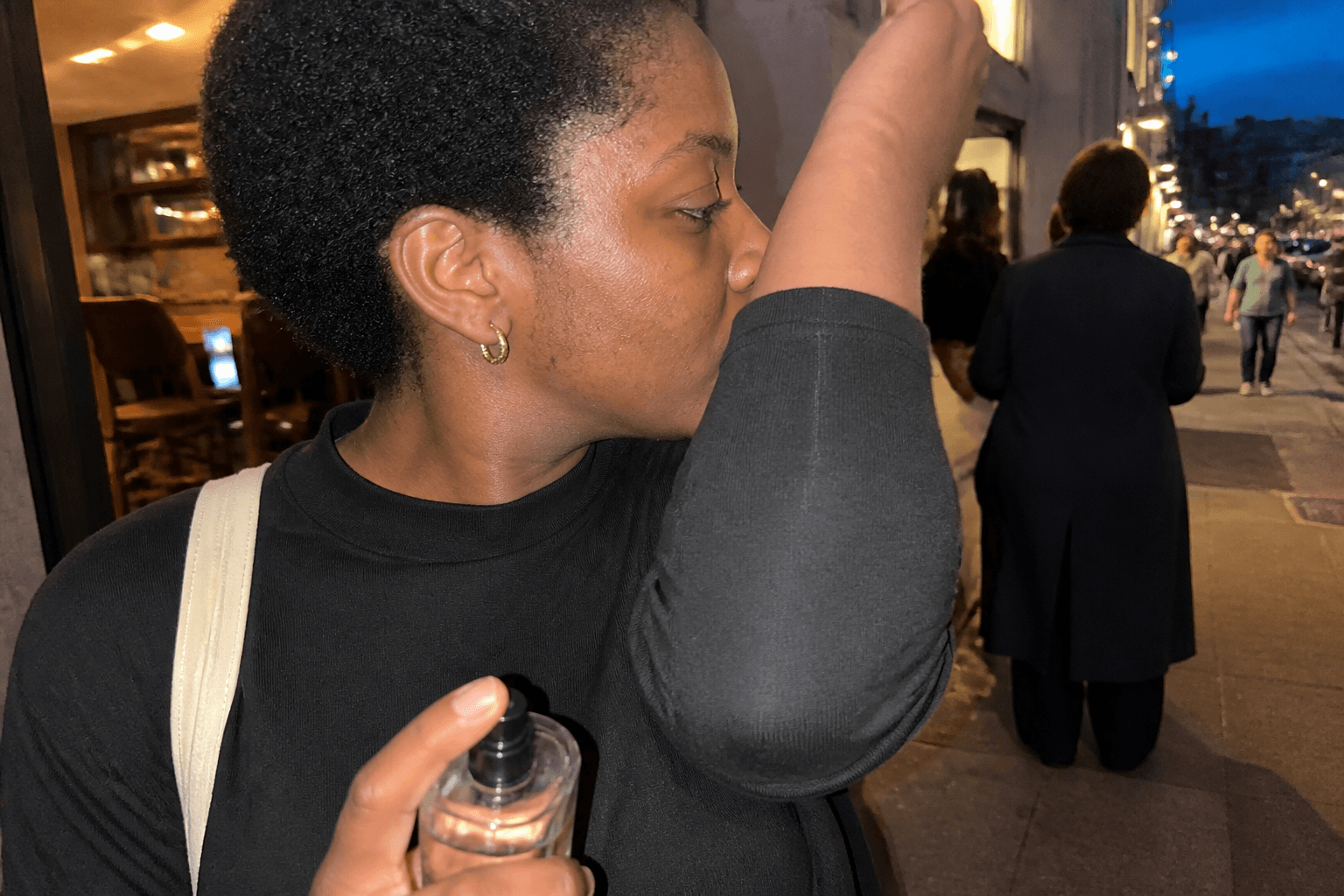
"Why does perfume smell sour on my skin?" has no single answer. Fragrance ingredients evaporate differently on skin, and the remaining balance may smell sharper than it did on paper. Sweat, body odour, lotion, sunscreen or deodorant can also join the mix.
The claim that your skin is "too acidic" is weak, so test clean skin, paper and washable fabric before blaming your body.
What a sour dry-down can mean
"Sour" isn't a chemical diagnosis because you may mean acidic, metallic, sweaty, rancid or simply less sweet than expected. Those descriptions point to different causes, so start with when and where the change appears.
A perfume contains molecules that leave its surface at different rates, while heat speeds evaporation, according to Lund University chemist Ulf Ellervik. Faster-evaporating ingredients shape the opening, while slower ones become more noticeable during the dry-down.
Skin adds another variable: a 2025 International Journal of Cosmetic Science study tracked eight fragrance compounds on ten volunteers. The researchers found different profiles because skin properties and each molecule's traits both helped explain the variation.
That result supports a shifted balance, but the study didn't test finished perfumes or ask whether they smelled sour. It also involved only ten people.
Body odour can change the result too, as a 2012 PLOS ONE study found perfume and underarm odour formed person-specific blends. Participants' chosen perfumes made more pleasant blends than randomly assigned perfumes in one experiment. Sweat doesn't ruin fragrance; the combination matters.
Your skin pH probably isn't the main problem
Online perfume advice often blames acidic skin for every strange dry-down, yet normal skin pH differences between people are small. Ellervik told Lund University that they hardly affect perfume.
In 1996, Behan and colleagues compared perfume behaviour on skin and an inert surface, adding useful laboratory context. They found little chemical transformation across many fragrance groups on clean, dry skin under their test conditions.
The researchers found specific settings could change ingredients, with underarm microbes and skin products named as possible factors. A pH-sensitive citral system also reacted under one product condition.
So pH can matter in a specific formula, but that doesn't mean your whole body has the wrong chemistry. Don't use lemon juice, baking soda or harsh toner to "correct" your skin for perfume.
Run this three-surface test
This comparison won't identify a molecule, but it will show which part of the situation deserves attention.
Choose a day when your skin isn't irritated, then use the same bottle and test everything within a few minutes.
- Spray once on a paper blotter or plain unscented card.
- Spray once on a clean, dry inner forearm that has no lotion or sunscreen.
- Spray once on a hidden area of washable clothing, if the fabric label allows it.
- Check each spot after 10 minutes and again after two hours.
- Ask one trusted person to smell them without telling them which result you dislike.
Keep the sprays apart, don't rub your wrists, and record plain descriptions such as sharp, sweaty, metallic or sweet. "Bad" is harder to compare.
Repeat the test once on another day if the result surprises you. Temperature, activity and scented products can change the setting between wears.
How to read the result
It smells sour on paper, fabric and skin
Look at the fragrance first because you may dislike its normal dry-down, even if the opening smelled good. Compare your bottle with a fresh store tester or sample of the same product.
If both smell alike, the formula probably doesn't suit your nose, and no skin hack will rewrite it. If they differ, stop using your bottle until the seller or maker can check it.
It smells fine on paper but sour on clean skin
Your skin setting is changing what reaches the nose, and the 2025 study makes differing evaporation a plausible explanation. It doesn't tell you which skin measure caused your result.
Try a second skin test on a cooler day, or wear the perfume on suitable clothing after a hidden patch test. Avoid adding products just to make the scent behave.
It changes only after you get warm or sweaty
The fragrance may be mixing with body odour, since sweat is mostly odourless at first, according to the American Society for Microbiology. Skin microbes turn some sweat compounds into volatile acids and sulfur compounds with distinct smells.
Test away from underarms and other sweaty areas because a clean forearm gives a clearer comparison. Don't cover persistent body odour with more sprays, since that creates a stronger mixture.
It changes only over lotion, sunscreen or deodorant
You have found a product combination, not a defective body, so repeat the skin test without the scented product. If the perfume then smells normal, keep the products separate or choose an unscented base.
Use only a moisturiser your skin already tolerates because adding a new one creates another variable and may cause irritation.
Only you notice the sour note
Smell is a perception, and Lund University's review notes that two brains can read the same mixture differently. Your impression remains valid, but a second nose helps separate a private note association from a strong shared change.
What to change after the test
Match the fix to the result because buying more products before testing usually hides the cause.
- Sample a fragrance on skin through its full dry-down before buying a bottle.
- Apply it to clean, dry skin rather than a stack of scented products.
- Use suitable clothing when skin changes the scent and the fabric tolerates perfume.
- Move the spray away from hot, sweaty areas if warmth triggers the change.
- Compare a suspect bottle with a fresh sample instead of guessing from its age.
Skip pH-balancing sprays and "detox" fixes because the evidence doesn't support them as a general answer. A fragrance that suits someone else may simply smell wrong to you.
When the issue is your skin, not the smell
A sour smell alone isn't a fragrance allergy, which DermNet describes as delayed contact dermatitis. It usually brings an itchy, red or scaly rash after contact, sometimes with burning, stinging, swelling or blisters.
Stop applying the product if your skin reacts, then wash gently and avoid testing again while the area heals. See a doctor or dermatologist if symptoms persist, spread or keep returning.
Patch testing can help identify a contact allergen, but it won't show whether a perfume's dry-down suits your nose.
FAQ
Does skin pH make perfume smell sour?
It may affect a specific pH-sensitive formula, but it doesn't explain every sour dry-down. Normal pH differences are small, and chemical changes were low on clean, dry skin in the 1996 study.
Why does perfume smell good on paper but bad on me?
Paper removes skin evaporation, sweat and personal-care products from the comparison. If clean skin still differs, its setting changes the balance you smell without meaning it is unhealthy.
Can I spray perfume on clothes instead of skin?
Yes, when the maker and fabric label allow it. Test a hidden patch first because alcohol, oils or colour can mark delicate or valuable material.
Is a sour perfume smell a sign of allergy?
No, smell change by itself doesn't show contact allergy. Watch for itching, redness, scaling, burning, swelling or blisters, and seek medical advice if those symptoms continue.