Quick answer
An itchy face after beard dye usually points to skin irritation or allergic contact dermatitis. Stop using the dye, rinse your beard and skin well with lukewarm water and mild shampoo, and don't apply more to test the reaction.
Get emergency help if your lips, mouth, tongue or throat swell, or if breathing or swallowing becomes difficult. For a mild rash, a pharmacist can advise on an emollient, antihistamine or suitable treatment. A dermatologist may use patch testing if the cause remains unclear.
Why an itchy face after beard dye happens
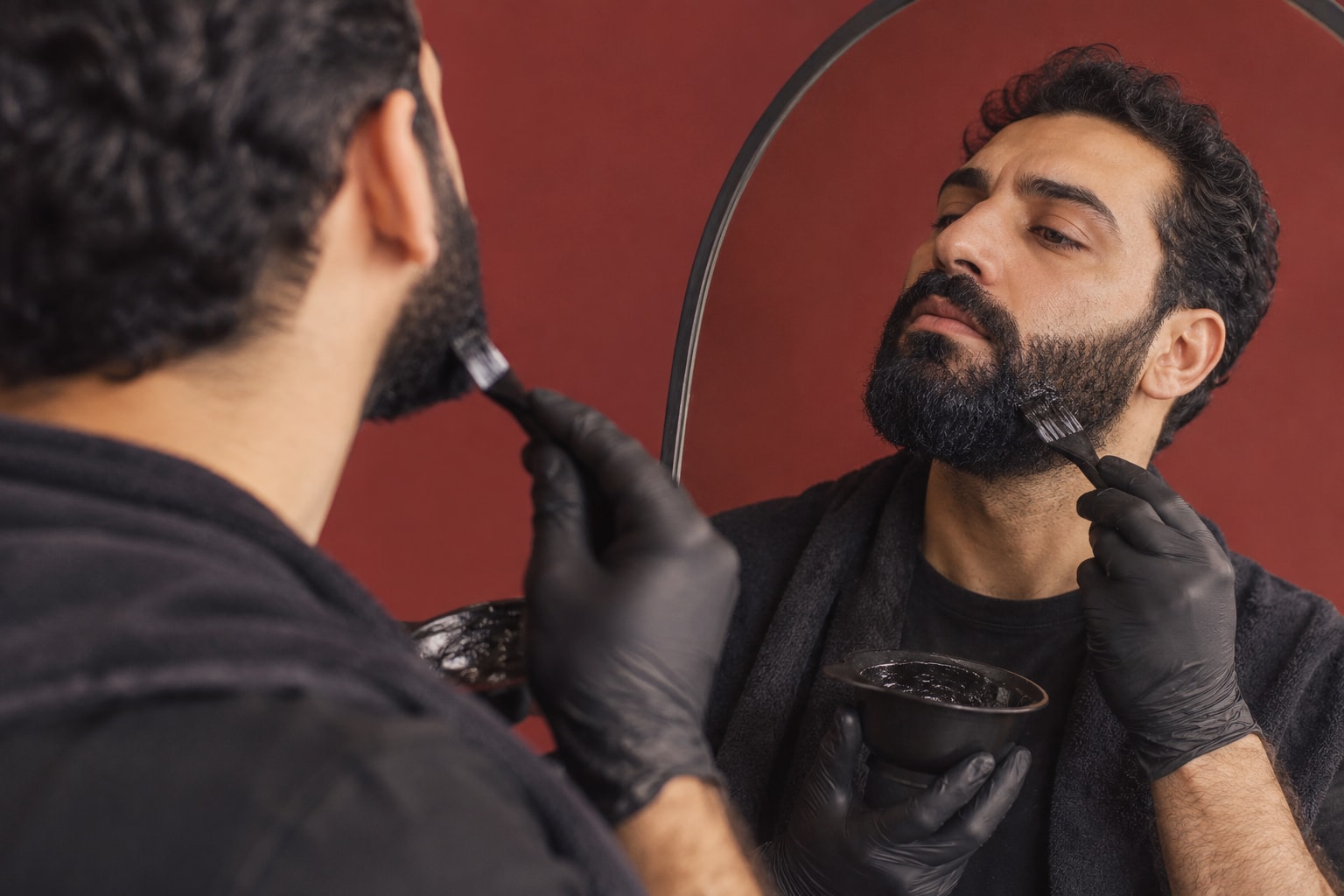
Beard color can irritate the skin during processing or trigger an allergy to one of its ingredients.
Many permanent and some semi-permanent dyes contain paraphenylenediamine, usually shortened to PPD, which the NHS identifies as a known irritant and allergen. DermNet adds that other dyes, preservatives and fragrances can cause reactions, while the alkaline color mixture may irritate skin without causing a true allergy.
That distinction matters because the next exposure may behave differently. Irritation depends on factors such as product strength, contact time and the condition of your skin. An allergy involves immune sensitization, so a small later exposure may still trigger dermatitis.
You can't confirm the cause from redness alone. On brown and black skin, an inflamed area may look purple, gray or darker brown rather than bright red. Itch, swelling, blisters and timing often provide more useful clues than color.
Clues that favor irritation
Irritant contact dermatitis tends to sting or burn during application or within a few hours, and often stays where the mixture touched your face. Tight, dry or sore skin can follow.
This pattern is more likely if the dye stayed on too long or reached already damaged skin. Recent shaving, scratching or another irritating product may leave the area less tolerant. Timing is only a clue, though, and it isn't a diagnosis.
Clues that favor an allergy
Allergic contact dermatitis often causes strong itching, a raised or scaly rash, swelling or blisters. Symptoms may start hours later and can take up to 72 hours to appear. DermNet notes that hair-dye allergy can affect the eyelids, ears, face and neck beyond the colored area.
A delayed rash after an uneventful application is still possible because the FDA says repeated exposure can create sensitivity. Product formulas can change too, so years of trouble-free use don't prove the next application is safe.
What to do now
Stop at the first sign of a reaction, then rinse the beard and nearby skin thoroughly with lukewarm water and a mild shampoo. Keep the product box, ingredient list and batch details.
Then make the routine boring for a few days. Don't use more dye, aftershave, fragrance, exfoliating acids, retinoids or harsh scrubs on the sore area. A plain, fragrance-free emollient may help mild dryness. Ask a pharmacist which product suits facial skin and your symptoms.
Avoid guessing with leftover prescription cream or a strong home remedy. The face, eyelids and beard area need careful treatment. The NHS says a clinician may prescribe a steroid treatment when skin is sore or inflamed. That decision depends on the site and severity.
Take one clear photo in neutral light, then another if the rash spreads. Photos can document a visible change for a clinician, but cannot separate irritation from allergy or rule out a serious reaction.
When the reaction needs medical care
Call emergency services if your lips, mouth, throat or tongue suddenly swell. Breathing trouble, wheezing, throat tightness, difficulty swallowing, faintness or confusion also need emergency help, so don't drive yourself.
Contact a doctor promptly if the rash keeps worsening, spreads toward your eyes or develops marked swelling or blisters. Oozing, increasing pain or feeling unwell also deserves an assessment. The NHS advises seeing a GP when hair-dye symptoms get worse.
Milder itching still needs attention if it doesn't settle after the dye is removed. A pharmacist can suggest symptom relief, while a doctor can decide whether you need treatment or a dermatology referral.
Don't reuse the dye to check
Trying the same product again can turn a manageable rash into a worse exposure. DermNet reports that PPD reactions can become faster, more extensive and longer-lasting after sensitization. The safest move is to stop that product until a clinician has reviewed the reaction.
Don't rely on the words "natural," "gentle" or "PPD-free" alone. A PPD-free dye may contain a related color chemical or another allergen. DermNet lists preservatives and fragrances among other possible causes.
Save the full packaging, not just the brand name. A dermatologist needs the ingredient list because formulas vary between shades and can change over time. The British Association of Dermatologists also advises bringing suspected toiletries and their packaging to patch-test appointments.
Product test versus medical patch testing
The allergy alert test in a dye packet is a consumer safety check. The FDA says to follow it before every use. You must also follow the exact waiting time and instructions on that product.
A negative result lowers concern but doesn't guarantee a reaction-free application, a limit the FDA makes clear. If you've already reacted, don't repeat a home test or use the dye again because a previous test was negative.
Medical patch testing is different. A dermatology team places selected allergens on your skin and reads the reactions over several visits. The British Association of Dermatologists describes it as a way to find contact allergies, including reactions to personal-care products.
Bring the dye, developer and packaging to the appointment if the clinic asks. Testing may identify PPD or a different ingredient, giving you a safer basis for choosing future color products.
How to lower the chance of another reaction
First, don't color over irritated, sunburned or damaged skin. The FDA also advises following the label, using gloves, respecting the stated processing time and rinsing well. Perform the packet's skin test before every future use if a clinician says dyeing remains appropriate.
Never assume that leaving a weaker color on longer is safer because contact time matters. Mixing brands, changing the developer or altering the formula also moves you outside the tested instructions.
If patch testing confirms an allergy, use the avoidance list your dermatologist provides. Don't choose an alternative by comparing one front-label claim. A related dye may still cross-react, while a temporary color can contain its own fragrance or preservative.
Wait until the skin has fully settled before judging any leftover dark mark. DermNet notes that dermatitis can leave temporary pigment change, especially after a stronger reaction. Scrubbing that mark while the skin is inflamed can add more irritation.
FAQ
How long does beard-dye itching last?
There is no fixed time. Mild irritation may ease after thorough rinsing and avoiding the product, while allergic dermatitis can last longer. Get medical advice if symptoms worsen, spread or fail to improve rather than repeatedly treating the rash yourself.
Can I become allergic after years of using the same dye?
Yes. The FDA says repeated exposure can create sensitivity, and a formula may change over time. A delayed reaction after several trouble-free uses is a recognized pattern, so don't dismiss a new rash as dry skin.
Does PPD-free beard dye guarantee no reaction?
No. PPD is a common cause, but DermNet lists other color chemicals, preservatives and fragrances as possible triggers. If you've reacted before, a dermatologist can test likely allergens and guide your choice.
Should I patch test beard dye every time?
Follow the packet and test before every use, as the FDA advises. A negative consumer test cannot promise safety, so stop using any dye that has already caused itching, swelling or a rash.