Quick answer
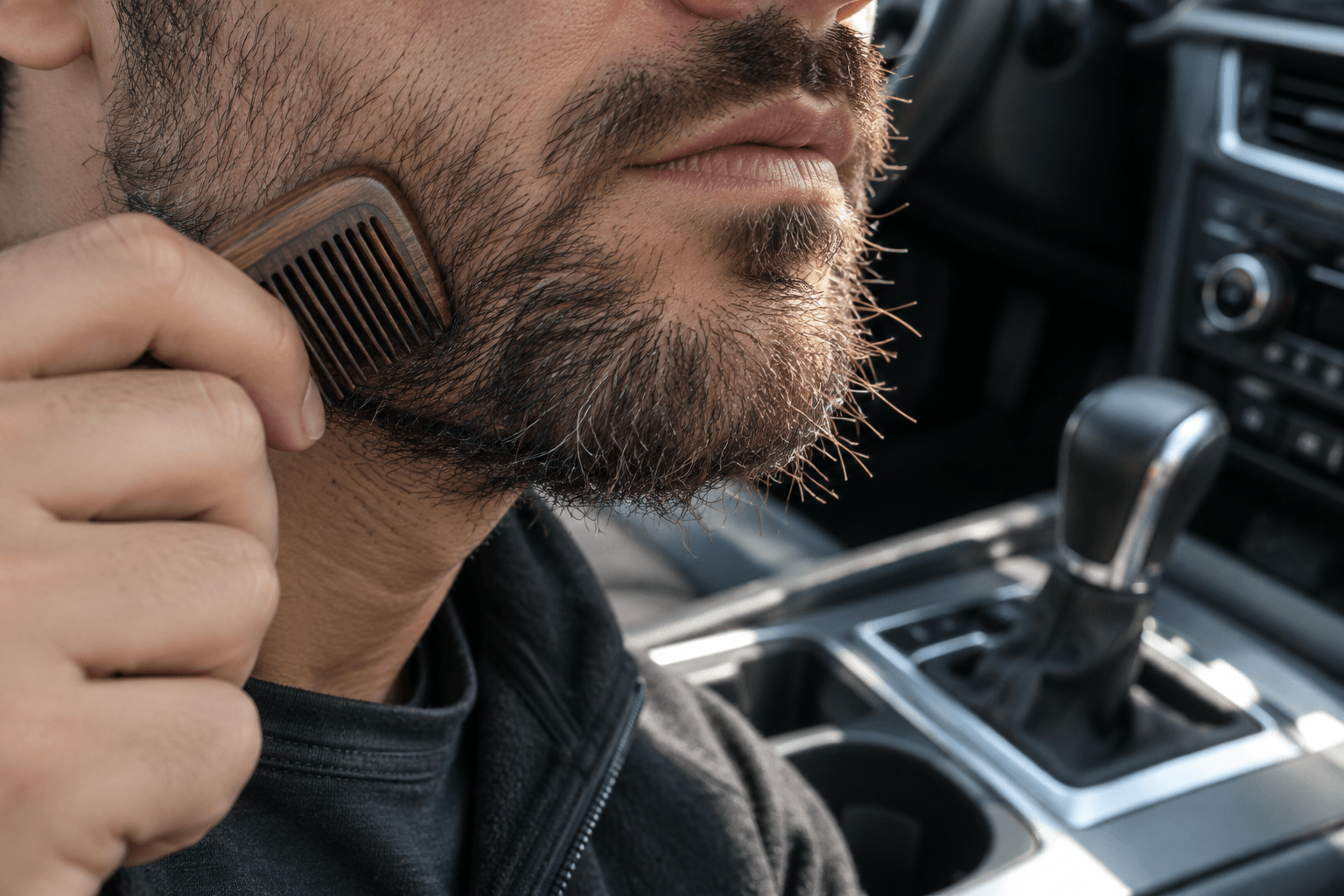
The answer to how to stop beard hairs sticking out is simple: soften, direct, and set the hair. Start with a clean, damp beard, apply a little leave-in conditioner or balm, and comb it into shape. Use cool or low heat while you brush, then trim only the hairs that still break the outline after drying. This can control the hair shaft for the day, but it cannot permanently change the direction of new growth.
Why some beard hairs stick out
A beard does not grow as one flat sheet. Individual follicles can point in different directions, and each shaft can be straight, curved, or tightly curled. Research on scalp follicles shows that curl is formed at the bulb. Beard-specific studies are limited, so this only suggests that permanent redirection through brushing is unlikely.
Length also changes what you see. Short growth exposes each hair's exit angle, while one longer hair can break an otherwise even outline. Dryness, friction, and heat damage can add roughness or breakage, which creates more short ends.
Check the pattern before cutting anything by dampening the beard, combing it in its usual direction, and letting it dry. A strand that springs out from the root likely follows its natural angle or curl. A few hairs that remain longer than the finished outline are trim candidates.
Don't judge the shape while the beard is wet because trimming it then can leave a shorter patch after it dries.
A five-step routine that keeps flyaways down
1. Start with a clean, damp beard
Wash your face and beard with a gentle cleanser, then rinse well with lukewarm water. Pat with a towel and leave the beard damp, not dripping. The American Academy of Dermatology recommends this routine to remove oil and debris without drying the skin beneath.
Water makes the hair easier to arrange and gives you a clean baseline, rather than layering fresh product over yesterday's oil or balm.
2. Add softness before hold
Spread a small amount of leave-in beard conditioner, beard oil, or gentle moisturizer through the hair. Follow the label and rinse any product sold as rinse-out. Choose the product around your skin, not a marketing claim. The AAD suggests beard conditioner for acne-prone skin, beard oil for normal or dry skin, and a fragrance-free non-comedogenic moisturizer for sensitive skin.
Start with less than you think you need because the AAD warns that too much conditioner or oil can leave a greasy look. Add more only if the hair still feels dry.
Conditioners coat and lubricate the hair cuticle, reducing friction, static, and frizz so the hairs are easier to align. Oil can soften and add slip, but it provides little hold on its own.
3. Comb in the finished direction
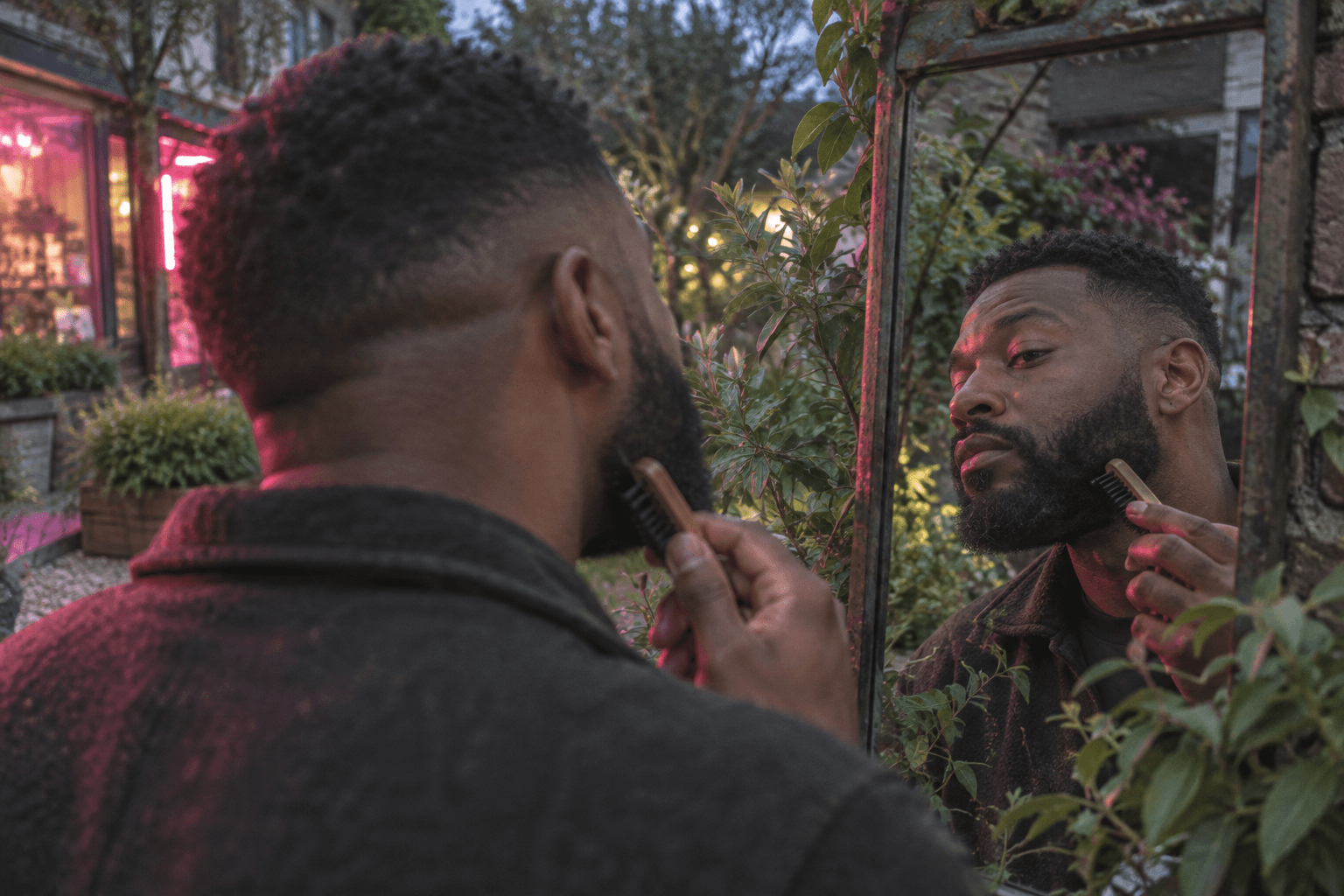
Use a beard comb to distribute the product from root to tip, then guide the outer layer into shape with a soft brush. Work with the main growth pattern instead of forcing every area straight down.
The AAD includes a comb and brush in basic beard care. Mapping the growth direction still matters because a neck beard may grow sideways while the chin points down.
You may hear that daily brushing "trains" a beard. A clearer description is repeated surface styling, not a proven change inside the follicle. Brushing shapes exposed hair, but good evidence does not show that it permanently changes new growth.
4. Set the shape with low heat
Point a hair dryer in the same direction as the brush. Use the coolest setting that works, keep it about 15 centimeters away, and keep it moving. Stop if your skin feels hot.
One laboratory study tested scalp-hair tresses, not beards. Surface damage rose as dryer temperature increased. The least damaging dryer method tested kept the dryer 15 centimeters away and moving continuously. Treat that distance as a cautious guide, not a beard-specific rule.
High heat may flatten the beard faster, but repeated damage can leave the cuticle rougher and create more unruly ends. It still cannot change how new hair grows.
5. Add hold, then trim true outliers
Warm a small amount of beard balm or wax between your fingers. Press it across the outer layer, then brush once more. Both add hold. Pick one by its finish and the maker's directions.
Wait until the beard is fully dry before you trim. Comb it into its final shape, keep your head neutral, and snip only the strands that remain outside the outline. Barber Brandon Faulk recommends scissors for isolated strays and warns against repeatedly cutting flyaways while a sparse beard is still growing.
Use guarded clippers if many hairs need evening out. Start with a longer guard and move shorter only if needed. Freehand trimming removes density fast and can turn a styling issue into a visible gap.
Match the fix to what you see
- If many hairs spring out from their roots, use damp styling, directional brushing, and low heat. Their growth angles are the main limit.
- If the beard looks fluffy or rough across a whole area, reduce high heat and friction. Add a light conditioner before reaching for more hold.
- If only a few long ends cross the outline, style first and trim those ends on dry hair.
- If product controls the hairs but looks oily, use less and test a balm instead of adding more oil.
- If hairs are snapping, splitting, or feeling brittle, pause heat and aggressive brushing. A barber can reshape damaged ends without thinning the whole beard.
Mistakes that create more flyaways
Cutting every hair that moves is the fastest way to lose density. Curly hairs shift as the beard dries, so style the beard before deciding what needs cutting.
More product is not more control. Too much conditioner or oil can look greasy, so start small and spread it fully.
Don't pull hard with a dense brush. Friction and repeated grooming can damage the shaft. Detangle with a comb first, then use the brush only to shape the surface.
Skip DIY chemical straighteners on facial hair. Straightening chemicals can damage hair and irritate the nearby skin. If you want a major shape change, ask an experienced barber what your beard can hold safely.
When it is more than a styling problem
Hairs pointing in mixed directions are normal, but sudden patchiness, smooth bald spots, scaling, pain, or inflamed bumps are different. They may reflect a skin or hair condition rather than stubborn growth.
Stop any new product that causes burning, itching, or swelling. See a dermatologist if the reaction persists or beard density changes without a clear trimming mistake, since photos cannot diagnose the skin beneath.
FAQ
Can you train beard hair to grow downward?
You can repeatedly style beard hair downward, but evidence does not show that brushing permanently redirects the follicle. Any change is temporary because brushing only moves the exposed shaft.
Should I trim beard hairs that stick out?
Trim a hair only after you have washed, dried, and styled the beard. If it still crosses the planned outline, make a small cut with beard scissors. Don't chase moving curls or trim the same area each day.
Does beard oil stop flyaway hairs?
Beard oil can soften hair and reduce friction, so some flyaways sit better, but it gives less hold than balm or wax. Use it sparingly, especially if your skin is oily or acne-prone.
Why does my beard stick out more when it is short?
At a short length, each hair's growth angle is easier to see. Some hairs blend into the shape as they grow, while curved hairs may still need daily styling. Direct research comparing flyaways at different beard lengths is lacking.