Quick answer
You can dye your beard without staining your skin by combining a barrier with precise application. Put petroleum jelly on bare skin around the beard line, then use a lightly loaded brush and wipe slips at once. With stubble, some skin contact may be unavoidable because dye must reach close-cropped hairs. Rinse on time, and never trade a small temporary stain for burning, hard scrubbing, or an allergic reaction.
Know the difference between a stain and a reaction
A stain changes skin color but doesn't hurt, itch, swell, or blister. It should fade as you wash your face and the outer skin cells shed.
A reaction affects the skin itself, causing stinging, burning, an itchy rash, dryness, tightness, soreness, or blisters. Symptoms can appear immediately or take up to 72 hours.
That difference changes what you do next: remove pigment gently, but wash irritated skin and stop further exposure.
Set up before you mix the dye
Hair-dye allergy can start after earlier applications caused no problem, and formulas can also change. The US Food and Drug Administration tells people to follow the enclosed skin-test directions before every use.
Do the test exactly where and when the package tells you. A negative test lowers concern but cannot guarantee that you won't react during the full application.
Before dyeing, check these points:
- Choose a product whose label allows use on beards or facial hair. A scalp product is not automatically suitable for your face.
- Don't dye over cuts, razor burn, sunburn, a rash, or skin that already stings.
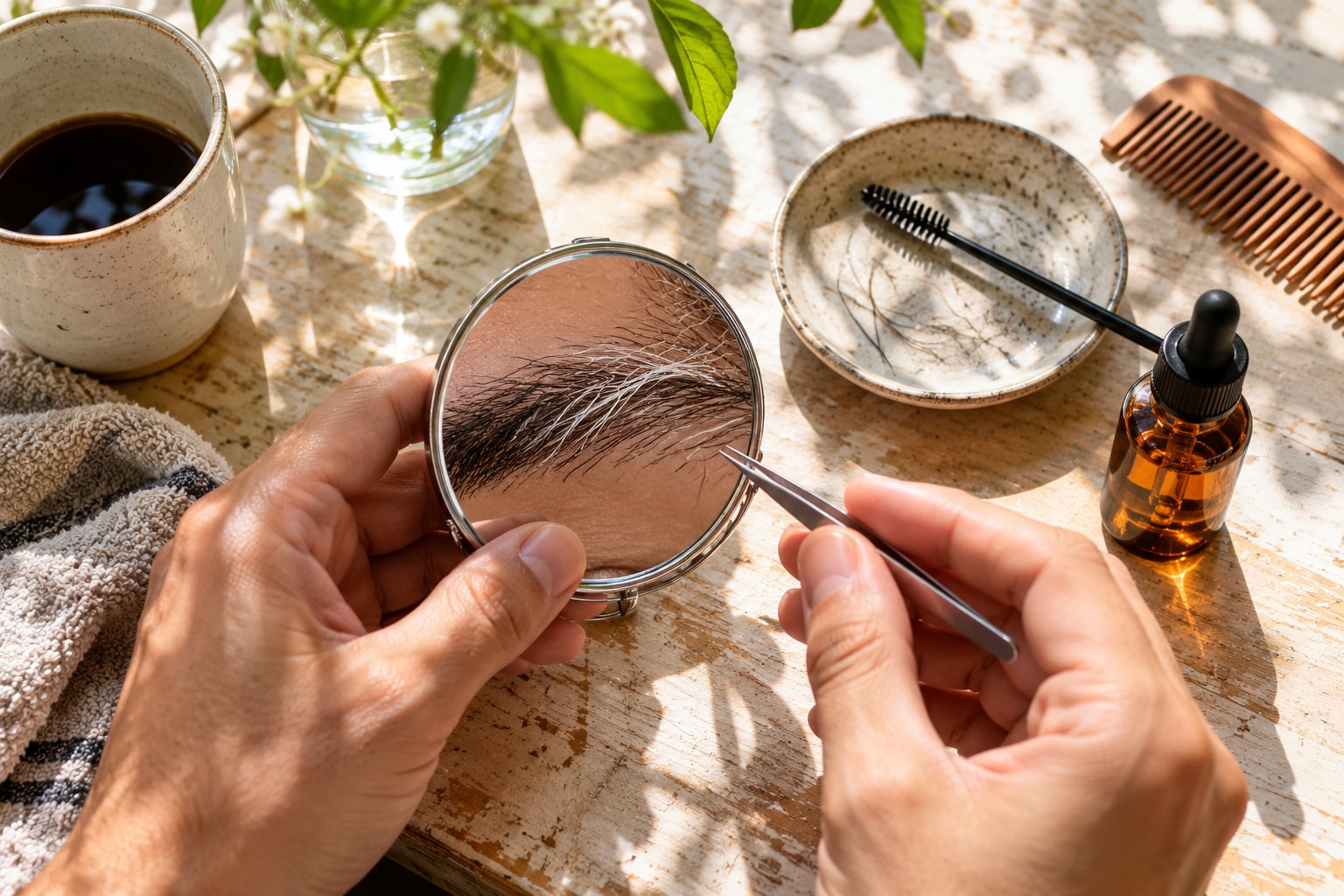
- Keep the product away from your eyes, and never use hair dye on eyelashes or eyebrows.
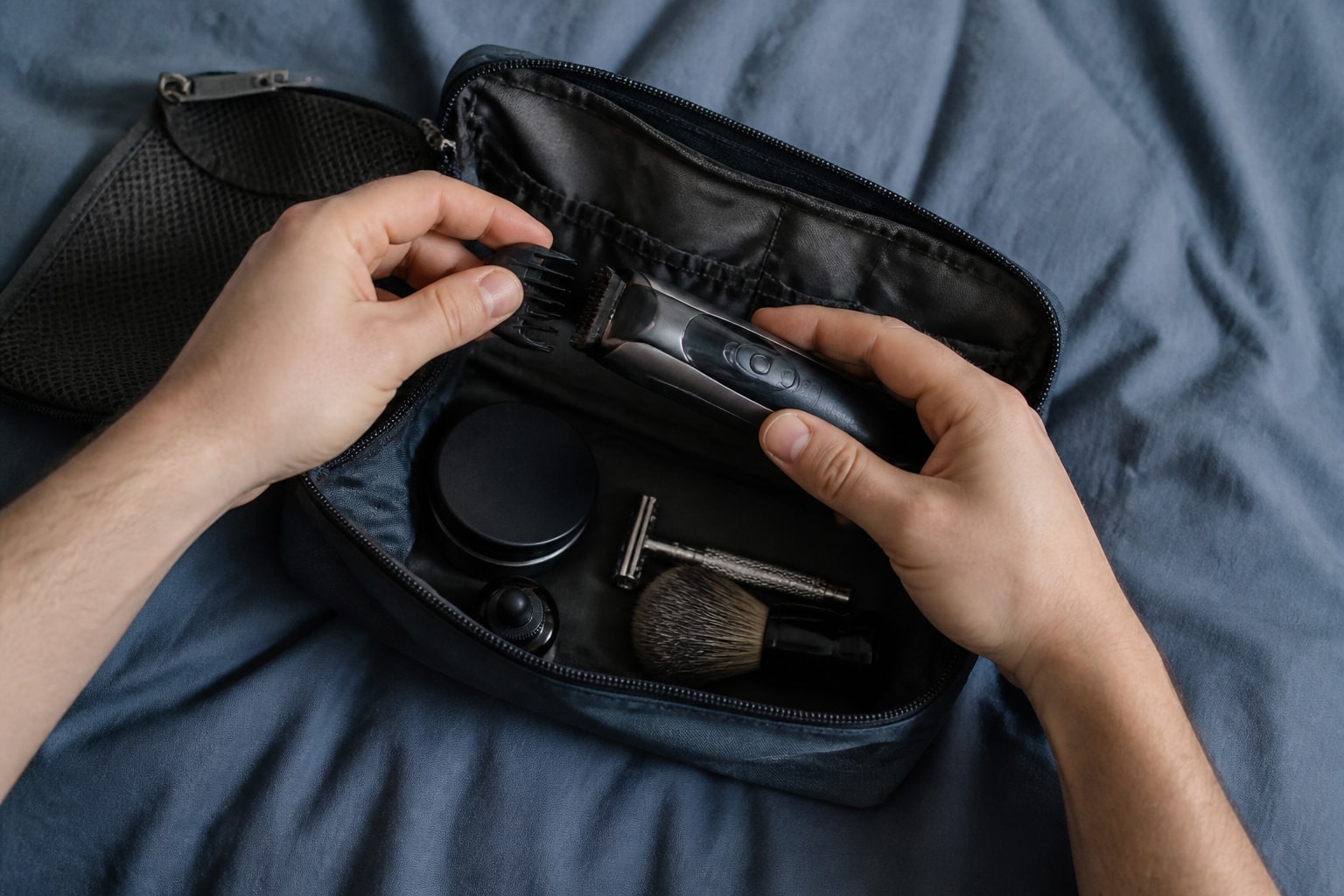
- Have gloves, a timer, a small applicator, cotton pads, petroleum jelly, and gentle cleanser ready.
- Read the full directions before mixing rather than guessing the ratio or processing time.
If you've reacted to hair or beard dye before, don't test another permanent dye by trial and error. A dermatologist can assess contact allergy and arrange formal patch testing when needed.
How to dye your beard with cleaner edges
1. Prepare the beard as the label directs
Some products require clean, dry hair, while others give different instructions, so follow your kit rather than a generic internet routine.
Shape the beard first if you want a defined outline. Wait until any shaving redness or small nicks have settled before applying dye.
2. Protect only the exposed skin
Apply a thin line of petroleum jelly or color barrier just outside your cheek, neck, and mustache edges. Use a cotton swab or clean detail brush for control.
Keep the barrier off hairs you want to color because a greasy layer can stop dye from reaching them. This is why coating the skin beneath short stubble rarely works well.
3. Use less dye on a smaller tool
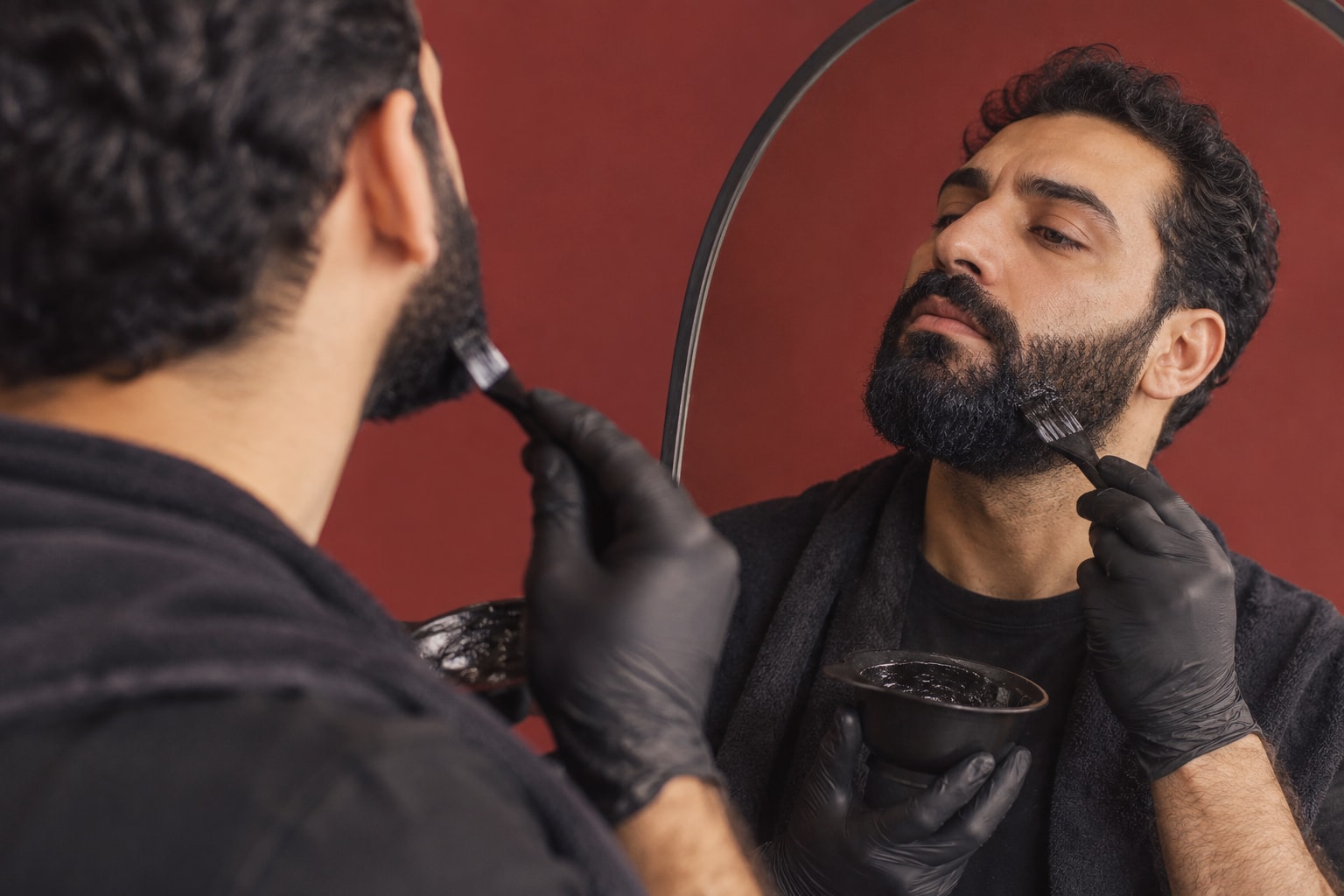
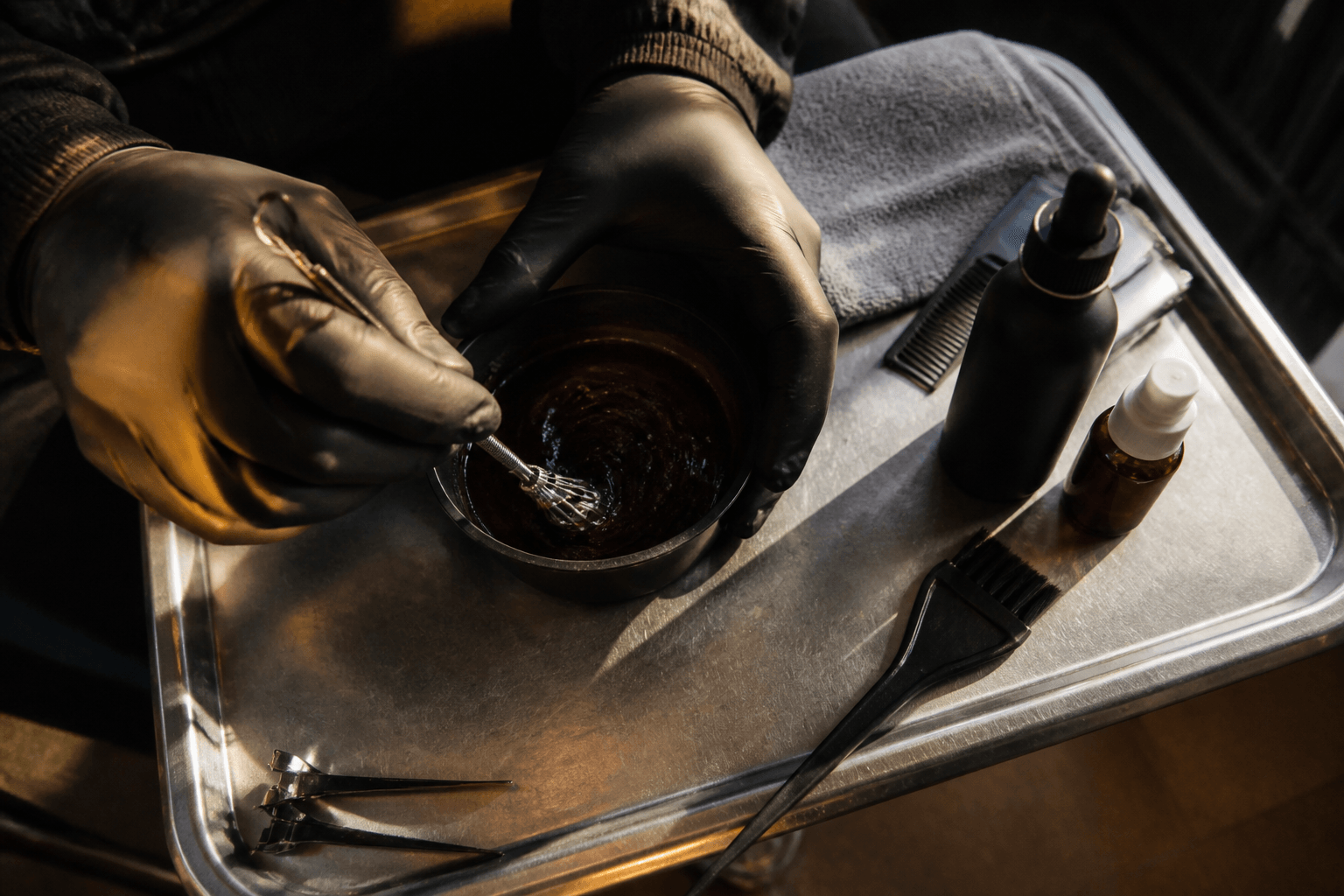
Wear the supplied gloves. Mix only as directed, then place a small amount on the applicator. Remove any visible excess before the brush reaches your face.
Press the color onto the hair instead of painting broad strokes across the skin. For longer beards, a comb-through method can spread color across the hairs with less flooding at the roots.
Work slowly around the upper lip and corners of the mouth, keeping dye away from the lips, nostrils, and eyes.
4. Clean mistakes while they are fresh
Keep a damp cotton pad beside you. If dye crosses the outline, lift it with gentle cleanser or micellar water before it sets. Use a new section of the pad so you don't smear color farther.
Don't rub the intended beard area while the color develops because that moves dye from the hairs onto nearby skin.
5. Time it, then rinse
Start a timer as the instructions specify. Leaving dye on longer won't make a patch test more protective or the process safer. The FDA says not to exceed the stated processing time.
Rinse exactly as the package directs, with your eyes closed near the mustache and cheeks. Don't scrub your face to chase the last shadow of pigment. Check the result only after the beard and skin are dry.

Short or sparse beards need a different plan
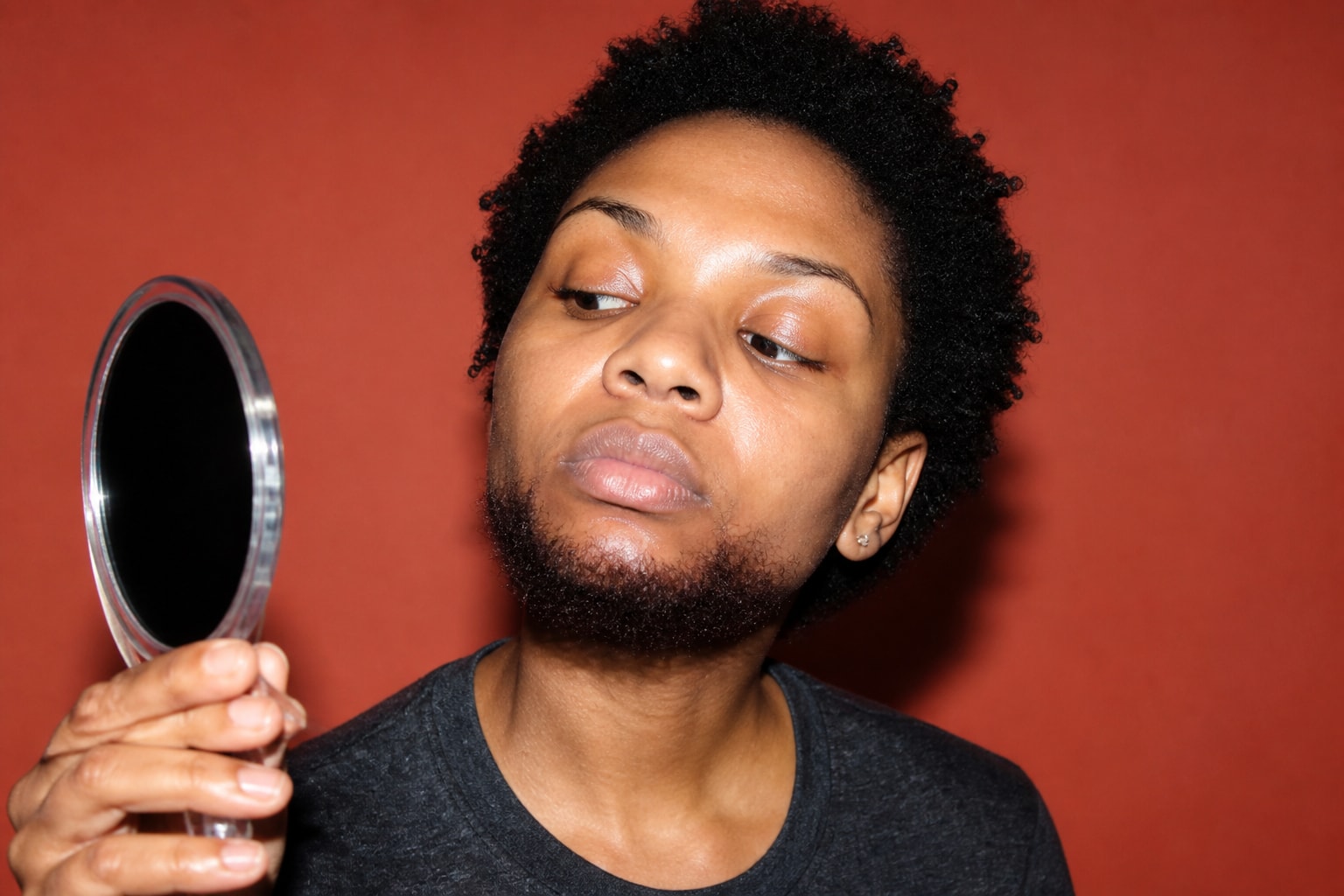
A barrier protects the outline. It cannot protect the skin directly under a 1–3 mm beard without also coating those hairs.
If a dark skin shadow looks worse than a few visible grays, permanent dye may be the wrong tool. Consider growing the beard longer or choosing a wash-off beard color that is labeled for facial use.
Another option is a qualified barber or colorist who offers beard tinting. Ask what product they use, whether it is intended for facial hair, and how they handle allergy testing.
Beard dye only colors hairs that already exist, so it doesn't make a sparse beard denser. A darker shade can make both application errors and skin staining stand out more.
How to remove beard dye from skin safely
Start gently. Dermatologist Marisa Garshick recommends soap and warm water first for beard-dye stains. A mild facial cleanser or micellar water is another low-friction option.
If color remains, try a hair-color stain remover labeled for facial skin. Petroleum jelly or a plain cleansing oil may also lift some pigment. Massage lightly, wipe, rinse, and stop if the skin stings.
Patience is safer than repeated stripping because a harmless stain will usually soften with normal cleansing and skin shedding.
Skip acetone, ammonia, bleach, lemon juice, baking soda, dish soap, rubbing alcohol, and rough scrubs. Dermatologist Marisa Garshick warns that these can damage the skin barrier. On the face, an irritated red patch is harder to hide than leftover color.
When to stop and get help
Wash the dye off immediately if you feel burning, stinging, or strong itching, and don't apply another color to cover the area.
Contact a pharmacist or clinician if a rash, soreness, or blisters appear or keep getting worse. Reactions may be delayed, so keep watching the skin for three days.
Swelling of the lips, mouth, tongue, or throat needs emergency help. Trouble breathing, swallowing, or staying awake can also signal a rare severe allergic reaction.
FAQ
Does petroleum jelly stop beard dye from staining skin?
It helps on the bare skin around your beard line. Keep it off the hairs you want to dye because it can block color beneath short stubble.
Why does beard dye stain stubble more than a longer beard?
The applicator sits closer to the skin when hairs are short. Reaching each hair without touching the surface is difficult, so use less product or wait for more length.
How long does beard dye stay on skin?
A simple pigment stain should fade with normal cleansing and skin shedding, though dark shades may take several days. Pain, itch, swelling, or blisters point to something beyond normal staining.
Can I use regular hair dye on my beard?
Only use a product when its label permits that facial use because scalp hair dye can contain strong sensitizers, including PPD. Never repurpose it for eyebrows or eyelashes, and follow the skin-test directions every time.