Quick answer
Do orthodontic elastics change your face shape? They can cause small profile changes because they move teeth and correct how your upper and lower teeth meet. A systematic review of Class II elastics found mainly dental changes around the teeth, not dramatic reshaping of the jawbones. Your result depends on the elastic pattern, starting bite, age, growth, and the rest of your treatment.
What orthodontic elastics actually move
Orthodontic elastics aren’t generic “jawline bands.” They add force in a direction that braces or aligners can’t provide alone. The American Association of Orthodontists says each set of connection points is chosen for a specific bite and tooth movement.
That distinction matters. Class II, Class III, crossbite, midline, and vertical elastics don’t create the same forces. A 2023 clinical review by Marcel Farret maps different arrangements, expected tooth movements, and unwanted movements that orthodontists must control.
Most braces move teeth through bone remodeling around their roots, while elastics guide that movement between selected teeth or arches. They don’t work like surgery, and they don’t carve a new adult jaw angle.
Which visible changes are possible
Teeth support the lips, so moving front teeth can alter a side profile. Correcting a large overjet may move the upper lip back, while lower-incisor movement can affect lower-lip support. These effects are usually subtler than a viral before-and-after post implies.
Bite correction can also change how your teeth show when you smile. Some elastic patterns move teeth vertically, which may alter the smile line. That is a dental and soft-tissue effect, not proof that the cheekbones or jaw width changed.
Age adds another layer because a child or teenager may grow during treatment over several years. You can’t assign every profile change to the bands, while ordinary tooth-borne elastics mainly move teeth and supporting tissues in adults.
The full plan matters as much as the bands because brackets, wires, aligners, extractions, other appliances, and growth can affect the final profile. A photo cannot separate their contributions.
What the evidence says about Class II elastics
Class II elastics treat a bite where the lower teeth or jaw sit behind the upper teeth or jaw. This pattern can raise fears about a “recessed” chin or flatter profile.
Janson and colleagues reviewed 417 articles and included 11, but they differed too much for a meta-analysis. The conclusion was clear but limited: Class II elastics corrected the bite mainly through dentoalveolar changes. That means tooth movement and changes in the tooth-bearing bone, rather than large skeletal jaw changes.
The same review found that researchers had paid little attention to soft-tissue outcomes. It cannot promise every face stays unchanged, but it doesn’t support predictable adult jaw remodeling.
A later study offers a closer look by comparing 47 non-extraction Class II patients. Twenty-two used Class II elastics, while 25 used a fixed Twin Force appliance. In the elastic group, the upper lip moved back and the angle beneath the nose increased during treatment.
That finding cannot isolate elastics because the retrospective study covered about 2.75 years of full treatment and lacked an untreated control. Participants varied widely in age, with a mean starting age near 16 in the elastic group. It is useful evidence for possible lip changes, not a universal forecast.
Why online before-and-after photos can mislead
A pair of selfies rarely isolates one part of orthodontic treatment. Camera distance changes facial proportions, while head posture shifts how the chin and neck meet. Different lighting can sharpen or erase the jaw shadow.
Expression also matters because clenching, pushing the chin forward, or holding the lips apart changes the profile immediately. Normal growth and the rest of treatment add more noise. Even honest photos can tell the wrong story.
Use online posts to find questions, not to predict your result. A stranger’s elastic pattern may look similar while correcting a different bite.
How to check your face fairly
Start with your orthodontist’s records, which the AAO says may include initial X-rays or digital scans. Ask to compare any standardized side photographs taken by the practice. Those records are more reliable than a close phone selfie.
If you want your own visual record, take it calmly and consistently:
- Use the same rear camera, distance, height, and zoom each time.
- Stand in the same neutral light with your head level.
- Keep your lips relaxed and avoid pushing your jaw forward.
- Compare planned checkpoints, such as the start and an orthodontic review, rather than checking each day.
These photos can show a trend, but they cannot reveal which tooth moved or whether a skeletal measurement changed. Your orthodontist can compare them with your bite, scans, and X-rays.
Questions to ask before changing anything
Bring the concern to your next visit before changing the setup yourself, then ask concrete questions:
- What bite problem is this elastic pattern correcting?
- Which teeth should move, and in which direction?
- Could the planned incisor movement change my lip support or side profile?
- Are the expected changes mainly dental, skeletal, or both at my age?
- Can you show the change on my starting photos or cephalometric tracing?
If you dislike an emerging change, describe it without diagnosing it from a selfie. Point to less upper-lip support in a matched side photo, for example. Your orthodontist can check whether it is expected, temporary, or unrelated.
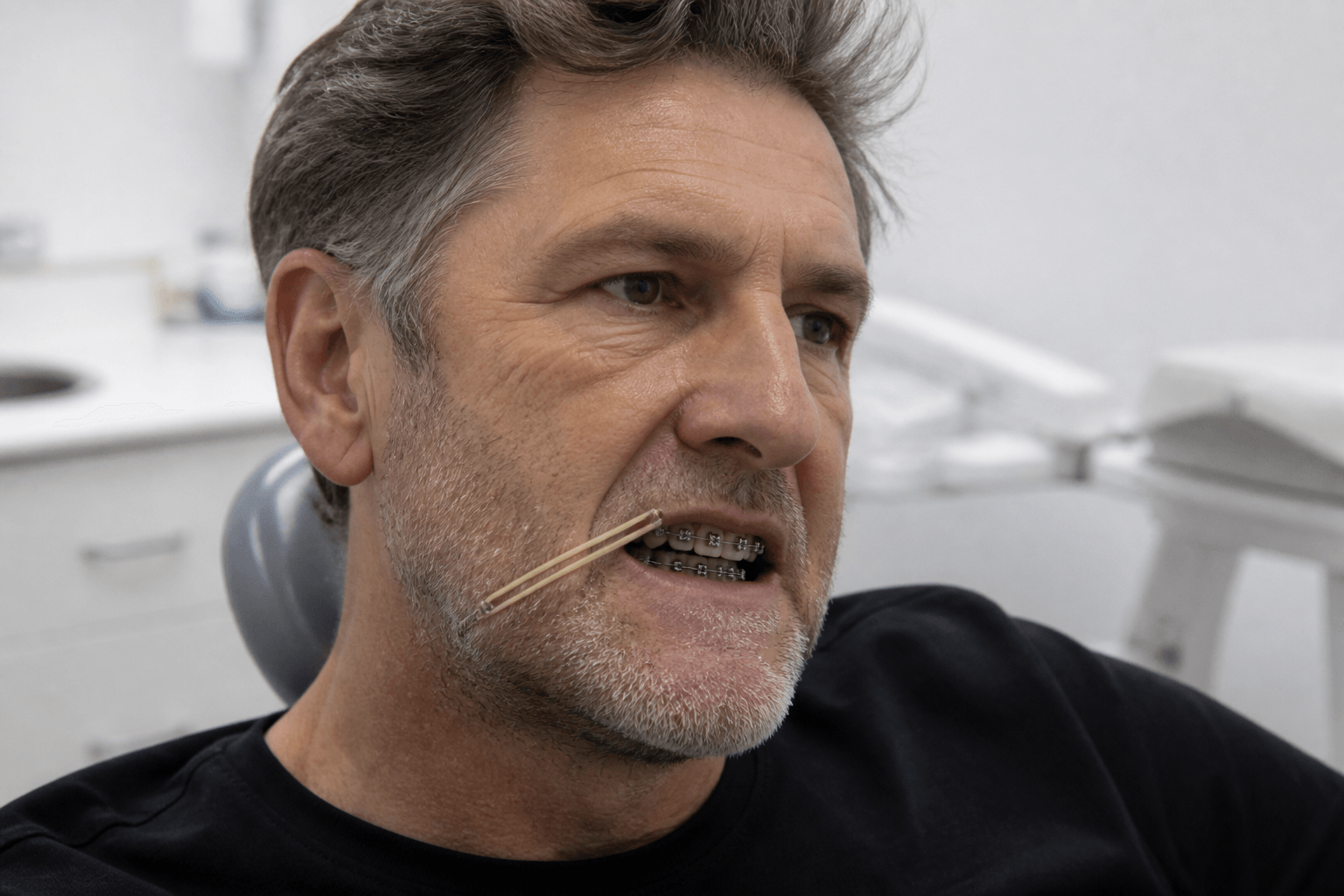
Don’t adjust prescribed elastics yourself
More force isn’t better. The AAO warns against doubling elastics because excess force can harm teeth and jaws or slow movement. Changing the hooks can also create a force your treatment plan never intended.
Follow the prescribed pattern, strength, and wear schedule, and contact the practice if you forget the layout or run out. If the setup worries you, ask for an earlier review rather than running an unsupervised experiment.
FAQ
Can Class II elastics make my chin look smaller?
Class II elastics don’t directly shrink the chin. Tooth and lip changes can alter the balance of a side profile, while posture and camera distance can change it in seconds. Ask your orthodontist to compare matched profile records if your chin seems different.
Can orthodontic elastics make my lips look thinner?
Moving front teeth can change lip support, and one small retrospective study found upper-lip retrusion in 22 Class II elastic patients. That doesn’t mean every patient’s lips will look thinner, and a relaxed matched photo gives a fairer check.
Do elastics change an adult jawbone?
Ordinary tooth-borne elastics mainly produce dental changes in adults, so the bite and profile may change without rebuilding the mandible or cheekbones. A treatment involving skeletal anchorage or jaw surgery is a different situation and needs its own explanation.
Will my face return to normal after I stop elastics?
Don’t expect your teeth to simply move back when the elastic phase ends because treatment aims to keep planned tooth and bite changes. Ask about retention and which visible changes should remain before assuming that stopping bands will reverse them.