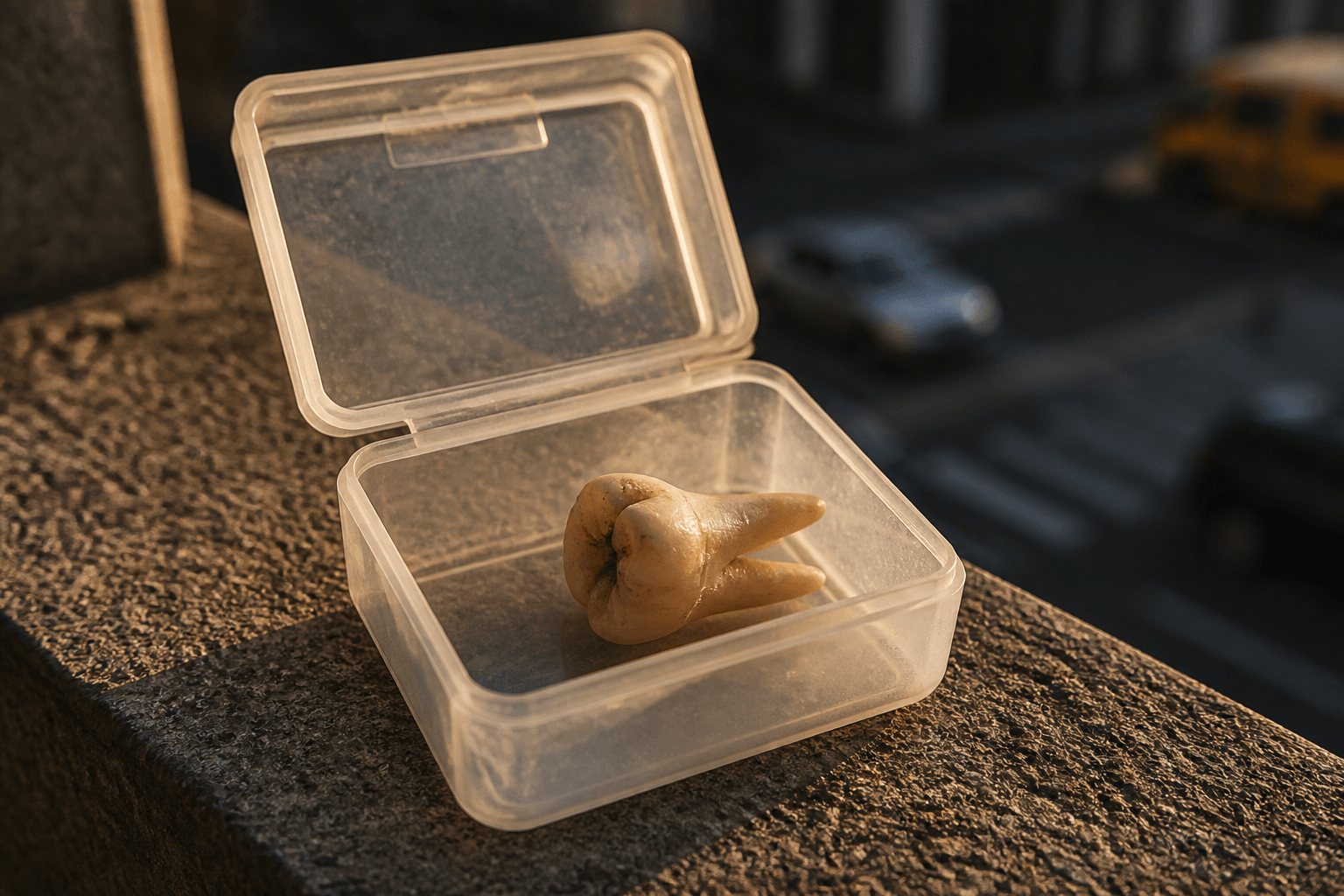
Quick answerCan one missing molar change your jawline? Usually, it won't create a visible change you can reliably spot from outside. Bone around the empty socket does shrink during healing, and nearby teeth may shift over time. The clearest evidence for broader facial change comes from people missing all their teeth, not one back tooth.## The change starts at the socketA molar root sits in alveolar bone, the tooth-bearing ridge that loses some width and height while an extraction socket heals. Dentists call this local process post-extraction remodeling around the gap.Couso-Queiruga and colleagues reviewed 28 studies of sockets healing without ridge-preservation procedures; 20 had comparable data for quantitative analysis. At molar sites, radiographic measurements showed an average horizontal ridge reduction of 3.61 millimetres. Average vertical reductions measured 1.46 millimetres on the cheek side and 1.20 millimetres on the tongue side.Those numbers describe the ridge that once surrounded the root, so they sound large without context. They do not mean 3.61 millimetres vanished from the visible lower edge of your jaw.Tan and colleagues found width decreased more than height, fastest during the first three to six months and more gradually thereafter.## Why one gap rarely reshapes the faceThe reviews measured alveolar ridge dimensions, not cheek width, jawline sharpness, chin projection, or visible facial appearance. The evidence supports local bone change, but it does not prove a predictable outer-face change from one molar.The best direct facial evidence covers a different level of loss: Skomina and colleagues studied 102 adults over 65 without natural teeth. They compared them with 30 dentate adults and used 3D facial scans around complete-denture treatment.After complete dentures were fitted, the largest surface changes appeared around the mouth and profile, with differences from faces retaining natural teeth. This shows extensive tooth loss can affect visible soft tissues, but it cannot show that one missing molar changes your jawline.That distinction undercuts clinic images that pair extensive tooth loss with claims about one empty socket. The cited research does not support that leap.## What can change even if your jawline doesn'tA back-tooth gap still matters because the ADA says a missing molar may affect chewing even when the gap isn't visible. It also warns that remaining teeth may shift and bone loss can occur around the missing tooth.Cleveland Clinic lists a bad bite, extra pressure on remaining teeth, bone loss, and further tooth loss as possible oral-health complications. They are better reasons for a dental review than anxiety about dramatic facial change.The cause also matters because adult tooth loss often follows decay, gum disease, or injury. Your dentist should check the rest of your mouth for the same problem. An exam and X-rays can show local bone loss and any tooth fragments left in the socket.If the molar never developed, your situation differs because the reviews measured healing after teeth were removed. They don't establish the same timeline for a tooth that never developed.## Why before-and-after selfies can mislead youA close selfie cannot show whether alveolar bone shrank; Cleveland Clinic lists dental X-rays for that job. A photo shows the face's surface, and camera distance can alter that view.Derakhshan and colleagues photographed 12 people with a smartphone and full-frame camera at several distances. Compared with a 60-inch reference, smartphone images stretched the midface vertically by 18% at eight inches and 12% at 12 inches.That study measured the midface, not the jawline, but it shows why casual selfies cannot prove small structural changes. For a fairer comparison, keep the camera, distance, light, head angle, and expression unchanged.Keep dental images with your care team because a face scan cannot diagnose bone loss inside the jaw.## What to ask before replacing the molarReplacing the tooth isn't a proven jawline treatment; it is a dental decision about function, alignment, local bone, and future risk.The ADA lists bridges, dentures, and implants; Cleveland Clinic says an implant replaces the missing root and supports a crown. A bridge uses teeth beside the gap for support, and each choice needs an individual assessment.No cited study tested whether an implant sharpens the face after one missing molar, despite what a marketing image may promise.Ask your dentist:- Has the gap affected my bite or chewing?- Are nearby teeth moving?- How much bone remains at the site?- What happens if we monitor instead of replace?- What benefits and downsides does each option have for my case?Cleveland Clinic advises a dental visit for warning signs such as loose teeth, bleeding or swollen gums, and tooth pain.DIY jaw manipulation cannot replace a missing root or measure bone loss, so leave the socket alone and get dental advice.## FAQ### How soon does bone shrink after molar extraction?Tan and colleagues found most measurable ridge change occurred during the first three to six months, followed by slower change. Your result may differ, so an exam and X-rays matter more than a generic timeline.### Can one missing molar make my face asymmetrical?Current evidence does not show predictable visible asymmetry from one molar, though it does show local ridge loss and possible tooth movement. Standardized photos can compare the surface, while dental X-rays assess the bone.### Will a dental implant restore my jawline?An implant replaces a missing root and supports a crown, but no cited study shows it sharpens the jawline after one lost molar. Choose it for dental benefits your dentist expects, not a promised face transformation.### Is a wisdom tooth the same as a missing molar?No; the 2021 review excluded third molars, so its measurements should not apply to wisdom-tooth removal, which is a separate clinical question.