Quick answer
Why do gray hairs feel wiry? Some unpigmented strands do handle moisture and bending differently from your pigmented hair. Aging can also change the follicle, hair shape and scalp oil at the same time.
But losing pigment doesn't make every gray hair coarse. The best direct study found few differences across its whole group, although many people had small differences within their own hair. Pale flyaways also stand out more against darker strands, so the change can look larger than it feels.
Pigment loss explains the color, not the whole texture
Hair turns gray when cells in the follicle supply less melanin to the growing shaft. With little or no melanin, a strand looks gray, silver or white. That explains the color change.
It doesn't prove why a strand feels rough, bends sharply or refuses to lie flat. Texture depends on the shaft's diameter, shape, surface condition, moisture response and styling damage. Those traits can change with age, but not in one fixed direction for everyone.
This distinction matters. Many hair pages say gray hair is always drier because it has no pigment. Human measurements don't support such a simple rule.
What the direct gray-hair study found
A 2011 study gives the closest answer. Researchers collected salt-and-pepper hair from 11 Mennonite adults aged 45 to 65. Their hair was untreated and had limited sun exposure, which reduced two major sources of damage.
The team compared pigmented and unpigmented strands from the same people. It tested surface properties, stiffness, break stress, bending, shear strength and water uptake and loss.
Across the full group, the researchers found few consistent differences between gray and pigmented fibers. Within individuals, though, many had small differences in mechanical behavior and moisture handling. Those changes could help explain why their gray strands felt drier or harder to manage.
The study was tiny. Only five participants supplied usable data for part of the water-loss testing. Everyone also came from one culturally distinct, low-sun population. The results show that wiriness can be real, but they don't support a universal gray-hair type.
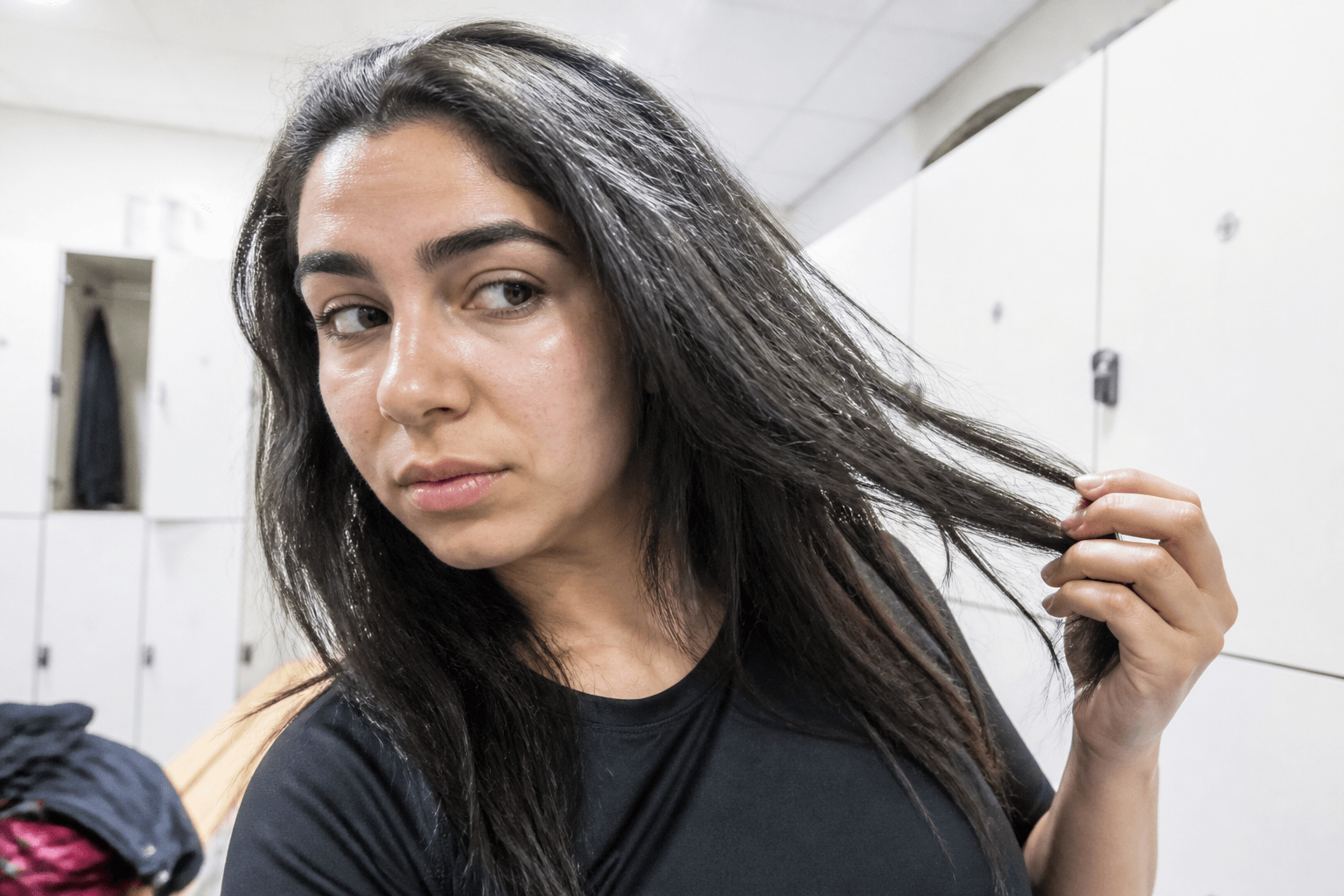
The researchers raised another useful point: visibility. One pale, curved strand catches your eye among dark hair. The same curve in a brown strand may disappear into the rest. Contrast can turn a small physical difference into an obvious flyaway.
Aging can change more than pigment
Gray hair and hair aging usually arrive together, so their effects are easy to confuse. Follicles can change the diameter, curve and growth of new strands over time. Heat, dye, sun and repeated brushing add damage after the hair leaves the scalp.
Scalp oil may play a part for some people. A 2023 study measured 200 Korean adults, split between their 20s and 50s. Women in their 50s had lower scalp sebum than women in their 20s. The researchers didn't find the same significant age difference among men.
That study compared age groups rather than following people over time. It also measured scalp sebum, not whether each gray fiber felt wiry. It shows why “older scalps make less oil” shouldn't be treated as a rule for everyone.
Hair type matters too. A review of 69 publications found that hair structure and aging patterns differ across racial and ethnic groups. Straight, wavy, curly and coily hair won't respond to the same amount or weight of conditioner. Your own pigmented hair is the fairest comparison.
Work out what “wiry” means in your hair
The word can hide several different problems. Check a clean, dry section in indirect daylight.
- It sticks up: A short new gray may lack the length and weight to blend with nearby hair. High color contrast makes it easier to spot.
- It feels rough: The shaft may have surface damage or need more conditioning. Heat and chemical processing can affect gray and pigmented strands.
- It bends or curls differently: A follicle can produce a strand with a different curve or diameter as it ages.
- It snaps: That is breakage, not just wiriness. Rough handling, high heat and chemical treatments can make it worse.
Touch the gray and a nearby pigmented strand rather than judging a flash photo. Phone sharpening and bright overhead light outline pale flyaways. They can't tell you whether the shaft is dry or damaged.
A simple routine to soften gray flyaways
You can't add pigment back with conditioner, but you can reduce friction and make a strand easier to style. Start with the smallest routine that solves the problem.
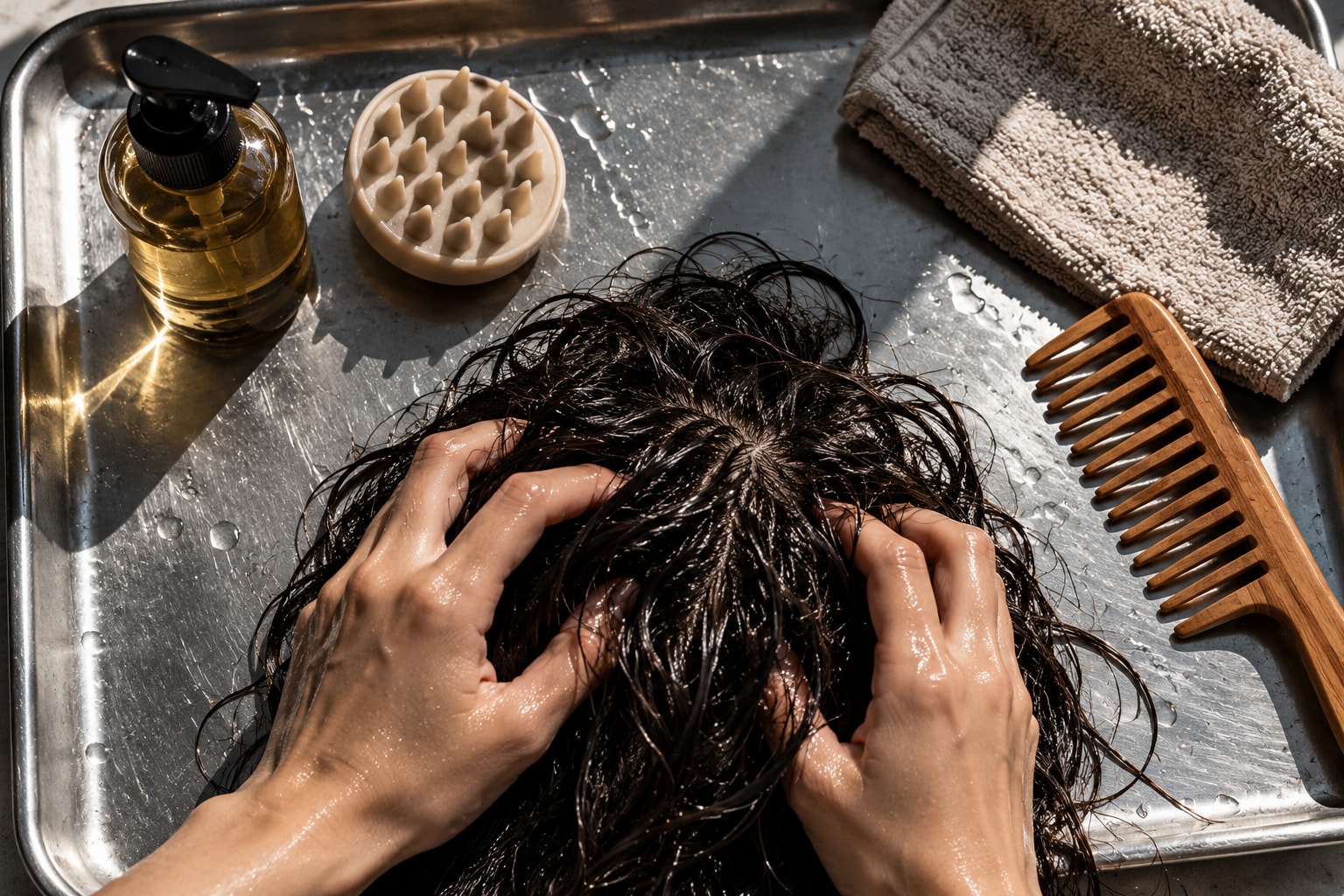
- Condition after each wash. Apply a rinse-off conditioner to the lengths, especially where hair feels rough. Conditioner coats the shaft and can reduce tangling and breakage.
- Add a small leave-in only if needed. Put a hair-type-matched leave-in on damp strands from the mid-lengths to the ends. The American Academy of Dermatology advises keeping it off the scalp, where buildup may irritate.
- Match the product weight to your hair. Fine, straight hair usually needs a lighter leave-in. Thick or curly hair may need more conditioning. Start with less than you think.
- Lower the heat. Use the lowest useful blow-dryer setting. Limit flat irons, curling irons and hot combs if the wiry strands also feel brittle.
- Comb gently. Detangle without tugging, and don't keep pulling at the same visible grays. If one short hair bothers you, trimming it is gentler than repeatedly plucking it.
Test that routine for two weeks before buying a mask, oil and serum together. Take one photo in the same light after each wash. More shine or fewer flyaways is useful evidence; a promise to “reverse” the structure of gray hair isn't.
Leave-in conditioner can smooth the surface, but it can't permanently change the follicle that formed the strand.
When texture change deserves a closer look
A few unruly grays are common and don't need a medical workup. Book a dermatologist if the change is sudden or comes with heavy shedding, bald patches, frequent snapping, scalp pain, redness or scale.
Those signs point beyond ordinary color change. A dermatologist can examine the scalp and shafts, then decide whether testing is useful. Don't start high-dose hair supplements from a photo or a single rough strand. The American Academy of Dermatology warns that excess selenium, vitamin A and vitamin E have been linked with hair loss.
FAQ
Does losing melanin make every gray hair coarse?
No. Melanin loss explains the lack of color, but the direct fiber study found few group-wide physical differences. Some people had small within-person changes in stiffness or moisture behavior, while others did not.
Why does one gray hair stick straight up?
A short strand has less weight to pull it into the surrounding style. Its curve or diameter may also differ, and the pale color makes its outline easier to see. Let it gain length or smooth it with a small amount of leave-in conditioner.
Can conditioner change the texture of gray hair?
Conditioner can coat the shaft, reduce friction and make hair feel smoother. It can't change the follicle or permanently remake the strand. Use a rinse-off conditioner first, then add a light leave-in if flyaways remain.
Should I take supplements for wiry gray hair?
Not based on texture alone. A supplement won't reliably soften a gray shaft, and too much of some nutrients can worsen hair loss. Ask a clinician about testing if early graying or texture change comes with shedding, fatigue or other symptoms.