Quick answer
Why does sunscreen sting after shaving? The razor may have irritated your outer skin or left tiny nicks, making a familiar formula burn.
That sting is usually irritation, not proof that the SPF is working. Rinse off persistent burning, cool your skin, and apply a plain fragrance-free moisturizer, then shave gently and test a fragrance-free mineral sunscreen next time.
Why shaving changes how sunscreen feels
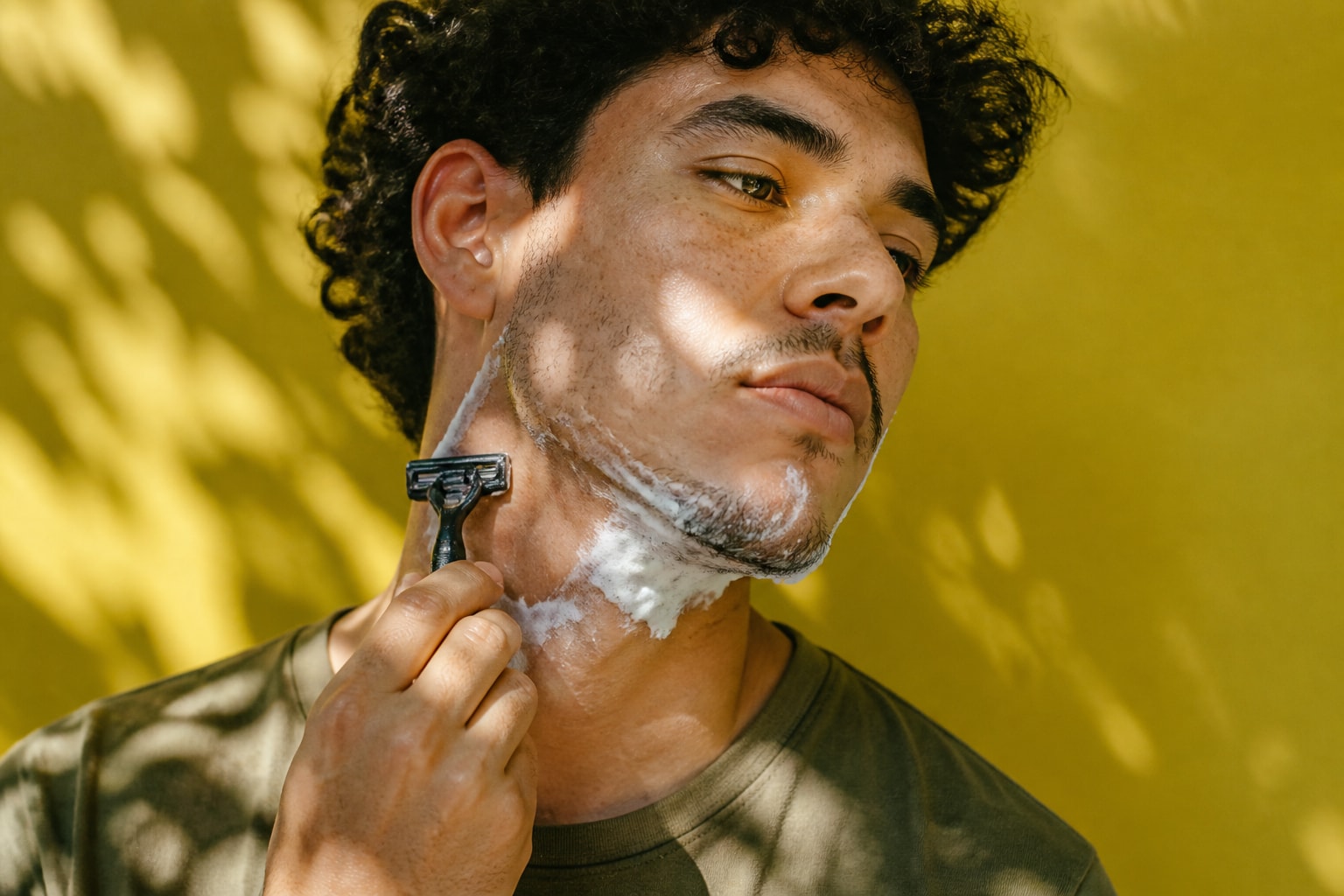
A shave affects more than the hair. A blade also moves across the outer skin, where it can cause tiny cracks, water loss, and inflammation. Cleveland Clinic lists dry shaving, a dull blade, fast strokes, and shaving against hair growth as common causes of razor burn.
You don't need a visible cut for sunscreen to sting. Freshly shaved skin may already feel tight or tender before you apply anything. A sunscreen formula that feels fine on intact skin can then reach irritated areas and trigger burning.
The sunscreen may add its own source of irritation. DermNet lists brief stinging, skin irritation, and irritant contact dermatitis among known sunscreen side effects. Fragrance, preservatives, the sunscreen filters, and the product base can each be involved.
The combination matters. If the product burns only on areas you just shaved, shaving irritation is the leading explanation. If it also burns on unshaved skin, the formula itself is a stronger suspect.
Is it irritation or a sunscreen allergy?
An immediate sting limited to freshly shaved skin fits irritation better than allergy, but it does not prove the cause. Razor burn can also bring redness, tenderness, or itching.
An allergy is less common. DermNet says sunscreen allergy can come from an active filter, fragrance, preservative, or another ingredient. It may cause an itchy, eczematous rash and can spread beyond the exact application area. Some reactions appear only after sunlight reaches the product-covered skin.
Timing alone cannot diagnose the cause. Stop using the product if burning persists, returns with each use, or develops into a rash. A dermatologist can use patch testing, and sometimes photopatch testing, when a true allergy is suspected.
What to do when sunscreen burns after a shave
Remove the product instead of trying to tolerate it. Use cool or lukewarm water and avoid scrubbing the area. Then hold a cool, damp cloth against the skin.
Apply a simple fragrance-free moisturizer if the skin is intact. Cleveland Clinic recommends a moisturizer or cool washcloth for razor burn and advises avoiding fragrance, alcohol, and other irritants.
Pause shaving until the irritation settles. Keep the routine simple, and avoid scrubs, fragranced aftershave, or other products that sting the area.
Do not put sunscreen over an open nick or visibly broken skin. FDA sunscreen warnings say not to use these products on damaged or broken skin. If you must go outside, cover the area where practical and use shade until the skin closes.
A mild razor burn often clears within hours to a few days. Seek medical advice if the rash is worsening, looks infected, or has not improved after several days.
A lower-irritation shave and SPF routine
The best fix is to reduce irritation before sunscreen touches your face.
- Soften the hair with warm water. Shaving after a shower is convenient, but a warm rinse also works.
- Use a shaving cream or gel. DermNet notes that it softens hair and adds a layer between the blade and your skin.
- Use a clean, sharp blade with light pressure. Shave in the direction the hair grows.
- Aim for one pass where possible. Repeated passes over any area raise the chance of irritation.
- Rinse with cool water, pat dry, and use a plain moisturizer. Do not rub the skin with a towel.
- Apply sunscreen only when there are no open cuts and the skin feels settled. Use the condition of your skin, not a fixed wait time.
If every morning shave causes burning, move the shave to the evening. This separates shaving from the next sunscreen application without sacrificing daytime sun protection.
How to choose a sunscreen that is less likely to sting
Start with the label, not marketing words. The American Academy of Dermatology says "sensitive skin" is not a term defined by the FDA.
Look for a fragrance-free mineral sunscreen whose active ingredients are zinc oxide, titanium dioxide, or both. Dermatologists often recommend these filters for sensitive skin. They can still irritate some people, so "mineral" is not a guarantee.
Choose broad-spectrum protection and an SPF you will apply in the required amount. A comfortable SPF 30 used properly is more useful than an SPF 50 you avoid because it burns.
Test one change at a time. Try the new sunscreen on a small area of unshaved skin first. If that is comfortable, test it after a gentle shave on a different day. This separates a formula problem from a shaving problem.
Do not keep buying products at random. Compare ingredient lists from formulas that sting and formulas that do not. A dermatologist can help if several unrelated sunscreens cause the same reaction.
Mistakes that keep the cycle going
- Assuming a stronger sting means stronger protection. Burning is a tolerability problem, not a measure of SPF.
- Shaving closer to remove every trace of shadow. Extra pressure and repeated passes raise the chance of irritation.
- Applying an alcohol-heavy aftershave before sunscreen. That adds another possible irritant to freshly shaved skin.
- Testing a new razor, shaving cream, moisturizer, and sunscreen on the same morning. You will not know which change caused the reaction.
- Ignoring a recurring rash. Repeated exposure can keep contact dermatitis active even after razor burn should have settled.
FAQ
How long should I wait after shaving before applying sunscreen?
Use the condition of your skin, not a fixed number of minutes. Apply sunscreen when the skin is intact and comfortable, then follow the product directions before sun exposure. Repeated stinging points to the shave, the formula, or both.
Is mineral sunscreen always better after shaving?
Mineral sunscreens with zinc oxide or titanium dioxide are often less irritating for sensitive skin. They are not reaction-proof. Fragrance, preservatives, or the product base can still cause trouble.
Why does sunscreen sting my neck but not my cheeks?
You may be making extra passes on your neck or shaving there against the grain. More blade contact means more irritation. Map the growth direction and use lighter, fewer strokes there.
Should sunscreen sting if my skin barrier is damaged?
Irritated skin can sting when products are applied, but the sensation is not a useful test of barrier damage. Persistent burning, redness, or rash means you should stop the product and let the skin recover.