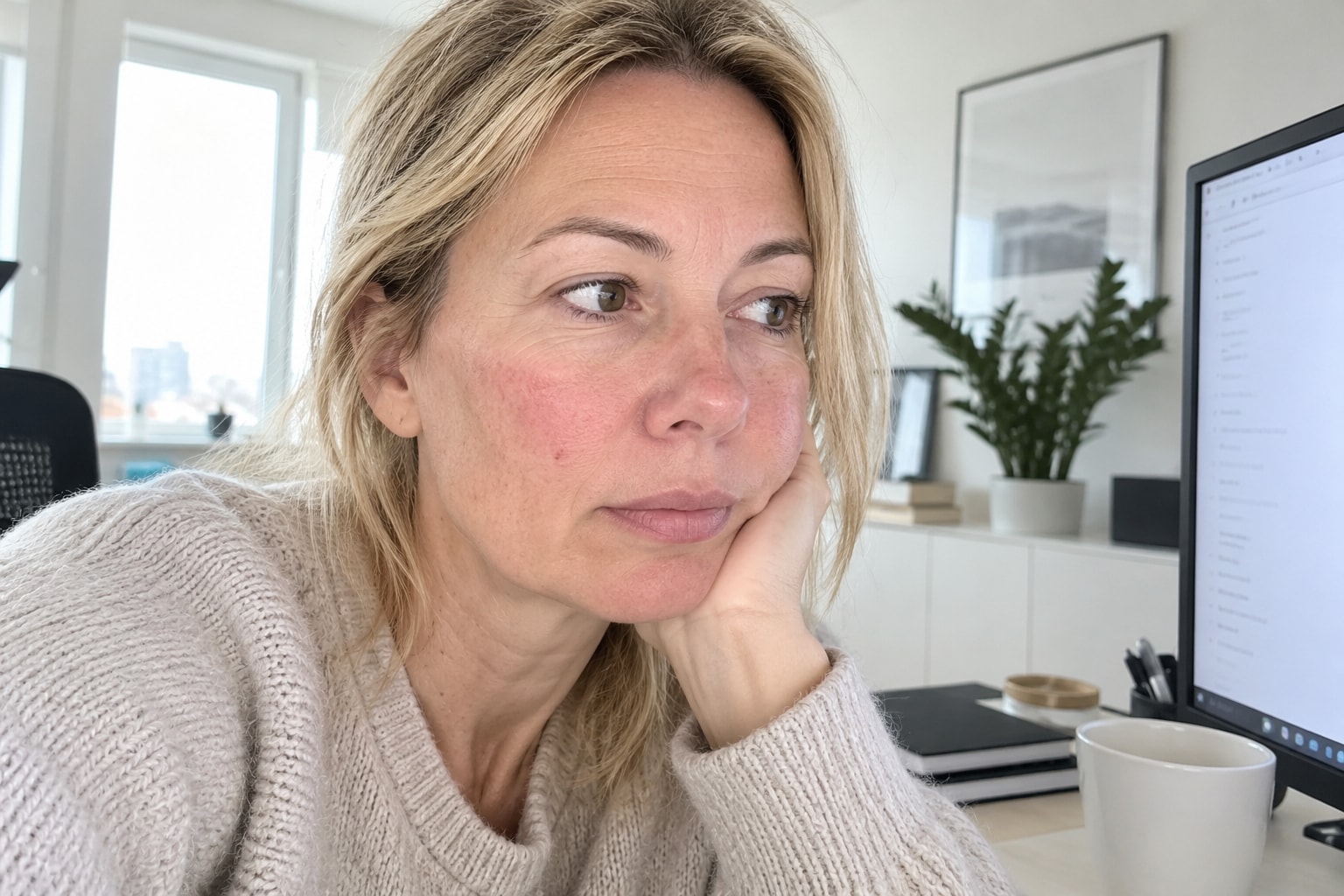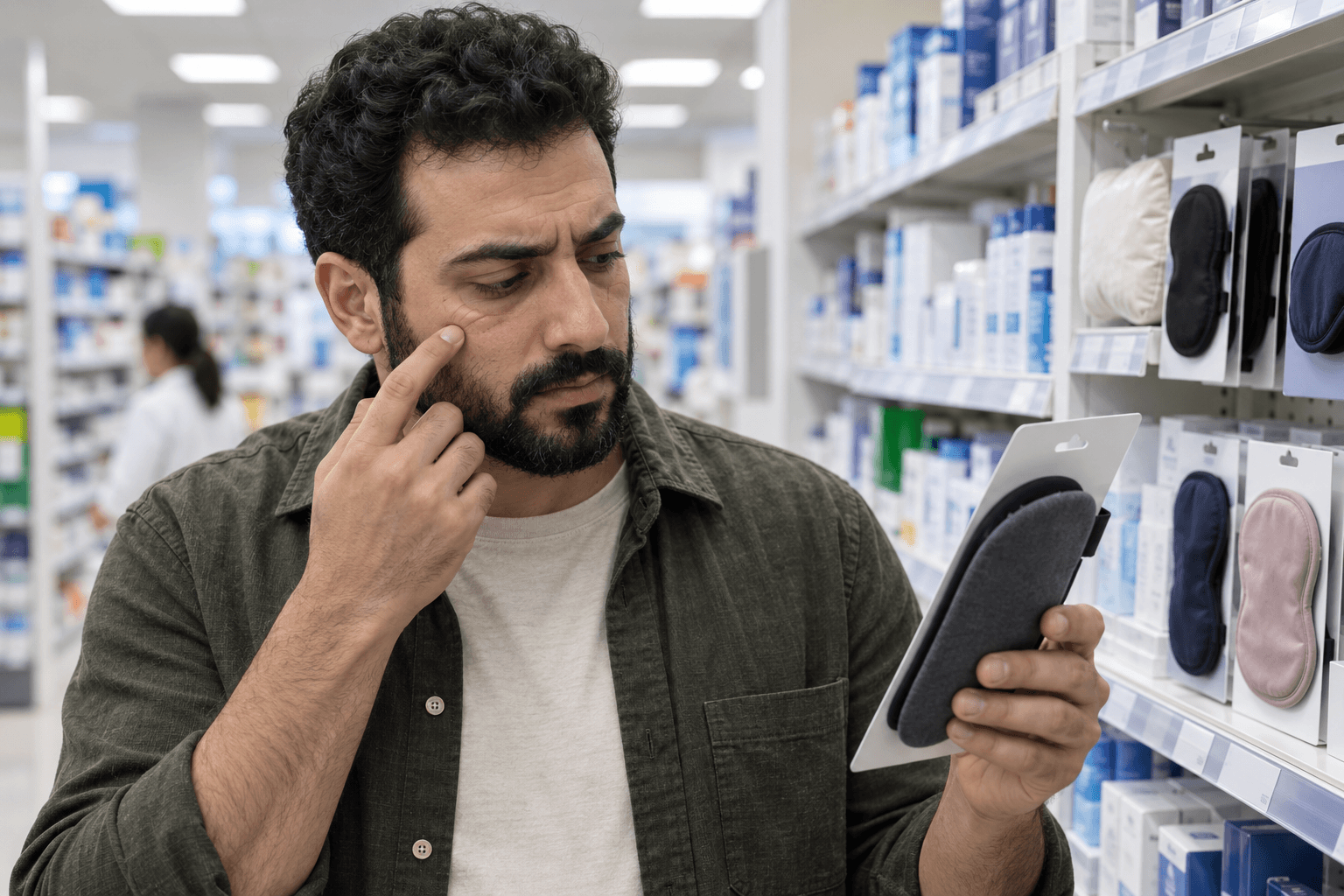
Quick answer
A sleep mask leaving marks on your face usually points to concentrated pressure, rubbing, or both. Loosen the strap, check the edges while lying in your normal sleep position, and change the mask shape if one spot still feels compressed. Stop using it if the skin becomes itchy, scaly, swollen, painful, or broken.
Pillow-pressure studies describe compression, shear, and stress, but they don't prove that an eye mask will permanently age your skin.
Why a sleep mask can leave lines
A sleep mask works only if it blocks light and stays in place, but it should not squeeze your face. Cleveland Clinic advises choosing one that feels snug without being tight and blocks light without pressing on your eyes.
Three forces can leave a visible mark:
- The strap pulls a narrow edge into your temples or cheeks.
- A seam, buckle, or eye-cup rim concentrates pressure in one place.
- Your pillow pushes the mask sideways when you sleep on your side or front.
The result may be a simple indentation or irritation if the mask rubs, traps skin products, or stays dirty. DermNet's evidence concerns medical face masks, not sleep masks. Still, it shows the relevant skin mechanics: pressure can cause indentations, while friction can cause redness and scaling.
That distinction matters: a fit change may solve a pressure line, while a rash needs rest from the suspected trigger.
Work out which mark you have
A smooth line that fades
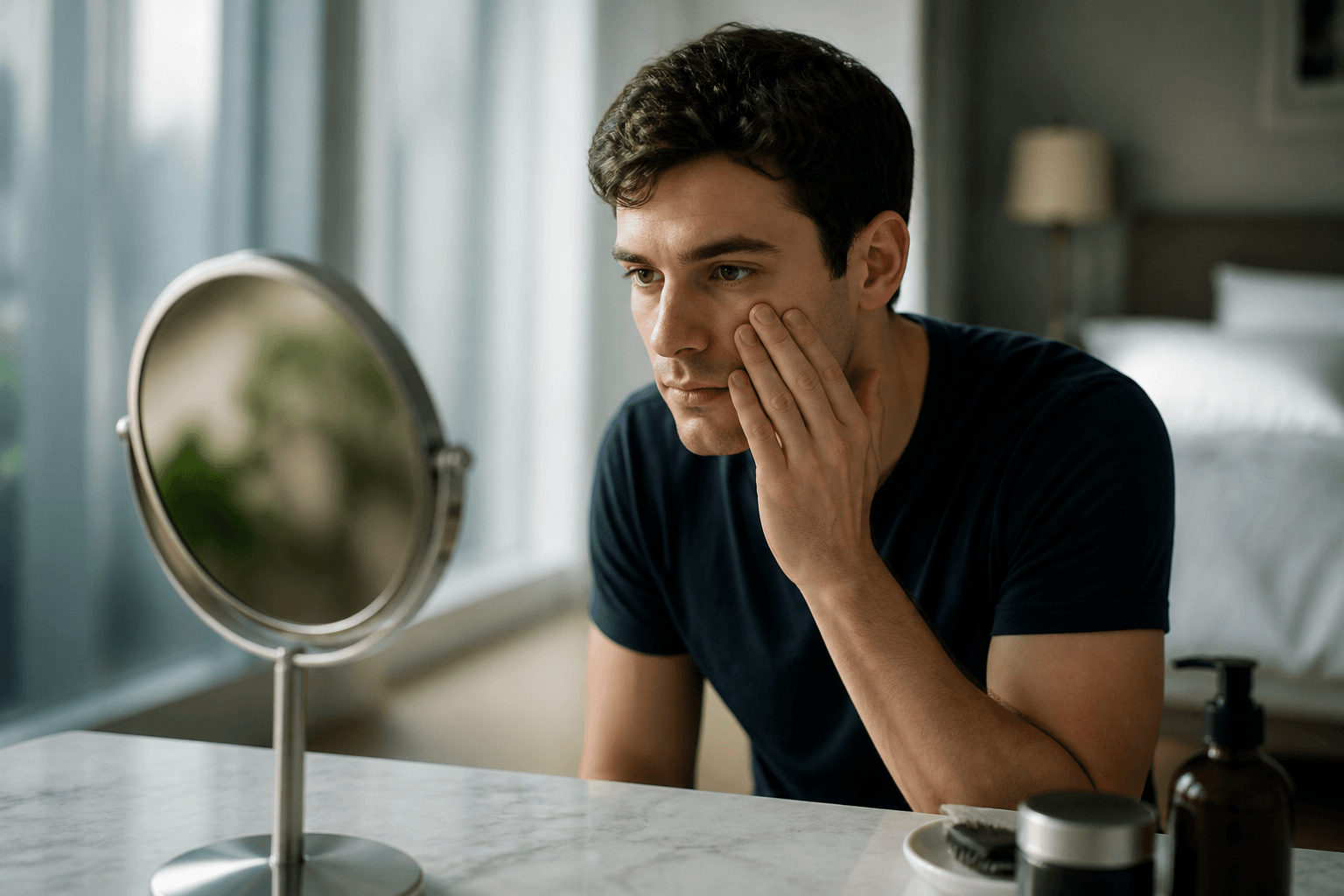
A pressure line usually matches the strap or mask edge and feels like normal skin rather than itching, burning, or peeling.
The cited sources do not set a time limit for an eye-mask mark to disappear. A faint line that steadily fades is less concerning than one that remains sore or visible for much of the day.
Redness with soreness or burning
This pattern points more toward rubbing or irritant contact dermatitis. Check whether the mask shifts when you turn, and look for a rough seam in the same location. Skin already irritated by retinoids, exfoliating acids, or a new product may tolerate rubbing poorly.
Advice from the American Academy of Dermatology on cloth face masks is useful here, with limits. It recommends a comfortable fit, gentle skin care, regular washing, and fragrance-free detergent. Those steps are reasonable for a washable sleep mask, but follow its care label first.
Itching, scale, or a rash-shaped outline
These signs make contact dermatitis more plausible. The elastic or a fragranced detergent may contribute, and products under the mask may worsen irritation. You can't identify an allergy from a selfie or from the rash shape alone.
Stop using the mask until the skin settles. If the rash returns after you reuse it, a dermatologist can assess the cause and arrange patch testing when needed.
Run a one-change fit test
Don't buy several masks or overhaul your skin routine at once, or you won't know which change worked. This is a practical troubleshooting test, not a clinical protocol.
- Wait until the skin looks and feels normal, then wash the mask as directed, rinse it well, and let it dry fully.
- Put it on while sitting up, then set the loosest strap position that still blocks light.
- Lie in your usual position, turn your head both ways, and notice any edge, seam, or buckle pressing against the pillow.
- Test the adjusted fit for two or three nights while keeping your cleanser, moisturiser, pillowcase, and bedtime products unchanged.
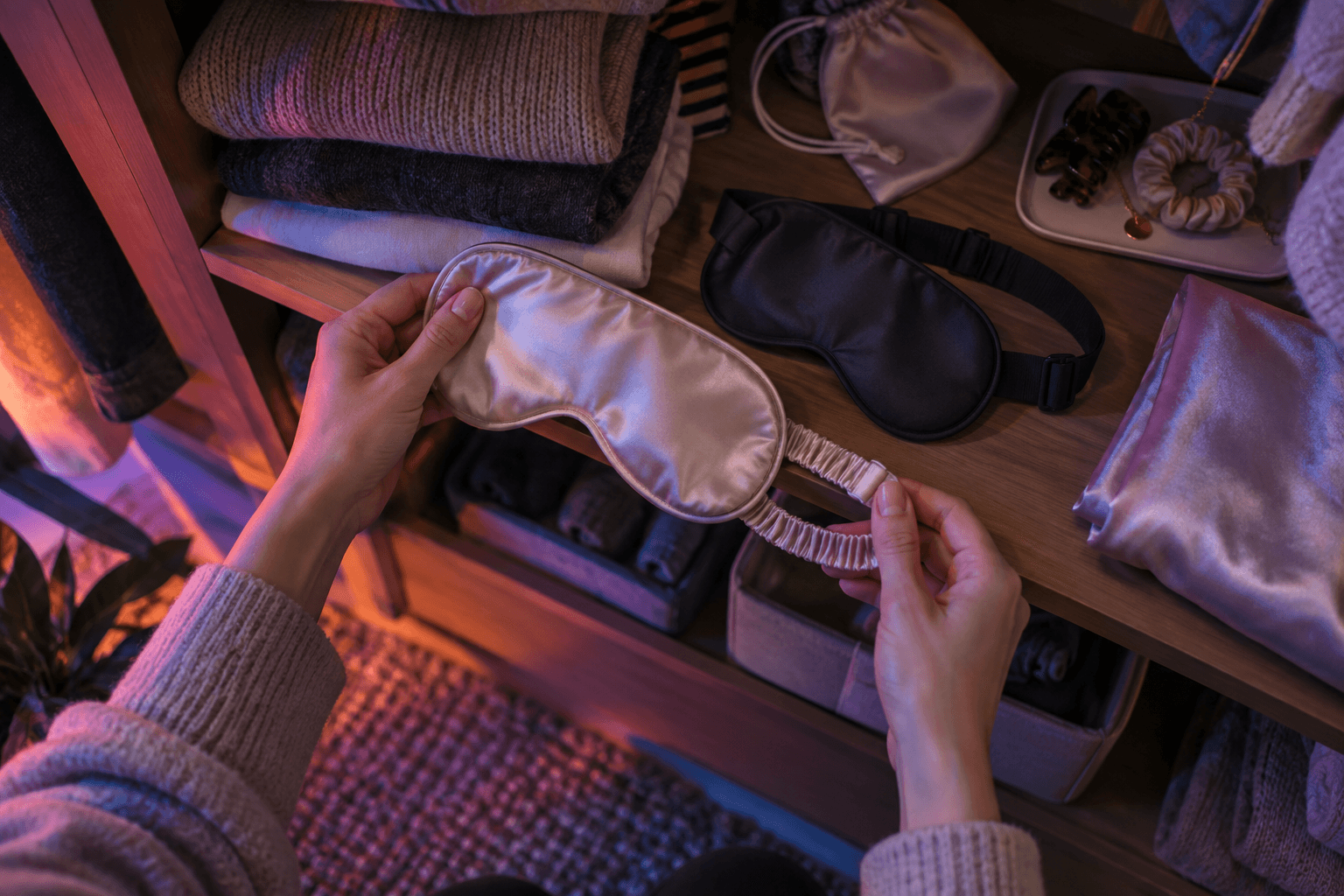
- If the same line returns, change the pressure pattern. A broader strap, softer edge, or contoured cup may fit better. Cleveland Clinic says there is no single best style, so choose by comfort and fit.
- If redness or itching returns, stop rather than keep testing a material that appears to inflame your skin.
A weighted eye mask adds pressure by design. It may feel calming, but it is a poor match if pressure marks are your main problem. Choose comfort and stable light blocking over weight.
Judge the change without camera noise
Use photos as a short log, not as a diagnosis, because changing the lighting or time since waking makes comparisons less useful.
Take one front-facing photo soon after waking and another at a fixed later time. Keep the same camera, distance, window light, angle, and neutral expression for three mornings before and after one fit change.
Mark location is more useful than a beauty score. A line that repeatedly matches a seam gives you an action: remove that pressure point. A redness score cannot tell you whether the cause is friction, allergy, or a skin condition.
LooksMax Scan can record visible redness from a clear, front-facing photo. Its own guidance describes it as a screening tool, not a medical diagnosis. Use a scan to compare consistent photos, then stop tracking once the practical question is answered.
Do sleep-mask marks become permanent wrinkles?
The cited studies are mixed, and neither directly tested ordinary eye masks.
A 2016 review described compression, shear, and stress when the face presses into a pillow. The authors proposed that repeated distortion may contribute to sleep wrinkles. That is a plausible mechanism, not proof that a sleep mask causes them.
A separate 2013 study found no link between a person's preferred sleep side and the side with more wrinkles or facial sagging. That result weakens any simple claim that pressure always creates lasting asymmetry.
Fix a mask that leaves deep lines because it is uncomfortable and may irritate your skin. Don't sacrifice good sleep or force yourself into one position because of an unproven anti-wrinkle claim.
When to stop testing and get help
Stop wearing the mask and seek medical advice if you develop broken skin, blisters, marked swelling, worsening pain, or a rash that keeps returning. Eye pain or a change in vision needs prompt assessment rather than another mask adjustment.
Book a routine skin review if itching, scaling, or redness does not improve after you remove the likely trigger. Bring the mask, its fabric label, your detergent details, and a short photo timeline. That is more useful than trying several creams at random.
FAQ
How tight should a sleep mask be?
It should stay in place and block light without squeezing your temples, cheeks, or eyes. Test the fit while lying in your normal position because the pillow can add pressure that you won't notice while standing.
Is silk better for preventing sleep-mask marks?
Silk feels smooth, but the cited research doesn't establish that silk eye masks prevent pressure marks or wrinkles. Check strap tension, seams, padding, and how the mask meets your pillow.
Can I wear a sleep mask over skin care?
Yes, if your routine does not irritate your skin or leave the mask wet and slippery. Let moisturiser settle before bed, avoid adding a new active during your fit test, and wash the mask as directed.
Why is the mark worse on one side?
Your pillow can push the mask harder into the lower side of your face. Test the fit in that sleeping position, and check whether a seam or buckle lands on the marked area.