Quick answer
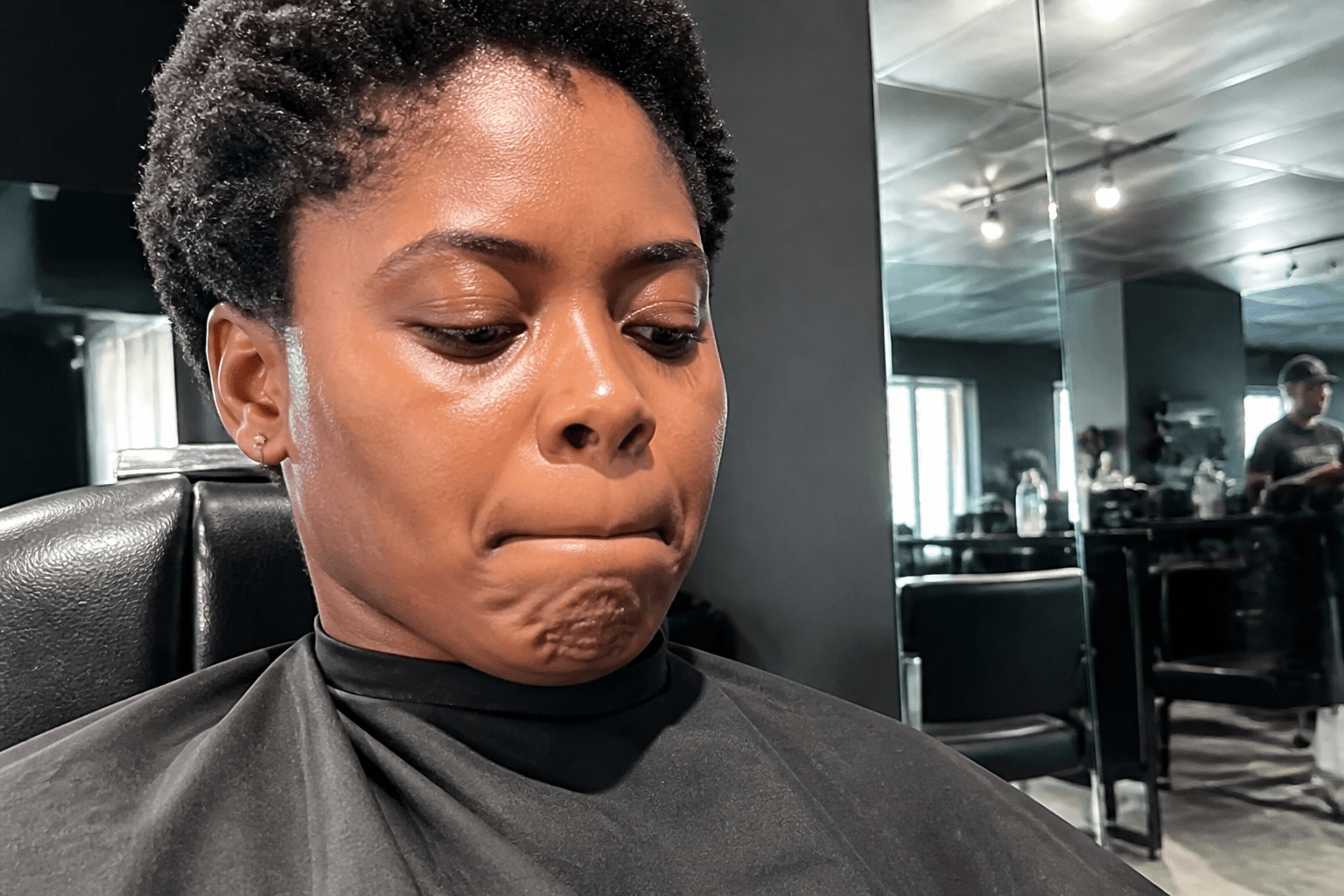
Does one-sided chewing cause facial asymmetry? It may be linked to small differences in jaw muscles or lower-face shape. Human evidence doesn't prove that chewing created those differences, though.
The largest adult 3D study included 748 people and found no statistically significant effect of preferred chewing side on facial asymmetry. Smaller studies found associations, but they disagree about which side should look larger.
If you favor one side because the other hurts or doesn't meet well, see a dentist. Don't try to fix your face by chewing hard gum or forcing the "weaker" side.
What the strongest study found
The best direct evidence comes from the 2024 Northern Finland Birth Cohort study. Researchers examined 748 adults aged 32.9 to 35.5. They recorded each person's chewing preference, completed a dental exam, and measured facial asymmetry from 3D images.
Preferred chewing side had no statistically significant effect, a result that carries weight because this study dwarfed the earlier work.
The dental exam revealed a more useful clue. People missing one tooth had 2.44 times the odds of favoring the side with more teeth. Some people may chew on one side because the other side works less comfortably.
This was still a snapshot rather than an experiment, so it couldn't prove which change happened first. Its narrow age range and regional sample also limit how widely the result applies.
Why smaller studies keep the question open
A second 2024 study used 3D surface scans from 163 healthy adults aged 18 to 55. It found patterns linking preferred chewing side with facial asymmetry in men, but not in women. Right-side male chewers tended to show more right-sided facial projection. Left-side male chewers showed a different left-sided pattern.
Participants reported their own chewing preference, and researchers didn't follow their faces as their habits changed. The study can show a link, but it can't show that chewing caused the face pattern.
A study of 106 same-sex twin pairs produced another twist. Chin volume was often larger opposite the preferred chewing side. People who chewed symmetrically tended to have lower asymmetry scores, though most differences weren't statistically significant.
That finding clashes with the simple claim that the working side must become larger.
Muscle measurements offer one possible piece of the puzzle. A 2026 ultrasound study examined 25 people who habitually chewed on one side because of missing teeth. Their working-side masseter was about one millimeter thicker on average, both at rest and during contraction. The working-side masseter and temporal muscles were also stiffer during contraction.
The sample was tiny, included no two-sided comparison group, and involved tooth loss in every case. You can't apply those measurements to a healthy person who sometimes favors one side.
Muscle adaptation isn't the same as reshaping your jaw
Chewing loads the masseter and other jaw muscles, so uneven use could produce uneven muscle adaptation. The small ultrasound study supports that possibility in people with missing teeth.
It doesn't show that one-sided chewing sculpts an adult jawbone. The larger studies measured the face's outer surface, which reflects muscle, skin, fat, teeth, and underlying bone together.
Some asymmetry appeared across the healthy volunteers, so a slightly uneven jaw isn't proof that a chewing habit damaged your face.
This distinction changes how you should read a selfie: it records a visible difference but can't identify whether muscle, bite, bone, or expression caused it. A face scan has the same diagnostic limit.
Find out why you use one side
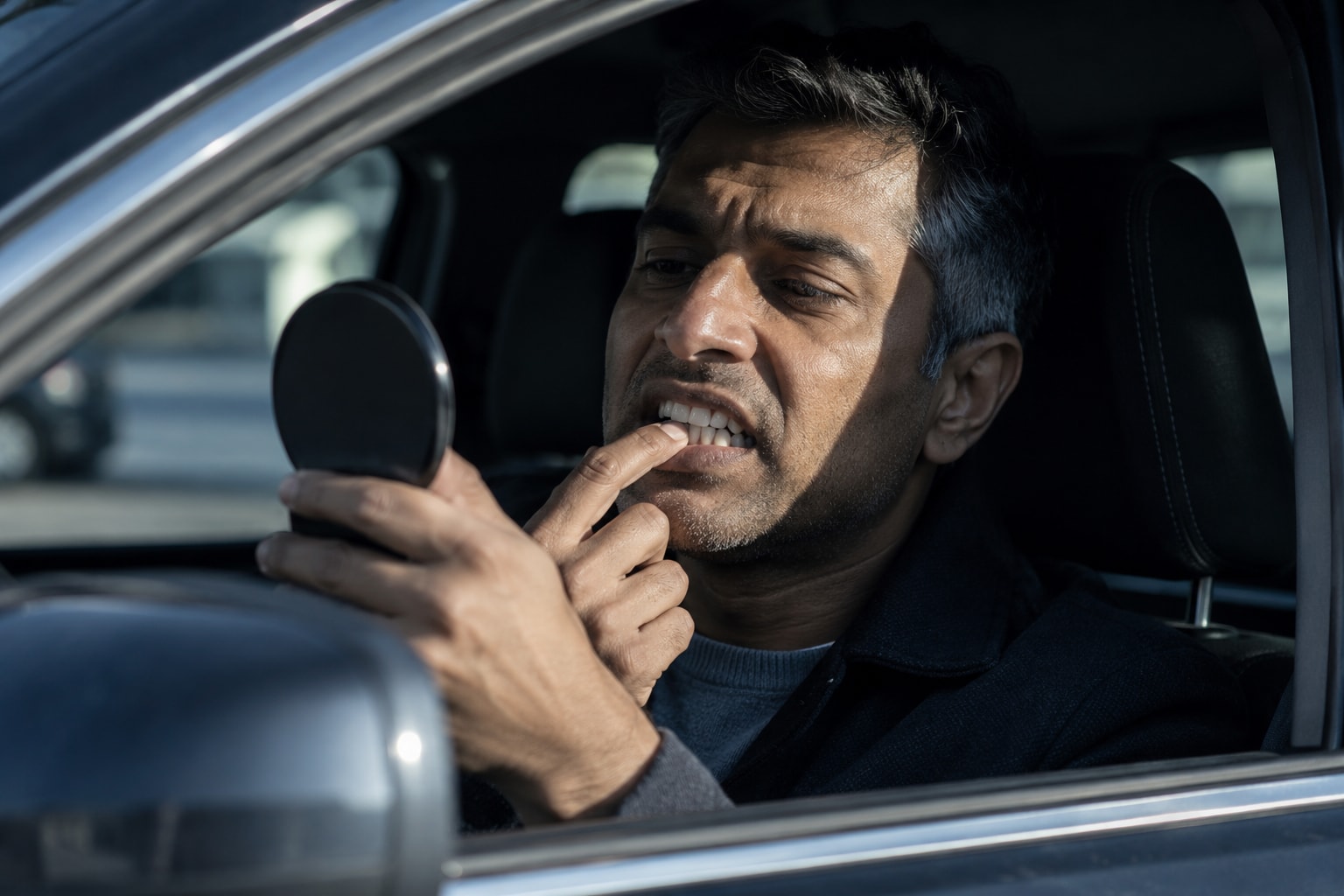
Persistent one-sided chewing is more useful as a clue than as a diagnosis. Check whether you notice any of these patterns:
- One tooth hurts while you bite or chew.
- A missing or painful tooth, or a sore gum, makes one side awkward.
- Your upper and lower teeth no longer meet in the usual way.
- Your jaw feels painful, stiff, or locked.
- A jaw click hurts when you open or close your mouth.
The American Association of Orthodontists lists tooth decay, gum disease, tooth loss, and bite problems among reasons chewing may become difficult. The National Institute of Dental and Craniofacial Research also lists pain, stiffness, locking, and a changed bite as TMD signs.
A click without pain is common and usually doesn't need treatment. Painful clicking, limited movement, or a new bite change deserves an assessment.
Start with a general dentist who can check the teeth, gums, restorations, and bite. An orthodontic or jaw specialist may help if the dentist finds a bite or joint problem.
What to do safely
Don't force a painful side to "catch up." Pain may be steering you away from a tooth or joint that needs care.
Skip hard-gum routines, jaw trainers, and deliberate over-chewing. The studies above don't show that these methods correct adult facial asymmetry. NIDCR advises reducing gum chewing and clenching when jaw muscles or joints hurt.
If both sides feel comfortable, let your chewing move naturally. The cited studies don't define a 50:50 target, and counting every bite can turn a minor concern into constant checking.
If you want to monitor appearance, take one neutral front photo each month. Keep the setup consistent and look for a trend rather than comparing two random selfies.
Treat a face scan as a record of visible change, not a dental diagnosis. These studies provide no timeline for making an adult face more even by switching sides.
FAQ
Which side gets bigger when you chew on one side?
The evidence doesn't give one reliable answer. A small study found a thicker masseter on the working side, while a twin study found larger chin volume more often on the opposite side. Different tissues, dental problems, and natural asymmetry can all affect what you see.
Can chewing on the other side fix facial asymmetry?
The studies above don't show that counter-chewing fixes facial asymmetry. Forcing the other side may also hide tooth or bite pain and add jaw strain. Find the reason for your preference before changing how you chew.
Why do I naturally chew on one side?
You may favor the side with more comfortable tooth contacts. Missing teeth, decay, gum pain, or a bite problem can push chewing away from the other side. Some people have a preference without an obvious problem.
When should one-sided chewing be checked by a dentist?
Book a dental exam if the habit is new or comes with tooth pain, sensitivity, jaw stiffness, locking, painful clicking, or a changed bite. Get checked sooner if eating is difficult or the symptoms are worsening.