Quick answer
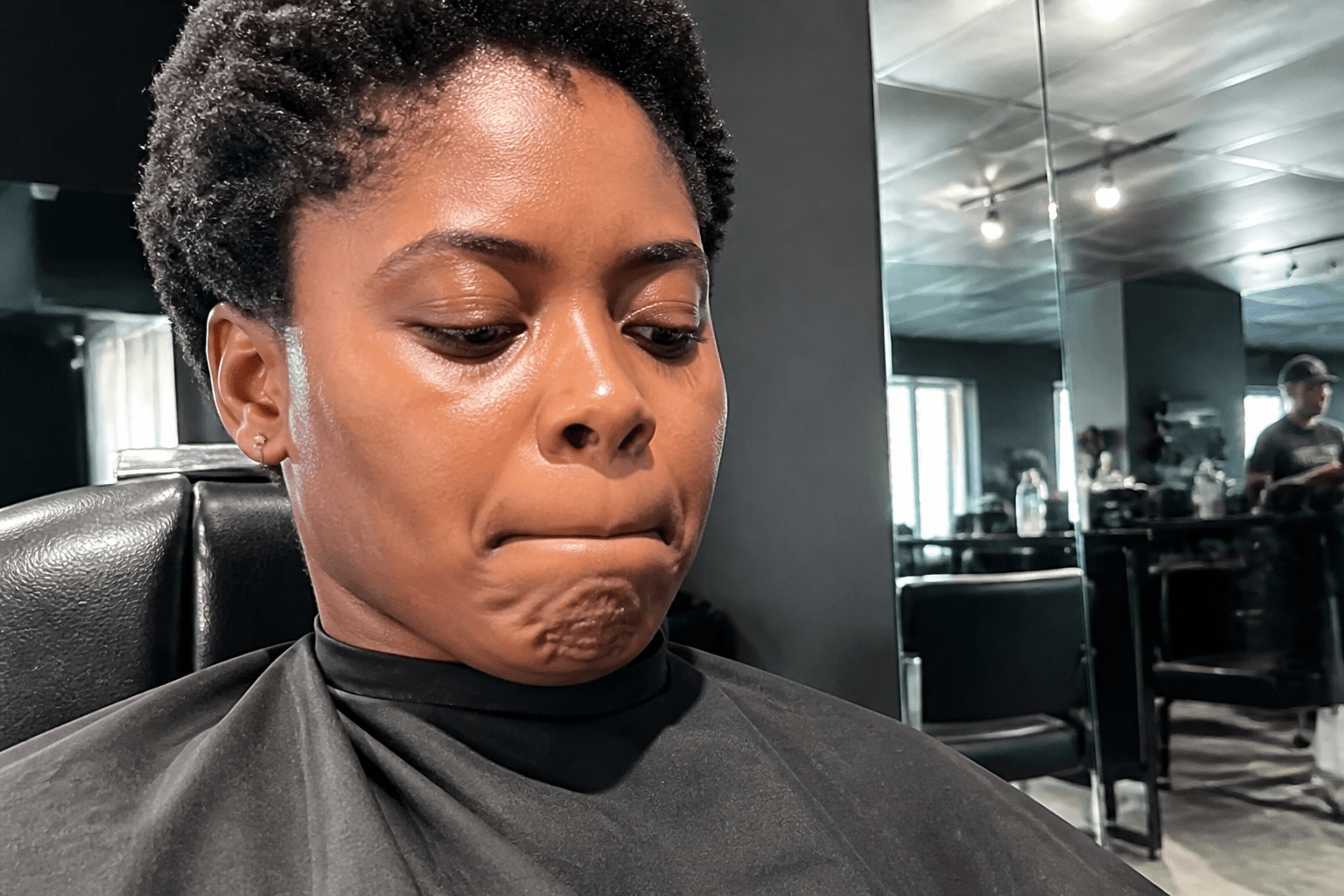
The answer to “why does my chin wrinkle when I close my mouth?” is usually contraction of the mentalis muscle. This muscle lifts your lower lip and chin skin, which can make the surface bunch. Dimpling during a pout is ordinary movement, but dimpling needed to join relaxed lips may reflect mentalis strain or lip incompetence. A selfie can't diagnose the cause, so persistent effort at rest deserves a dental or orthodontic check.
What is moving under the skin
The mentalis is a paired muscle in the centre of your chin, and it supports and raises the lower lip. Its fibres attach to chin skin, so contraction can create a pebbled or “orange-peel” texture.
That movement is often harmless; the useful clue is timing. Dimpling that appears only when you pout or press your lips together is an expression pattern. Dimpling required for ordinary lip closure may point to extra muscle effort.
This is a movement issue, not automatically a skin problem. A skincare product won't stop the muscle contracting. Strong side lighting can throw tiny shadows into each dimple and make the texture look deeper.
When chin dimpling may mean lip incompetence
Your lips should be able to meet without you clenching your teeth or forcing the lower lip upward. If they naturally rest apart, and the chin tightens when you close them, that pattern may be lip incompetence. The label describes lip function, not your face's worth.
Tooth position is one possible factor because protruding teeth can push the lips forward or apart, according to the American Association of Orthodontists. That can make you recruit facial muscles to seal them.
Yu and colleagues studied 209 women aged 18 to 30 who had Class I or II malocclusions. Chin strain was more likely with greater upper-incisor prominence and overjet, along with certain vertical bite measurements. The observational study involved one narrow patient group, so it cannot explain your chin wrinkles from a photo.
Lip and jaw anatomy can vary even when the bite is healthy, and muscle habits may differ too. That is why “wrinkled chin equals weak jaw” is too simple.
One chin wrinkle does not indicate sleep apnoea. Loud snoring, witnessed breathing pauses, gasping, morning headaches, or daytime sleepiness do warrant a medical assessment.
Do a calm 30-second check
Use this check to describe the pattern, not diagnose yourself.
- Sit upright and let your shoulders, jaw, and face relax for 20 seconds while keeping your teeth unclenched.
- Breathe normally, and do not force nasal breathing if your nose feels blocked.
- Notice whether your lips touch on their own; if they don't, bring them together with the least effort possible.
- Watch for the lower lip lifting, the chin becoming firm, or dimples appearing, and note any discomfort.
- Repeat once from the side, then stop. Repeated posing can create the tension you are trying to observe.
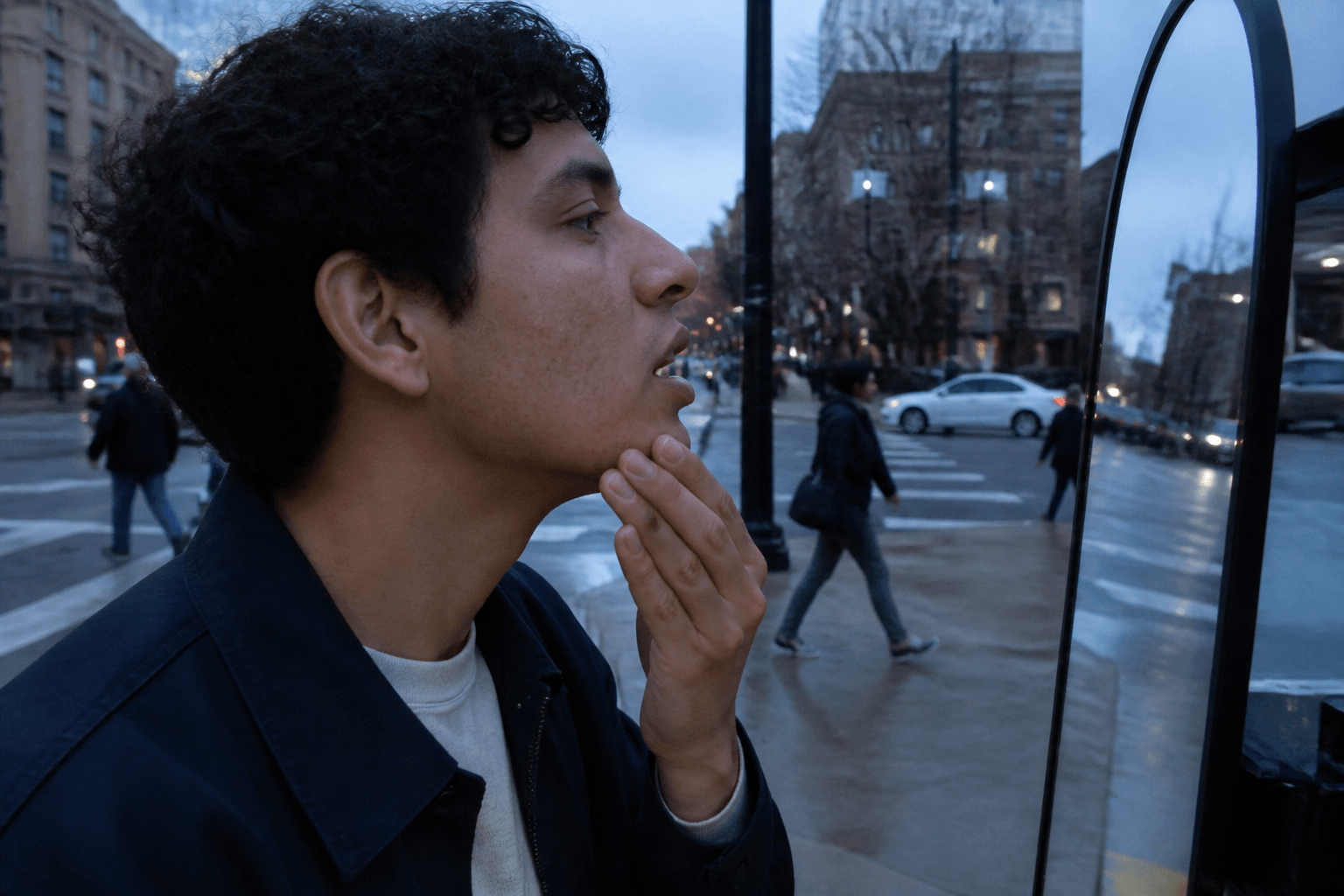
If you take a reference photo, keep the camera at face height and at least 1.2 metres away; use a timer and crop later. Clinical photography guidance stresses consistent distance, lighting, and head position because changing them can alter facial proportions and surface shadows.
Use the same relaxed lip position each time. A close selfie with pursed lips is not a fair comparison with a relaxed mirror view. If you upload the photo anywhere, check how the service stores and deletes face images first.
What not to do
Don't start forceful pouting drills, hard lip squeezing, or a random “mentalis workout” when the muscle is already contracting. There is no good evidence that making it work harder corrects protruding teeth or a jaw relationship.
Professional orofacial myofunctional therapy differs from social-media face exercises, and a 2025 scoping review covered 58 publications. It judged the evidence for improving lip incompetence as plausible, but not confirmed by strong trials. The studies were often small, varied in method, and lacked long follow-up.
Guided therapy may suit a selected functional problem after assessment, but that does not mean everyone with chin dimpling needs exercises.
Don't try to move your teeth or jaw with DIY elastics, thumb pulling, or a forced resting position. None can explain why your chin wrinkles; an orthodontist can assess the teeth and jaw without guessing from internet angles.
What can realistically help
If the dimpling appears only during an expression and causes no discomfort, you may need nothing. Faces move. A smooth, fixed chin is not a health standard.
If your lips cannot meet comfortably, start with a dentist or orthodontist. They can check overjet, tooth position, your bite, lip posture, and jaw relationships. Treatment might involve orthodontic care when tooth position contributes, but braces or aligners are not an automatic answer.
Mention any recent braces, aligners, or chin or jaw procedure. A new change should be reviewed by your treating clinician.
If you also struggle to breathe through your nose, start with a GP or an ear, nose, and throat clinician. Seek a sleep assessment for loud snoring with pauses, gasping, or marked daytime sleepiness, rather than treating those signs as cosmetic.
If your concern is cosmetic, discuss options with a qualified medical professional after checking lip function; don't buy injectable or prescription products online.
How to track it without obsessing
Take one relaxed front photo and one side photo, then leave them alone for a month. Use the same room, camera distance, head position, and light. Record whether your lips met naturally or whether you closed them on purpose.
Track function beside appearance: lip tension, dry mouth on waking, nasal blockage, snoring, and any bite discomfort. Those notes are more useful to a clinician than a folder of daily close-ups.
Stop tracking if it makes you check your face throughout the day. Chin dimpling is common facial movement, not a score of attractiveness or worth.
FAQ
Is a wrinkled chin the same as an orange-peel chin?
“Orange-peel chin” describes the pebbled look created when the mentalis pulls on the skin. It is an appearance label, not a diagnosis. Note whether the texture is present at rest or appears only when you close or pout your lips.
Does chin dimpling mean my chin is recessed?
No. Dimpling alone cannot show whether your lower jaw or bony chin is recessed. An orthodontic exam compares your teeth, lips, bite, and jaw position together.
Can braces get rid of chin wrinkles?
They might when tooth position makes lip closure difficult, but the 209-person study did not test treatment results. Braces should correct a diagnosed orthodontic problem, not chase a conclusion drawn from one selfie.
Can facial exercises fix mentalis strain?
DIY facial exercises are not proven to fix it. Clinician-led myofunctional therapy may help selected cases of lip incompetence, but the evidence is still limited. Assessment should come before exercises because muscle habit, tooth position, and breathing issues need different care.