Quick answer
Here is how to wash out oil-based pomade without rough treatment: use a shampoo made for hair, then rinse it completely. Start with your normal shampoo, then use a clarifying shampoo if a greasy coating remains or has built up over several uses.
Massage gently, avoid rubbing the lengths together, and condition afterward. Skip unproven dish soap and baking soda hacks.
The evidence is indirect because no cited study compares removal methods on hair coated with oil-based pomade.
Why water alone leaves residue behind
Pomade removal depends on surfactants, shampoo ingredients with an oil-attracting part and a water-attracting part. This structure lets shampoo surround oily material, suspend it in water, and carry it away during rinsing.
Water lacks that cleaning action against oily residue, while shampoo balances cleaning with scalp and hair mildness. That balance matters because removing too much surface oil can leave hair rough, dull, tangled, and prone to static.
Foam is a poor scorecard because oil can suppress lather during the first wash. More foam during another wash doesn't prove that the second wash cleans better.
Judge the result by the remaining coating, not the bubbles.
How to wash out oil-based pomade
Use this as a conservative process, not a rigid formula, and put your shampoo's directions first.
1. Start with shampoo, not a household cleaner
Use normal shampoo for light buildup, then choose a clarifying shampoo when styling residue remains or has collected through repeated use.
Clarifying shampoos contain stronger cleaning systems for retained styling products, but they aren't automatically better for every wash.
The American Academy of Dermatology gives more specific advice for curly and coily hair. If you use gels, oils, creams, or pomades, it suggests considering a clarifying shampoo before a moisturizing shampoo.
That guidance is useful, but it isn't a direct pomade-removal trial and doesn't cover every hair type.
2. Spread shampoo across the scalp
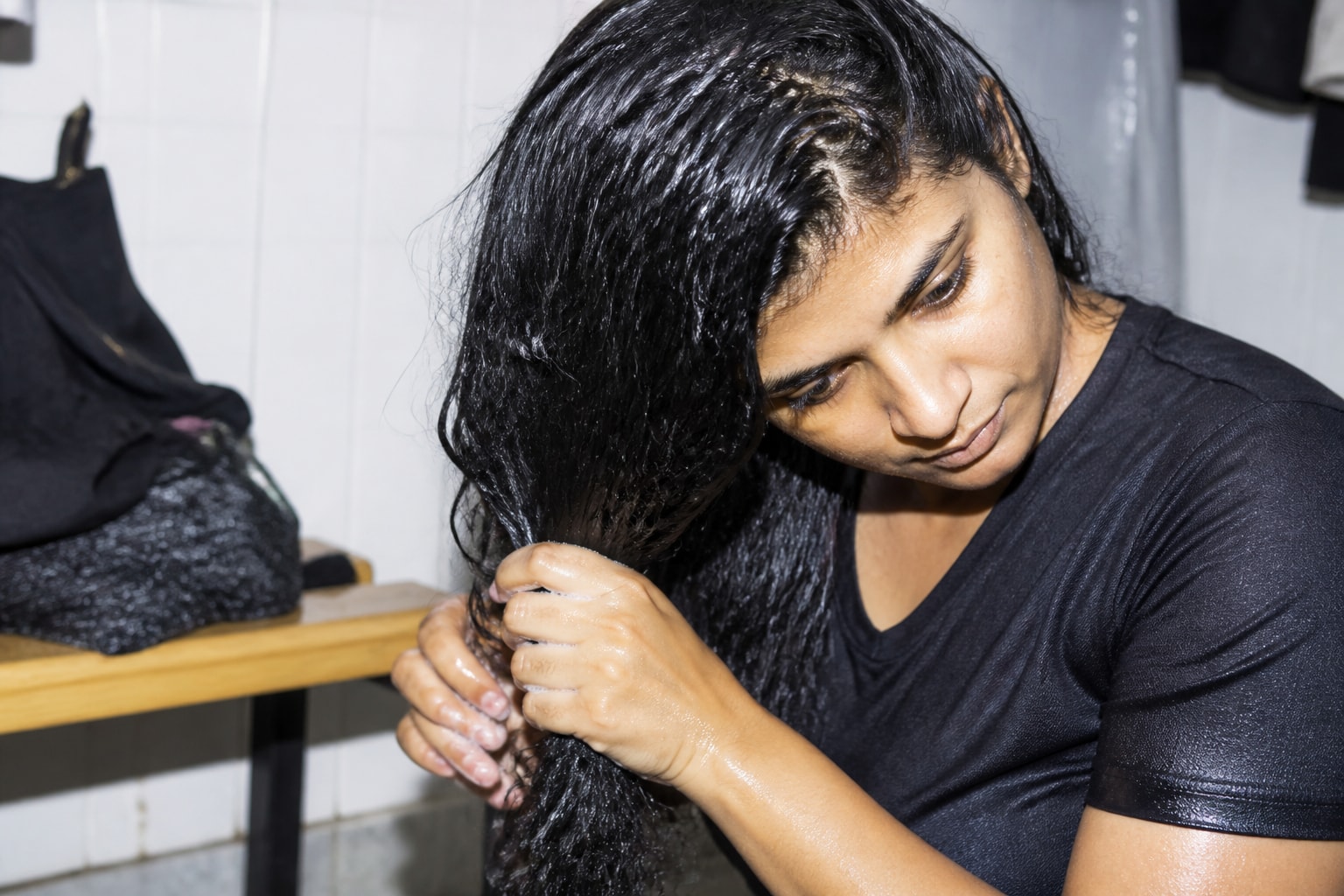
Place small amounts across different scalp areas instead of dropping everything onto the crown, then massage gently with your fingertips.
Avoid piling hair at the crown or rubbing the lengths together, since that handling increases friction and tangling. The AAD also advises letting shampoo rinse through the lengths instead of scrubbing them.
If pomade coats longer sections, let the lather contact them without twisting or grinding the strands together.
3. Rinse completely, then check the coating
Rinse until the shampoo is gone, and don't keep scrubbing because the foam looks weak.
If a clear greasy coating remains, a second shampoo pass is a reasonable practical test. No controlled study establishes the ideal number of washes for oil-based pomade, so don't treat two washes as a rule.
If repeated normal washes still leave buildup, switch to a label-directed clarifying wash instead of using more force.
4. Condition the lengths
Apply conditioner to the hair lengths after shampooing, then rinse it completely. Conditioner reduces friction between fibers and lowers the force needed for combing.
This makes clean fibers easier to handle and less likely to snag during grooming.
Finish by wrapping or blotting the hair with a towel instead of rubbing it dry. Detangle gently, using a wide-tooth comb when that suits your hair type.
When clarifying shampoo makes sense
A clarifying shampoo is useful when ordinary shampoo leaves a persistent film from styling products. It may also help after several pomade applications without a full wash.
An older dermatology review describes clarifying shampoo as an occasional product, often used about weekly for styling buildup. That is a description, not a schedule everyone should follow.
Use it only as often as your product label and hair response support. Stronger cleaning can increase roughness, friction, frizz, and tangling, especially when hair is already dry or chemically treated.
Curly and coily hair often needs extra moisture after clarifying. The AAD advises following clarifying shampoo with moisturizing shampoo for pomade users with these hair types. It also recommends a thick conditioner after washing.
Why dish soap and baking soda are poor first choices
None of the cited studies tests dish soap on pomade-coated hair, so the evidence doesn't prove that every dish liquid causes damage. It also gives no reason to choose dish liquid over shampoo designed for hair and scalp.
Clarifying shampoo already fills the heavy-cleaning role within a formula built around cleansing, mildness, rinsing, and hair feel.
Baking soda has a clearer drawback: PubChem lists a freshly prepared sodium bicarbonate solution at about pH 8.3, although homemade mixtures vary.
Hair reviews warn that alkaline conditions can swell the shaft and loosen its protective cuticle, increasing friction and susceptibility to damage.
One baking soda wash won't necessarily ruin your hair, but the hack adds an avoidable variable without proven superiority for pomade removal.
The sulfate-free label doesn't settle the question
Don't choose a shampoo from one front-label claim. A 2015 review found no published evidence at that time proving sulfate-free shampoo cleaned better or treated hair more gently.
A later surfactant review explains why the full formula matters. Shampoo makers blend surfactants to balance cleaning, foam, ingredient deposition, and skin mildness.
One sulfate-free shampoo may remove your pomade while another may not. Test the finished product and your scalp's response instead of judging one missing ingredient.
Stop using a shampoo if it causes burning, a rash, or persistent itching. Shampoo reactions are uncommon, but hair-product ingredients can cause contact dermatitis in some people.
FAQ
Can I use dish soap to wash out oil-based pomade?
There is no cited trial showing that dish soap removes pomade more safely or effectively than hair shampoo. Use normal or clarifying shampoo first, because those products are formulated for hair and scalp.
Does sulfate-free shampoo remove oil-based pomade?
It can, but the label alone can't predict the result. Cleaning depends on the complete surfactant blend, while pomade-specific comparison studies are missing.
Why doesn't my shampoo foam on the first wash?
Oil and residue can reduce lather, and foam doesn't perform the cleaning itself. Rinse fully and judge whether a coating remains rather than chasing more bubbles.
How often should I use clarifying shampoo?
There is no universal schedule. Use it when styling buildup remains, follow its label, and reduce use if your hair becomes rough or your scalp feels irritated.