Quick answer
Caveman skincare is the idea that you stop using skincare products and let your skin recover on its own. Some people use the term for a short reset after over-exfoliating, over-cleansing, or irritating their skin. Others mean a strict no-water, no-cleanser, no-moisturizer routine. The first version can sometimes be reasonable. The extreme version can backfire.
If your skin is red, burning, tight, flaky, or shiny from irritation, simplifying your routine may help. But doing absolutely nothing is not automatically better. Sweat, sunscreen, makeup, pollution, shaving, acne, and skin conditions still need sensible care. The goal is not to prove you need zero products. The goal is to remove unnecessary irritation and rebuild a routine your skin can tolerate.
Why this is trending
Caveman skincare became popular because many people are tired of complicated routines. A person may start with cleanser, moisturizer, and sunscreen, then add exfoliating acids, retinoids, benzoyl peroxide, vitamin C, clay masks, pore strips, oils, scrubs, and spot treatments. When the face becomes red and reactive, the internet offers a dramatic solution: stop everything.
The trend also fits a wider "natural" beauty narrative. If products caused the problem, doing nothing feels pure and logical. The problem is that skincare is not all-or-nothing. Some products irritate. Some protect. Some help acne. Some remove sunscreen or sweat. A reset should be specific, not ideological.
For looksmaxxing audiences, the appeal is obvious. A no-product routine sounds cheap, masculine, minimalist, and low effort. But if it leaves sunscreen unwashed, acne untreated, or irritation ignored, it may make the visible skin signals worse.
What the evidence says
Dermatology advice usually favors gentle consistency, not aggressive routines. The American Academy of Dermatology recommends gentle cleansing, avoiding irritating products, not scrubbing, giving acne treatments time to work, and using non-comedogenic sunscreen. That is very different from constantly attacking the skin.
The skin barrier matters. When the barrier is irritated, skin can feel tight, sting when products touch it, flake, look red, or become more sensitive. A temporary simplification can reduce new irritation. However, the barrier also benefits from appropriate cleansing and moisturization when needed. Leaving sweat, oil, sunscreen, and debris on the face for long periods can be uncomfortable and may contribute to clogged pores for some people.
A useful reset is usually boring: stop harsh actives for a while, use a gentle cleanser, moisturize if dry, protect from sun, and reintroduce one product at a time. Extreme caveman rules are rarely necessary.
What LooksMax Scan can help you check
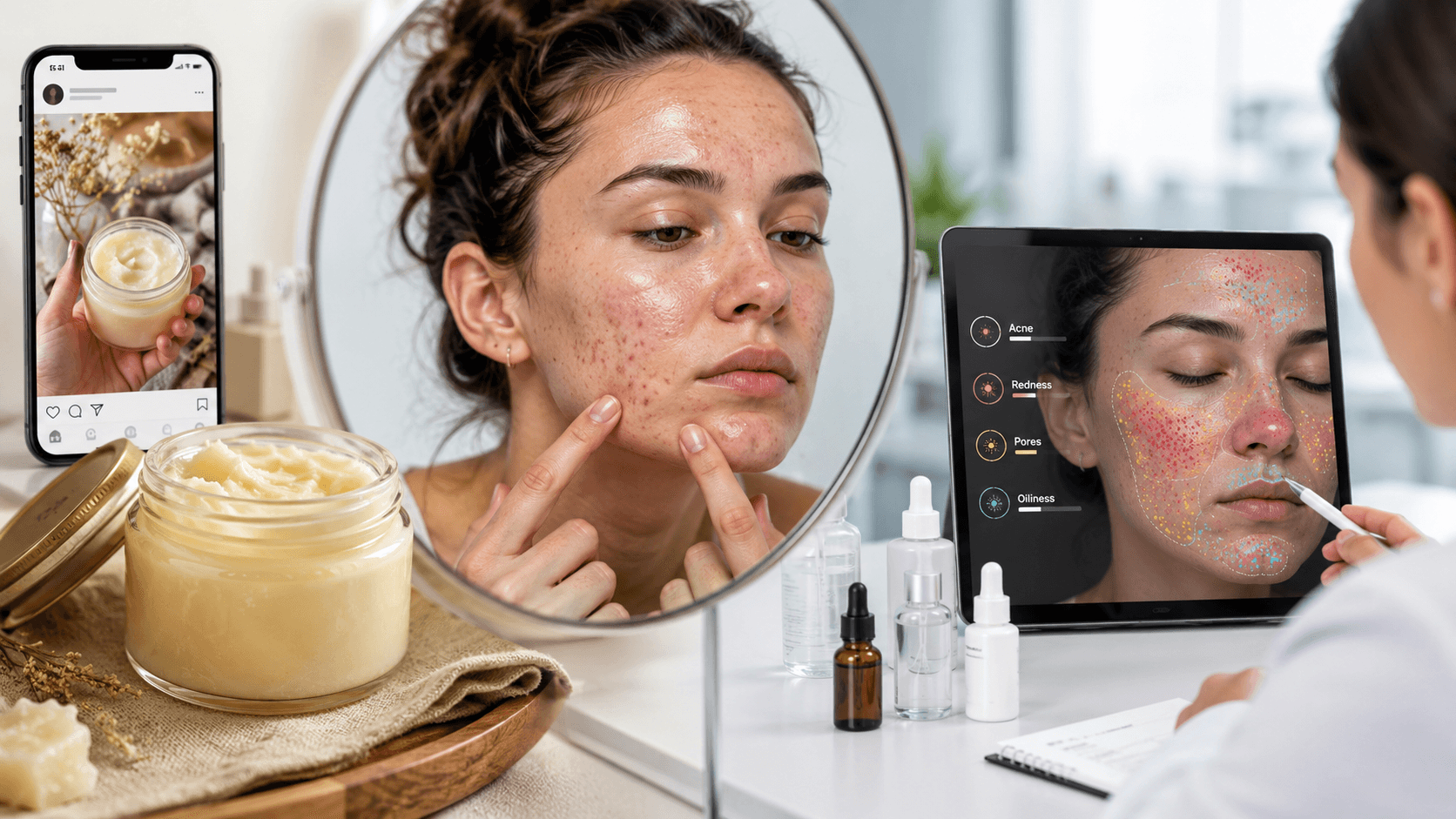
LooksMax Scan can help you track whether a reset is actually improving visible signals. If your redness score drops after removing harsh exfoliants, that is useful feedback. If oiliness climbs sharply and acne-like spots increase, your "do nothing" routine may not be working for your skin.
The scan can also help separate irritation from progress. Some people think peeling means a product is working. Sometimes peeling means the barrier is not tolerating the routine. If pore visibility looks the same but redness and dryness look worse, the routine may be too aggressive.
Use comparable photos. A reset tested under soft daylight cannot be compared with an old photo under harsh bathroom light. The more consistent the photo, the more useful the scan.
What it cannot diagnose
LooksMax Scan cannot diagnose a damaged skin barrier, eczema, dermatitis, rosacea, fungal acne, infection, allergy, or acne subtype. It cannot tell you whether you should stop prescribed medication or whether a medical condition is present. Do not stop prescription treatments without professional guidance.
It also cannot know what is on your skin. A photo cannot tell whether you used sunscreen, slept in makeup, shaved with irritation, worked out, changed laundry detergent, or started a new supplement. You need to pair scan results with notes.
Practical next steps
If you think your skin is irritated, do a gentle reset rather than an extreme one. Pause non-essential actives such as scrubs, strong acids, harsh masks, and unnecessary spot treatments. Cleanse gently, especially after sunscreen, makeup, sweat, or heavy pollution. Moisturize if your skin feels dry or tight. Use sun protection in the morning.
Keep the reset short and observable. Take a baseline photo, simplify for one to three weeks, and note redness, burning, peeling, acne, oiliness, and comfort. Then reintroduce one product at a time. If everything changes at once, you cannot know what helped.
Avoid the mistake of treating discomfort as discipline. If your face feels dirty, itchy, inflamed, painful, or covered in worsening breakouts, strict caveman rules are not a badge of honor. They may simply be wrong for you.
A good skincare routine should make your skin calmer and your life easier. If "doing nothing" becomes another obsession, it has stopped being a reset.
Run a private AI skin scan on LooksMax Scan.