Quick answer
AI face-rating games fail because they turn a complex human face into a single entertainment score. The score feels objective because a machine produced it, but it is usually shaped by hidden training data, lighting, pose, camera quality, cultural bias, and arbitrary design choices. A higher or lower number rarely tells you what to improve.
A useful looksmaxxing tool should do the opposite. It should avoid public ranking, avoid shame, and break visible signals into practical categories. Acne, pores, redness, oiliness, and dark circles are more actionable than a vague attractiveness score because they can be tracked, compared, and improved with safer habits.
Why this is trending
People are curious about AI face ratings because the internet already trains us to quantify ourselves. Dating apps, profile photos, filters, social platforms, and short-form video make appearance feel measurable. An AI score adds a new layer: it promises instant feedback without asking a real person.
The problem is that instant feedback can become instant anxiety. A user may upload one bad photo, get a low number, and treat it as a verdict on their face. Another user may chase a higher number by changing lighting, angle, expression, or filters instead of improving anything real. That turns the tool into a game, not a guide.
Face-rating content also spreads because it is provocative. People share rankings, compare celebrities, test friends, or argue about whether the result is fair. That may be good for engagement, but it is not good for practical self-improvement.
What the evidence says
AI can be useful when the task is specific, transparent, and bounded. In skin and dermatology-adjacent tools, research repeatedly emphasizes validation, safety, privacy, and clear communication. Those principles matter even more when a tool touches appearance, identity, and self-esteem.
A single attractiveness score is not a bounded medical or skincare metric. It mixes bone structure, skin, expression, grooming, culture, age, styling, camera conditions, and personal preference. It also gives the user almost no next step. Should they sleep more, treat acne, change their haircut, stop using a filter, adjust lighting, see a dermatologist, or do nothing? The number does not say.
For SEO and user trust, content about AI appearance tools should be people-first. It should answer the user's real question, explain limitations, and avoid manipulative claims. A page that says "upload your face to find your worth" is not useful. A page that says "here are visible skin signals the scan can track, and here are the limits" is much stronger.
What LooksMax Scan can help you check
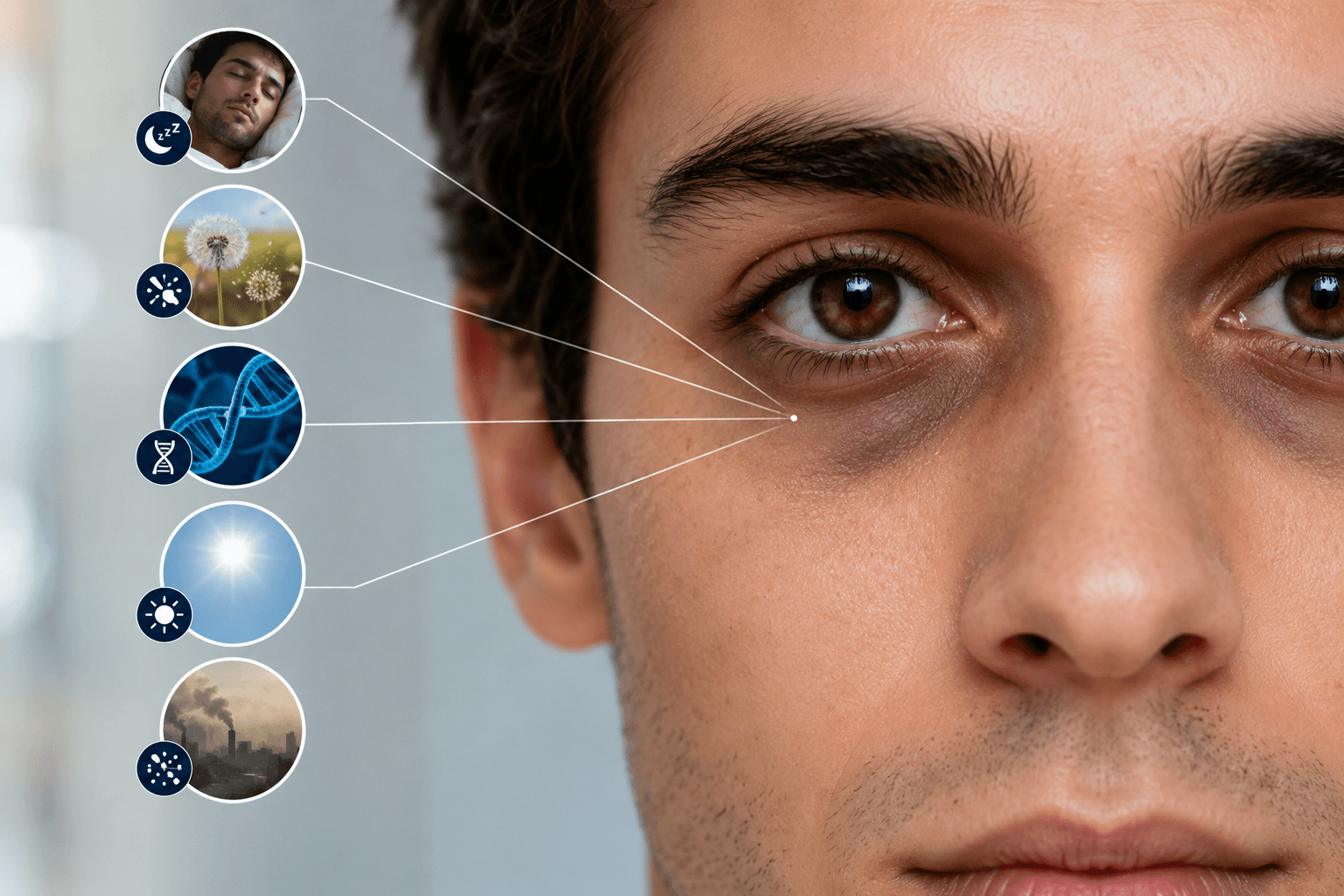
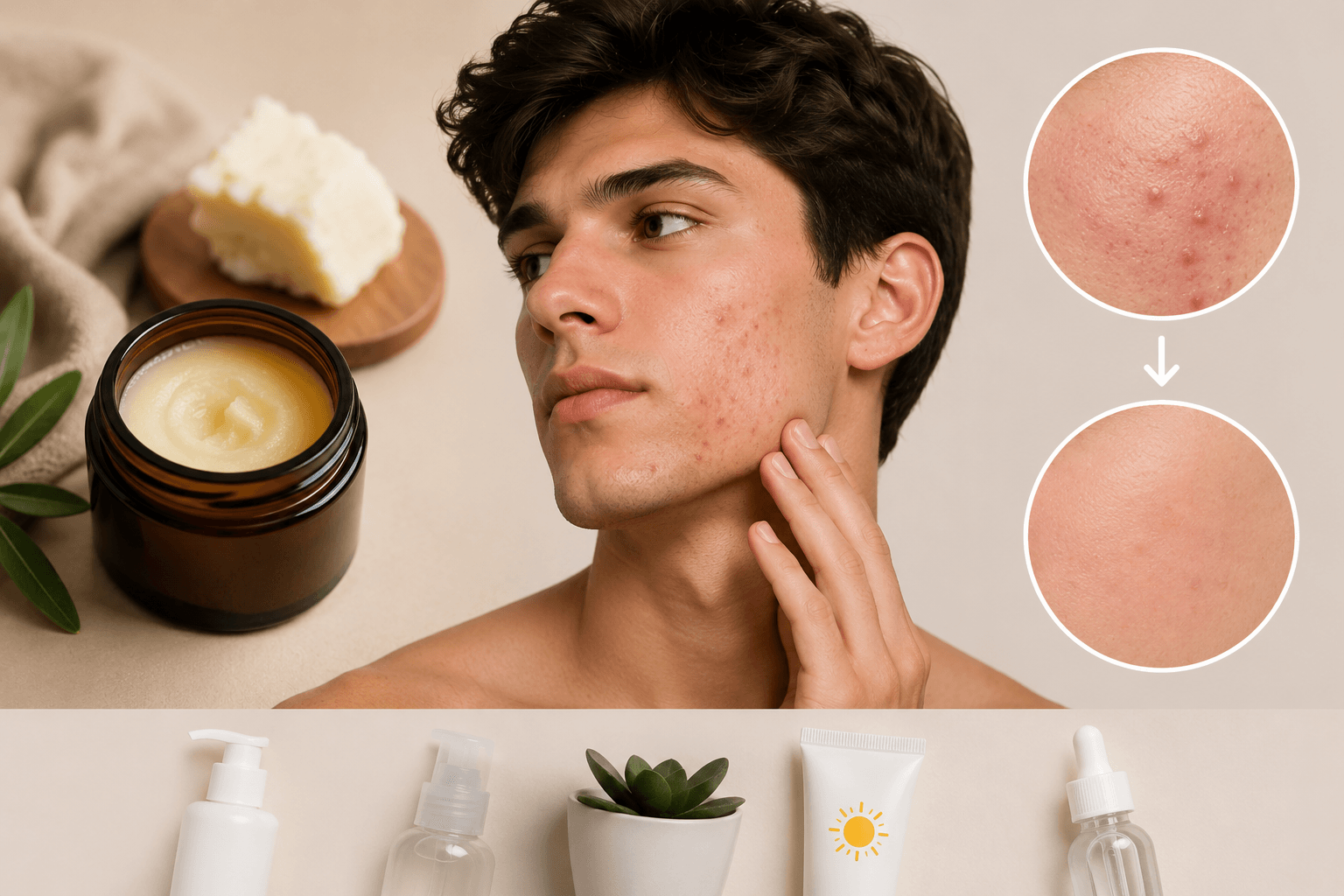
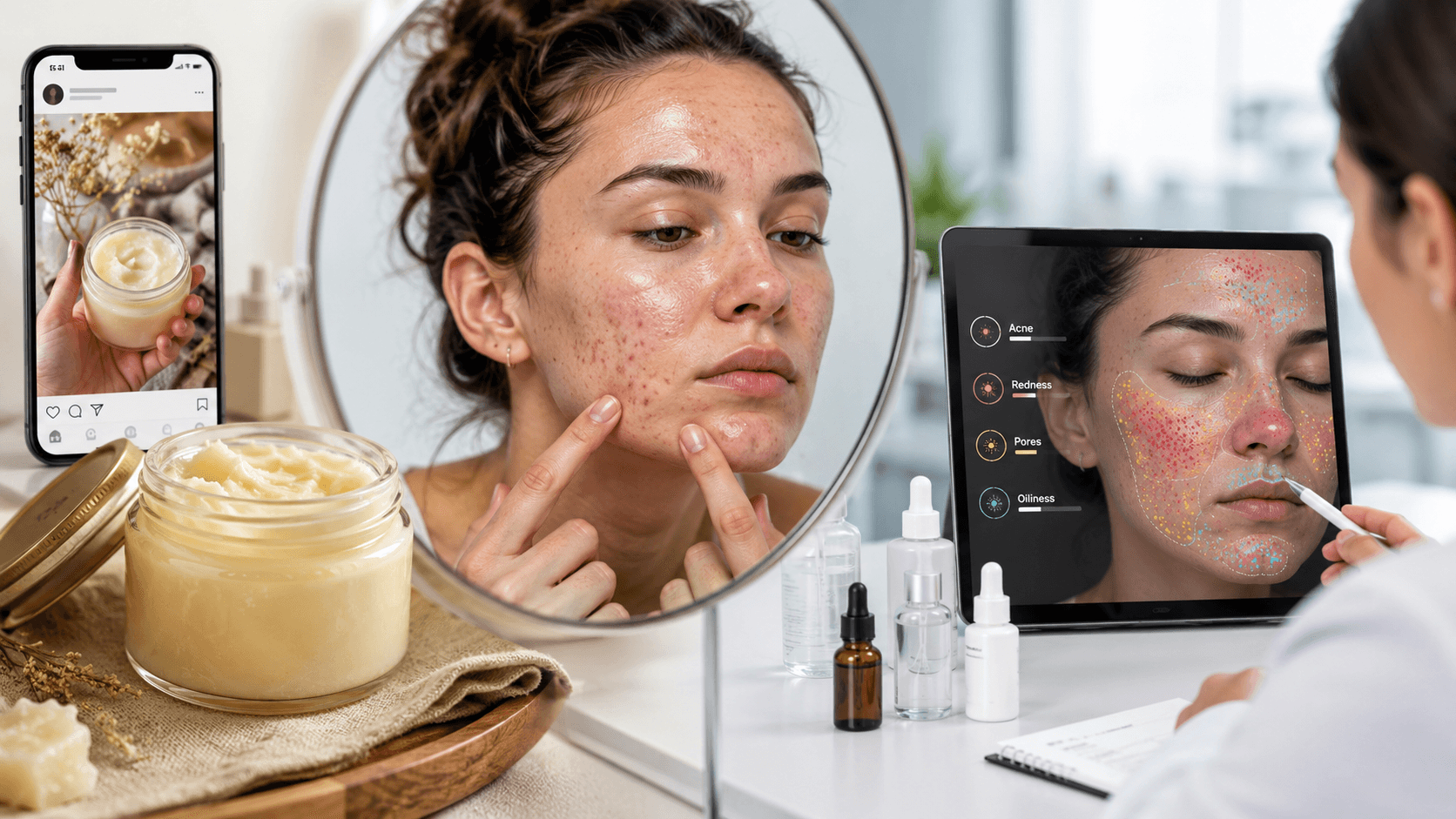
LooksMax Scan is designed around metric-based skin tracking, not public attractiveness rating. The current scan focuses on five visible signals: acne, enlarged pores, redness, oiliness, and dark circles. Each signal can be tied to a practical question.
Acne: are visible spots clustered in a specific zone? Pores: are pores more visible on the nose and central cheeks? Redness: is uneven tone concentrated around the cheeks, nose, or chin? Oiliness: is the T-zone driving shine? Dark circles: is the under-eye area changing under similar lighting?
These questions are useful because they lead to decisions. A user can simplify a routine, retest under consistent conditions, avoid over-exfoliation, improve photo lighting, or seek professional advice when symptoms are persistent or severe.
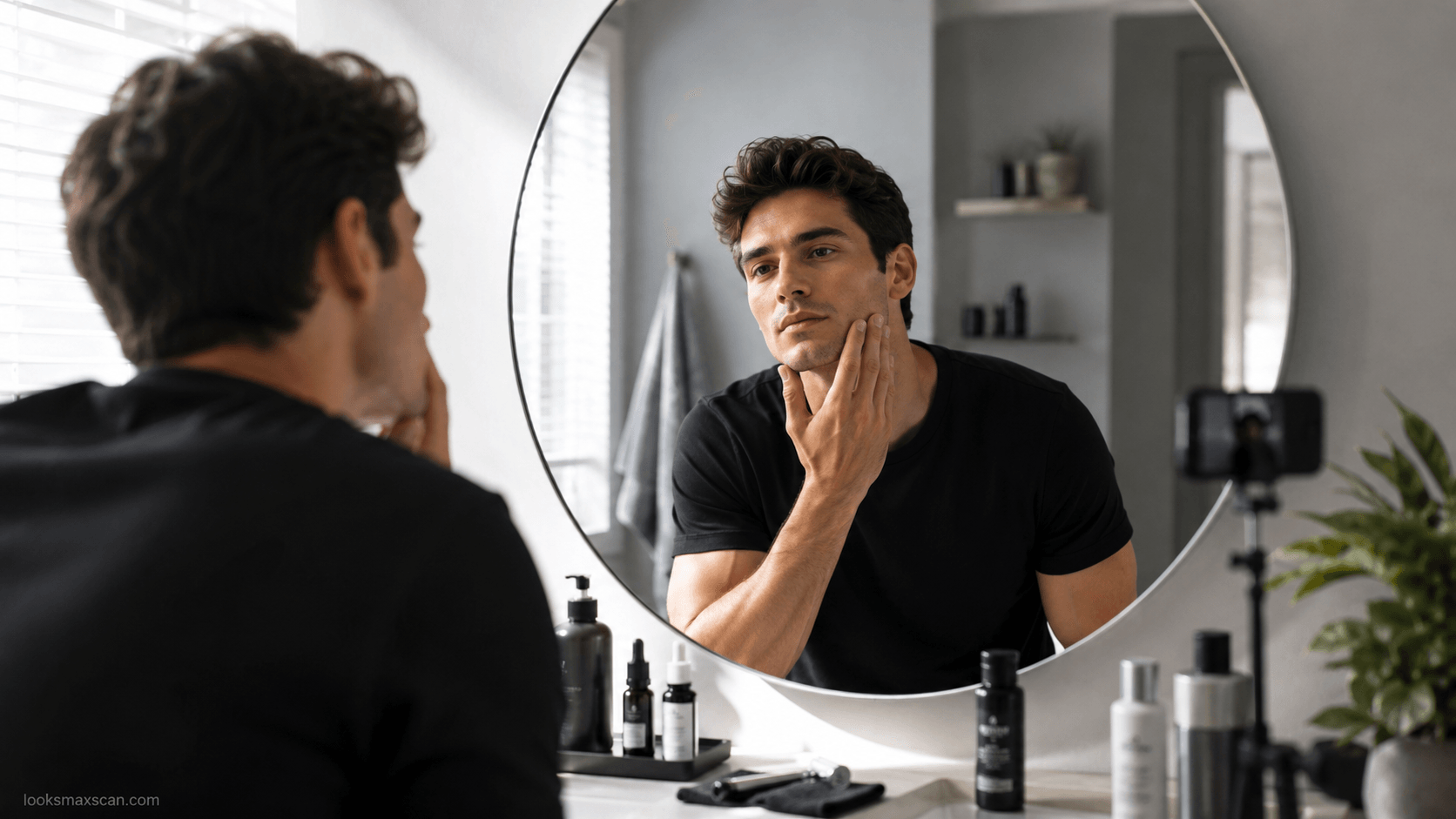
The privacy angle matters too. A private scan reduces the pressure to perform for strangers. It lets the user treat the face as data for self-care, not as content for public judgment.
What it cannot diagnose
LooksMax Scan cannot diagnose medical conditions or tell you whether you are attractive. It cannot decide your value, social potential, dating prospects, or identity. It cannot replace a dermatologist, therapist, dentist, orthodontist, or other qualified professional.
It also cannot remove every source of bias. Image quality, lighting, camera lens, skin tone, facial hair, makeup, filters, and head angle can affect any photo-based system. Good AI design acknowledges this instead of pretending every score is absolute.
If appearance analysis makes you feel obsessive, panicked, or unable to stop checking, step away from scoring tools. The healthiest appearance project is one that improves your life outside the screen.
Practical next steps
Replace face-rating questions with trackable questions. Instead of asking "what is my score?", ask "what visible skin signal is most noticeable in this photo?" Instead of asking "am I attractive?", ask "is redness, oiliness, acne, pore visibility, or dark-circle contrast the main thing affecting this image?"
Use one baseline photo, one routine change, and one follow-up scan. Keep lighting, angle, camera distance, and time of day as similar as possible. If a product makes your pore score look slightly better but redness gets worse, that is not a clean improvement. If a simpler routine reduces redness and irritation, that may improve the face more than a dramatic trend.
Avoid using AI to rate other people. Uploading someone else's face without consent, comparing friends, or posting ranking content turns a self-improvement tool into a social weapon. Private analysis is safer, kinder, and more useful.
The best version of AI looksmaxxing is boring in a good way: practical signals, clear limits, privacy, and small improvements over time.
Run a private AI skin scan on LooksMax Scan.