Quick answer
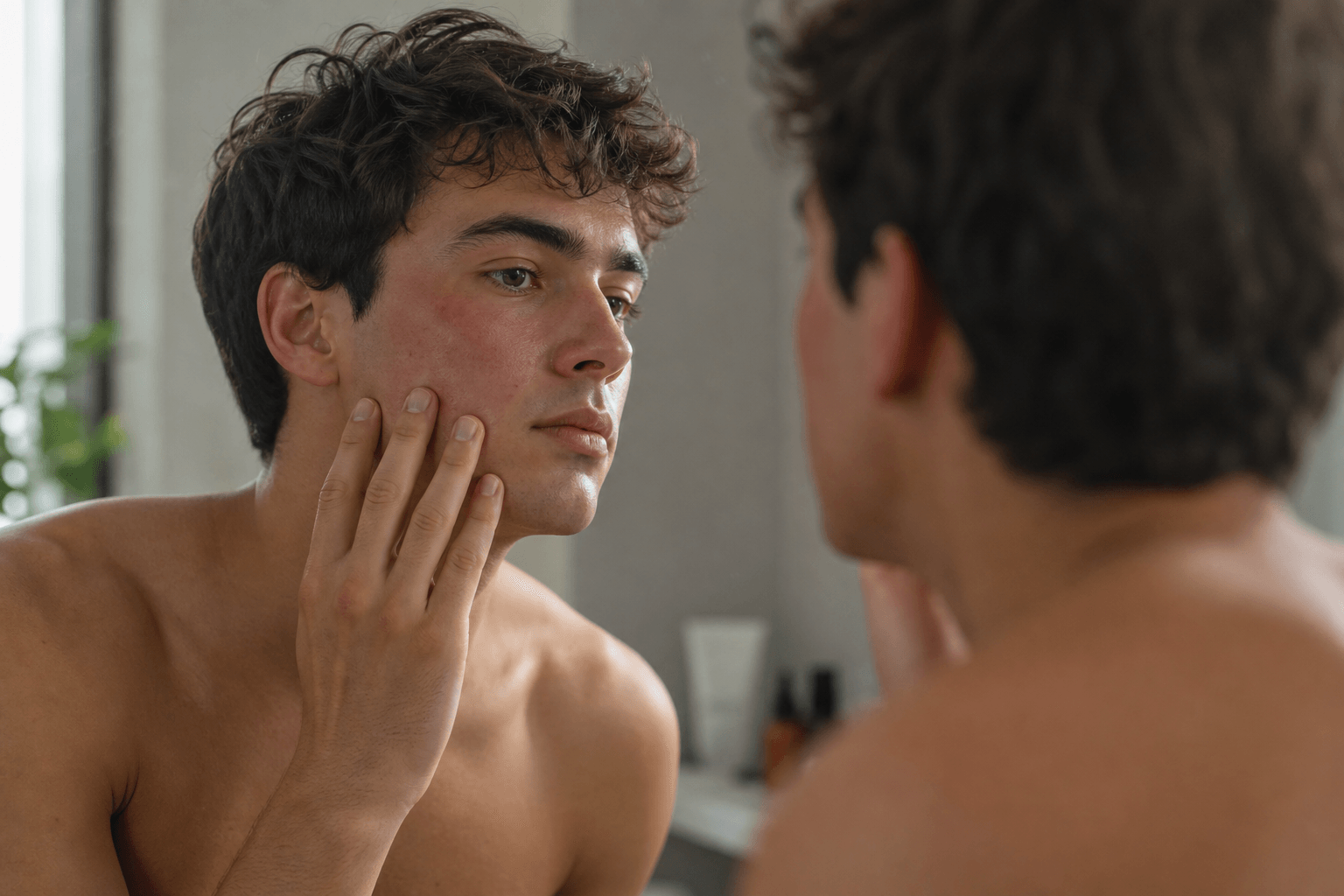
A damaged skin barrier usually feels like skin that cannot tolerate normal life: stinging after basic products, tightness after washing, persistent redness, roughness, flaking, or breakouts that appear alongside irritation. It is not one single diagnosis. It is a pattern that often shows up after too many actives, harsh cleansing, over-exfoliation, weather exposure, or skipping moisturizer and sunscreen.
The most useful move is usually not adding another strong treatment. It is simplifying the routine, letting irritation calm down, and tracking whether redness, shine, and breakout load normalize over the next few weeks.
| Signal | Barrier stress often looks like | Do not confuse it with |
|---|---|---|
| Redness | Diffuse flushing, stinging, or patches that stay irritated | A single pimple or temporary post-workout flush |
| Texture | Rough, tight, flaky, or papery skin | Normal pores or sebaceous filaments |
| Product reaction | Burning from products that used to feel fine | A mild one-time tingle from an active |
| Breakouts | Small irritated bumps plus redness and dryness | Classic oily breakouts without sensitivity |
| Comfort | Skin feels tight even when it looks shiny | Simple oiliness alone |
Common triggers
Barrier stress often follows a stack of small mistakes: cleanser that leaves the face squeaky, exfoliating acids used too often, retinoids increased too quickly, benzoyl peroxide layered with other drying steps, fragrance-heavy products, or skipping moisturizer because the face is oily. Oily skin can still be barrier-stressed. Shine is about sebum; dehydration and barrier disruption are about water loss and irritation.
A reset routine that is less likely to backfire
For a short reset window, keep the routine boring:
- Use a gentle cleanser or rinse with water in the morning if cleanser makes the face feel tight.
- Use a plain moisturizer that focuses on barrier support rather than a long list of actives.
- Wear sunscreen during the day, especially if redness or post-acne marks are part of the problem.
- Pause extra exfoliating acids, scrubs, and new active experiments until stinging and tightness improve.
- Reintroduce one active at a time so you can tell what your skin actually tolerates.
What LooksMax Scan can help you track
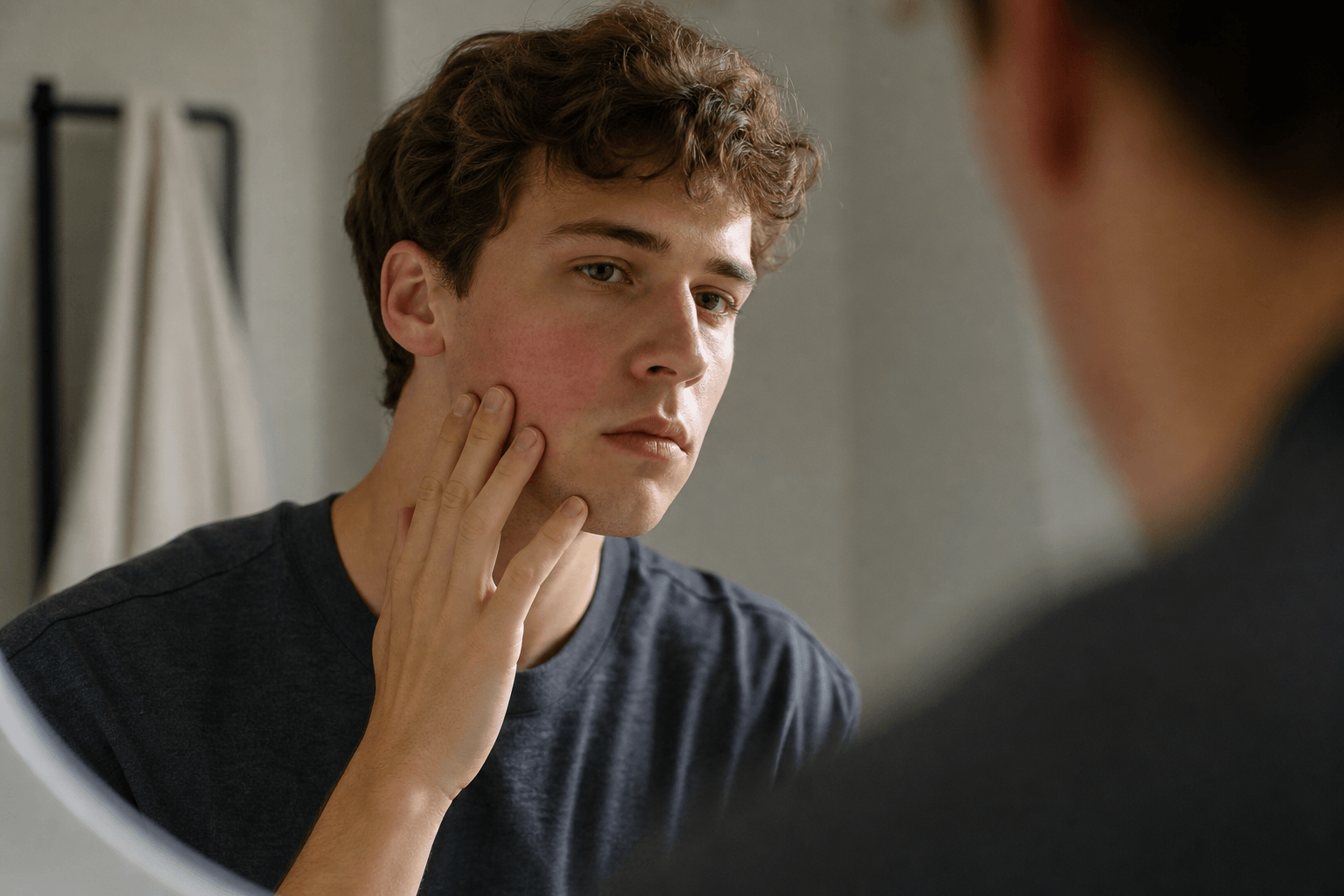
The scan cannot diagnose eczema, rosacea, infection, allergy, or dermatitis. What it can do is quantify the visible signals that often change when a barrier is irritated: redness coverage, acne-like lesion load, oiliness pattern, and pore visibility. If your scan shows rising redness while your routine gets more aggressive, that is a useful signal to slow down instead of adding more products.
When to get medical help
Seek clinician advice if irritation is severe, painful, rapidly spreading, crusting, bleeding, infected-looking, or not improving after a simple routine reset. Also get help if you suspect rosacea, eczema, allergic contact dermatitis, or medication-related irritation. A scan is a tracking tool, not a substitute for a diagnosis.
Run a private AI skin scan on LooksMax Scan: https://looksmaxscan.com/analyze