Quick answer
Searches for “why is acne worse on one side” often lead to face-mapping claims, so start with uneven contact against your skin. A phone, resting hand, tight strap, or hair-product residue can add pressure, friction, heat, or trapped oil to one cheek.
The pattern doesn’t prove its cause, so keep your routine steady and test one uneven exposure for four to six weeks. See a dermatologist sooner if the area is deeply painful, suddenly itchy, or getting worse quickly.
What a one-sided pattern can tell you
The National Institute of Arthritis and Musculoskeletal and Skin Diseases says acne starts inside a hair follicle. Oil and dead skin cells plug the follicle, while bacteria and inflammation can then help form a spot.
Those events don’t follow an organ map. Left-cheek acne doesn’t diagnose one body organ, and right-cheek acne doesn’t reveal another.
Hormones, family history, age, and some medicines can raise your chance of getting acne. The side alone can’t tell you which factor matters. It only shows where more visible spots appeared.
First, check whether the imbalance repeats in even light. Take front, left, and right photos with the distance, time, expression, camera settings, and lighting held steady.
Track red bumps and clogged pores separately. A local trigger becomes more likely if the same cheek stays worse across several weekly checks.
Four local explanations worth checking
Pressure, friction, heat, and blockage
In a paper on athletes, dermatologist Rodney Basler called this acne mechanica. He linked the acne-like eruption to pressure, friction, covered skin, or heat, alone or together.
A helmet strap, chin guard, phone edge, or hand against your cheek can create similar conditions. The object can be clean and still press, rub, or trap heat.
Don’t loosen safety or medical equipment to protect your skin. If a helmet, brace, or mask matches the breakout area, ask a qualified fitter or clinician to check it.
Hair products and fabric transfer
The American Academy of Dermatology says oils in some hair products can cause small bumps called acne cosmetica. That includes some shampoos, conditioners, and styling products. The bumps often appear along the hairline, forehead, or back of the neck.
Residue can reach skin through pillowcases, hats, headbands, and sheets. A one-sided cluster is worth checking when hair rests against that cheek.
Keep the suspected product off your face and wash residue from the fabrics it touches. Don’t replace your whole routine at once because you need one clear change to learn anything.
Your phone
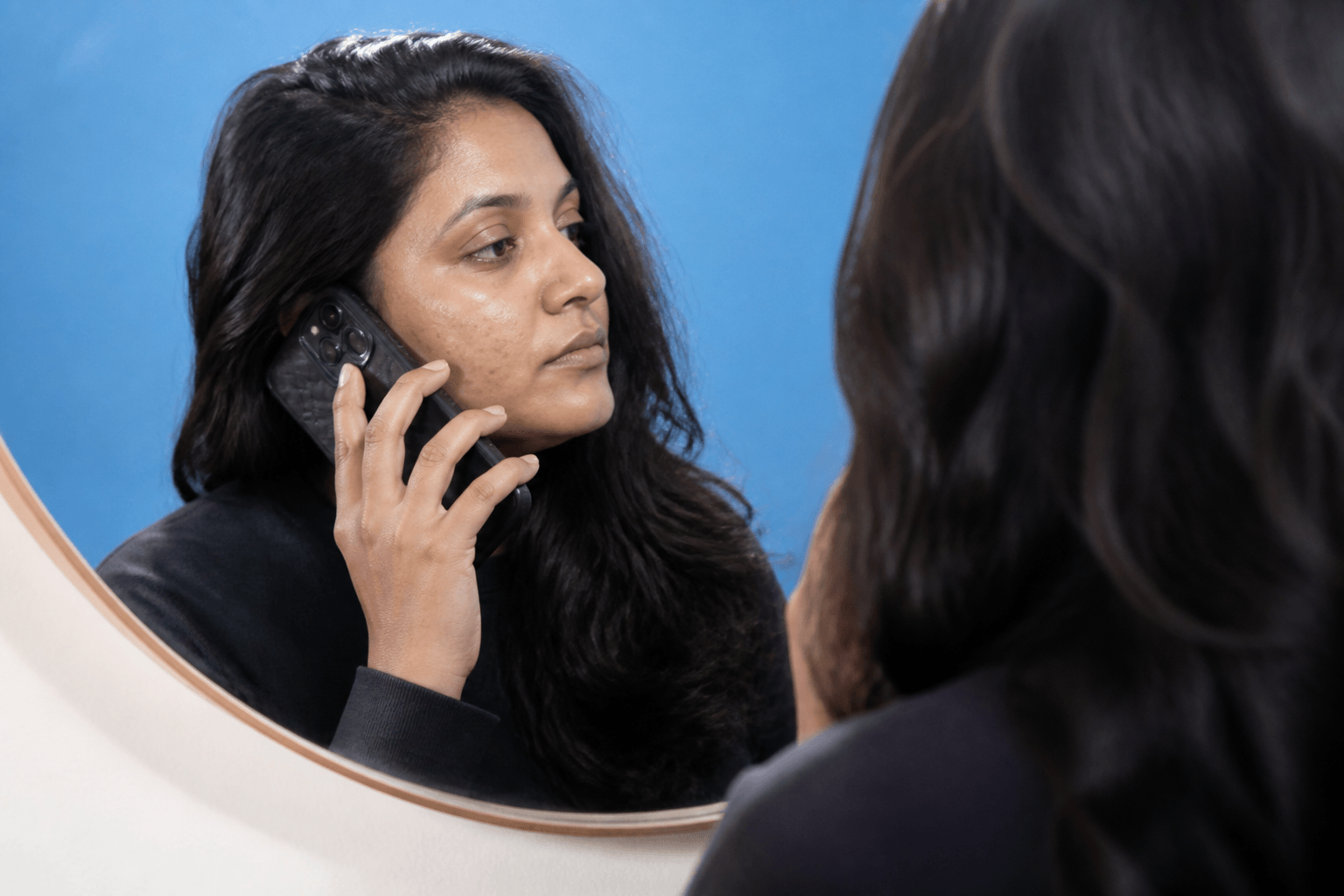
A 2020 report examined 13 people with facial acne during telemedicine visits. Nine had existing acne, and four reported new acne. Each had more spots, worse acne, or both on the side that most often touched a phone.
Average counts were 23.44 spots on the contact side and 11.94 on the other, with a similar split for inflamed spots.
The report was small, had no control group, and found an association rather than proof. The authors proposed friction, heat, trapped sweat, oil, and contamination as possible links.
Treat phone contact as a testable exposure and avoid pressing the screen against your cheek during the test. Use speaker mode for calls and clean your device as its maker directs.
Folliculitis or another acne look-alike
The American Academy of Dermatology warns that folliculitis can resemble a sudden acne breakout. The spots may itch or hurt, and each may have a red ring. Friction, shaving, tight clothing, and hot, damp skin can injure follicles.
Don’t pick an antifungal or antibiotic from a selfie. Different causes need different care. A dermatologist can examine the bumps and decide whether testing is useful.
Run a four-to-six-week trigger test
Use this process to test the most likely one-sided exposure without muddying the result:
- Take baseline photos in soft, even light, capturing the front and both sides from the same distance.
- Note the number and location of inflamed bumps, whiteheads, and blackheads, then record pain or itch separately.
- List contacts that favor one side, including your phone, hand, hair, pillow, headwear, sports gear, and workplace equipment.
- Pick one exposure that matches the affected area, then change only that exposure while keeping skincare and acne treatment steady.
- Repeat the photos once a week because daily checking can turn normal fluctuation into a false trend.
For example, move calls off your cheek without changing cleanser, moisturizer, or acne treatment. Or keep one styling product away from the affected side while everything else stays the same.
The American Academy of Dermatology says hair-product breakouts can take four to six weeks to clear after removing the trigger. A next-day photo can’t settle the question.
If the gap between sides narrows, the exposure may have contributed. That result still doesn’t prove a single cause. If nothing changes, stop blaming that item and test the next best match.
You can use LooksMax Scan as a zone tracker during this test. It maps visible acne and redness from a front-facing photo. The scan can’t diagnose their cause, so consistent photos matter more than any single result.
Mistakes that hide the answer
- Scrubbing the worse side harder can add irritation, and NIAMS lists hard scrubbing among factors that can worsen acne.
- Picking or squeezing makes the pattern harder to read and can worsen the breakout.
- Changing several products at once removes any useful comparison.
- Using a new light, angle, or camera each week can create an apparent change.
- Following cheek “face maps” can delay a simpler contact test or proper medical care.
A gentle test beats a punitive routine because your goal is to find a repeatable trigger, not force both sides to look identical.
When to see a dermatologist
Book an appointment for deep or painful lumps, or for a breakout that keeps worsening. These features can fit more severe acne.
Get checked when bumps arrive suddenly, itch, hurt, or form red rings because those clues can fit folliculitis.
You don’t need to wait through a home test if the pattern worries you. A clinician can check acne, folliculitis, contact irritation, and other look-alikes without guessing from side alone.
FAQ
Can sleeping on one side cause acne?
Pressure, friction, heat, and product residue can make your usual sleep side a reasonable suspect. Direct evidence for sleep position alone is limited. Change one factor, such as a product-coated pillowcase, and track the same cheek for four to six weeks.
Can a phone cause acne on one cheek?
A 13-person report found about twice as many lesions on the usual phone-contact side, but it couldn’t prove causation. Reduce cheek contact, clean the phone as directed, and keep the rest of your routine steady.
Is acne on one side hormonal?
Hormones can affect your general acne risk, but the side doesn’t identify a hormonal cause. Ask a clinician about persistent acne or other symptoms instead of using a cheek map.
How long should I test one trigger?
Use four to six weeks when symptoms are mild and stable, taking one photo set each week under the same conditions. Seek care sooner for deep pain, rapid worsening, or an itchy acne-like eruption.