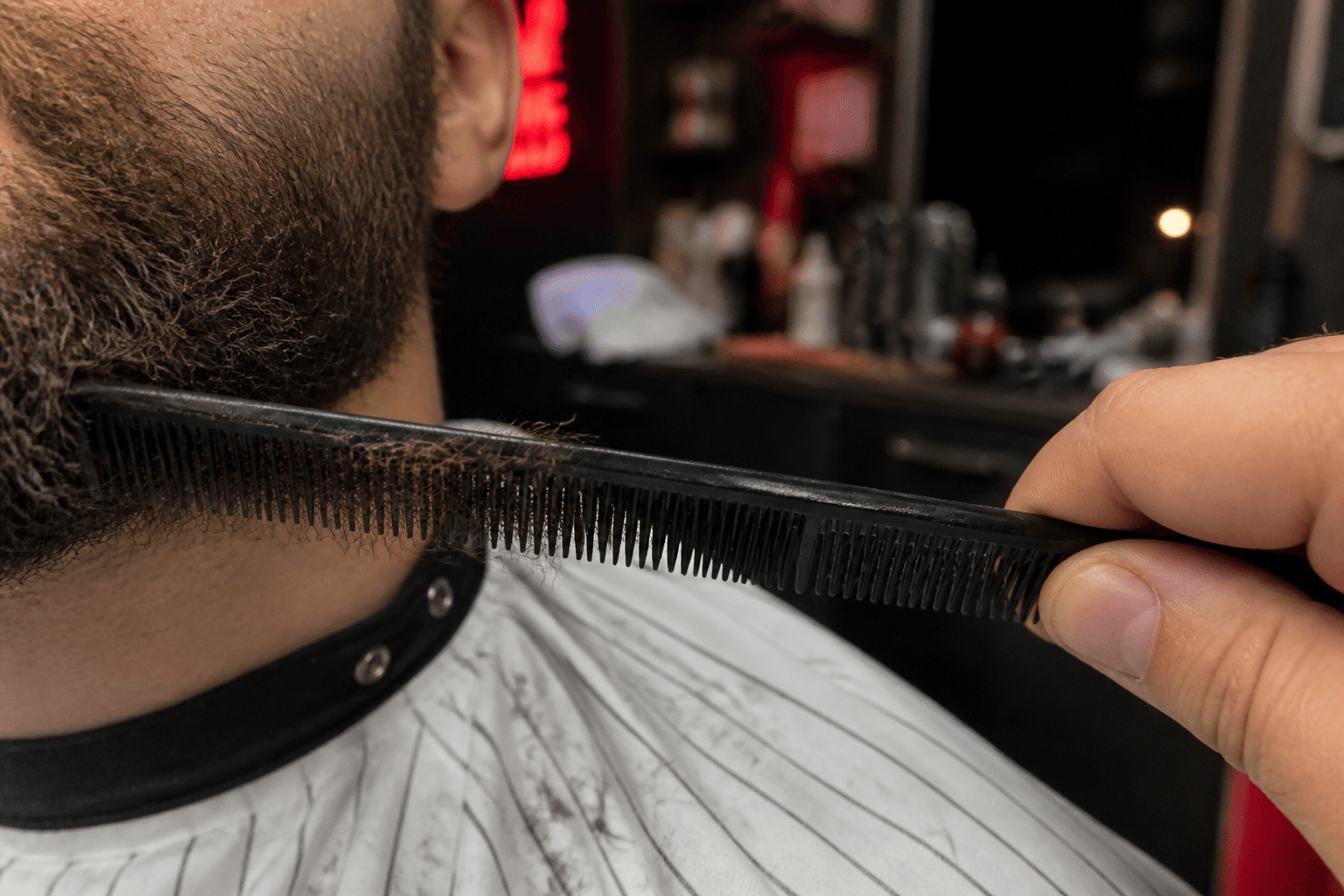
Quick answer
Why does my beard have split ends? The hair shaft has developed a lengthwise crack after repeated friction, heat, chemical processing, or everyday wear. Beard oil and conditioner can make damaged hair feel smoother, but they can't fuse an existing split.
Trim above the visible fork, then make your routine gentler. The best evidence comes from scalp-hair lab tests, not beard-specific trials, so no product or trimming schedule is proven to prevent every split.
What a beard split end actually is
A split end is damage to the hair fibre itself, unlike shedding, where the whole hair leaves the follicle. The strand may fork at the tip, fray into several fine branches, or split farther up its length.
Under bright light, a true split in clean, dry hair stays attached to one strand and divides along its length. Don't pull the branches apart to check them, since that adds more force to an existing crack.
A 2024 Interface Focus study used a moving-loop device to copy the stress created when tangled hairs rub during combing. Damage-prone hair failed sooner and formed longer splits; bleaching made control hair behave more like the damage-prone sample.
This early lab study used straight hair from two donors, without testing beards, curls, oils, or daily routines. It shows how a split can start and travel, but it can't tell you which product will work best.
Why the damage builds up
Friction and forced detangling
Hair can tolerate normal grooming, but repeated snagging loads the same weak points again. Hard brushing, ripping a comb through knots, and rubbing with a towel add mechanical stress. The 2024 experiment found that some fibres split after fewer repeated cycles than others, so personal susceptibility matters too.
You don't need to stop combing; soften tangles first and work through them slowly. More strokes aren't better.
Heat and chemical processing
A 2011 lab study found more hair-surface damage as dryer temperature rose across 30 cycles. The hottest test held a dryer five centimetres from the hair, which isn't a sensible daily setup.
If you blow-dry your beard, choose low heat, keep the dryer moving, and hold it about 15 centimetres away. Hot combs and straighteners place more concentrated heat on the fibre, so use them less often.
Bleach is a clear stressor: the moving-loop study found it made resistant hair split more like the damage-prone sample. Beard dye isn't identical to bleach, but repeated lightening or strong chemical processing deserves suspicion when splits start afterward.
Length and time
A long beard doesn't cause splits, but its older tips have collected more washing, drying, combing, and clothing friction. Damage also becomes easier to see once the hair is long enough to inspect.
Splits returning at the same length don't mean your beard has reached a fixed biological limit. They may mean the exposed ends are wearing faster than your routine protects them.
How to remove the splits you already have
No topical product can restore a visibly divided fibre to its original structure. Hair conditioners deposit material on rough areas and improve slip, according to a 2023 review of hair conditioning. The temporary coating can reduce friction and hide roughness for a while.
Use this approach:
- Start with a clean, dry beard in good light.
- Use clean, sharp grooming scissors and cut above the last visible fork.
- Spot-trim a few damaged hairs. Ask a barber for a small, even trim when splits cover a large area.
- Stop if you can't see the hair clearly. Don't cut close to your skin by feel.
Don't peel a split or seal it with flame or heat, since both add more damaging force.
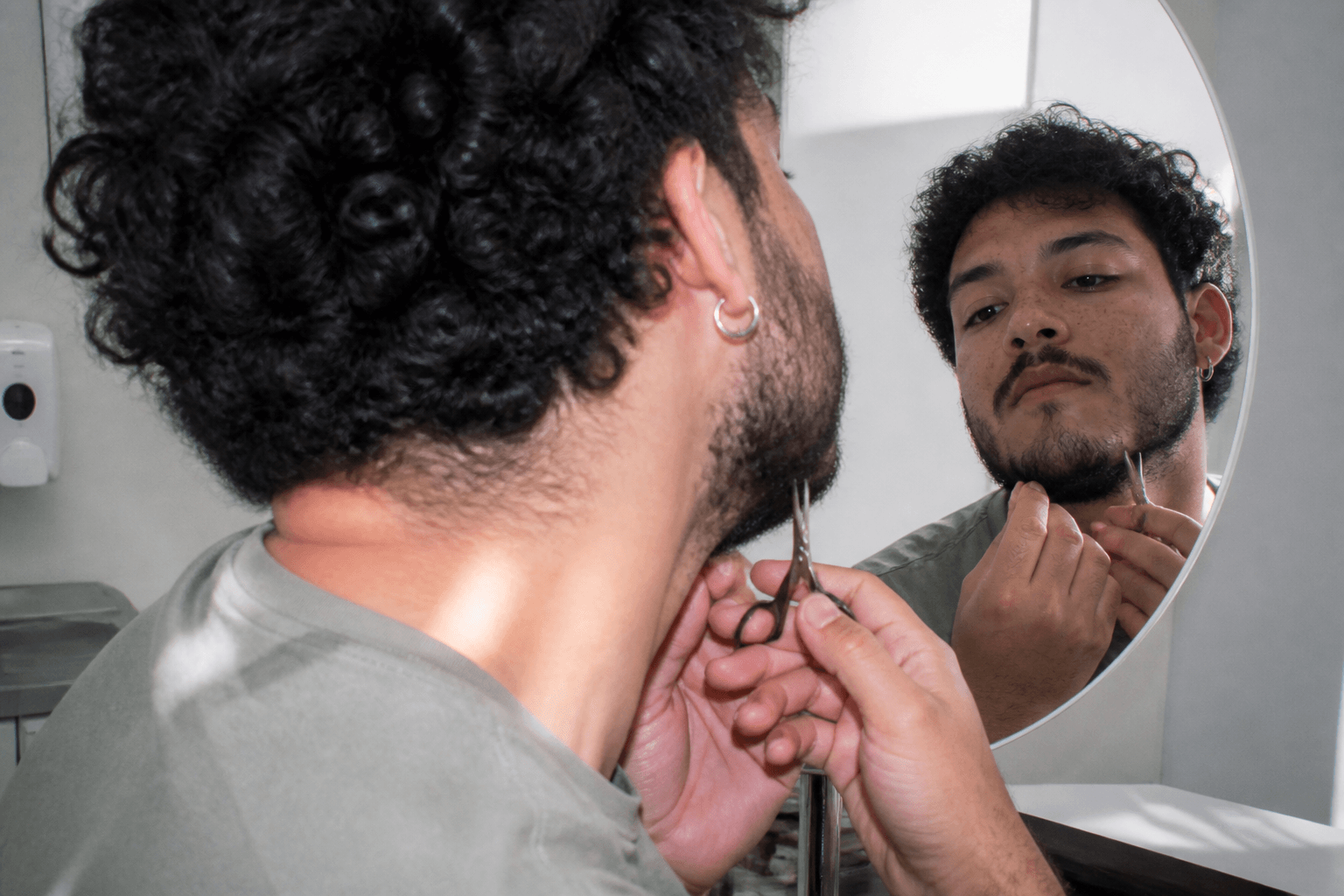
A lower-damage beard routine
Keep the routine simple for a month before buying another treatment.
- Wash without scrubbing. Use lukewarm water and a gentle cleanser suited to your skin. Massage it through the beard, rinse well, and pat dry with a clean towel.
- Add slip before detangling. The American Academy of Dermatology suggests beard conditioner for acne-prone skin, beard oil for normal or dry skin, and a fragrance-free moisturizer for sensitive skin.
- Use only a small amount. Spread it through the beard, then loosen tangles with a beard comb. Start near the ends instead of forcing a knot from the roots.
- Lower the heat. Air-dry when practical, or use a moving dryer on its lowest comfortable setting. Avoid holding one hot spot against the same hairs.
- Reduce repeat damage. Pause bleaching, frequent dyeing, and hot straightening while you test the routine. Trim new forks when you notice them rather than peeling them.
A 2025 dry-combing study tested untreated and bleached straight-hair tresses across 5,000 machine cycles. Bleached hair released more fragments early, while two conditioning treatments reduced that early breakage. This supports conditioner as friction control, not as a permanent repair.
After trimming, photograph one small area in consistent light and compare new forks and comb catches at your next grooming check. A fair comparison is more useful than judging the whole beard after one rough morning.
When split ends need a closer look
A few forked tips are usually a grooming problem. Book a dermatologist if breakage becomes sudden, widespread, or close to the skin. Do the same for bald patches, heavy shedding, painful skin, or a persistent rash.
Ordinary weathering doesn't explain those signs, so a dermatologist should examine the shafts and underlying skin.
FAQ
Can beard oil repair split ends?
No. Beard oil can coat the fibre, reduce friction, and make it feel softer. It can't reconnect a hair that has already divided, so the visible split still needs trimming.
Should I cut split ends off my beard?
Yes. Cut above the visible split with sharp grooming scissors, or ask a barber for a light trim. Removing the damaged section also stops you from catching and pulling it during combing.
Why do split ends appear only when my beard gets long?
Longer beard tips are older and have faced more grooming, heat, and friction. Splitting at a familiar length usually reflects accumulated wear, not proof that your follicles can't grow longer hair.
Are beard split ends a sign of hair loss?
Not by themselves. A split end is damage along a hair shaft, while hair loss involves shedding or reduced growth from follicles. Get an exam if you also see bald patches, sudden thinning, or many hairs breaking near the skin.