Quick answer
Does a white bulb mean hair will grow back? Usually, the pale bump on the scalp end is a club-shaped root from a normal shedding phase. It is not the whole follicle, which stays inside your skin and can produce another hair.
Still, one white end cannot promise full regrowth or explain why you are shedding. The amount, pattern, timing and condition of your scalp tell you far more.
What is the white bulb on a shed hair?
Online posts use the word bulb loosely because the living hair bulb sits deep in an active follicle and surrounds the dermal papilla. The small white node you see on a fallen strand is usually a club end.
StatPearls describes how this club forms during catagen, the short transition out of active growth. The lower part of the follicle regresses, and a hard white node forms on the old strand. That strand then rests before it is released during the shedding phase.
The follicle itself is a tube within your skin. Cleveland Clinic states that pulling out a strand with a round end does not pull out this structure. In most cases, the follicle remains able to cycle and grow hair again.
That distinction matters because a white club end is part of the shed hair, not proof that you removed its growth machinery.
What the white end can actually tell you
A hard, pale club at the scalp end usually shows that the strand reached its resting phase before shedding. DermNet calls this a telogen or club hair, and finding some is expected because scalp follicles do not all shed together.
The American Academy of Dermatology gives 50 to 100 shed hairs a day as a normal range. Treat that as context, not a home test you must perform. Counting every hair often creates worry without identifying the cause.
The useful question is whether your pattern has changed. Are you finding far more hair than usual? Is your part widening, your hairline moving, or one area becoming bare? Those clues matter more than the color of one root.
Why a white bulb does not guarantee regrowth
Most isolated club hairs are replaced as the follicle begins another growth cycle. In telogen effluvium, new hairs may push resting club hairs out. That is why a period of heavy shedding can happen while new growth is already starting.
Yet the same-looking club end can appear during different situations. It neither diagnoses telogen effluvium nor rules out pattern hair loss, which gradually produces finer hairs, or a separate scalp condition.
Scarring hair loss is different because inflammation can destroy follicles. No feature on one loose strand can show whether nearby follicles are healthy. A dermatologist checks the scalp pattern, symptoms and hair calibre, then orders tests only when the history supports them.
Think of the white end as a clue about that strand's cycle. It is not a forecast for your future density.
Could increased shedding be telogen effluvium?
Telogen effluvium causes more resting hairs than usual to shed across the scalp. The change often appears two to four months after a trigger, rather than the next morning.
DermNet and the AAD list triggers such as childbirth, fever, surgery, illness, marked weight loss, psychological stress and some medicines. Thyroid problems or nutritional deficiencies can also contribute, and sometimes no clear trigger appears.
With a temporary trigger, shedding often eases and fullness tends to recover. The AAD says many people regain their usual fullness within six to nine months. Persistent stress or another ongoing cause can make shedding last longer.
Do not stop a prescribed medicine because shedding started. The AAD advises speaking with the prescriber first, since suddenly stopping treatment can cause harm.
White bulb or hair breakage?
A shed club hair often has a smooth, shaped end on the scalp side. Breakage happens along the shaft, so the fallen piece may be shorter, frayed or uneven without a club end.
That check has limits because clinicians may use light microscopy to identify club hairs and hair-shaft defects. A magnified phone photo cannot reliably diagnose the type of hair loss.
No visible white end does not mean the follicle is dead. The strand may have snapped above the root, or the tiny end may simply be hard to see. Hair can keep growing after shaft breakage because the follicle remains in the scalp.
What to track instead of inspecting every root
Use a small set of repeatable checks for the next few wash cycles:
- Compare shedding with your own usual amount, not a stranger's shower photo.
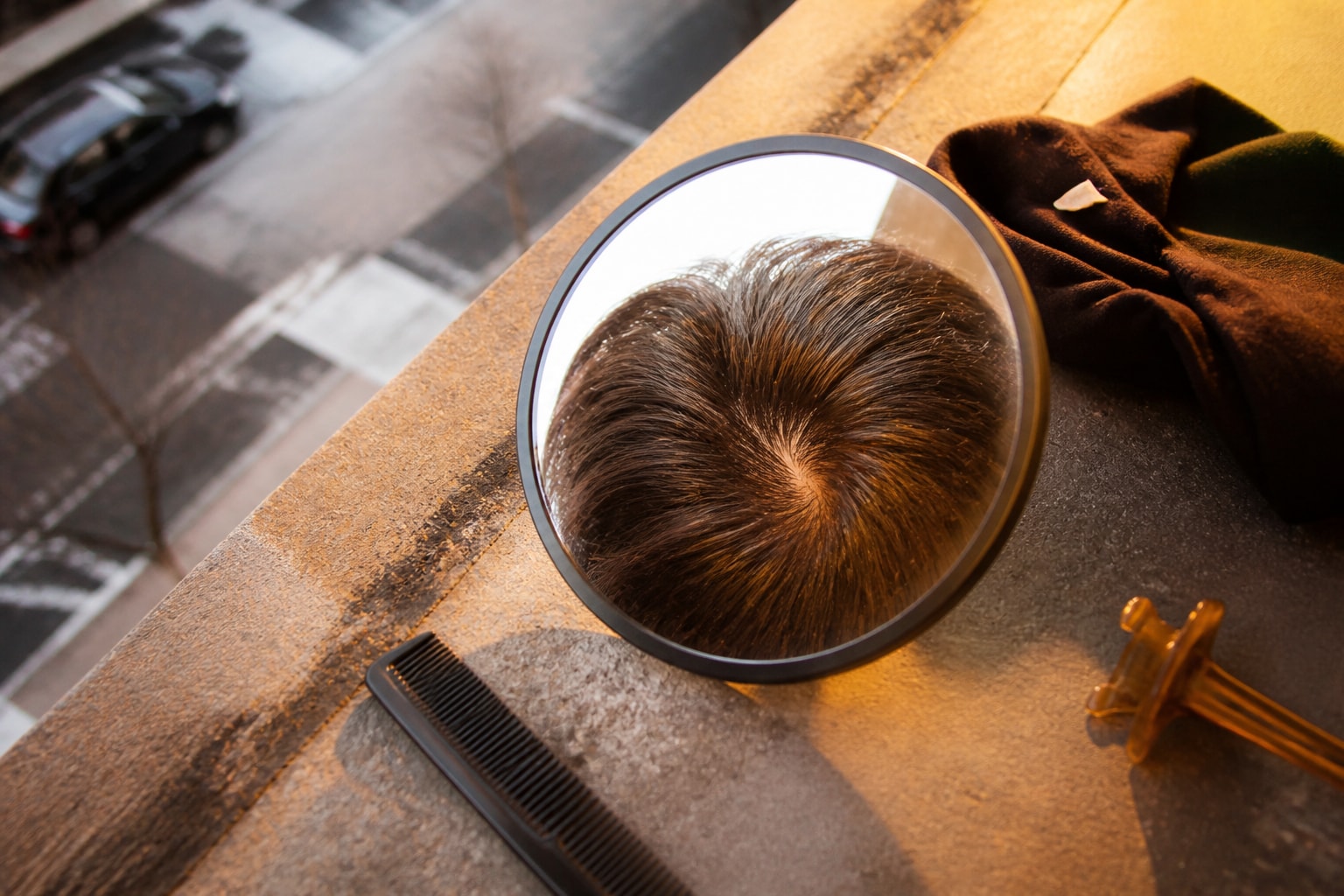
- Photograph the same part and hairline in dry hair, using the same light and camera position.
- Note any illness, operation, major weight change, childbirth or medicine change from the previous few months.
- Watch for a widening part, receding temples, a thinner ponytail or a distinct bare patch.
- Check for itching, burning, tenderness, heavy scale, sores or pus.
Keep hair care gentle while you observe, avoiding forceful brushing, combing and scalp massage during heavy telogen shedding. Tight styles, harsh chemicals and high heat can add shaft damage, which makes the picture harder to read.
Do not start iron, thyroid treatment or high-dose hair supplements from the appearance of a bulb. A clinician can decide whether your history and examination justify blood tests. Treating a deficiency helps when one exists; guessing can delay the right diagnosis.
When should you see a dermatologist?
Book an assessment if shedding stays clearly above your baseline, your density keeps falling, or you cannot identify a likely temporary trigger. Get advice earlier for a widening part, progressive temple recession or a bald patch.
Seek care sooner if hair comes out in clumps or the scalp is painful, intensely itchy, red or swollen. Scaly bald areas, open sores, blisters or pus can point to infection or inflammatory disease. Those signs need a scalp examination, not closer inspection of the fallen hairs.
FAQ
Is the white bulb the hair follicle?
No. The follicle is a microscopic tube within the skin, while the visible white node is usually the club-shaped root end of a shed strand. Pulling out that strand does not normally remove the follicle.
Does every white bulb mean telogen effluvium?
No. Club hairs are part of the normal cycle, so a few white-ended strands are expected. Telogen effluvium means excessive, usually diffuse shedding and is diagnosed from the wider pattern and history.
What if a fallen hair has no white bulb?
The strand may have broken above the root, may be in another growth phase, or may have an end too small to see. Its appearance alone cannot tell you whether the follicle will produce another hair.
How long does hair take to grow back after telogen shedding?
New growth may already be starting as club hairs fall. After a temporary trigger resolves, shedding often tapers over several months, and the AAD says usual fullness often returns within six to nine months.