Quick answer
Hair tangles at the nape of your neck because that small section rubs against collars, scarves, bedding, and nearby strands throughout the day. Dryness, curls, bleach, heat damage, and rough detangling can raise friction, so each knot forms faster.
No clinical trial has isolated nape tangles, but hair-fiber research points to three practical steps: reduce rubbing, add conditioner, and use less force. Don't keep dragging a brush through the knot, since that can turn a nuisance into breakage.
Why the nape becomes a tangle point
The location gives the best clue because hair at the back of your neck sits between moving skin, other strands, and clothing. A collar, hood, scarf, necklace, or pillow can keep rubbing the same section as you turn your head.
The clothing link is plausible rather than proven, so treat it as a cause you can test instead of a diagnosis.
The strand surface matters because healthy hair has overlapping cuticle cells that help strands slide past one another. Heat, bleach, chemical straightening, rough towel drying, and repeated combing can wear that surface, leaving rougher fibers that catch more easily.
A major review in the International Journal of Trichology found that conditioner lowers friction between fibers and reduces combing force. Conditioner can smooth the surface temporarily, but it can't fuse a split or broken strand back together.
Texture changes the routine: the American Academy of Dermatology recommends damp, conditioned detangling in sections for curly and coily hair. Straighter hair is often easier to comb after it has dried a little.
Check whether you have tangles, breakage, or a mat
A normal tangle loosens with slip, patience, and gentle work from the ends, and the hair looks unchanged once the knot is out.
Breakage leaves shorter pieces, frayed ends, white nodes, or an uneven fuzzy patch. Repeated friction can disrupt the cuticle and snap the shaft. A small case series linked one combing habit to localized shaft breakage, so more brushing isn't always the answer.
A mat is different because the strands form a tight, felt-like mass that won't separate with ordinary conditioning. DermNet describes severe acute matting as irregularly twisted hair packed with dirt or discharge in some cases. Don't pull, burn, chemically relax, or cut near your skin; ask a stylist or dermatologist for help.
A lower-damage way to remove the knot
Work when you have time because rushing is how a small tangle becomes a snapped section.
- Separate the tangled nape section from the rest of your hair.
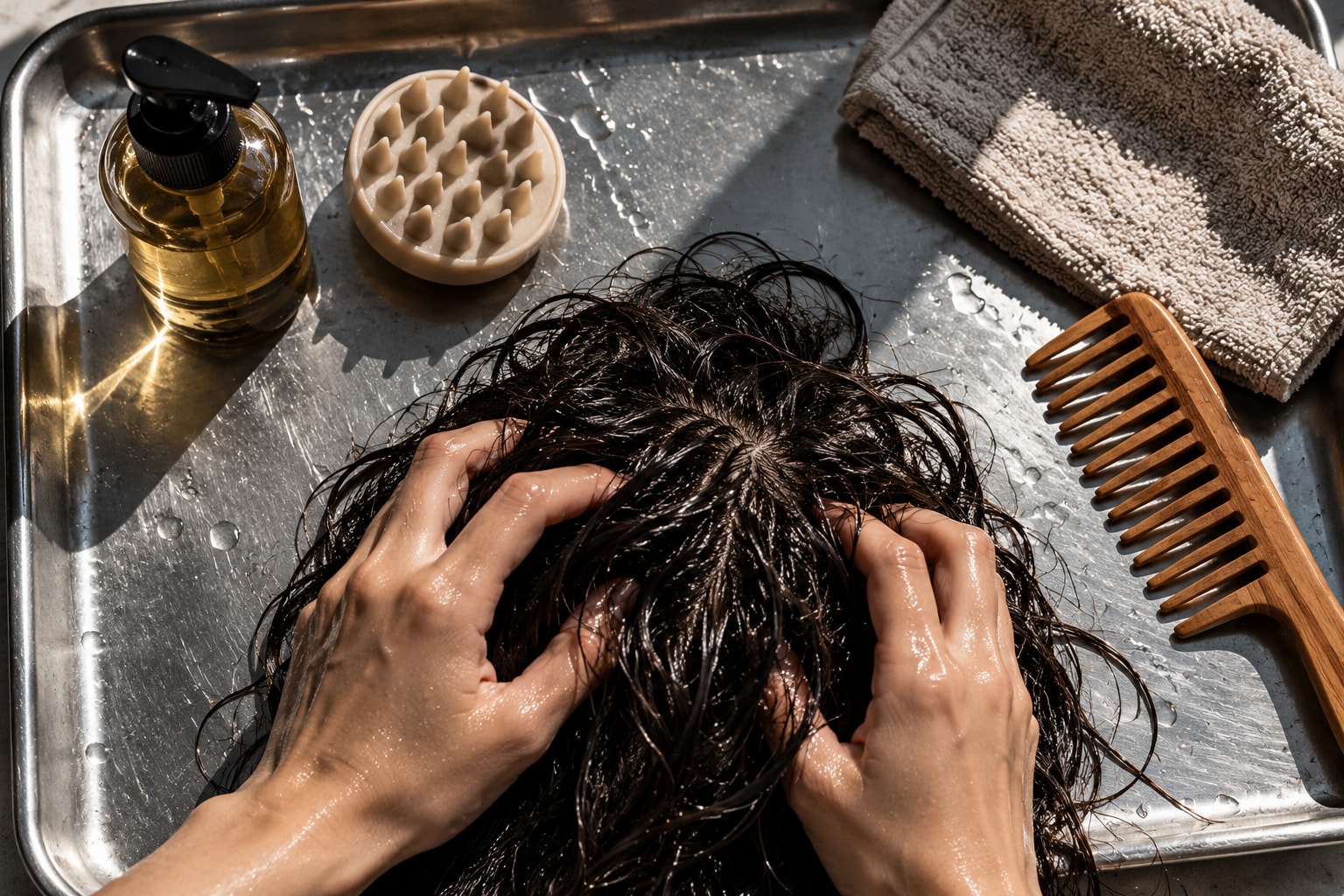
- Add slip with your normal rinse-out conditioner during washing. For curls or coils between washes, wet the section and add a small amount of leave-in conditioner.
- Hold the hair above the knot to limit pulling on your scalp.
- Loosen the outside of the knot with your fingers, removing a few strands at a time instead of splitting the mass in half.
- Use a wide-tooth comb only after the knot starts opening; begin at the ends, then move upward in short strokes.
- Stop if the section hurts, stretches like gum, or keeps snapping; a stylist can often remove a stubborn mat with less loss.
The American Academy of Dermatology gives different timing by texture and advises letting straight hair dry somewhat before gentle combing. Detangle thick, curly, or coily hair while it is damp and coated with conditioner.
Run a two-week friction test
You don't need ten new products; change one source of rubbing and watch what happens.
For three days, note when the knot appears and record your collar, hairstyle, wash day, and whether your hair was damp. Take one close photo in the same light if breakage is hard to judge, keeping it on your own device if you prefer.
For the next week, keep the nape off its usual contact point. Choose a smooth, low collar, or place the hair in a loose braid or clip. Avoid any style that pulls at the roots, and apply conditioner to the nape section at each wash.
Use the final four days to repeat the routine that helped most, though this isn't a medical test. It simply shows whether everyday friction is a useful target before you buy more treatments.
How to stop the knot returning
Condition after every shampoo, including the hidden nape section; two scientific reviews found that conditioners improve combing and reduce friction. A costly mask isn't required if your regular conditioner gives enough slip.
Remove water without scrubbing by squeezing or wrapping the hair in a towel instead of rubbing the nape back and forth. If you use heat, keep it moderate and avoid holding a dryer against one spot.
Match bedtime care to your texture: the American Academy of Dermatology suggests a loose braid or high, loose ponytail for curls to reduce pillow friction. A bonnet or smooth pillowcase may also help, but direct evidence for nape tangles is limited, so try the cheaper change first.
Keep tight styles out of the experiment because repeated tension can damage both shafts and follicles. A low bun that feels neat can still pull the same nape hairs every day.
Consider a trim when the affected ends are split, rough, or repeatedly interlock. Products can coat damaged hair and improve slip, but they can't permanently repair fiber that has already split.
When to see a professional
See a dermatologist if the nape is painful, red, scaly, crusted, or losing density. Pustules, a widening patch, or hairs breaking close to the scalp also deserve an examination.
If tangling suddenly spreads across your scalp, a dermatologist can check for a scalp condition or hair-shaft disorder. A stylist is the better first stop for a painless knot that only needs careful detangling or trimming.
FAQ
Why does only the underneath layer of my hair tangle?
The underneath layer makes the most contact with your neck, clothing, and pillow. If the same area is also curly, dry, or weathered, those strands have more chances to catch while the top layer stays smooth.
Should I brush the nape every day?
Detangle often enough that small knots don't become mats, but don't force a dry brush through resistance. Use fingers and a wide-tooth comb with enough slip; for curls and coils, damp, conditioned detangling is usually gentler.
Will a silk or satin pillowcase prevent nape tangles?
It may reduce rubbing, but no good trial has tested pillow fabric for this exact problem. A loose braid, less abrasive collar, and adequate conditioner may be cheaper first tests.
Do I need to cut tangled hair at the nape?
Patient detangling may save a loose knot without cutting. A trim makes more sense when the ends are split or keep catching, while a tight mat is safer in a stylist's hands.