Quick answer
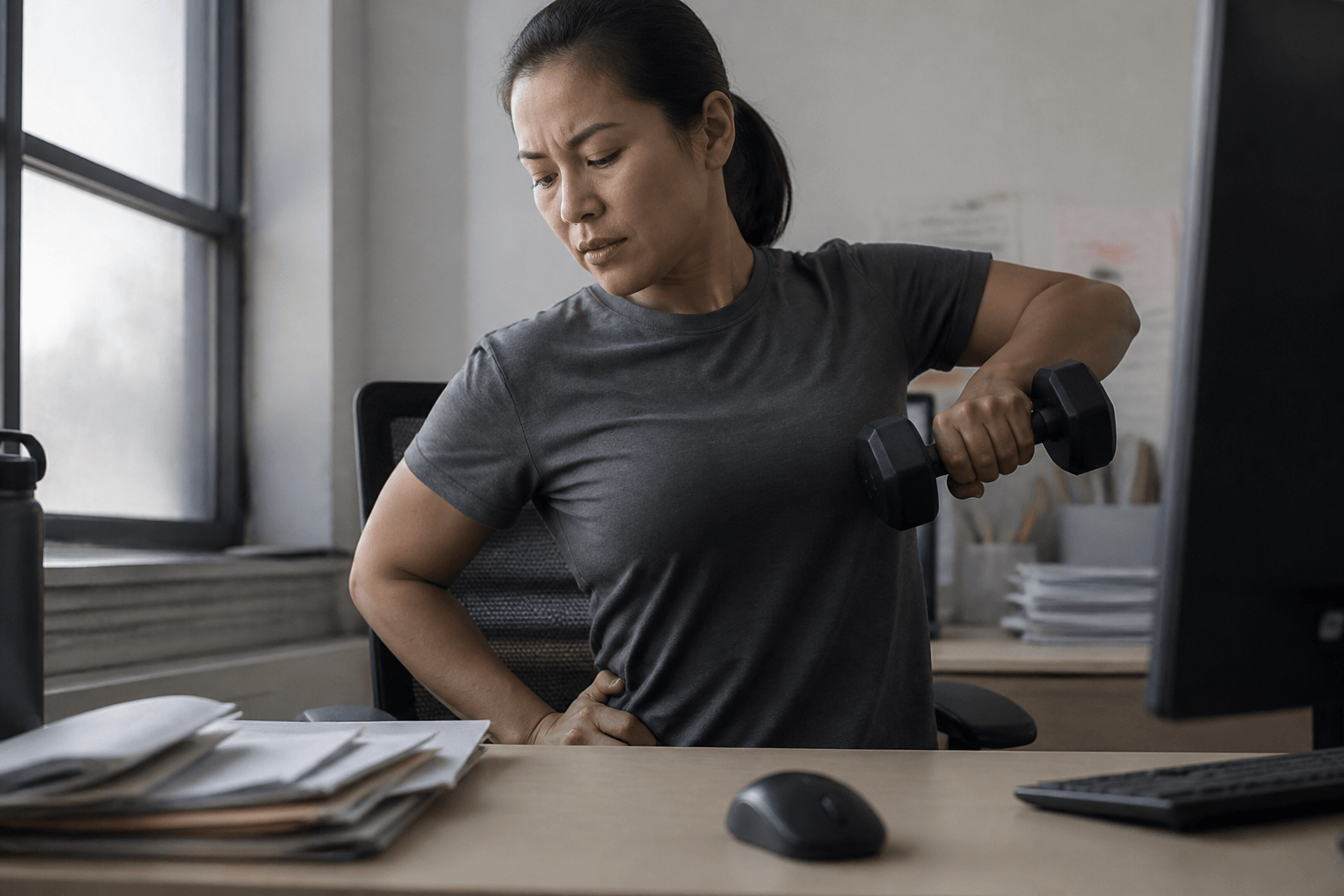
Do weighted side bends make your waist wider? They may add some thickness if you train hard enough to grow your obliques. The evidence is indirect, though, because available studies do not tell us how many millimetres this exercise adds to a waist.
A few casual sets won't suddenly give you a blocky shape. Visible growth is more plausible after sustained, progressive, high-volume training aimed at the obliques. If a smaller-looking waist is your priority, you can train your core without specializing in heavy side bends.
Why weighted side bends could add width
Cleveland Clinic places the external and internal obliques along the sides of the abdominal wall, between your ribs and pelvis. These muscles help control the trunk.
A 2020 laboratory study tested four isometric lateral-trunk tasks in 63 healthy adults. The trunk-elevated side-unsupported task and lateral plank activated both oblique muscles, showing that lateral trunk work can recruit them.
Activity is not growth.
That study measured electrical activity during one session, but it did not test dumbbell side bends, track muscle size, or measure waists. An exercise can feel intense without producing a visible change.
The growth part comes from broader resistance-training evidence. A 2026 American College of Sports Medicine position stand combined 137 systematic reviews involving more than 30,000 adults. Resistance training increased muscle size compared with no exercise, and higher weekly volume tended to produce more growth.
A 2023 network meta-analysis reached a similar result: every resistance-training prescription it assessed promoted some muscle growth compared with no training. Programs using multiple sets ranked highly for growth.
Put those findings together and the answer is plausible, not proven. Side bends load muscles at the sides of your waist, so growth could add tissue to that area. No study in this evidence set shows the size of that change.
What determines whether you notice a change
Your rib cage and pelvis set the frame of your waist. Side bends cannot narrow or widen those bones, but they can change muscle around that frame.
Training dose matters because progressively adding weight, hard sets, or weekly sessions gives muscle a stronger reason to adapt. Doing the same light set now and then is a different stimulus.
Your starting shape matters too, since a small amount of muscle may show clearly on a lean torso. The same change may be hard to see when the obliques are less visible, and people respond differently to the same plan.
There is no useful centimetre estimate because the relevant trials cover resistance training in general, not waist-focused side bends. Anyone promising an exact increase is guessing.
Photos can also create a false alarm because a shifted hip, braced stomach, or close camera can alter your outline. Compare front-facing photos with the same pose, distance, light, lens, and camera height.
Side bends do not target waist fat
Weighted side bends train muscle. They are not a proven way to remove fat above it. A small 2011 trial tested six weeks of abdominal exercises in 24 sedentary adults. The routine improved abdominal endurance but did not reduce abdominal fat or circumference.
That trial did not study every possible exercise plan, but it gives no support to the claim that side bends erase love handles. Feeling a burn at your waist does not show that fat there is disappearing.
Avoid trying to force a smaller waist through starvation or extreme cutting. If changing body fat is appropriate, use a sustainable plan and ask a qualified clinician or dietitian for help. Your training should support health and performance, not punish you for your shape.
Should you stop doing weighted side bends?
You do not need to drop side bends because of one alarming video, so match the exercise to your own goal.
- If you want larger obliques, progressive weighted side bends may help, based on general muscle-growth evidence rather than a side-bend trial.
- If you want balanced core strength, use a modest amount and track your response without chasing bodybuilding-level volume.
- If you want to limit added thickness, stop treating side bends as a growth project by reducing direct volume or added load.
Swapping side bends for another oblique exercise does not guarantee zero growth. A side plank produced high oblique activity in the 2020 laboratory study, but its growth effect was not measured.
Core training serves more than appearance because the abdominal muscles stabilize your trunk, support movement, and protect the spine. Removing every exercise that touches your obliques is unnecessary.
Track the answer on your own body
For personal tracking, define one waist point and use it every time. This is not a clinical measurement protocol. Measure relaxed, at the same time of day, after a normal exhale.
Take one front photo every four weeks, keeping the camera, distance, light, clothing, and posture the same. Do not suck in, flare your ribs, or tilt a hip.
Log your side-bend load, sets, and weekly frequency, then review the trend after eight to twelve weeks. That window is a tracking choice, not a promise about growth speed.
If strength improves while your relaxed waist stays stable, you have no measured waist-size change. If the trend rises after you add direct oblique work, reduce that volume and keep tracking. The pattern cannot prove cause, but it can guide your next training block.
Use side bends without chasing pain
Use a load you can control without bouncing or folding forward, and increase it gradually. Cleveland Clinic advises good form and warns that overuse, overstretching, and sudden trunk movements can strain abdominal muscles.
Stop if the movement causes pain rather than normal muscular effort. Get medical advice for swelling, bruising, a new abdominal bulge, or pain that disrupts daily movement. A physical therapist or qualified trainer can adapt core work around an existing back problem.
FAQ
Do unweighted side bends make your waist wider?
There is no direct trial. Without progression or hard effort, unweighted side bends probably provide a smaller growth stimulus. Repeated high-effort work can still train muscle, so your total dose matters.
Do side planks make your waist blocky?
Side planks recruit the obliques, but none of the cited sources shows that ordinary side-plank training creates a blocky waist. Progressive resistance and total weekly volume matter more than the exercise name, so track your measurements if appearance is a major goal.
Can weighted side bends get rid of love handles?
No good evidence shows that weighted side bends selectively remove fat from your sides. The 2011 trial improved endurance without reducing abdominal fat or circumference, so use side bends for muscle training rather than targeted fat loss.
How heavy is too heavy for side bends?
There is no appearance-based cutoff. A load is too heavy when you cannot control it, your form changes, or it causes pain. For limiting growth, total hard sets and progression matter more than one dumbbell number.